
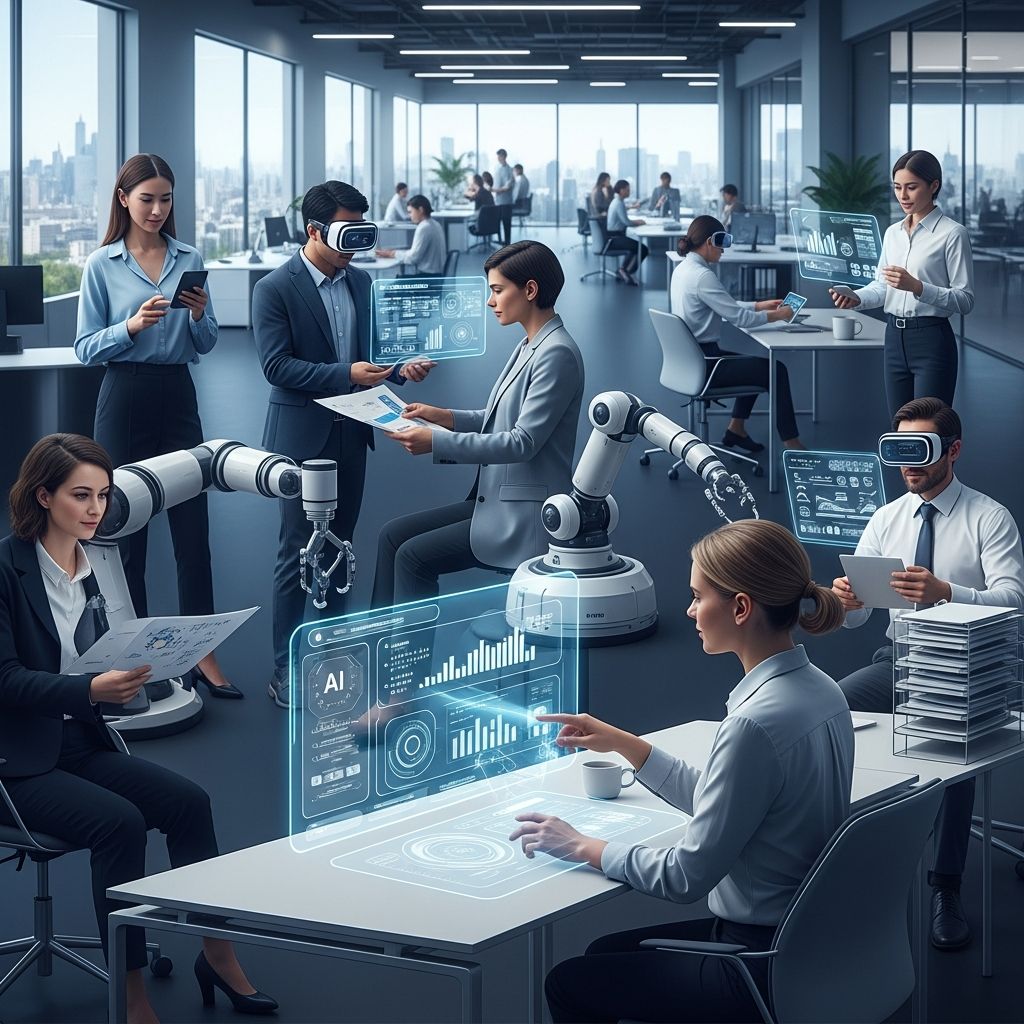
The workplace is undergoing a profound transformation as intelligent automation and artificial intelligence systems increasingly become active participants in daily operations. Unlike previous technological disruptions that positioned automation as a passive tool, the emergence of agentic AI in 2026 represents a fundamental shift toward AI functioning as collaborative teammates rather than mere instruments. This evolution demands that organizations rethink their strategies, cultures, and approaches to workforce management as they navigate unprecedented levels of technological integration.
The Rise of Agentic AI as Workplace Collaborators
The distinction between traditional AI tools and agentic AI marks a critical turning point in workplace transformation. Agentic AI systems operate autonomously within defined parameters, making decisions, executing complex workflows, and adapting in real-time without constant human direction. By 2026, these systems are expected to handle projects that would typically require a week of human effort, demonstrating capabilities that extend far beyond simple task automation.
Organizations are increasingly deploying these AI agents across diverse functions. In research and development, AI systems conduct independent analysis and experimentation. In project management, agents track progress, identify bottlenecks, and recommend interventions. Within information technology operations, what was once AI-assisted troubleshooting has evolved into AgenticOps, where digital workers autonomously support network lifecycle management, detect anomalies, and optimize performance in continuous feedback loops.
This represents more than incremental improvement; it fundamentally redefines the relationship between human workers and technology. Rather than workers adapting to systems designed by technologists, the modern workplace increasingly features systems that learn from and adapt to human needs and preferences.
Connected Intelligence: Breaking Down Silos Through Integrated Collaboration
A transformative concept gaining prominence in 2026 is Connected Intelligence, a framework that unifies three distinct forms of connection: human-to-human interaction, human-to-AI collaboration, and AI-to-AI communication. This integrated approach dissolves traditional organizational silos and geographic limitations that have historically constrained knowledge sharing and expertise deployment.
Within this framework, expertise and knowledge flow instantaneously to where they are needed most. An AI agent summarizing strategic meetings can simultaneously translate discussions into multiple languages while providing contextual recommendations based on organizational precedent and industry best practices. Another agent might analyze customer feedback in real-time, surfacing insights that inform product development, marketing strategy, and customer service protocols simultaneously.
The implications extend beyond operational efficiency. By removing geographic constraints, organizations can deploy specialized expertise without requiring physical relocation or complex coordination across time zones. A compliance specialist in one region can provide guidance through AI intermediaries that translate requirements into local contexts. A subject matter expert can scale their knowledge across thousands of applications without personal involvement in each instance.
This democratization of expertise fundamentally changes career trajectories and organizational hierarchies. Advancement no longer requires centralized decision-making authority but rather becomes more accessible through demonstrated expertise that AI systems can amplify and distribute.
Productivity Gains and the Paradox of Well-Being
Research indicates substantial productivity improvements from AI integration in workplace environments. Workers utilizing AI tools report significant time savings, with over 80 percent of users indicating that AI has freed them to pursue other projects and responsibilities. This capacity liberation has the potential to redirect human effort toward strategic thinking, creative problem-solving, and interpersonal dynamics that require distinctly human capabilities.
However, this productivity enhancement masks emerging psychological and cultural challenges. Early adopters of AI-intensive work environments report unexpected consequences: diminished connection with colleagues, reduced sense of meaningful contribution, and paradoxically, declining subjective measures of productivity despite objective efficiency gains. This phenomenon suggests that the mere automation of tasks does not automatically translate into workplace satisfaction or engagement.
The psychological impact of pervasive AI use in workplaces has become a recognized concern requiring proactive management. Organizations must equip leadership and management teams to recognize symptoms associated with problematic AI integration, identify emerging mental health concerns, and implement preventive measures. The challenge extends to preventing skill erosion as workers increasingly delegate cognitive functions to AI systems, potentially undermining the capacity to execute tasks independently when systems fail or require human judgment.
The Cultural Disconnect Between Expectation and Reality
A critical tension has emerged in 2026: many organizations have adopted aggressive performance expectations and demanding work cultures without corresponding increases in compensation, flexibility, or benefits. This cultural dissonance—where workplace culture no longer reflects organizational reality—creates specific retention dynamics that threaten long-term organizational performance.
The phenomenon termed “regrettable retention” describes employees who remain in roles despite reduced engagement and satisfaction. Rather than departing for opportunities elsewhere, disengaged employees continue working while gradually reducing their discretionary effort and emotional investment. This creates a drag on organizational productivity that cannot be simply compensated through automation or technology deployment.
Simultaneously, worker priorities have shifted substantially. Recent surveys indicate that 73 percent of workers prioritize salary increases among their most important considerations for 2026. This fundamental priority divergence—workers seeking increased compensation while organizations emphasize AI adoption and efficiency—creates misalignment that undermines workforce stability and organizational culture.
Organizations that succeed in navigating this transition will be those that clearly articulate what they expect from employees in terms of output, working hours, and location, while simultaneously being transparent about what they offer in return. This honest reassessment of the psychological contract between employer and employee becomes essential for building sustainable working relationships in an AI-augmented environment.
Addressing Quality Degradation and Low-Quality Output
An unintended consequence of rapid AI adoption has been the emergence of “workslop”—quickly produced, low-quality work generated through AI systems without adequate human review or refinement. The overwhelming focus on AI implementation velocity has sometimes subordinated quality considerations, resulting in outputs that technically meet specifications but lack the refinement and contextual appropriateness that human judgment provides.
This quality concern extends to recruiting and talent acquisition, where projections suggest that by 2028, one in four candidate profiles could be fabricated or substantially misrepresented. The integrity of the hiring process itself becomes compromised when AI systems designed to streamline recruitment lack sufficient verification mechanisms to ensure authenticity and accuracy.
Addressing these challenges requires organizations to establish governance frameworks that maintain quality checkpoints throughout AI-augmented processes. Rather than viewing human involvement as inefficient legacy overhead, organizations must reconceptualize human review as essential quality assurance that protects organizational reputation and client trust.
Transforming Customer Experience Through Hybrid Teams
In customer-facing functions, the convergence of consumer and enterprise environments is enabling new workforce models that blend AI agents with human representatives. These hybrid teams leverage AI concierge agents—systems capable of handling routine inquiries, conducting preliminary diagnostics, and gathering relevant context—while routing complex situations to human agents equipped with comprehensive background information.
Advanced innovations such as real-time speech-to-speech translation enable organizations to serve customers across language barriers without requiring multilingual staff in every location. AI agents can assess customer sentiment, identify urgency levels, and optimize routing decisions to match customer needs with the most appropriate agent. This combination enables faster resolution times while simultaneously improving customer journey coherence by ensuring consistent context throughout interactions.
The transformation of customer service roles reflects broader workplace evolution. Rather than replacing customer service professionals, organizations are reimagining their roles to focus on complex problem-solving, relationship management, and situations requiring empathy and contextual judgment—precisely the capabilities that AI currently augments but cannot fully replicate.
Infrastructure and Operational Optimization Through Intelligent Systems
AI-driven systems are beginning to optimize workplace infrastructure itself. By leveraging data from Wi-Fi networks, building sensors, and connected devices, agentic AI can make real-time adjustments that simultaneously enhance both operational efficiency and sustainability. On low-occupancy days, systems can automatically adjust climate control, modulate lighting intensity, power down unused equipment, and reconfigure workspaces to consolidate activity into efficient zones.
This infrastructure optimization extends beyond energy consumption to encompass security, maintenance prediction, and workspace utilization. By analyzing patterns of space usage, maintenance systems can predict equipment failures before they occur, scheduling preventive service during low-impact periods rather than responding to emergency breakdowns.
Strategic Imperatives for Navigating AI-Driven Workplace Evolution
Success in an AI-augmented workplace requires organizations to implement several strategic priorities. First, organizations must develop intentional AI governance frameworks that maintain quality standards, ensure security and trustworthiness, and establish clear protocols for human-AI interaction and decision authority.
Second, organizations should invest in developing organizational learning capabilities. Rather than treating AI adoption as a one-time implementation, leading organizations recognize that sustainable AI integration requires building a “change fitness”—the organizational capacity to continuously adapt, learn, and evolve as AI capabilities expand and new applications emerge.
Third, organizations must address the human dimensions of workplace transformation explicitly. This includes fostering collective learning cultures where employees continuously develop new competencies alongside AI systems, rather than becoming displaced by them. It requires open dialogue about how AI will be deployed, what value it creates, and how benefits will be distributed across the organization.
Finally, organizations should embrace open, interoperable ecosystems built on principles of trust and transparency. The most successful organizations in 2026 will be those that unify secure connectivity with intuitive, embedded AI while maintaining the human agency and oversight necessary to ensure that technological capabilities serve genuine organizational and human purposes.
Future Outlook: Balancing Opportunity and Responsibility
As intelligent automation and agentic AI continue advancing throughout 2026 and beyond, the future of work will increasingly depend on organizational choices rather than purely technical capabilities. The technology itself will provide unprecedented opportunities for productivity enhancement, knowledge distribution, and operational optimization. However, whether these capabilities ultimately improve or degrade the human experience of work depends fundamentally on how organizations choose to implement and govern these systems.
The organizations that lead in this new landscape will be those that view AI adoption not merely as an efficiency play but as an opportunity to redesign work itself—creating roles that are more strategic, more creative, and more meaningfully connected to organizational purpose. By maintaining human agency, fostering genuine collaboration between people and systems, and ensuring that technological gains are broadly shared, organizations can harness the transformative potential of intelligent automation while preserving what makes work meaningful and fulfilling.
References
- Culture dissonance and AI among top workplace challenges in 2026 — HR Dive. 2026-01-19. https://www.hrdive.com/news/culture-dissonance-negative-ai-effects-workplace/809768/
- How AI will transform the workplace in 2026 — Cisco Newsroom. 2025-12. https://newsroom.cisco.com/c/r/newsroom/en/us/a/y2025/m12/how-ai-will-transform-the-workplace-in-2026.html
- AI is becoming your new work colleague. But let’s not forget the human side — World Economic Forum. 2026-01. https://www.weforum.org/stories/2026/01/ai-agentic-workplace-human-resources/
- New Skills and AI Are Reshaping the Future of Work — International Monetary Fund. 2026-01-14. https://www.imf.org/en/blogs/articles/2026/01/14/new-skills-and-ai-are-reshaping-the-future-of-work
- What’s next in AI: 7 trends to watch in 2026 — Microsoft Source. 2026. https://news.microsoft.com/source/features/ai/whats-next-in-ai-7-trends-to-watch-in-2026/
- How 2026 Could Decide the Future of Artificial Intelligence — Council on Foreign Relations. 2026. https://www.cfr.org/article/how-2026-could-decide-future-artificial-intelligence

Medha Deb is an editor with a master's degree in Applied Linguistics from the University of Hyderabad. She believes that her qualification has helped her develop a deep understanding of language and its application in various contexts. Medha specializes in the areas of beauty, health, sports, and wellness and is committed to ensuring that the content on the website is…