
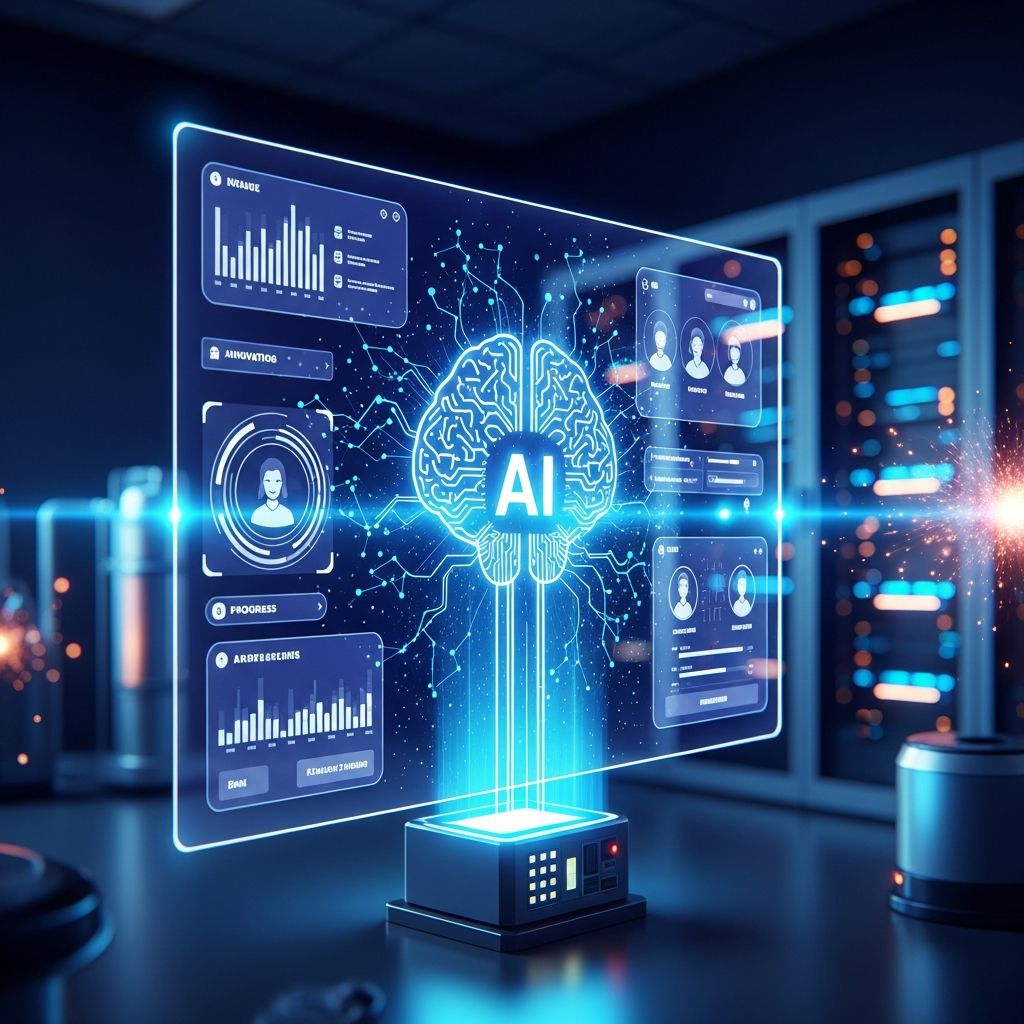
Artificial intelligence is rapidly reshaping how people learn, grow, and lead at work. Innovation labs dedicated to AI-driven coaching are emerging as strategic engines that fuse data science, behavioral research, and coaching expertise to build the next generation of digital coaching platforms.
Instead of treating AI as a simple automation tool, these labs explore how algorithms, coaching science, and human relationships can work together to deliver personalized, scalable, and evidence-based development experiences.
Why AI and Coaching Science Belong Together
Digital coaching platforms increasingly recognize that sustainable impact requires both robust science and responsible technology. Innovation labs are designed to bring these elements together in one place.
- Coaching science provides validated models of behavior change, goal setting, and learning transfer.
- AI and machine learning provide scale, personalization, and powerful analytics for real-time insights.
- Human coaches provide empathy, contextual judgment, and ethical sensitivity that algorithms alone cannot replicate.
By integrating these dimensions, AI innovation labs focus on democratizing access to coaching while preserving the relational and reflective essence that makes coaching effective.
The Strategic Role of an AI Coaching Innovation Lab
An AI-focused coaching innovation lab typically acts as a cross-functional hub. Its mandate is not just to ship features, but to experiment, validate, and translate research into practical tools that improve coaching outcomes over time.
- Design and test advanced algorithms for coach–coachee matching.
- Develop and evaluate natural language models that can support coaching conversations ethically.
- Build predictive models that can anticipate risks, opportunities, and likely coaching impact.
- Study behavioral patterns in digital environments to refine coaching methods.
- Create personalization engines that adapt learning journeys to each individual.
Key Research and Development Pillars
To advance AI coaching responsibly, innovation labs usually structure their work around several interlocking pillars.
1. Smarter Coach–Coachee Matching
Finding the right coach can be the single most important factor in coaching success. Labs are using AI to improve how that match is made at scale.
- Analyzing coach profiles, experience, style, and credentials.
- Incorporating coachee goals, industry, seniority, and learning preferences.
- Using historical outcome data to identify patterns of high-impact matches.
Instead of relying solely on manual selection, matching algorithms can propose a shortlist of ideal coaches while still allowing humans to make the final choice.
2. Natural Language Understanding for Coaching Conversations
Natural language processing (NLP) enables AI systems to interpret and respond to written or spoken language. In coaching, this technology can support reflection and insight while keeping humans in control.
- Identifying themes such as motivation, stress, or confidence in written reflections.
- Spotting recurring challenges that may require targeted interventions.
- Generating prompts or questions that encourage deeper self-exploration.
Responsible labs focus on explainability, so that coaches and clients can understand how language data informs recommendations rather than relying on opaque models.
3. Predictive Analytics for Coaching Outcomes
Predictive models help organizations move from intuition to evidence-based decisions about coaching investments.
| Predictive Focus | Example Questions | Organizational Benefit |
|---|---|---|
| Engagement | Which participants are at risk of disengaging? | Enable early interventions and tailored nudges. |
| Skill Development | Which behaviors are likely to improve with coaching? | Prioritize high-impact skills and populations. |
| Business Outcomes | How does coaching relate to performance metrics? | Link coaching investments to measurable value. |
By learning from patterns in past programs, innovation labs can refine which approaches are most likely to work for specific roles, industries, or leadership challenges.
4. Behavioral Science in Digital Settings
AI alone cannot explain why people change. Behavioral science offers frameworks on motivation, habits, and social dynamics that are essential for effective coaching.
- Operationalizing psychological constructs (e.g., self-efficacy, mindset) into digital measures.
- Designing interventions that nudge users toward sustained practice.
- Testing which kinds of feedback, timing, or formats drive meaningful behavior change.
Some AI coaching platforms already use multimodal models—analyzing voice, language, and nonverbal cues—to infer behavioral traits and give targeted feedback.
5. Personalization Engines for Unique Learning Journeys
Personalization engines sit on top of behavioral data, goal information, and engagement patterns to adapt each coachee’s experience.
- Recommending specific exercises, micro-learning content, or reflection prompts.
- Adapting pace and intensity based on user engagement and progress.
- Aligning coaching themes with organizational priorities and competency models.
The aim is to move beyond one-size-fits-all programs toward dynamically tailored coaching pathways that respond to individual needs in real time.
Who Works Inside an AI Coaching Innovation Lab?
Because AI coaching sits at the intersection of technology, psychology, and business, innovation labs rely on multidisciplinary teams.
- Data scientists and ML engineers who build and refine algorithms.
- AI researchers specializing in language models, recommender systems, and predictive analytics.
- Behavioral psychologists and organizational researchers who ensure interventions align with evidence-based theories of change.
- Professional coaches who ground product decisions in real client experience and ethical practice.
- Product managers and UX specialists who translate research into accessible user experiences.
This mix of expertise helps avoid purely technical solutions that ignore human nuance, or purely theoretical ideas that cannot scale in real-world organizations.
Initial Innovation Focus Areas
When a lab is first established, it often concentrates on high-leverage projects that quickly improve the quality and measurability of digital coaching.
- Enhancing the accuracy and fairness of coach–coachee matching.
- Developing more sophisticated models for predicting coaching outcomes at individual and cohort levels.
- Creating tools for continuous measurement of coaching effectiveness, including behavioral and business metrics.
These foundations then enable further experimentation with conversational agents, immersive simulations, or new feedback mechanisms.
Balancing Human Coaches and AI Systems
Research consistently indicates that AI coaching is most powerful as a complement to human coaching rather than a replacement.
- AI can handle structured, repetitive, or data-heavy tasks, such as tracking practice, summarizing themes, or suggesting resources.
- Human coaches focus on ethics, complex emotions, organizational politics, and deep transformational work.
- Hybrid models let coachees access AI support 24/7 while maintaining regular touchpoints with a coach.
Innovation labs explore which elements of the coaching process can be safely augmented by technology and which must remain fully human-led.
Ethics, Safety, and Data Governance
Because coaching often involves sensitive personal information, AI innovation labs must establish strong ethical and governance standards from the outset.
- Privacy and consent: clear communication about what data is collected, how it is used, and who can see it.
- Bias mitigation: testing algorithms for unintended demographic bias in matching, recommendations, or outcomes.
- Psychological safety: designing digital environments in which people feel safe to share honest reflections and receive feedback.
- Transparency: providing explanations for AI-generated suggestions or scores instead of black-box outputs.
External frameworks, such as professional coaching standards and AI ethics guidelines, are increasingly used to shape these safeguards.
Benefits for Organizations and Learners
When implemented responsibly, AI-enhanced coaching can drive measurable benefits for both individuals and organizations.
- Scalability: making coaching accessible to broader employee groups, not just senior leaders.
- Consistency: creating common frameworks and metrics across large, global populations.
- Personal relevance: delivering highly tailored content and recommendations at the right moment.
- Evidence of impact: linking coaching engagement and behavioral change to performance or business outcomes.
- Anytime access: enabling learners to engage in micro-coaching moments between traditional sessions.
Challenges and Open Questions
Despite its potential, AI coaching still raises important questions that innovation labs must continually explore.
- Where is the boundary between helpful guidance and over-automation?
- How can we ensure that AI-supported feedback is accurate, fair, and culturally sensitive?
- What is the right balance between quantitative metrics and qualitative, human judgment in evaluating coaching success?
- How can organizations maintain trust when using advanced analytics on developmental data?
Ongoing collaboration among researchers, practitioners, and technologists is essential to answer these questions responsibly.
Practical Steps for Organizations Considering an AI Coaching Lab
Organizations that want to build or partner with an AI coaching innovation lab can take several practical steps.
- Clarify strategic goals: leadership, culture change, performance, talent retention, or all of the above.
- Map existing data: what coaching, HR, and performance data is available and ethically usable.
- Engage stakeholders: HR, IT, legal, data protection, and representatives of target user groups.
- Start small: pilot limited use cases (e.g., matching or engagement analytics) and iterate based on evidence.
- Align with external standards: reference coaching and AI ethics frameworks to guide policy and design.
Frequently Asked Questions (FAQs)
Q: Can AI replace human coaches entirely?
Current research suggests that AI is best used to augment, not replace, human coaching. AI can provide scalable support, reminders, and insights, while human coaches handle complex relational and ethical dimensions.
Q: Is AI-driven coaching scientifically validated?
Studies indicate that AI-enhanced coaching can be integrated into coaching processes and can support behavior change, especially for clearly defined, structured goals. However, it is not yet equivalent to comprehensive face-to-face coaching in all contexts.
Q: How do innovation labs protect personal coaching data?
Responsible labs implement strong privacy controls, explicit consent mechanisms, data minimization, and governance frameworks. They also limit who can access individual-level data and apply anonymization when analyzing trends.
Q: What skills do coaches need to work effectively with AI tools?
Coaches benefit from basic data literacy, an understanding of AI capabilities and limits, and the ability to interpret algorithmic insights critically. They remain responsible for ethical practice and for integrating AI outputs into meaningful conversations.
Q: Which organizations benefit most from AI coaching labs?
Large or rapidly scaling organizations with global workforces gain particular value, as AI can help them extend coaching access, create consistent standards, and generate reliable evidence of impact across diverse populations.
References
- The Science of AI Coaching — Retorio. 2024-03-01. https://www.retorio.com/en/scienceai
- Using Artificial Intelligence to Enhance Coaching – A New Study — Oxford Leadership. 2023-10-10. https://www.oxfordleadership.com/using-artificial-intelligence-to-enhance-coaching-a-new-study/
- CoachHub Goes All-In On AI and Coaching Science with Innovation Lab — CoachHub. 2023-09-19. https://www.coachhub.com/news-media/coachhub-goes-all-in-on-ai-and-coaching-science-with-innovation-lab
- The Future of AI Coaching — Stanford University School of Engineering. 2024-05-15. https://engineering.stanford.edu/news/future-ai-coaching
- Artificial Intelligence Coaching Framework and Standards: Examples — International Coaching Federation (ICF). 2024-12-01. https://coachingfederation.org/wp-content/uploads/2024/12/icf-research-ai-coaching-standards-examples.pdf

Medha Deb is an editor with a master's degree in Applied Linguistics from the University of Hyderabad. She believes that her qualification has helped her develop a deep understanding of language and its application in various contexts. Medha specializes in the areas of beauty, health, sports, and wellness and is committed to ensuring that the content on the website is…