
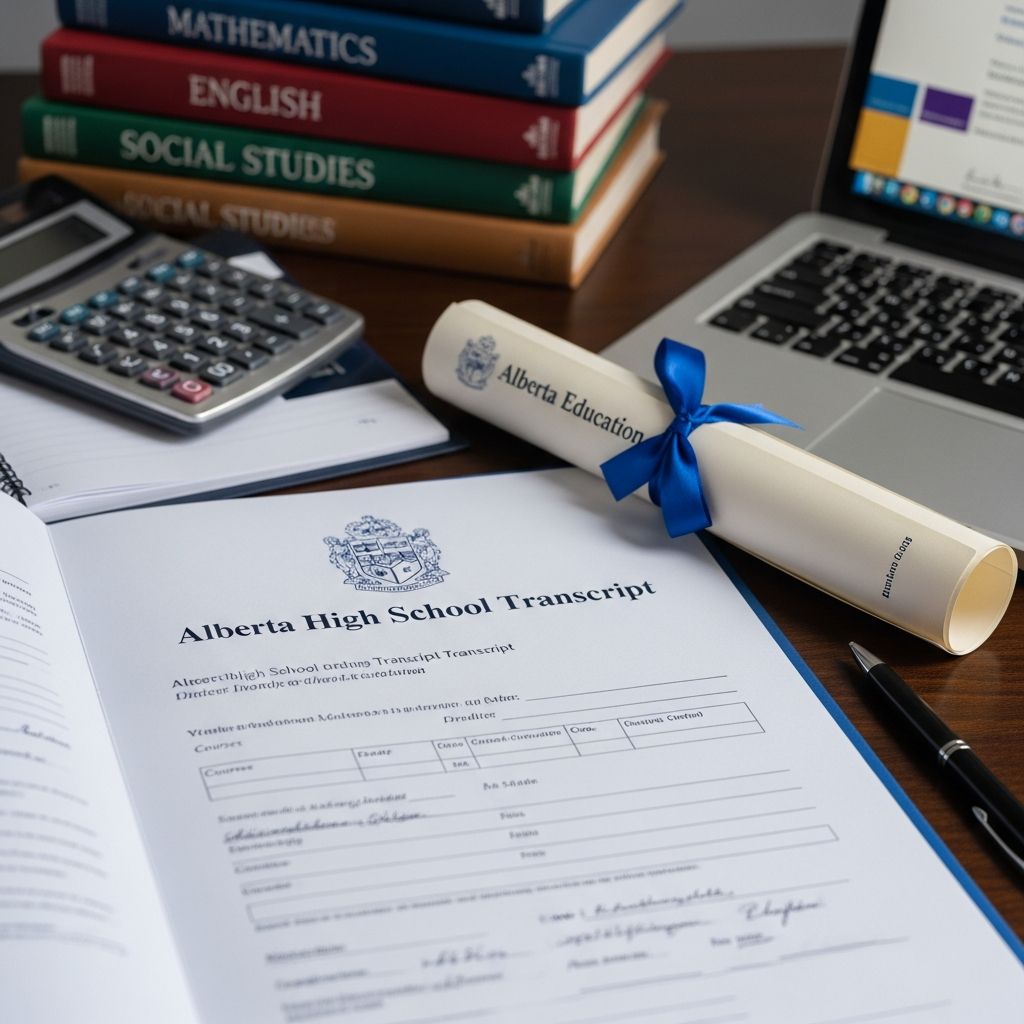
Official Documentation of Academic Achievement in Alberta Secondary Schools
Students completing secondary education in Alberta receive official documentation that serves as a comprehensive record of their academic accomplishments. This documentation becomes essential when pursuing further education, seeking employment, or accessing financial services. Understanding what constitutes an official academic record, how to obtain these materials, and when they are required forms a critical component of post-secondary planning and career development.
What Comprises Your Official Academic Record
Alberta secondary school documentation includes several distinct components that together create a complete picture of a student’s educational journey. The primary official document is the Alberta Transcript of High School Achievement, which serves as the authoritative record for admission purposes, loan applications, and employment verification. This transcript includes detailed information about coursework completed across all years of secondary education, final grades achieved in each course, credit values for completed courses, and current diploma status.
Beyond the standard transcript, students have access to additional documentation options. The Detailed Academic Report (DAR) contains comprehensive information about a student’s entire high school course history, including all course attempts, official marks received, and credits awarded. Importantly, the DAR is classified as an unofficial record intended exclusively for student reference and personal use, not for submission to external institutions or employers. The distinction between official transcripts and unofficial reports is significant, as post-secondary institutions and employers specifically require official documents bearing institutional certification.
Timeline for Transcript Availability Throughout the Year
Alberta students should understand that transcripts become available at specific intervals during the academic calendar. Planning ahead for transcript requests ensures timely receipt of documentation, particularly for application deadlines.
- Mid-February availability: First semester transcripts reflecting fall coursework and grades become accessible
- Mid-July availability: Second semester transcripts documenting spring coursework and final grades are released
- Late August availability: Summer school transcripts showing results from accelerated or makeup courses are made available
These release dates allow students to plan their application timelines strategically. For post-secondary applications with early deadlines, students should request transcripts immediately upon their availability to ensure processing time. Students considering summer courses should anticipate late August availability and plan accordingly if those grades are needed for applications or financial aid decisions.
The Process for Ordering Official Documentation
Obtaining official Alberta high school transcripts and credentials requires understanding the specific steps involved in the ordering process. The procedure begins with proper identification verification to ensure that documents are issued to legitimate requesters and that information accuracy is maintained.
When ordering transcripts, students must provide their legal name exactly as it appears in their vital statistics records. This requirement protects document integrity and ensures that issuing institutions can properly match requests with student records. For students whose legal names differ from names commonly used, this distinction becomes particularly important. The ordering system displays names according to Vital Statistics Act registrations by default, which may differ from preferred names or names used in academic settings.
The actual ordering process occurs through Alberta’s official transcript request system. Students can initiate requests online through the designated platform, which streamlines processing and reduces administrative delays. The online system provides immediate confirmation of requests and allows students to track the status of their documentation. Payment for transcript copies is processed through the secure online platform, and fees must be paid before transcripts are issued and mailed to the specified address.
Understanding Security Features and Document Authenticity
Alberta recognizes the importance of document security in preventing fraud and ensuring that transcripts hold legitimacy when presented to educational institutions and employers. Official transcripts incorporate multiple security features designed to protect against forgery and unauthorized reproduction.
The paper itself contains security elements including heat-sensitive ink that responds to temperature changes and embedded watermarks visible under examination. These physical security measures make unauthorized duplication extremely difficult and allow recipients to verify document authenticity through visual inspection. When submitting transcripts to post-secondary institutions or employers, these security features provide assurance that the documentation is legitimate and has not been altered or counterfeited.
Decoding Course Information and Academic Codes
Alberta transcripts display specific course codes and course names that correspond to provincially authorized high school offerings. Each course code represents a particular subject, level, and credit value. Understanding these codes helps students, parents, and post-secondary institutions identify exactly which courses were completed and at what level of difficulty.
The provincial course code system provides standardized identification across all Alberta secondary schools, ensuring consistency in how coursework is recorded and recognized. When reviewing transcripts, students and their families can cross-reference course codes with the complete list of provincially authorized high school courses, which includes currently offered courses and courses that have been withdrawn from the provincial curriculum. This historical information is important for interpreting older transcripts and understanding curricular changes over time.
Reporting of Coursework from Multiple Educational Sources
Alberta students may complete coursework through various educational pathways beyond traditional in-province secondary schools. Official transcripts reflect this diverse educational background by including information about coursework completed at:
- Alberta-accredited secondary schools
- Out-of-province Canadian schools
- International educational institutions
- Dual enrollment programs with post-secondary institutions
This comprehensive approach to transcript reporting acknowledges that secondary education increasingly occurs through multiple channels. Students participating in dual credit programs that allow them to earn both high school and post-secondary credits see both sets of achievements reflected on their official records. External credentials earned through recognized programs or examinations are also documented, providing a complete picture of academic accomplishment.
Practical Applications and Required Documentation Scenarios
Official transcripts and credentials serve multiple distinct purposes throughout a student’s educational and professional journey. Different contexts require official documentation for verification and assessment purposes.
For post-secondary admission, universities and colleges require official transcripts to evaluate academic preparedness and determine eligibility for specific programs. These institutions use transcript information to assess prerequisite completion, calculate grade point averages, and make admission decisions. The official status of the documentation ensures that institutions can rely on the accuracy and legitimacy of reported grades and credits.
When applying for student loans and financial aid, lending institutions and government agencies require official transcripts to verify educational status and academic standing. This documentation helps determine loan eligibility and may affect interest rates or repayment terms based on program completion status.
Employment verification also frequently requires official transcripts and credentials. Employers in certain fields or positions may require proof of secondary school completion or verification of specific coursework. Professional licensing bodies sometimes require educational documentation as part of credential verification processes.
The Canada Revenue Agency may request transcripts or credentials for verification purposes in specific circumstances, including name change verification, school enrollment status confirmation, age verification, or residence documentation. Having official transcripts available can facilitate these verification processes when required.
Differences Between Official and Unofficial Academic Records
Understanding the distinction between official transcripts and the Detailed Academic Report is critical for appropriate document use. Official transcripts bear institutional seals and signatures indicating their authenticity and authorization for external submission. These documents carry legal weight and are universally accepted by post-secondary institutions, employers, and government agencies.
The Detailed Academic Report, while containing more comprehensive grade history information, lacks official institutional certification and exists primarily as a student study tool. Students reviewing their DAR can see all course attempts, including repeated courses, and track their academic progress in detail. However, institutions and employers do not accept DARs as official documentation, making them unsuitable for formal applications and submissions.
This distinction protects both students and receiving institutions. Official transcripts provide verified, standardized information suitable for consequential decisions. Unofficial reports serve the valuable function of allowing students complete visibility into their academic records while maintaining the integrity of official documentation systems.
Strategic Considerations for Transcript Management
Students should consider several factors when planning their transcript requests and usage. Ordering multiple copies at the time of initial request often proves cost-effective, as subsequent additional copies incur additional fees. Students uncertain about how many copies they might need should consider requesting extras to have on hand for unexpected opportunities or applications.
Timing requests to align with the document availability schedule ensures prompt receipt. Students applying to institutions with early application deadlines should request transcripts immediately upon their availability to allow processing and mailing time. This proactive approach prevents missed deadlines due to documentation delays.
Students who attended multiple schools or completed coursework through various programs should verify that all relevant coursework appears on their official transcript. The comprehensive reporting system should capture all education, but students bear responsibility for reviewing their documents to ensure completeness.
Frequently Asked Questions About Alberta High School Documentation
Q: When should I request my transcript for post-secondary applications?
A: Request transcripts immediately when they become available according to the annual schedule (mid-February for first semester, mid-July for second semester). This allows time for processing and mailing before institutional application deadlines, which often occur in early spring for fall admission.
Q: Can I use my Detailed Academic Report instead of an official transcript?
A: No. While the DAR contains useful information for your personal reference, it is unofficial and not accepted by post-secondary institutions, employers, or government agencies. You must request official transcripts for external submissions.
Q: What should I do if my legal name on file differs from my current name?
A: Transcripts display your legal name as registered under the Vital Statistics Act. If this differs from your current name due to marriage, legal change, or other reasons, contact your school or school board before requesting transcripts to ensure proper name updates in the system.
Q: How long does it take to receive my transcript after ordering?
A: Processing times vary depending on the school board and current workload. Plan for at least two to three weeks for delivery after submitting your request. For time-sensitive applications, factor in this timeline when determining when to order.
Q: Can I include coursework from schools outside Alberta on my transcript?
A: Yes. Official Alberta transcripts include reporting of coursework completed at out-of-province schools, which are documented alongside Alberta-completed coursework to provide a comprehensive educational record.
Q: What if I took courses through a dual enrollment program?
A: Dual enrollment achievements are included on your official transcript, showing both the high school credit and post-secondary credit earned. This demonstrates your advanced coursework to post-secondary institutions considering your admission.
Q: Are there security measures I should look for on an official transcript?
A: Yes. Legitimate Alberta transcripts include heat-sensitive ink and embedded watermarks on the paper itself. These security features help verify authenticity and protect against forgery. Inspect these elements when you receive your transcript.
Q: Can someone else order my transcript for me?
A: Transcript ordering policies vary by school board. Contact your school or school board directly to learn whether authorized representatives can request transcripts on your behalf and what documentation is required for such requests.
References
- Student information and high school transcripts — Government of Alberta. 2025. https://www.alberta.ca/student-information-high-school-transcripts
- Secondary school transcripts — Ontario Tech Admissions. 2025. https://admissions.ontariotechu.ca/transcripts/secondary-school-transcripts-.php
- Request a transcript or a secondary school certification document — Government of Quebec. 2025. https://www.quebec.ca/en/education/preschool-elementary-and-secondary-schools/programs-training-evaluation/ministerial-examinations-evaluation-learning/request-transcript-secondary-diploma
- Transcripts/Student Records — Toronto District School Board. 2025. https://www.tdsb.on.ca/High-School/After-High-School/Transcripts
- Order a High School Transcript or Certificate as a Current Student — Government of British Columbia. 2025. https://www2.gov.bc.ca/gov/content/education-training/k-12/support/transcripts-and-certificates/order-a-high-school-transcript-or-certificate
- I graduated from an English- or French-language high school, college or university — Immigration, Refugees and Citizenship Canada. 2025. https://ircc.canada.ca/english/helpcentre/answer.asp?qnum=573&top=5

- Integrated M.A. in Applied Linguistics, University of Hyderabad
- 5+ years in editorial, instructional, SEO, and research-based writing
Sneha is a relationships and lifestyle writer with a strong foundation in applied linguistics and certified training in relationship coaching. She brings over five years of writing experience to theskillvault, crafting thoughtful, research-driven content that empowers readers to build healthier relationships, boost emotional well-being, and embrace holistic living. Her writing and insights reflect the belief that beauty, happiness, and wellness…