
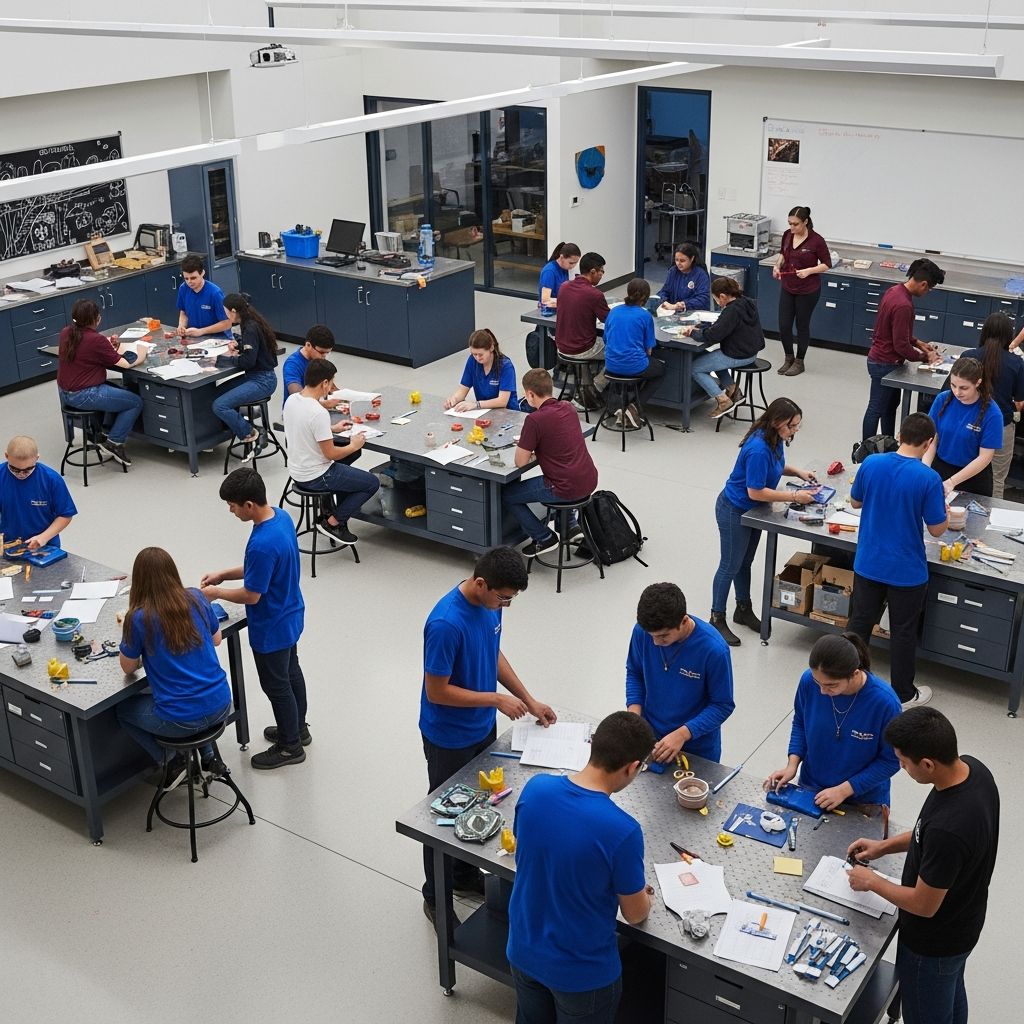
High school students in Alberta have access to dynamic off-campus education initiatives that transform traditional learning into practical, real-world application. These programs enable young learners to step beyond classroom walls, immersing themselves in workplaces, community projects, and specialized training. By earning high school credits through hands-on experiences, students not only fulfill diploma requirements but also cultivate essential skills for future success.
Why Pursue Off-Campus Learning?
Off-campus programs address a critical gap in conventional education by connecting academic knowledge to everyday professional demands. Students gain exposure to diverse industries, develop workplace competencies, and build networks that can lead to employment or further training. Research from Alberta Education highlights how these opportunities reduce the transition shock from school to work, fostering confidence and employability. Key advantages include:
- Practical Skill Development: Apply classroom theory in authentic settings, such as operating machinery or managing customer interactions.
- Credit Accumulation: Earn one credit per 25 hours of verified activity, up to significant portions of a diploma.
- Career Exploration: Test interests in fields like trades, agriculture, or creative arts without long-term commitment.
- Safety and Maturity Focus: Mandatory prerequisite courses ensure preparedness for workplace hazards.
These initiatives are partnerships among schools, employers, and communities, tailored for grades 10-12 students aged 16 and older who demonstrate reliability and eagerness to learn.
Core Off-Campus Program Types
Alberta’s off-campus offerings span a variety of formats, each designed to match different career aspirations and learning styles. Below, we outline the primary pathways, drawing from implementations across school divisions like Vista Virtual School, Holy Spirit Catholic, and Rocky View Schools.
Work Experience Initiatives
Work experience programs place students in paid or volunteer roles during school terms or summers. Participants log hours at local businesses, nonprofits, or farms, reflecting on their experiences through journals or employer evaluations. Typically, 125 hours yield five credits, with monthly submissions required for tracking. This model emphasizes soft skills like punctuality, teamwork, and communication, often starting with job shadows to assess fit.
| Day | Location Example | Schedule |
|---|---|---|
| Monday | Chinook High | 8 a.m. – 3:30 p.m. |
| Tuesday | ICSS | 8:45 a.m. – 3:30 p.m. |
| Wednesday | Chinook (Room 209) | 8 a.m. – 3:30 p.m. |
| Thursday | WCHS | 8 a.m. – 3:30 p.m. |
| Friday | LCI (Room D131) | 8 a.m. – 12:30 p.m. |
Such scheduling accommodates school routines while maximizing immersion.
Registered Apprenticeship Program (RAP)
For trades enthusiasts, RAP allows high schoolers to launch certified apprenticeships. Students work under journeypersons, earning paid hours toward provincial certification while accumulating school credits. Northern and southern Alberta coordinators facilitate placements, requiring prior approval and safety training like HCS 3000 Workplace Safety Systems. Programs run full days (e.g., 8 a.m.-4 p.m.), building credentials in areas like mechanics or construction.
Green Certificate in Agriculture
Aimed at rural and ag-focused students, the Green Certificate program offers up to 16 credits through farm-based training. Specializations include cow-calf breeding, beekeeping, or equine management, culminating in provincial accreditation. AGR 3000 serves as the entry prerequisite, blending classroom prep with on-site practice. This pathway is ideal for those eyeing Alberta’s robust agriculture sector.
Special Projects and Creative Pursuits
Entrepreneurial students can design individualized projects outside standard curricula, such as coding apps, producing podcasts, or studying equestrian arts. Offered at levels 10, 20, and 30 (OTH1999/2999/3999), these can be solo or group efforts but exclude routine extracurriculars like sports. They foster innovation and self-directed learning, perfect for unique passions.
Dual Credit and Trades Sampling
Dual credit options let students sample post-secondary courses, earning credits toward both high school diplomas and college credentials. Rocky View Schools’ trades programs, for instance, provide industry safety tickets like fall protection and first aid, taught by pros in full-day sessions. These build problem-solving, detail orientation, and collaboration—skills transferable across careers.
Eligibility and Enrollment Steps
Accessing these programs requires meeting baseline criteria: minimum age of 16, strong attendance record, and completion of safety prerequisites like HCS 3000. Enrollment processes vary by division:
- Consult Advisors: Discuss options with school counselors or off-campus coordinators.
- Secure Approval: Submit applications, often with parent consent and employer agreements.
- Complete Prerequisites: Finish mandatory courses on workplace safety.
- Track Progress: Log hours weekly/monthly, attend reflections, and obtain employer sign-offs.
- Evaluate Outcomes: Review experiences for credit allocation and future planning.
Divisions like Lethbridge and Parkland emphasize screening, including job shadows, to match students with suitable placements.
Real-World Benefits and Success Metrics
Participants report heightened career clarity and readiness. Programs like RVS Building Futures equip students with hands-on training, journeyperson mentorship, and networks for post-grad jobs. Nationally, work-integrated learning correlates with 20-30% higher employment rates for youth, per government data, underscoring Alberta’s model’s efficacy.
Challenges include transportation and scheduling, but schools often provide coordinators for support. Success hinges on student maturity and commitment, yielding not just credits but lifelong competencies.
Frequently Asked Questions (FAQs)
What credits can I earn from off-campus work?
One high school credit per 25 hours, with minima like 125 hours for five credits; up to 40 credits possible through extensive participation.
Do I get paid in these programs?
Yes in RAP and some work experience; volunteers gain exposure. RAP mandates paid hours per apprenticeship rules.
Is prior experience required?
No—programs start with shadows and training. Safety courses like HCS 3000 are mandatory.
Can I combine multiple off-campus options?
Yes, many students blend work experience, special projects, and dual credits for a customized path.
How do I find placements?
School coordinators match you with partners; northern/southern splits apply in some divisions.
Getting Started: Next Steps for Students
Begin by visiting your high school’s career center or division website. Contact coordinators like those at Vista Virtual (north/south sections) or Holy Spirit for tailored guidance. These programs represent a pivotal investment in your future—bridging education and opportunity in Alberta’s vibrant economy.
References
- Off-Campus Programs — Vista Virtual School. Accessed 2026. https://www.vvschool.ca/programsandcourses/programs/off-campus-programs/
- Off-campus Education Options — NorthStar Academy School. Accessed 2026. https://www.nsaschool.ca/high-school-courses/high-school-options/off-campus-options
- Off Campus Education — Holy Spirit Catholic School Division. Accessed 2026. https://www.holyspirit.ab.ca/off_campus_education
- Off-Campus Opportunities Through RVS — Rocky View Schools. Accessed 2026. https://www.rockyview.ab.ca/schools/learning/career-learning/off-campus-opportunities
- Off-Campus Education — Lethbridge School Division. Accessed 2026. https://www.lethsd.ab.ca/programs/off-campus-education-and-careers/off-campus-education

Medha Deb is an editor with a master's degree in Applied Linguistics from the University of Hyderabad. She believes that her qualification has helped her develop a deep understanding of language and its application in various contexts. Medha specializes in the areas of beauty, health, sports, and wellness and is committed to ensuring that the content on the website is…