
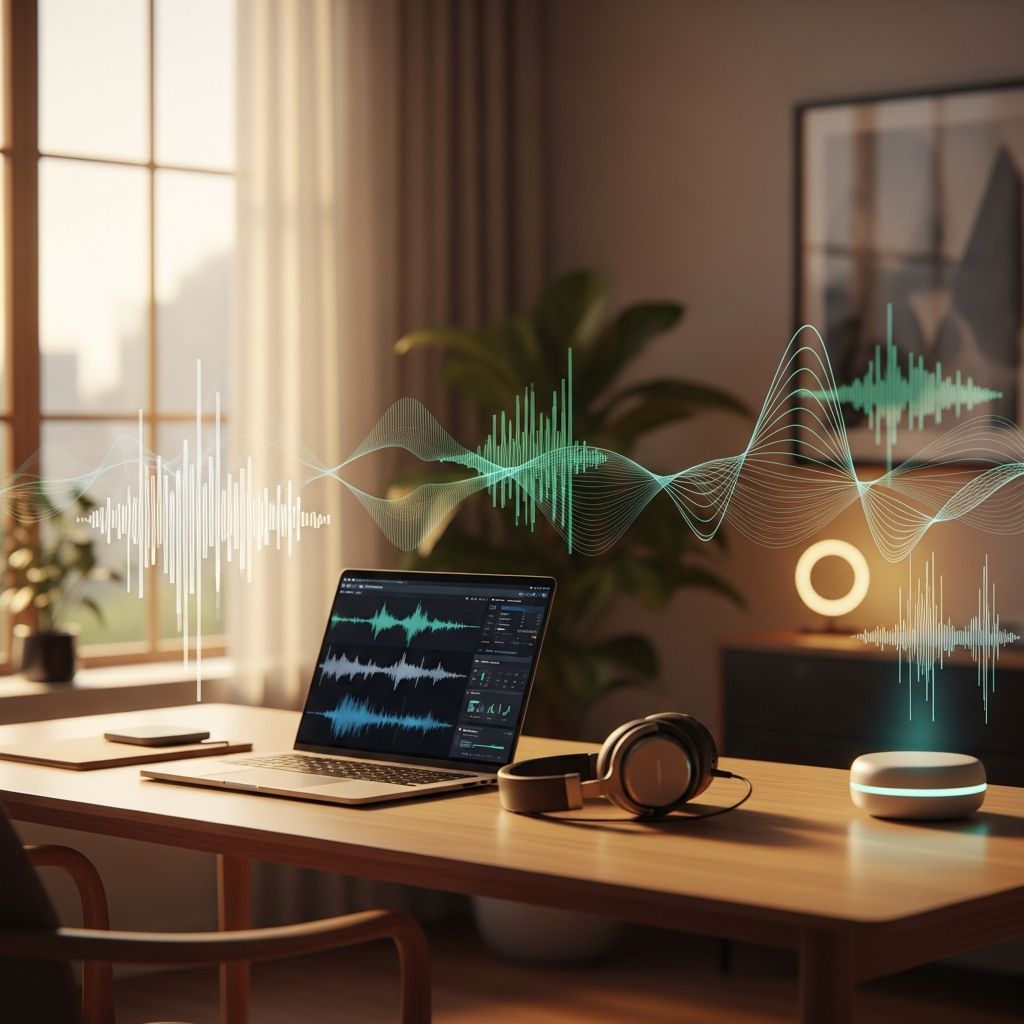
Ambient audio environments can significantly enhance focus and output by masking distractions and optimizing brain function. Scientific studies confirm that moderate, steady sounds outperform silence or chaotic noise for demanding tasks.
The Science of Sound on Your Brain
Our brains process auditory input continuously, even subconsciously. Disruptive sounds fragment attention, elevate stress hormones like epinephrine, and impair memory recall or arithmetic tasks. In contrast, consistent broadband noise stabilizes neural oscillations in the auditory cortex, promoting sustained attention and reducing cognitive fatigue.
Research from NeuroReport shows white noise improves problem-solving by fostering steady neural activation, while moderate noise levels around 70 decibels—akin to a coffee shop—boost creativity via associative thinking. Functional MRI studies reveal it enhances connectivity between attention-related brain regions, filtering irrelevant stimuli for clearer mental processing.
However, excessive noise above 85 decibels crushes performance, confirming intermittent loud sounds harm more than steady ones, per a meta-analysis of 242 studies. This underscores selecting controlled soundscapes over uncontrolled office chatter, which slashes productivity by up to 66%.
Why Your Workspace Needs Audio Optimization
Open offices amplify issues: Harvard Business School reports 15% productivity drops from interruptions, leading to headphone dependency and collaboration avoidance. Background noise disrupts workflow, increases musculoskeletal strain from poor ergonomics, and demotivates complex problem-solving.
Steady sounds counteract this by creating a ‘sensory gating’ effect, where the brain prioritizes key inputs. For repetitive tasks, low noise aids engagement; for creative work, moderate levels spark innovation. White noise particularly aids learning and memory retention by minimizing environmental fluctuations.
Top Strategies for Effective Ambient Audio
- Mask Disruptions: Use broadband sounds to drown out unpredictable noises like conversations or traffic, preserving mental flow.
- Match Task Type: Opt for white noise in analytical work; nature sounds for creativity to avoid overload.
- Control Volume: Stay at 50-70 dB to enhance focus without stress induction.
- Combine with Tools: Pair with noise-cancelling apps for calls or hybrid setups.
Proven Sound Profiles for Peak Performance
Different audio types yield unique benefits. Here’s a comparison:
| Sound Type | Best For | Decibel Range | Key Benefit |
|---|---|---|---|
| White Noise | Focus & Memory | 50-70 dB | Blocks distractions, syncs brain waves |
| Nature Sounds (Rain, Waves) | Creativity & Relaxation | 60-70 dB | Masks chatter, reduces fatigue |
| Coffee Shop Ambience | Brainstorming | 70 dB | Boosts idea generation |
| Instrumental Music | Repetitive Tasks | 50-65 dB | Sustains engagement without lyrics distraction |
Curated Resources to Get Started
Customizable Sound Mixers
Platforms blending multiple layers let you tailor audio precisely. Combine rain with soft static for analysis or cafe hum with theta waves for deep work. These tools generate infinite variations, adapting to your mood or task duration.
AI-Driven Focus Tracks
Advanced apps use neuroscience to craft sounds modulating brain states. Patented algorithms deliver personalized sessions promoting alpha waves for flow states, outperforming generic noise in sustained concentration tests.
Nature-Inspired Generators
High-fidelity recordings of forests, oceans, or wind provide calming backdrops. Ideal for creative professionals, they lower cortisol while masking urban din, fostering prolonged immersion.
Productivity Playlists
Curated libraries offer tempo-matched tracks without vocals. Select by genre or brainwave target, like binaural beats for memory enhancement, ensuring seamless loops for hours-long sessions.
Office Acoustics Simulators
Virtual environments replicate ideal workspaces, from quiet libraries to bustling hubs. Adjustable parameters help test what optimizes your output, backed by acoustic research.
Practical Implementation Guide
Start small: Test one sound for 25-minute Pomodoro sessions, noting focus levels. Integrate via browser tabs or mobile apps for seamless use. For teams, shared playlists normalize audio use without isolation.
Monitor via journals: Track task completion pre/post-audio. Adjust based on energy—louder for mornings, softer for afternoons. Combine with ergonomic tweaks for compounded gains.
Real-World Applications Across Professions
- Students: White noise sustains study marathons in dorms, improving retention by stabilizing attention.
- Developers: Instrumental layers reduce bug-hunting fatigue in home offices.
- Writers: Nature audio unlocks flow, countering blank-page anxiety.
- Managers: Ambience sharpens meetings by muting mental chatter.
Frequently Asked Questions
Does background sound work for everyone?
Individual differences exist; extroverts often thrive on moderate noise, while introverts prefer subtler tones. Experiment to find your threshold.
Can it replace silence entirely?
No—reserve pure quiet for ultra-deep tasks. Use sound to simulate it in noisy spaces.
How long until benefits appear?
Immediate for masking; 1-2 weeks for neural adaptation and habit formation.
Is it safe for daily use?
Yes, at moderate volumes. Avoid extremes to prevent auditory strain.
What if I prefer music with lyrics?
Lyrics compete for cognitive resources, impairing reading or math. Stick to instrumentals.
Advanced Tips for Maximum Gains
Layer binaural beats under white noise for theta induction, enhancing learning. Sync with lighting—dim for evening sessions. Track via apps integrating sound with timers. For remote teams, standardize ‘focus hours’ with group soundscapes.
Incorporate breaks: Silence resets overstimulation. Hybrid setups with physical absorbers amplify digital aids.
References
- How White Noise Impacts Cognitive Performance and Brain Function — Lone Star Neurology. 2023. https://lonestarneurology.net/others/how-listening-to-white-noise-affects-cognitive-performance-and-brain-function/
- How Background Noise Affects Productivity — Krisp.ai. 2023. https://krisp.ai/blog/background-noise-and-productivity/
- Noise vs. Focus: How soundscapes affect your brain at work — Bureau. 2024. https://withbureau.com/blog/office-culture/noise-vs-focus-how-soundscapes-affect-your-brain-at-work/
- Could reducing noise make offices more productive? — World Economic Forum. 2016-03-09. https://www.weforum.org/stories/2016/03/could-reducing-noise-make-offices-more-productive/
- The impact of noise on concentration — Skyted. 2024. https://www.skyted.io/blog/impact-noise-on-concentration

Medha Deb is an editor with a master's degree in Applied Linguistics from the University of Hyderabad. She believes that her qualification has helped her develop a deep understanding of language and its application in various contexts. Medha specializes in the areas of beauty, health, sports, and wellness and is committed to ensuring that the content on the website is…