
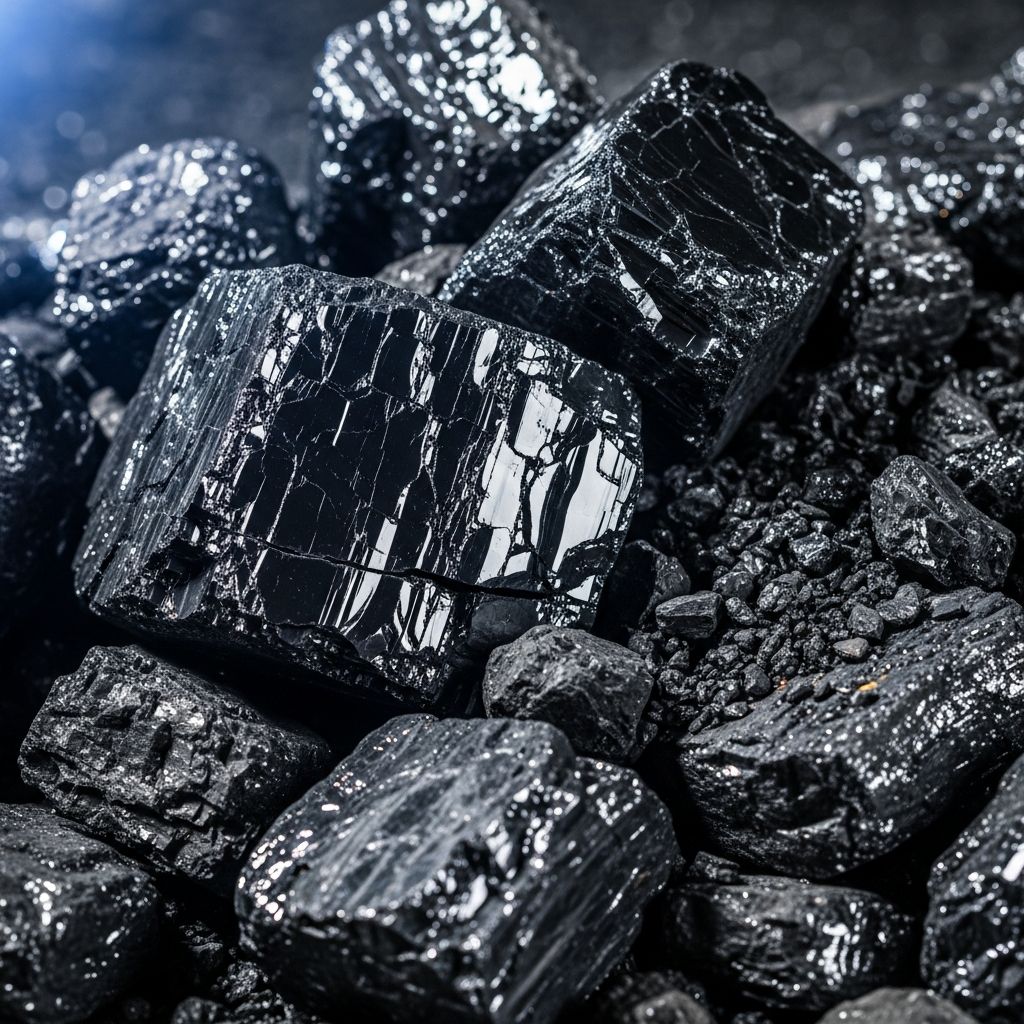
What Defines Anthracite Coal
Anthracite represents the most refined stage of coal development in the metamorphic process, distinguished by its exceptionally high carbon content and dense, crystalline structure. Unlike lower-grade coal varieties, anthracite achieves carbon concentration levels reaching up to 95%, contributing to its superior performance characteristics and widespread industrial adoption. This premium coal type exhibits a distinctive shiny, submetallic appearance that immediately sets it apart from bituminous or lignite varieties when examined side by side.
The geological formation of anthracite occurs over millions of years through intense heat and pressure applications deep within the Earth’s crust. This transformation process removes volatile compounds and impurities, leaving behind an exceptionally pure and energy-dense fuel source. The compact nature of anthracite coal and its hard composition make it structurally distinct from softer coal types, providing handling and storage advantages in industrial settings.
Energy Performance and Heat Output
Anthracite coal stands unmatched among coal varieties in terms of thermal energy production capability. When combusted, anthracite generates between 13,000 to 15,000 BTU per pound, substantially exceeding the heat output of bituminous or sub-bituminous coal. This remarkable energy density means that smaller quantities of anthracite can produce equivalent or greater heat compared to larger amounts of lower-grade coal types, translating directly into cost savings and operational efficiency for industrial users.
The burning characteristics of anthracite produce distinctive visual indicators of its superior composition. When ignited, anthracite generates a bright blue flame, contrasting sharply with the yellow or orange flames typical of lower-grade coals. This blue flame appearance correlates directly with complete combustion and maximum energy release, indicating efficient fuel utilization in furnaces, boilers, and heating systems.
The slow-burning nature of anthracite provides another significant advantage for sustained heat applications. Unlike more volatile coal types that burn quickly with intense initial heat, anthracite maintains steady, consistent combustion over extended periods. This characteristic makes it particularly suitable for industrial operations requiring reliable, uninterrupted heat supply, such as steel manufacturing and metallurgical processing.
Chemical Composition and Minimal Impurities
The chemical makeup of anthracite coal differs fundamentally from other coal categories due to its advanced maturation state. The volatile matter content in anthracite typically remains below 10%, significantly lower than bituminous coal or lignite varieties. This low volatile content directly contributes to safer storage conditions, as anthracite exhibits substantially reduced spontaneous combustion risk compared to higher-volatility fuels. Industrial facilities can maintain larger stockpiles with enhanced confidence in operational safety.
Anthracite’s minimal sulfur content represents another defining characteristic that elevates its environmental and operational value. When combusted, this low-sulfur composition releases substantially reduced quantities of sulfur dioxide (SO₂) and nitrogen oxides (NOx), pollutants that contribute to acid rain formation and atmospheric degradation. This compositional advantage provides industries with a naturally cleaner fuel option without requiring extensive post-combustion emission control technology.
The presence of trace impurities such as mercury, lead, and arsenic occurs at far lower concentrations in anthracite compared to lower-grade coal types. This purity advantage reduces the environmental impact of combustion byproducts and minimizes the contamination of ash residues, which can be beneficially utilized in various applications including mine reclamation and agricultural amendments.
Industrial Applications and Commercial Uses
Metallurgical industries have long recognized anthracite coal’s exceptional suitability for specialized applications requiring precise heat control and minimal contamination. In steel manufacturing processes, anthracite serves as a preferred fuel for furnaces and heating equipment where chemical purity directly impacts final product quality. The consistent heat output and reduced ash content ensure that steel production meets stringent quality specifications without introducing unwanted mineral compositions.
Power generation facilities continue incorporating anthracite into their fuel portfolios despite the contemporary shift toward renewable energy sources. The high calorific value of anthracite, combined with its cleaner combustion profile compared to bituminous or lignite alternatives, makes it economically and environmentally defensible for electricity generation in regions where anthracite reserves remain accessible. Aging coal-fired power plants frequently transition to anthracite as a bridge fuel strategy while infrastructure transitions to alternative energy sources.
Residential and commercial heating systems represent another significant application area for anthracite coal. Home heating systems utilizing anthracite benefit from extended burn times, reduced ash production, and minimal smoke generation. Property owners appreciate the practical advantages of storing adequate supplies without experiencing the air quality degradation associated with lower-grade coal burning in traditional stoves and furnaces.
Water treatment and purification processes utilize anthracite’s physical properties and purity characteristics in innovative ways. The strength and porosity of anthracite coal render it ideal for filtration systems designed to remove dissolved impurities and suspended particles from water supplies. Municipal water utilities and industrial water treatment facilities incorporate anthracite into multi-stage filtration systems that enhance water quality without introducing chemical contaminants from the filter media itself.
Environmental Considerations and Emission Profiles
While all coal combustion releases carbon dioxide and other atmospheric emissions, anthracite presents a more environmentally favorable profile compared to lower-grade coal varieties. The cleaner-burning characteristics of anthracite result in substantially reduced particulate matter emissions, lower quantities of sulfur oxides, and diminished nitrogen oxide formation during combustion. For industrial operations constrained to coal-based energy systems, anthracite represents a more responsible fuel choice that aligns with increasingly stringent air quality regulations.
The concept of carbon footprint reduction becomes particularly relevant when considering anthracite’s energy density advantages. Because anthracite produces significantly more heat per unit of fuel consumed, industries can meet their energy requirements while burning reduced total fuel quantities compared to lower-grade coal alternatives. This efficiency translates into lower overall carbon dioxide emissions per unit of heat produced, providing a meaningful environmental benefit despite coal’s inherent carbon content.
Ash residues generated from anthracite combustion present interesting opportunities for beneficial reuse rather than disposal as waste. Regulatory frameworks in coal-producing regions, particularly Pennsylvania’s mining reclamation programs, have established protocols for utilizing coal ash in abandoned mine reclamation, acid mine drainage remediation, and land restoration projects. Approximately 6.75 million tons of coal ash were beneficially utilized in reclamation activities during the 1990s, demonstrating significant waste reduction and environmental restoration achievements.
Mining Operations and Land Reclamation
Contemporary anthracite extraction relies primarily on surface mining techniques targeting coal seams abandoned from earlier deep-mining operations. Modern surface mining focuses on retrieving coal reserves left behind in previously exhausted deep mines, utilizing advanced equipment and techniques to maximize recovery efficiency while minimizing land disturbance. This approach represents a practical solution to energy demands while avoiding the creation of new deep underground mining infrastructure.
The Surface Mining Control and Reclamation Act of 1977 established comprehensive regulatory requirements for land restoration following anthracite extraction. Mining operations must systematically refill excavated areas, restore topography, and revegetate reclaimed lands with native grasses and tree species. These reclamation protocols serve multiple environmental purposes, including redirecting water flow away from abandoned underground mines and tunnels, preventing acid mine drainage formation, and restoring habitat for wildlife and vegetation communities.
Government oversight and monitoring of reclaimed anthracite mining sites ensures compliance with environmental standards and validates the effectiveness of reclamation methodologies. Long-term monitoring by state environmental protection agencies has documented minimal off-site water pollution from properly managed coal ash placement in reclaimed mines, indicating that scientifically-designed reclamation approaches successfully protect groundwater and surface water resources.
Comparative Analysis: Anthracite Versus Other Coal Types
| Characteristic | Anthracite | Bituminous | Lignite |
|---|---|---|---|
| Carbon Content | Up to 95% | 70-85% | 25-35% |
| Heat Output (BTU/lb) | 13,000-15,000 | 10,500-13,000 | 6,000-8,500 |
| Volatile Matter | Below 10% | 20-40% | 40-50% |
| Emission Profile | Minimal SO₂ and NOx | Moderate emissions | High emissions |
| Burning Speed | Slow and steady | Moderate pace | Rapid combustion |
| Ash Content | Low | Moderate | High |
Economic Advantages and Cost Efficiency
Industries selecting anthracite as their primary fuel source experience measurable economic advantages stemming from its superior energy density and operational characteristics. The requirement for smaller fuel quantities to achieve equivalent heat output compared to lower-grade coals reduces overall energy expenditures for commercial and industrial operations. Additionally, reduced ash production decreases disposal and handling costs associated with combustion residues, further improving the cost-per-unit-of-energy equation.
Storage efficiency represents another economic dimension favoring anthracite selection. The compact, dense structure of anthracite coal enables more efficient utilization of storage space compared to fluffier, lower-density coal varieties. Facilities can maintain equivalent energy reserves using smaller storage areas, reducing real estate requirements and associated infrastructure investments in storage facility construction and maintenance.
The durability and minimal spontaneous combustion risk of anthracite reduce insurance and safety management costs compared to higher-volatility fuels. Extended storage periods become feasible without deterioration or degradation concerns, allowing industrial operators to maintain strategic fuel reserves without accelerated replacement or quality assurance monitoring expenses.
Contemporary Challenges and Market Dynamics
Despite its technical advantages, anthracite coal faces significant market headwinds driven by global energy transition initiatives and shifting regulatory environments. The expansion of renewable energy infrastructure, combined with increasingly stringent carbon emissions regulations, has reduced demand for all coal types, including premium anthracite varieties. Future anthracite utilization will likely concentrate in specialized industrial applications where its unique properties provide irreplaceable value.
Scarcity represents an inherent limitation of anthracite coal availability. Anthracite deposits occur in geographically restricted locations, primarily in specific regions including northeastern Pennsylvania, parts of Appalachia, and select international locations. This geographic concentration limits anthracite’s role as a primary global energy source and necessitates careful stewardship of remaining reserves for applications where no viable alternatives exist.
Transitional energy policies across developed economies increasingly favor fossil fuel phase-out timelines that potentially eliminate coal-based power generation entirely within coming decades. However, specialized industrial processes requiring exceptional heat characteristics or specific fuel properties may sustain anthracite demand in niche markets even as mainstream coal utilization declines substantially.
Frequently Asked Questions
Q: What percentage of global coal reserves consist of anthracite?
A: Anthracite represents a relatively small fraction of global coal reserves, typically less than 1%, making it the scarcest coal variety. Its rarity enhances its value for specialized applications where its superior properties justify premium pricing compared to abundant bituminous and lignite reserves.
Q: Can anthracite be blended with other coal types to improve combustion efficiency?
A: Yes, blending anthracite with lower-grade coal varieties can enhance overall combustion characteristics and reduce emissions compared to using lower-grade coal exclusively. However, cost considerations and supply constraints often limit such blending practices to specific applications requiring performance optimization.
Q: How does anthracite’s environmental impact compare to natural gas and petroleum fuels?
A: While anthracite produces significantly fewer emissions than lower-grade coals, it remains substantially more carbon-intensive than natural gas or petroleum fuels per unit of energy produced. However, for regions with limited access to cleaner fuel alternatives, anthracite represents the most responsible coal option available.
Q: What technologies enable better emission control from anthracite combustion?
A: Modern emission control systems including scrubbers, baghouse filters, and selective catalytic reduction technology can further reduce particulate matter, sulfur oxides, and nitrogen oxides from anthracite combustion. These technologies, combined with anthracite’s inherently lower emissions profile, create substantial air quality improvements.
Q: Is anthracite coal still economically viable for new industrial projects?
A: Anthracite remains economically viable for specialized applications where its unique thermal and chemical properties provide irreplaceable value. However, capital investments in new coal-dependent infrastructure face regulatory and financial uncertainties due to global energy transition initiatives, making comprehensive cost-benefit analysis essential.
References
- Understanding Anthracite Coal: The Cleanest and Most Efficient Coal for Industrial Use — Vocal Media Education. 2024. https://vocal.media/education/understanding-anthracite-coal-the-cleanest-and-most-efficient-coal-for-industrial-use
- Anthracite Coal Combustion — U.S. Environmental Protection Agency. 2020. https://www.epa.gov/sites/default/files/2020-09/documents/1.2_anthracite_coal_combustion.pdf
- Anthracite Heritage: Landscape, Memory and the Environment — Open Rivers Journal, University of Minnesota Libraries. 2024. https://openrivers.lib.umn.edu/article/anthracite-heritage-landscape-memory-and-the-environment/
- Beneficial Use of Coal Ash in Anthracite and Bituminous Mine Reclamation — Pennsylvania Department of Environmental Protection. 2002. https://www.dep.state.pa.us/dep/subject/advcoun/minrec/Mrab_2002/00A84_rev.HTM
- Anthracite: Earth and Atmospheric Sciences — EBSCO Research Starters. 2024. https://www.ebsco.com/research-starters/earth-and-atmospheric-sciences/anthracite
- Anthracite Coal Magazine — Hitzer. 2024. https://hitzer.com/uploads/page/Files/Coal_Magazine.pdf

Medha Deb is an editor with a master's degree in Applied Linguistics from the University of Hyderabad. She believes that her qualification has helped her develop a deep understanding of language and its application in various contexts. Medha specializes in the areas of beauty, health, sports, and wellness and is committed to ensuring that the content on the website is…