
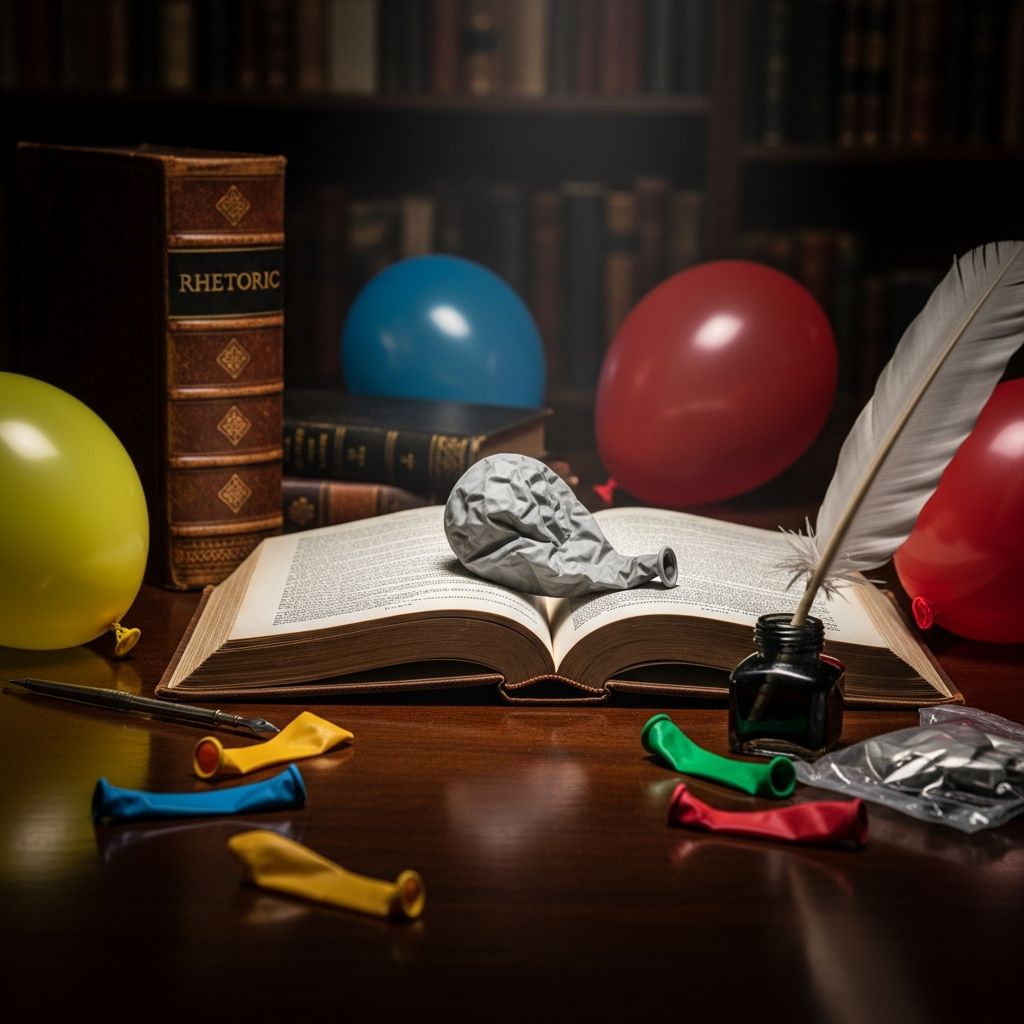
Anticlimax serves as a powerful rhetorical strategy where escalating tension suddenly drops into something trivial or absurd, often provoking laughter or reflection. This technique contrasts sharply with traditional builds to grandeur, instead using deflation to highlight truths or mock pretensions.
Defining the Essence of Anticlimax
At its core, anticlimax involves a sudden shift from significant ideas to ludicrous or mundane ones, creating a jarring effect. Derived from Greek roots meaning ‘against the ladder,’ it rejects the climb toward resolution, opting for a plummet that undercuts anticipation. In rhetoric, this figure of speech arranges words or ideas in descending order of importance, starting strong and ending weakly for comedic or satirical impact.
Writers and speakers employ anticlimax to manage audience expectations deliberately. Rather than fulfilling suspense, it shatters it, often revealing the triviality of what seemed profound. This device appears in sentences, speeches, narratives, and even plots, making it versatile across genres.
Historical Roots and Evolution in Language Arts
Anticlimax traces back to classical rhetoric, where orators used it to disarm opponents or punctuate arguments with humor. Ancient texts show early forms in satirical works, evolving through Renaissance literature into modern usage. Dictionaries like Merriam-Webster formalize it as a ‘sudden transition in discourse from a significant idea to a trivial or ludicrous idea,’ underscoring its abrupt nature.
In contemporary contexts, anticlimax thrives in comedy, advertising, and social commentary. Its evolution reflects shifting cultural tastes, from subtle wit in 19th-century novels to bold twists in today’s films and memes.
Rhetorical vs. Narrative Applications
| Type | Description | Example Context |
|---|---|---|
| Rhetorical (Sentence-Level) | Series of ideas descending from important to trivial. | Speeches, essays, proverbs. |
| Narrative (Plot-Level) | Build-up to a major event ending in disappointment. | Stories, films, novels. |
Rhetorical anticlimax operates within a single sentence or short passage, ideal for quick punches of humor. Narrative anticlimax spans scenes or entire stories, subverting plot expectations for deeper thematic resonance.
Key Purposes and Effects on Audiences
- Humor Generation: The mismatch between buildup and payoff elicits laughter through surprised deflation.
- Emphasis on Triviality: Highlights how even grand pursuits can end mundanely, critiquing human endeavors.
- Satirical Edge: Mocks pomposity or false importance in politics, society, or personal boasts.
- Tension Release: Provides catharsis by avoiding overly intense resolutions, grounding narratives in reality.
These effects make anticlimax indispensable for writers seeking to engage without overwhelming readers.
Classic Examples Across Literature and Rhetoric
Mark Twain masterfully wielded anticlimax: ‘The holy passion of Friendship is of so sweet and steady and loyal and enduring a nature that it will last through a whole lifetime, if not asked to lend money.’ Here, noble ideals crash into everyday pettiness.
Alexander Pope’s ‘Essay on Man’ offers: ‘Die and endow a college, or a cat.’ Grand philanthropy deflates to absurdity. In drama, Shakespeare’s bathos in Henry IV juxtaposes heroic battles with tavern brawls, blending anticlimax for comic relief.
Modern instances include film endings where epic quests conclude with mundane reveals, like characters forgetting their quest over coffee.
Contrasting Climax and Anticlimax
Climax builds ideas in ascending order of importance, heightening suspense toward a peak. Anticlimax reverses this, descending to triviality for humor or irony. While climax satisfies expectations, anticlimax defies them, often leaving audiences chuckling at the twist.
- Climax: ‘He lost his job, his home, and finally, his mind.’
- Anticlimax: ‘He lost his job, his home, and his favorite pen.’
This table illustrates the directional opposition:
| Aspect | Climax | Anticlimax |
|---|---|---|
| Order | Ascending importance | Descending importance |
| Effect | Suspense and payoff | Humor and deflation |
| Purpose | Build intensity | Undercut pretension |
Practical Techniques for Crafting Anticlimax
To use anticlimax effectively:
- Build Gradually: Start with weighty concepts to set expectations high.
- Drop Abruptly: Pivot to the absurd without warning for maximum impact.
- Contextual Fit: Ensure the trivial element relates thematically to amplify meaning.
- Audience Awareness: Gauge if readers expect the build-up to succeed or fail.
Practice by rewriting serious statements: Transform ‘We face war, famine, and disease’ into ‘We face war, famine, and a parking ticket.’
Anticlimax in Speeches and Persuasion
Orators like Winston Churchill occasionally deployed anticlimax to humanize grave topics, blending solemnity with levity. In debates, it disarms adversaries by reducing their arguments to ridicule. Today, stand-up comics and TED speakers use it to re-engage drifting audiences.
Potential Pitfalls and When to Avoid It
Misused anticlimax risks frustrating readers expecting resolution, especially in serious genres like tragedy. Overuse dilutes impact, turning wit into annoyance. Balance with context: Save it for moments needing levity or critique.
Frequently Asked Questions (FAQs)
What is the primary goal of anticlimax in writing?
It aims to create humor or emphasis by suddenly shifting from important to trivial matters, deflating tension unexpectedly.
How does anticlimax differ from bathos?
Bathos is unintentional anticlimax, often clumsy; anticlimax is deliberate for effect.
Can anticlimax work in non-fiction?
Yes, in essays, speeches, and journalism to satirize or lighten heavy topics.
Is anticlimax always funny?
Typically humorous, but it can also provoke thought or irony without laughter.
Examples of anticlimax in movies?
Films like The Big Lebowski end epic pursuits with absurd, everyday resolutions.
Mastering Anticlimax for Modern Creators
In digital age content—blogs, scripts, social media—anticlimax cuts through noise. Viral tweets often end setups with punchy trivialities. Aspiring writers should study masters like Twain and experiment boldly. This device not only entertains but sharpens messages, making the profound memorable through playful subversion.
By integrating anticlimax thoughtfully, creators craft experiences that linger, turning potential letdowns into triumphs of rhetoric.
References
- What Is Anticlimax? – Meaning and Definition — BYJU’S. 2023. https://byjus.com/english/anticlimax/
- What is Anticlimax? Definition & Examples — StudioBinder. 2023-05-15. https://www.studiobinder.com/blog/what-is-an-anticlimax-definition/
- Anticlimax in Literature | Definition, Purpose & Examples — Study.com. 2023. https://study.com/academy/lesson/anticlimax-in-literature-definition-examples.html
- ANTICLIMAX Definition & Meaning — Merriam-Webster. 2026-04-01. https://www.merriam-webster.com/dictionary/anticlimax
- Anticlimax Definition: 7 Anticlimactic Literary Twists and Endings — MasterClass. 2023-09-20. https://www.masterclass.com/articles/anticlimax

- Integrated M.A. in Applied Linguistics, University of Hyderabad
- 5+ years in editorial, instructional, SEO, and research-based writing
Sneha is a relationships and lifestyle writer with a strong foundation in applied linguistics and certified training in relationship coaching. She brings over five years of writing experience to theskillvault, crafting thoughtful, research-driven content that empowers readers to build healthier relationships, boost emotional well-being, and embrace holistic living. Her writing and insights reflect the belief that beauty, happiness, and wellness…