
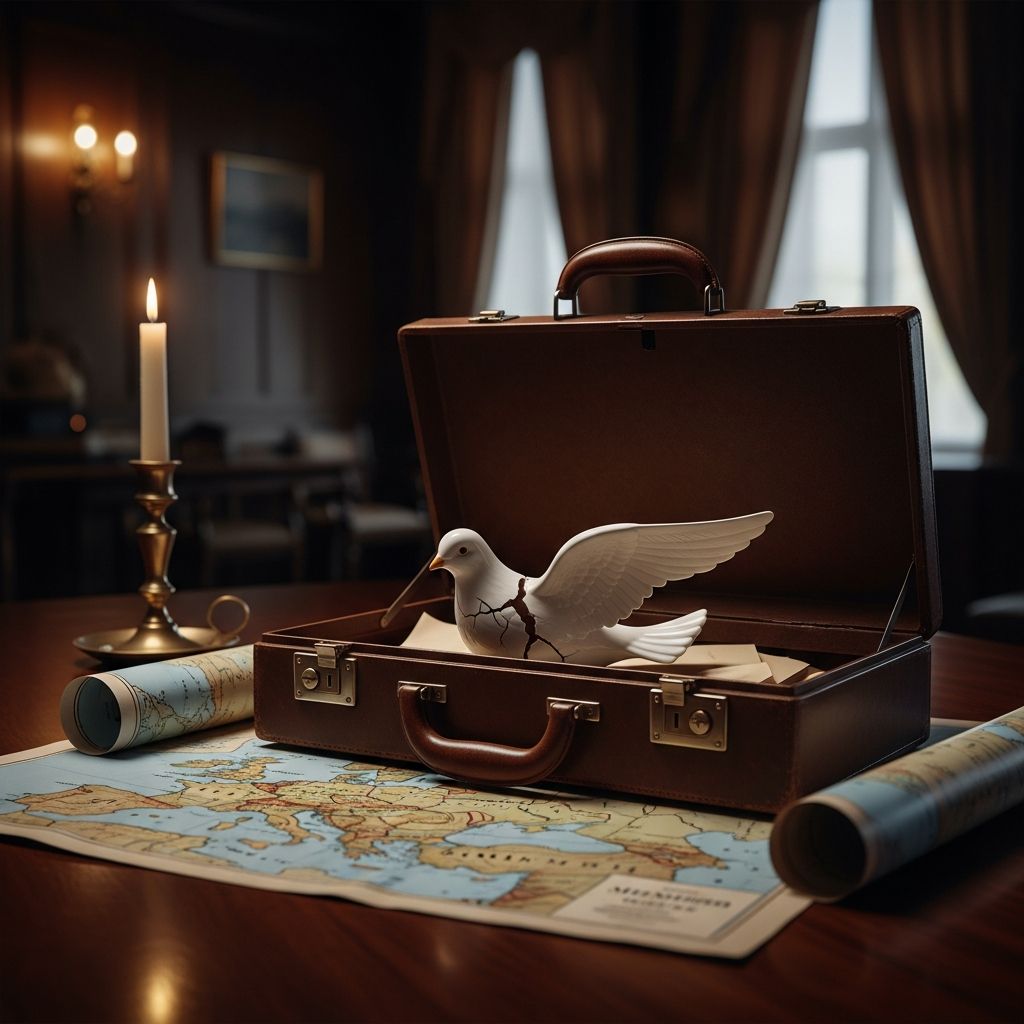
The policy of **appeasement** emerged as a desperate diplomatic strategy in the 1930s, where Western powers made concessions to authoritarian regimes in hopes of averting another devastating war. Rooted in the trauma of World War I, it sought to satisfy grievances through negotiation but instead emboldened aggressors like Adolf Hitler.
Defining Appeasement in Diplomatic History
Appeasement refers to a foreign policy approach involving political, territorial, or material concessions to an aggressive nation to prevent armed conflict. Historically, it carried a neutral or even positive connotation, implying peaceful resolution of disputes. In the interwar period, however, it became synonymous with Britain’s and France’s responses to fascist expansions by Germany and Italy.
The term gained infamy due to its application against Nazi Germany under Prime Ministers Ramsay MacDonald, Stanley Baldwin, and especially Neville Chamberlain. The goal was to ‘saturate’ the aggressor’s demands, assuming they had legitimate complaints redressable without violence.
- Core Principle: Address perceived injustices to reduce aggression.
- Historical Precedent: Used positively in British diplomacy as early as 1929 by Foreign Secretary Austen Chamberlain.
- Shift in Meaning: Post-Munich, it denoted weakness and unwarranted surrender.
Post-World War I Context and Motivations
The carnage of World War I, with over 16 million deaths, left Britain and France scarred and pacifist. Public opinion favored isolationism, and military unpreparedness—due to disarmament treaties and economic depression—made another war unthinkable.
Leaders believed dictatorships stemmed from unresolved grievances, like Germany’s Treaty of Versailles humiliations: territorial losses, reparations, and military restrictions. By conceding on these, appeasers hoped to foster stability.
| Factor | Influence on Appeasement |
|---|---|
| WW1 Trauma | Strong pacifism; ‘never again’ sentiment. |
| League of Nations Failure | Proved collective security ineffective against aggression. |
| Military Weakness | Britain/France underarmed; needed rearmament time. |
| Economic Strain | Great Depression prioritized domestic recovery. |
Early Concessions: Testing the Waters
Appeasement began with Italy’s 1935 invasion of Ethiopia. Britain and France imposed ineffective sanctions via the League of Nations, then secretly proposed the Hoare-Laval Pact, offering Mussolini territorial gains for peace—though leaked and abandoned.
Germany’s 1936 Rhineland remilitarization followed. Hitler marched in unopposed; Britain lacked will or means to intervene, viewing it as Germany’s ‘backyard’.
The Anschluss: Austria Falls Quietly
In March 1938, Germany annexed Austria in the Anschluss. Hitler pressured Chancellor Kurt Schuschnigg to resign, then sent troops across the border. Chamberlain’s government deemed resistance futile, acquiescing despite League prohibitions.
This unification boosted Germany’s power, resources, and morale, with no reprisals, signaling Western impotence.
Crisis in Czechoslovakia: The Munich Debacle
The Sudetenland crisis peaked in 1938. Ethnic Germans there faced alleged oppression; Hitler demanded annexation. Chamberlain flew to Berchtesgaden, Godesberg, and Munich, negotiating without Czechoslovakia.
The Munich Agreement (September 30, 1938) allowed Germany to take the Sudetenland, which held Czechoslovakia’s defenses and industry. Chamberlain returned proclaiming ‘peace for our time’; Daladier and Mussolini joined.
- Key Figures: Chamberlain, Daladier (France), Hitler, Mussolini.
- Exclusion: Czechoslovakia’s pleas ignored.
- Immediate Impact: Temporary relief, but Hitler lied about Sudetenland being his ‘last demand’.
Collapse of Appeasement: From Prague to Poland
Hitler occupied all Czechoslovakia in March 1939, shattering Munich promises. Britain and France abandoned appeasement, guaranteeing Poland’s independence.
Germany invaded Poland on September 1, 1939; war declarations followed on September 3. Appeasement had bought time for rearmament but allowed German strengthening.
Debates Among Historians: Was It Inevitable?
Critics label appeasement cowardly, enabling Nazism. Winston Churchill warned against it, proven right.
Defenders argue it was pragmatic: Britain unprepared, public opposed war. Historians like A.J.P. Taylor called Munich a ‘triumph’, buying rearmament time. Martin Gilbert saw it as rooted in ‘Christianity, courage, and common sense’.
Modern views balance both: sincere but misguided, misjudging Hitler’s insatiable aims.
Global Repercussions and Lasting Lessons
Appeasement encouraged Japanese aggression in China and Italian moves in Albania. It eroded League credibility, paving WWII’s path—over 70 million deaths.
Lessons endure: Concessions to aggressors without enforcement invite escalation. Today, parallels appear in responses to authoritarian expansions, reminding of resolve’s necessity.
Frequently Asked Questions (FAQs)
What was the main goal of appeasement?
To prevent war by satisfying aggressors’ demands through concessions, avoiding WWI’s repeat.
Who was the key architect of appeasement?
Neville Chamberlain, British PM, most associated via Munich.
Did appeasement succeed?
No; it delayed but enabled Hitler’s conquests, leading to WWII.
Why did Britain choose appeasement?
WW1 trauma, military unreadiness, economic woes, League failures.
Could WWII have been prevented without appeasement?
Debatable; earlier resistance risked war when weaker, but might have deterred Hitler.
References
- Appeasement | Definition & Facts — Britannica. 2023-10-12. https://www.britannica.com/topic/appeasement-foreign-policy
- Appeasement — Wikipedia. 2026-04-01. https://en.wikipedia.org/wiki/Appeasement
- Appeasement Explained: Why Did Hitler Get Away With It? — History Hit. 2022-05-15. https://www.historyhit.com/appeasement-explained-why-did-hitler-get-away-with-it/
- The United Kingdom and Appeasement — Lumen Learning. 2023-08-20. https://courses.lumenlearning.com/suny-worldhistory/chapter/31-2-3-the-united-kingdom-and-appeasement/
- Appeasement and ‘Peace for Our Time’ — The National WWII Museum. 2024-02-28. https://www.nationalww2museum.org/war/articles/appeasement-and-peace-our-time

- Integrated M.A. in Applied Linguistics, University of Hyderabad
- 5+ years in editorial, instructional, SEO, and research-based writing
Sneha is a relationships and lifestyle writer with a strong foundation in applied linguistics and certified training in relationship coaching. She brings over five years of writing experience to theskillvault, crafting thoughtful, research-driven content that empowers readers to build healthier relationships, boost emotional well-being, and embrace holistic living. Her writing and insights reflect the belief that beauty, happiness, and wellness…