
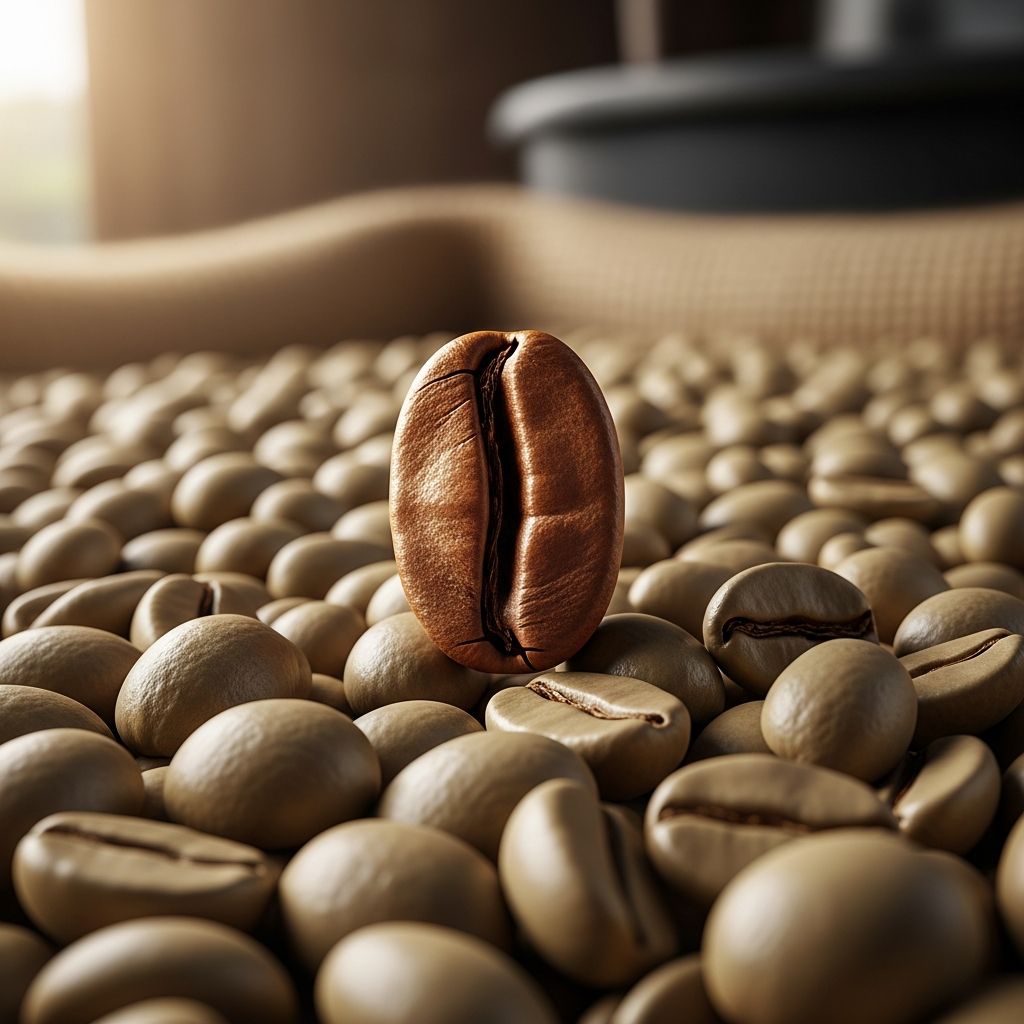
Arabica coffee, derived from the Coffea arabica plant, stands as the most cherished and widely produced coffee species globally, accounting for approximately 60-70% of the world’s coffee output. Renowned for its refined taste, this bean offers a smooth, nuanced profile that captivates drinkers everywhere.
Tracing the Roots: Where Arabica Began
The journey of Arabica coffee starts in the lush, forested highlands of southwestern Ethiopia, particularly the Kaffa region, where it grew wild as early as 1000 BC. Local tribes, such as the Oromo, discovered its energizing properties by mixing crushed beans with animal fat for sustenance during long travels.
From Ethiopia, seeds traveled across the Red Sea to Yemen around the 15th century, marking the shift from wild foraging to organized cultivation. Yemenis nurtured the plants in terraced highlands, turning coffee into a cultural staple brewed as qahwa. This Arabian hub controlled trade for centuries, fostering the bean’s name “Arabica.”
By the 17th century, European demand exploded. Dutch traders smuggled seedlings to Java and Sumatra, while the French introduced them to Réunion (then Île Bourbon), sparking global spread to India, Indonesia, and the Americas. Today, natural populations persist only in Ethiopia, South Sudan, and Yemen, but cultivated varieties thrive worldwide.
Ideal Growing Conditions for Superior Beans
Arabica demands specific environments to flourish, thriving in the “Bean Belt” between 23°N and 25°S latitudes. Key factors include:
- Altitude: Primarily 800-2,200 meters above sea level, where cooler temperatures (15-24°C or 59-75°F) slow cherry maturation, enhancing flavor complexity.
- Soil: Well-drained, mineral-rich soils, often volcanic, provide essential nutrients for aromatic beans.
- Climate: Consistent rainfall (1,500-2,500 mm annually), moderate humidity, and partial shade mimic its native montane forests.
- Shade: Protection from intense sun prevents stress, promoting balanced growth.
These conditions yield elongated, oval-shaped beans with a distinctive S-curve groove, larger and flatter than competitors.
Major Production Regions and Their Unique Profiles
Arabica’s adaptability has led to thriving plantations across continents, each imparting distinct characteristics.
| Region | Key Countries | Altitude Range | Flavor Notes |
|---|---|---|---|
| Africa | Ethiopia, Kenya | 1,500-2,200m | Fruity, floral, winey; bright acidity |
| Latin America | Brazil, Colombia | 600-2,000m | Balanced, nutty, chocolatey; clean finish |
| Asia-Pacific | Indonesia, India, Papua New Guinea | 1,000-1,800m | Earthy, spicy, full-bodied |
| Hawaii & Pacific Islands | Kona (HI), Kauai | 300-1,000m | Nutty, caramel, lower acidity; heavy body |
Higher elevations generally produce brighter, more acidic cups due to slower ripening, while lower ones offer milder, fuller-bodied brews.
Flavor Characteristics That Define Arabica
What elevates Arabica is its sensory symphony: mild sweetness, vibrant acidity, and absence of harsh bitterness. Expect notes of berries, citrus, florals, chocolate, or nuts, varying by origin and roast.
- Acidity: Crisp and fruity, not sour, balancing sweetness.
- Body: Medium to light, silky mouthfeel.
- Aroma: Intense, multi-layered upon grinding or brewing.
- Caffeine: Lower (0.8-1.4%) than Robusta, promoting smoother taste.
Lighter roasts amplify origin-specific traits, while darker ones mute acidity for bolder profiles.
Arabica vs. Robusta: A Clear Comparison
| Aspect | Arabica | Robusta |
|---|---|---|
| Market Share | 60-70% | 30-40% |
| Bean Shape | Oval, S-curve | Rounded, straight crease |
| Growing Altitude | 800-2,200m | Sea level-800m |
| Flavor | Smooth, acidic, aromatic | Bitter, woody, earthy |
| Caffeine Content | Lower | Higher (1.7-4%) |
| Price | Premium | Economical |
| Disease Resistance | Susceptible | Resilient |
Arabica’s delicacy commands higher prices, ideal for specialty brews, while Robusta suits instant coffee and blends.
Challenges in Arabica Cultivation
Despite dominance, Arabica faces hurdles: sensitivity to pests like coffee berry borer and diseases such as leaf rust (Hemileia vastatrix). Climate change exacerbates issues with rising temperatures and erratic rains, threatening yields in traditional areas.
Farmers combat this via shade-growing, resistant hybrids, and sustainable practices. High labor for hand-picking ripe cherries adds cost but ensures quality.
Key Varieties Shaping the Arabica Landscape
Diverse cultivars stem from landraces domesticated in Ethiopia. Pioneers include:
- Typica: Elongated beans, bright acidity; spread via Dutch routes to Americas and Asia.
- Bourbon: Rounder beans, sweet, higher yields; French-introduced to Réunion, then Africa/Latin America.
- SL34/SL28: Kenyan selections; exceptional cup quality, disease-tolerant.
- Caturra: Bourbon mutant; compact, high-yield for denser planting.
- Geisha/Gesha: Ethiopian heirloom; floral, jasmine notes; premium prices.
These form the backbone of modern specialty coffee.
Processing Methods and Their Impact
Post-harvest processing shapes final taste:
- Washed (Wet): Depulped, fermented, washed; clean, bright profiles (Latin America style).
- Natural (Dry): Sun-dried whole cherries; fruity, winey notes (Ethiopian/Brazilian).
- Honey/Pulped Natural: Partial mucilage removal; sweet, syrupy body.
Each method highlights Arabica’s versatility.
The Global Market and Future of Arabica
With 2/3 of production, Arabica drives the $100B+ industry. Brazil leads (35-40%), followed by Vietnam (though Robusta-heavy), Colombia, Indonesia. Demand for single-origin, certified (Fair Trade, Organic) sustains premiums.
Future innovations like genomic breeding promise rust-resistant strains without flavor loss, securing supply amid climate pressures.
Frequently Asked Questions
What makes Arabica coffee special?
Its superior flavor—smooth, fruity, with fine acidity—stems from high-altitude, slow growth.
Is all coffee Arabica?
No, about 60% is Arabica; the rest is mostly Robusta for blends and instants.
Why is Arabica more expensive?
Finicky growing conditions, lower yields, and hand-harvesting raise costs.
Can Arabica grow at low altitudes?
Yes, like in Hawaii, yielding milder flavors, but high altitudes optimize complexity.
How does roast affect Arabica taste?
Light roasts preserve fruity notes; dark roasts enhance body, reduce acidity.
References
- The properties of Arabica coffee — Caffè Vergnano. 2023. https://www.caffevergnano.com/en/blog/the-properties-of-arabica-coffee
- What is Arabica Coffee? — Kauai Coffee. 2024. https://kauaicoffee.com/blogs/guides/what-is-arabica-coffee
- All about Arabica coffee – origin, flavour and quality — Thermoplan AG. 2024-06-12. https://www.thermoplan.ch/en/coffeecompetence/blog/arabica-coffee
- The Arabica variety – origin, appearance and taste of the beans — Beans.at. 2023. https://beans.at/en/kaffeewissen/kaffeesorten-arabica-robusta/arabica
- Coffea arabica — Wikipedia (citing primary sources). 2026. https://en.wikipedia.org/wiki/Coffea_arabica
- Arabica Coffee Origins: Why Coffee’s Gold Standard Deserves a … — Flour and Coffee Substack. 2024. https://flourandcoffee.substack.com/p/arabica-coffee-origins-gold-standard-perspective
- History of Arabica — World Coffee Research. 2024. https://varieties.worldcoffeeresearch.org/arabica-2/history-of-arabica

- Integrated M.A. in Applied Linguistics, University of Hyderabad
- 5+ years in editorial, instructional, SEO, and research-based writing
Sneha is a relationships and lifestyle writer with a strong foundation in applied linguistics and certified training in relationship coaching. She brings over five years of writing experience to theskillvault, crafting thoughtful, research-driven content that empowers readers to build healthier relationships, boost emotional well-being, and embrace holistic living. Her writing and insights reflect the belief that beauty, happiness, and wellness…