
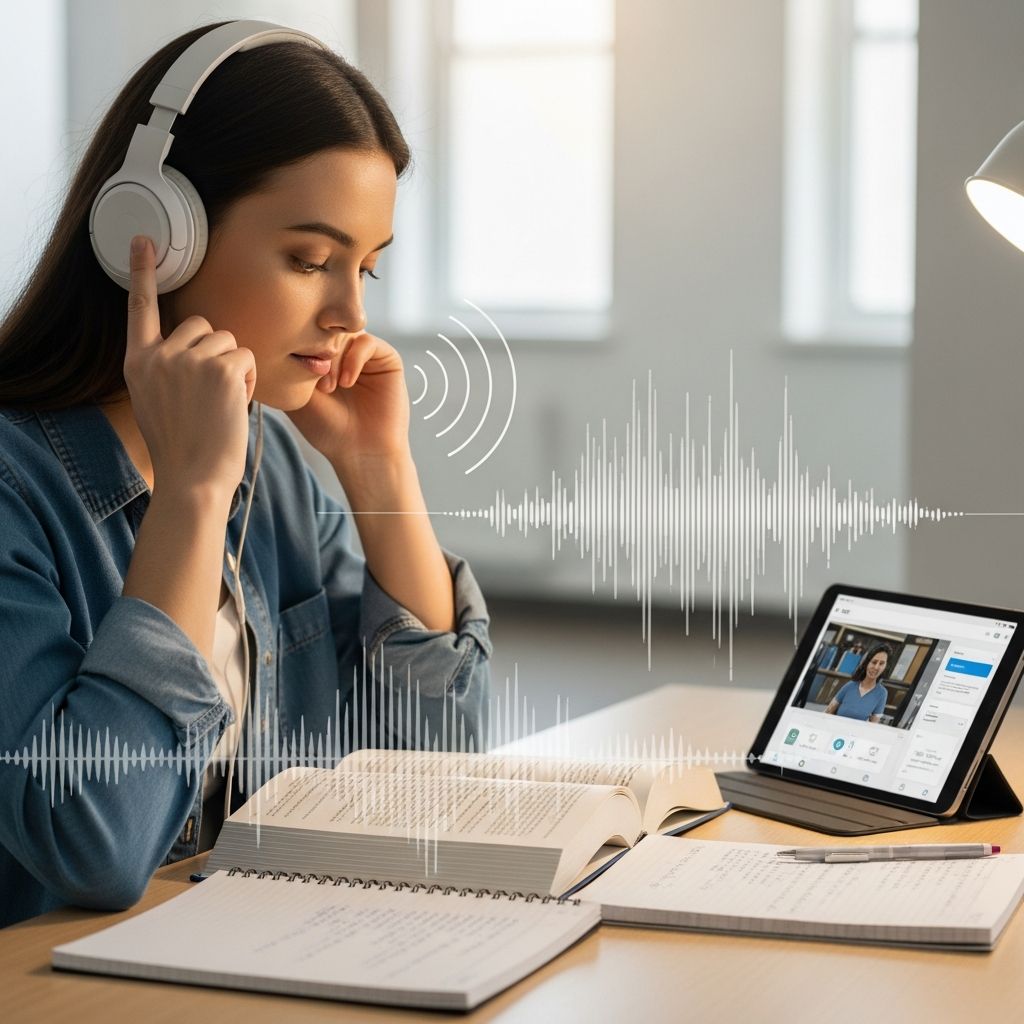
Individuals who excel when information is delivered through sound benefit immensely from tailored approaches that emphasize listening, speaking, and verbal repetition. These methods leverage the brain’s natural affinity for auditory input, making complex topics easier to grasp and recall during assessments.
Recognizing Your Auditory Learning Preference
Auditory learners process and retain knowledge best when it involves hearing. Approximately 16% of students identify strongly with this style, while broader estimates suggest up to 30% retain about 75% of heard material. Common signs include moving lips while reading silently, strong recall of spoken instructions, and preference for lectures over silent reading. Unlike visual learners who favor diagrams or kinesthetic types who need hands-on tasks, auditory individuals thrive on verbal exchanges and audio cues.
To confirm this preference, reflect on past successes: Do podcasts or discussions stick with you longer than written notes? If verbal explanations clarify concepts quickly, sound-based strategies will amplify your efficiency.
Core Principles of Auditory Revision
Effective sound study hinges on active engagement rather than passive hearing. Key principles include repetition for reinforcement, association to link new info with familiar sounds, and multi-sensory pairing where audio combines with minimal visuals or movement. Research highlights that verbalizing content activates multiple brain areas, improving long-term memory over silent review.
- Repetition: Hearing information multiple times builds neural pathways.
- Association: Linking facts to rhythms or rhymes cements recall.
- Interaction: Dialogues force processing and output.
Powerful Techniques for Solo Study
When working alone, transform solitary sessions into dynamic audio experiences. These methods require minimal tools, focusing on your voice and basic recording devices.
Verbal Recitation of Material
Reading text aloud engages both production and reception, doubling retention. Speak textbook passages, formulas, or essay outlines clearly and at varying speeds. For essays, vocalize questions alongside answers to spot weaknesses. Repeat until fluency emerges, mimicking exam pressure.
Pro tip: Record yourself and playback to self-assess pronunciation and pacing. This creates a personal audio library for on-the-go review.
Self-Recorded Summaries
Capture concise voice notes explaining key concepts in your words. Use smartphones for dictaphone-style recordings of lectures or self-made notes. Listen during commutes or breaks for spaced repetition. Combining playback with glancing at visuals reinforces doubly.
| Scenario | Recording Tip | Benefit |
|---|---|---|
| Lecture Review | Summarize immediately post-class | Captures fresh insights |
| Formula Memorization | Chant with rhythm | Enhances pattern recognition |
| Essay Practice | Read full draft aloud | Reveals flow issues |
Rhythmic Mnemonics and Songs
Create rhymes, songs, or chants for lists and sequences. For history dates, invent tunes like ‘In 1492, Columbus sailed the ocean blue.’ Word associations turn abstract facts into catchy phrases. These exploit the brain’s love for music, making recall automatic during stress.
Examples: Biology terms as rap verses; math rules as nursery rhyme twists. Practice singing them daily for embedding.
Collaborative Audio Methods
Group dynamics supercharge auditory learning through real-time feedback and diverse explanations. Even pairs suffice if full groups aren’t available.
Forming Dynamic Study Pairs or Circles
Pair with peers for verbal quizzes, debates, or teach-backs. Explaining concepts aloud solidifies your grasp while hearing alternatives fills gaps. Aim for same-subject buddies, but cross-course talks work too—teaching reinforces self-understanding.
Structure sessions: 10 minutes per person teaching, followed by Q&A. Rotate roles to keep energy high.
Debate and Discussion Drills
Argue pros/cons of topics or compare theories verbally. This hones critical thinking and exposes weak spots via peer challenges. End with group summaries recited chorally.
Tech-Enhanced Audio Tools
Modern devices expand options beyond voice alone.
- Podcasts and Expert Audio: Curate subject-specific episodes for passive absorption. Platforms offer lectures on demand.
- Study Playlists: Mix recordings, rhymes, and instrumental tracks (classical boosts focus without lyrics).
- Apps for Voice Quizzing: Tools that read flashcards aloud or quiz via speech.
Pair with timers for focused bursts, avoiding overload.
Overcoming Common Hurdles
Auditory styles shine but falter in noisy settings. Counter distractions with quiet zones or lyric-free music. Balance with other styles: Use audio alongside quick sketches. Practice silent mocks to adapt exam conditions.
For burnout, alternate verbal with light movement like pacing while reciting.
Sample Weekly Auditory Schedule
| Day | Morning (30 min) | Afternoon (45 min) | Evening (20 min) |
|---|---|---|---|
| Monday | Record summaries | Group debate | Playlist review |
| Tuesday | Read aloud chapters | Mnemonic creation | Self-quiz playback |
| Wednesday | Peer teach-back | Podcast dive | Rhyme recitation |
| Thursday | Voice note essays | Discussion drill | Formula chants |
| Friday | Full review audio | Mock verbal exam | Relax with audio |
| Weekend | Flexible group | Repetition focus | Light listening |
Measuring Progress and Adjustments
Track via self-tests: Record pre/post audio quizzes, noting recall speed. Adjust based on what sticks—more groups if solo lags. Combine with retrieval practice for superior outcomes over re-listening alone.
Frequently Asked Questions
Can auditory methods help non-auditory learners?
Yes, incorporating sound elements benefits all, enhancing variety and engagement regardless of primary style.
What’s the best background for audio study?
Quiet or instrumental tracks; test personal tolerance to avoid splits in attention.
How often should I repeat recordings?
Spaced intervals: daily first week, then every few days for retention.
Are apps necessary for these techniques?
No, voice and basic recorders suffice; apps add convenience.
Does this work for all subjects?
Highly effective for languages, history, sciences; adapt for math via verbal explanations.
References
- Effective Listening Practices: Auditory Learning Strategies — Teach Them to Study. 2023. https://www.teachthemtostudy.com/articles/effective-listening-practices-auditory-learning-strategies/
- Revision Techniques for Auditory Learners — SkillsYouNeed. 2023. https://www.skillsyouneed.com/rhubarb/auditory-revision-techniques.html
- Study Techniques for Auditory Learners — Tutor Doctor. 2017-05-01. https://www.tutordoctor.co.uk/blog/2017/may/study-techniques-for-auditory-learners/
- Revision Methods for All Learning Styles — Phoenix College Malaga. 2023. https://phoenixcollegemalaga.com/revision-methods-for-all-learning-styles/
- How to Teach Auditory Learners — Engage Education. 2023. https://engage-education.com/blog/how-to-teach-auditory-learners/
- How to Teach Children with an Auditory Learning Style — Promethean World. 2023. https://www.prometheanworld.com/gb/resource-centre/blogs/how-to-teach-children-with-an-auditory-learning-style/

Medha Deb is an editor with a master's degree in Applied Linguistics from the University of Hyderabad. She believes that her qualification has helped her develop a deep understanding of language and its application in various contexts. Medha specializes in the areas of beauty, health, sports, and wellness and is committed to ensuring that the content on the website is…