
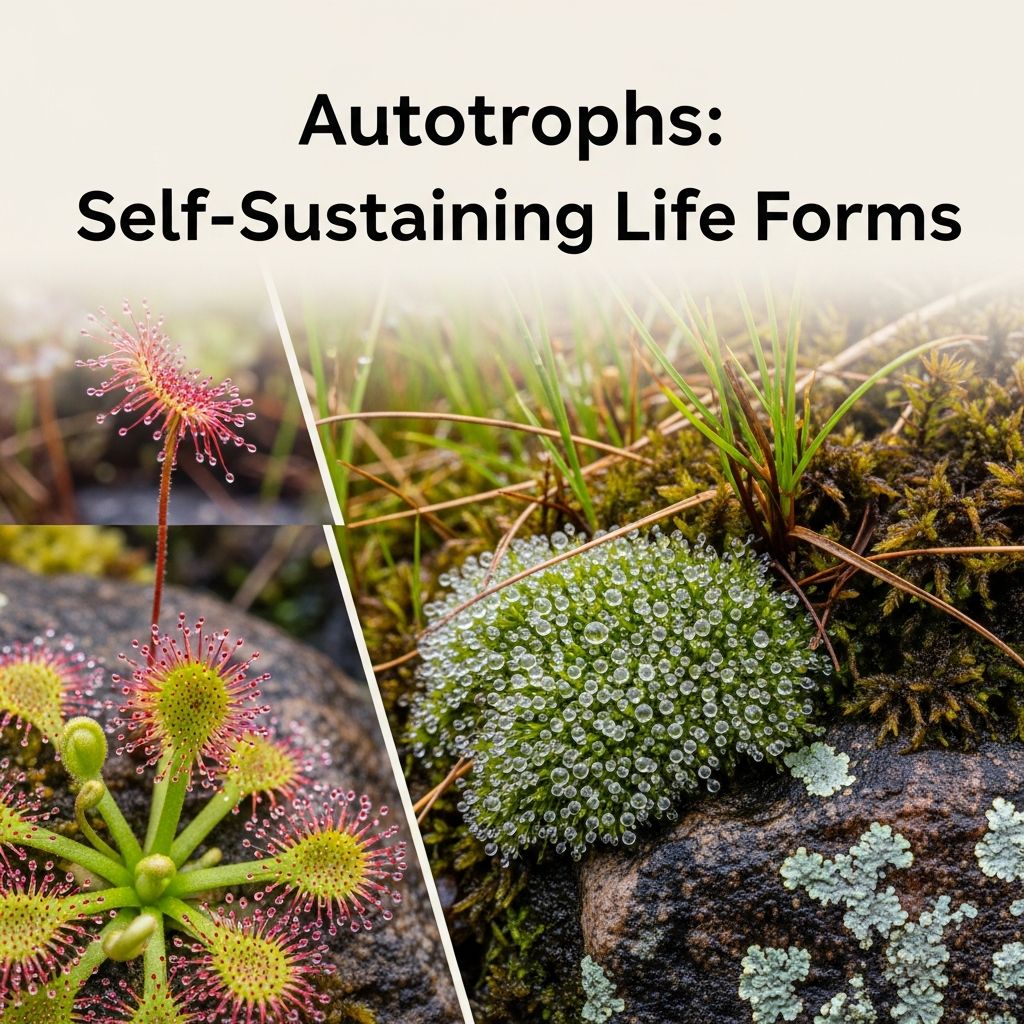
Autotrophs represent the foundation of life on Earth, capable of converting basic inorganic substances into complex organic compounds to fuel their growth and survival. These remarkable organisms, often called primary producers, harness energy from sunlight or chemical reactions, independent of other living beings for nutrition. Without them, food chains would collapse, as they provide the energy and biomass that support all heterotrophs, from microscopic consumers to apex predators.
The Fundamental Role of Autotrophs in Nature
In every ecosystem, autotrophs occupy the base of the trophic pyramid, transforming non-living resources into sustenance for higher levels. They capture energy that would otherwise remain inaccessible, creating glucose and other sugars through processes like photosynthesis or chemosynthesis. This self-reliance distinguishes them from heterotrophs, which must consume external organic matter. Green plants dominate terrestrial landscapes, while algae and cyanobacteria thrive in aquatic realms, collectively generating the oxygen we breathe and the biomass that feeds global food webs.
Consider a forest: towering trees and understory shrubs fix carbon dioxide into carbohydrates, supporting herbivores like deer and insects. In oceans, phytoplankton—microscopic autotrophs—produce half of Earth’s oxygen, sustaining marine life from zooplankton to whales. Even in extreme environments like volcanic vents, specialized bacteria demonstrate autotrophic prowess, proving life’s adaptability.
Decoding the Mechanisms of Self-Nourishment
Autotrophs synthesize organic molecules from inorganic precursors such as carbon dioxide, water, and minerals. The Greek roots “auto” (self) and “troph” (nourishment) aptly describe this independence. Chlorophyll-bearing organisms dominate photoautotrophy, using light to drive reactions that split water and reduce CO2. In contrast, chemoautotrophs oxidize inorganic chemicals, thriving where light cannot penetrate.
- Energy Capture: Pigments like chlorophyll absorb photons, exciting electrons for chemical work.
- Carbon Fixation: CO2 is incorporated into sugars via enzymes like RuBisCO.
- Byproduct Release: Oxygen from photosynthesis or reduced compounds from chemosynthesis.
This efficiency allows autotrophs to proliferate, forming vast biomass reserves that cycle through ecosystems via decomposition and consumption.
Photoautotrophs: Harvesters of Solar Power
Photoautotrophs rely on sunlight, making them the most visible and abundant autotrophs. They possess chloroplasts or similar structures containing chlorophyll, which absorbs red and blue wavelengths while reflecting green—hence their coloration. The photosynthetic equation, 6CO2 + 6H2O + light → C6H12O6 + 6O2, encapsulates their alchemy.
Land plants, from grasses to sequoias, exemplify this group. Their leaves maximize surface area for light interception, with stomata regulating gas exchange. Aquatic photoautotrophs like diatoms and kelp adapt to buoyancy and nutrient flows, contributing disproportionately to global primary production despite their size.
| Photoautotroph Type | Key Features | Habitats |
|---|---|---|
| Land Plants | Chloroplasts in leaves, vascular tissues | Forests, grasslands, deserts |
| Algae | Unicellular or multicellular, chlorophyll a/b | Freshwater, oceans, ponds |
| Cyanobacteria | Prokaryotic, oxygenic photosynthesis | Water surfaces, soils, symbiosis |
Cyanobacteria, ancient photoautotrophs, oxygenated Earth’s atmosphere billions of years ago, paving the way for complex life.
Chemoautotrophs: Masters of Chemical Energy
Where sunlight fades, chemoautotrophs flourish by oxidizing inorganic compounds like hydrogen sulfide, ammonia, or iron. These bacteria generate ATP through electron transport chains, fixing CO2 without light. Deep-sea hydrothermal vents host vibrant communities powered by these microbes, supporting tube worms and clams in total darkness.
Sulfur-oxidizing bacteria in hot springs or nitrogen-fixing soil microbes illustrate versatility. Unlike photoautotrophs, they produce no oxygen, relying on geochemical energy gradients. Their role in nutrient cycling is crucial, converting unusable chemicals into biomass.
- Hydrothermal Vent Bacteria: Use H2S from Earth’s crust.
- Iron-Oxidizing Bacteria: Thrive in iron-rich waters.
- Methanogens: Reduce CO2 with hydrogen (though some debate their strict autotrophy).
Diverse Examples Across Kingdoms
Embryophytes: The Vascular Powerhouses
Flowering plants, conifers, and ferns use roots to mine soil nutrients, stems to transport, and leaves for synthesis. Wheat fields and rice paddies showcase agricultural autotrophs, feeding billions.
Algal Wonders
From pond scum (green algae) to kelp forests, algae photosynthesize efficiently. Diatoms, with silica shells, form oceanic blooms, sequestering carbon.
Prokaryotic Pioneers
Cyanobacteria like Anabaena fix nitrogen symbiotically with plants. Green sulfur bacteria use bacteriochlorophyll in anaerobic niches.
Extreme Adaptors
Chemoautotrophs like those at vents exemplify resilience, basing entire ecosystems on chemosynthesis.
Autotrophs Versus Heterotrophs: A Comparative View
| Aspect | Autotrophs | Heterotrophs |
|---|---|---|
| Nutrition Method | Synthesize from inorganics | Consume organics |
| Energy Source | Light or chemicals | Other organisms |
| Food Chain Role | Producers | Consumers/Decomposers |
| Examples | Plants, algae, vent bacteria | Animals, fungi, protists |
This contrast underscores autotrophs’ primacy; heterotrophs depend on them entirely.
Ecological and Global Significance
Autotrophs drive biogeochemical cycles, producing ~100-120 billion tons of biomass yearly. They mitigate climate change via carbon sequestration and generate 50-80% of atmospheric oxygen. Deforestation and ocean acidification threaten this productivity, impacting food security and biodiversity.
In agriculture, optimizing autotrophic efficiency boosts yields. Biofuels from algae harness their productivity sustainably.
Challenges and Human Interactions
Autotrophs face threats like habitat loss and pollution. Algal blooms from eutrophication disrupt balances, while vent communities inform astrobiology, hinting at life on Europa.
Frequently Asked Questions
What is the primary difference between photoautotrophs and chemoautotrophs?
Photoautotrophs use sunlight for energy, while chemoautotrophs rely on chemical oxidations, often in dark environments.
Are all plants autotrophs?
Yes, nearly all embryophytes are photoautotrophs, though some parasitic plants like dodder have lost this ability.
Can autotrophs survive without sunlight?
Chemoautotrophs can, thriving in lightless depths using geochemical energy.
Why are autotrophs called producers?
They produce organic matter from inorganic sources, forming the food chain base.
How do cyanobacteria contribute to ecosystems?
They photosynthesize, fix nitrogen, and form symbiotic relationships, enhancing soil and water fertility.
References
- Autotrophs- Definition, Types and 4 Examples — Microbe Notes. 2023-05-15. https://microbenotes.com/autotrophs/
- Autotroph – Definition and Examples — Biology Online Dictionary. 2024-02-10. https://www.biologyonline.com/dictionary/autotroph
- Autotroph | Definition & Examples — Study.com. 2023-11-20. https://study.com/academy/lesson/autotrophs-definition-examples-types.html
- What Are Autotrophs: Types and Examples — SSI Aeration. 2024-01-05. https://www.ssiaeration.com/en/news/types-of-autotrophs/
- Autotroph — Wikipedia (primary sources referenced). 2025-03-12. https://en.wikipedia.org/wiki/Autotroph
- Autotrophs Explained for Kids — Workybooks. 2023-08-30. https://www.workybooks.com/resources/life-science/autotrophs

Medha Deb is an editor with a master's degree in Applied Linguistics from the University of Hyderabad. She believes that her qualification has helped her develop a deep understanding of language and its application in various contexts. Medha specializes in the areas of beauty, health, sports, and wellness and is committed to ensuring that the content on the website is…