
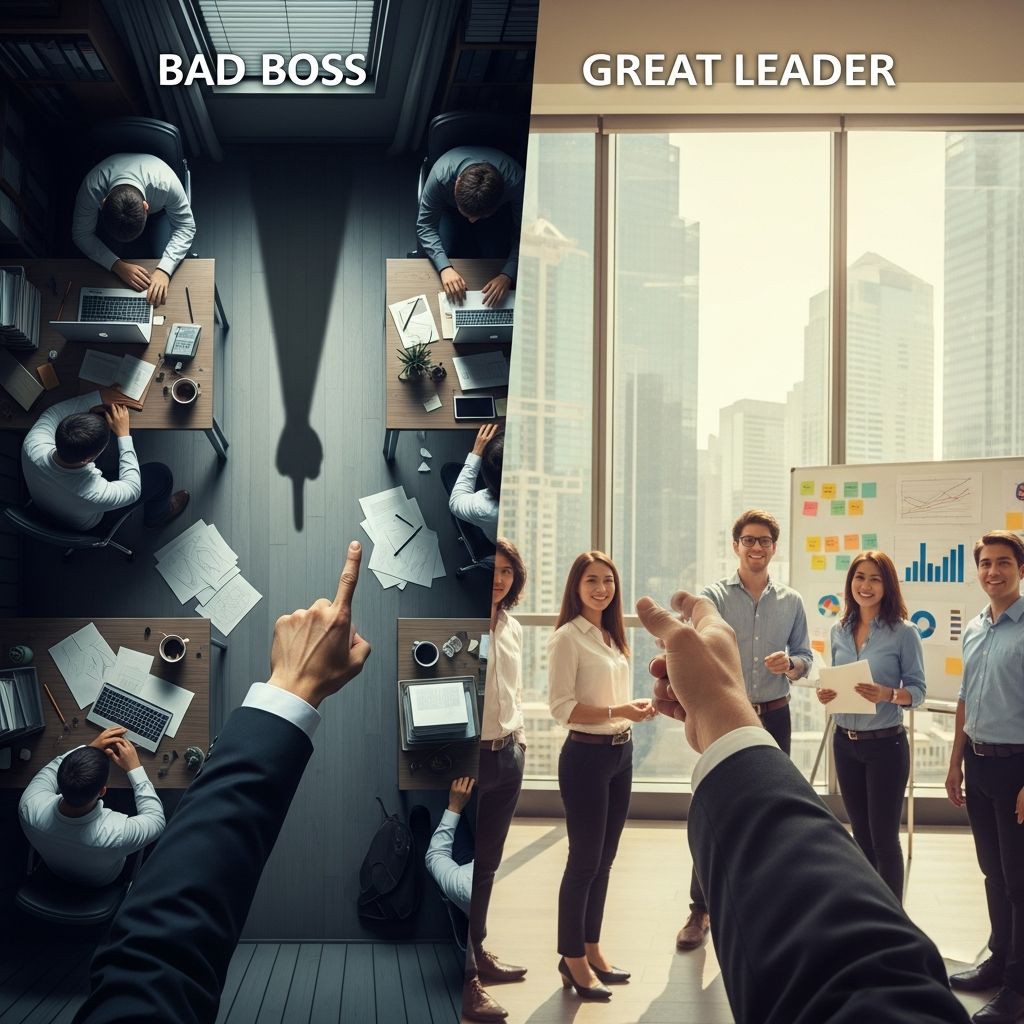
In today’s dynamic workplaces, the style of leadership profoundly shapes employee satisfaction, productivity, and organizational success. While a bad boss drains morale through micromanagement and inconsistency, a great leader ignites potential by fostering trust and growth. This article delves into these contrasts, drawing from established leadership principles to help you recognize, adapt, or aspire to better practices.
Understanding Leadership Impact on Teams
Effective leadership transcends mere supervision; it builds environments where individuals thrive. Research shows that leaders who embody organizational values enhance morale, engagement, and retention. In contrast, poor leadership leads to disengagement and high turnover. Leaders create visions and motivate teams through influence and support, positively impacting decisions and attitudes.
Bad bosses often prioritize short-term results over people, resulting in fear-driven cultures. Great leaders, however, invest in their teams’ development, recognizing that empowered employees drive innovation and performance.
Communication: Clarity vs Confusion
Great leaders excel in communication, conveying messages transparently to inspire trust and alignment. They listen actively, adapt to team preferences, and ensure everyone understands goals and visions. This open dialogue builds confidence and reduces misunderstandings.
Conversely, bad bosses communicate poorly, issuing vague directives or withholding information, which breeds confusion and resentment. Employees under such leaders feel undervalued, leading to errors and low productivity.
- Great Leader Action: Holds regular feedback sessions and celebrates achievements publicly.
- Bad Boss Trait: Criticizes privately without context, ignoring input.
Vision and Direction: Inspiration vs Micromanagement
A hallmark of great leadership is a clear vision that connects daily tasks to broader objectives. Leaders think strategically, planning for the future while understanding their organization’s landscape. They articulate directions that unite teams around common goals, fostering innovation.
Bad bosses lack this foresight, focusing on minutiae and micromanaging every detail. This stifles creativity and signals distrust, causing teams to disengage as they await constant approval.
| Aspect | Great Leader | Bad Boss |
|---|---|---|
| Vision Setting | Shares long-term goals, empowers execution | Focuses on immediate tasks, no big picture |
| Decision Making | Involves team, decisive when needed | Indecisive or overrides input arbitrarily |
Empathy and Influence: Support vs Indifference
Empathy allows great leaders to understand team concerns, defuse conflicts, and motivate through emotional intelligence. They influence positively, recognizing individual needs and boosting morale with positivity.
Bad bosses show indifference, dismissing personal challenges and failing to build rapport. This creates isolated workers who feel unsupported, eroding loyalty and collaboration.
Integrity and Accountability: Trust vs Hypocrisy
Integrity is foundational; 75% of employees rank it as the top leadership trait. Great leaders model ethical behavior, own mistakes, and maintain consistency, earning respect and fostering accountability cultures.
Bad bosses exhibit hypocrisy, making promises they don’t keep or shifting blame. This destroys trust, as teams witness unaccountable actions that contradict stated values.
- Own errors publicly to model responsibility.
- Explain decisions transparently to build credibility.
- Avoid power consolidation that harms fairness.
Delegation and Empowerment: Growth vs Control
Great leaders delegate effectively, trusting teams to handle tasks and providing guidance without micromanaging. They mentor, encourage risks, and align roles with strengths, promoting personal and professional growth.
Bad bosses hoard control, refusing to delegate and undermining confidence. This prevents skill development and leads to burnout as leaders become bottlenecks.
Decisiveness and Confidence: Action vs Hesitation
Confident leaders make informed, assertive decisions, even in uncertainty, while maintaining optimism. They assess risks critically and chart courses forward, helping teams navigate challenges.
Bad bosses waver, avoiding tough calls or reacting impulsively without thought. This instability creates anxiety, as teams lack reliable direction.
Recognition and Motivation: Appreciation vs Neglect
Outstanding leaders motivate by recognizing contributions, finding meaning in work, and celebrating successes. This inspires commitment and higher performance.
Bad bosses neglect praise, focusing only on shortcomings. Unrecognized efforts lead to demotivation and resentment.
Adaptability and Learning: Resilience vs Rigidity
Great leaders embrace learning from failures, innovating, and adapting styles to situations. They encourage collaboration and continuous improvement.
Bad bosses resist change, repeating mistakes and stifling new ideas, resulting in stagnant teams.
Building Workplace Culture: Positivity vs Toxicity
Effective leaders cultivate trust, openness, and positivity, reducing conflict and boosting morale through teamwork and respect.
Toxic bosses foster division, high stress, and low engagement, driving talent away.
How to Transition from Boss to Leader
Aspiring leaders can evolve by self-assessing strengths, seeking feedback, and practicing key traits daily. Commit to vision-setting, active listening, and empowerment. Regularly coach teams and align roles with talents for success.
Organizations benefit from leadership training emphasizing soft skills like interpersonal abilities and resilience.
Frequently Asked Questions (FAQs)
What is the main difference between a boss and a leader?
A boss manages tasks and enforces rules, while a leader inspires and empowers people toward shared goals.
How does poor leadership affect employee retention?
It lowers morale and engagement, increasing turnover as employees seek supportive environments.
Can a bad boss become a great leader?
Yes, through self-awareness, feedback, and commitment to traits like integrity and communication.
Why is empathy crucial for leaders?
It builds trust, resolves conflicts, and motivates teams by addressing individual needs.
How can leaders improve team accountability?
By modeling it, setting clear expectations, and recognizing efforts consistently.
Conclusion: Choose Leadership for Lasting Success
Embracing great leadership traits transforms workplaces into thriving ecosystems. By prioritizing people over control, leaders unlock potential and achieve sustainable results.
References
- Leadership in the workplace: How to be a good leader — Institute of Directors (IoD). 2023-10-12. https://www.iod.com/resources/business-advice/leadership-in-the-workplace/
- 3 Qualities of an Effective Leader in the Workplace — Snellings Walters. 2022-05-18. https://snellingswalters.com/3-qualities-of-an-effective-leader-in-the-workplace/
- 6 Characteristics of an Effective Leader — Harvard Business School Online. 2024-02-15. https://online.hbs.edu/blog/post/characteristics-of-an-effective-leader
- Effective Leadership: What Makes a Good Leader — Gallup. 2023-11-08. https://www.gallup.com/cliftonstrengths/en/356072/how-to-be-better-leader.aspx
- 15 Soft Skills You’ll Need to be a Dynamic Leader — Wilmington University. 2023-06-20. https://www.wilmington.edu/news/15-soft-skills-youll-need-to-be-a-dynamic-leader

- Integrated M.A. in Applied Linguistics, University of Hyderabad
- 5+ years in editorial, instructional, SEO, and research-based writing
Sneha is a relationships and lifestyle writer with a strong foundation in applied linguistics and certified training in relationship coaching. She brings over five years of writing experience to theskillvault, crafting thoughtful, research-driven content that empowers readers to build healthier relationships, boost emotional well-being, and embrace holistic living. Her writing and insights reflect the belief that beauty, happiness, and wellness…