
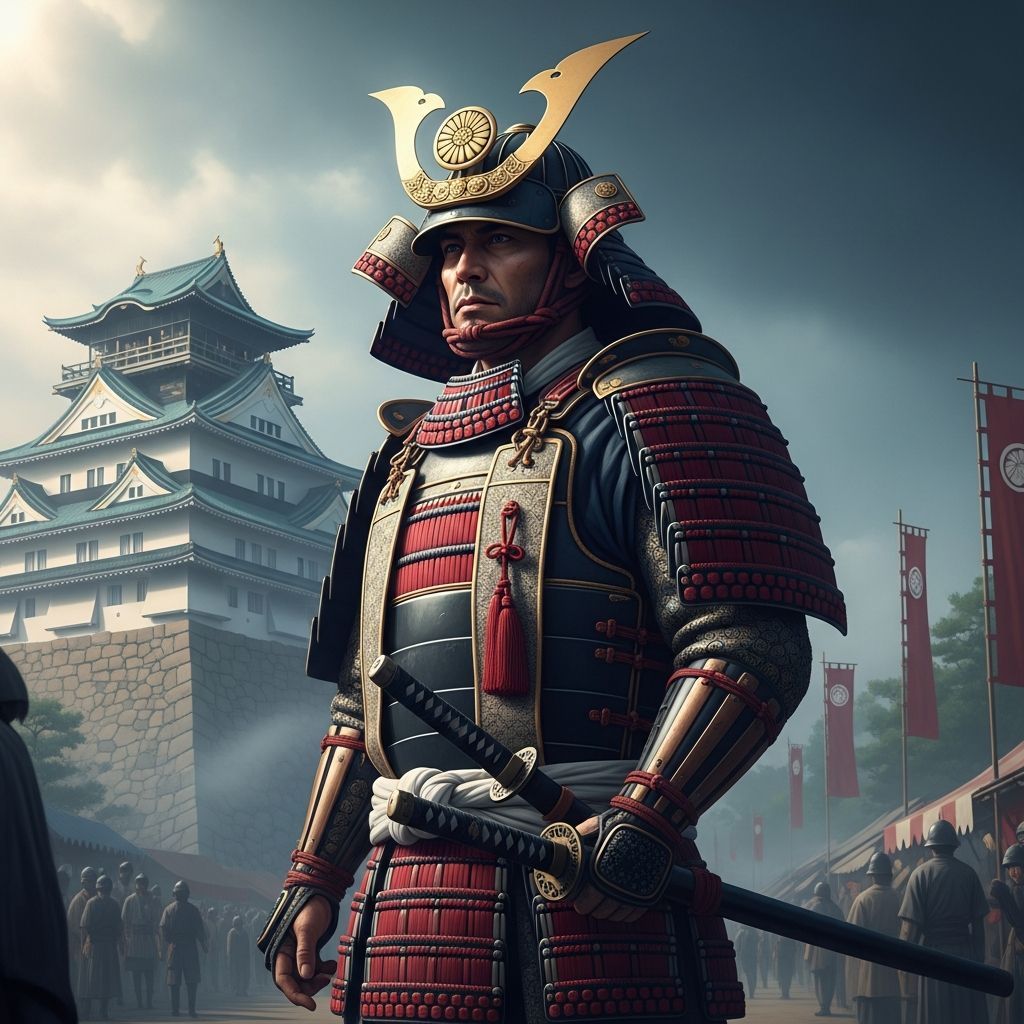
The bakufu, meaning ‘tent government,’ represented Japan’s military administrations led by shoguns from 1192 until 1868. This system shifted power from the emperor to warrior leaders, defining medieval and early modern Japan.
Origins of Military Rule in Japan
Japan’s transition to bakufu governance emerged from the late Heian period’s instability. Warrior clans gained prominence as imperial authority waned, culminating in the Genpei War (1180-1185) between Minamoto and Taira clans. Minamoto no Yoritomo’s victory established the first bakufu in Kamakura.
By 1192, Emperor Go-Toba appointed Yoritomo as Sei-i Taishogun, or ‘Barbarian-subduing Generalissimo,’ formalizing military control over eastern Japan. This marked the dawn of shogunal rule, with the emperor relegated to ceremonial duties in Kyoto.
The Kamakura Bakufu: Foundation of Shogunal Power (1192-1333)
The Kamakura bakufu, named after its coastal base, centralized warrior authority. Yoritomo created the Samurai Dokoro (Board of Retainers) for policing and the Mandokoro (Administrative Board) for finances, supported by the Hyojoshu (Council of State).
Key achievements included repelling Mongol invasions in 1274 and 1281, aided by typhoons dubbed kamikaze. However, internal rivalries, especially the Hojo clan’s regency after Minamoto decline, led to its fall in 1333 amid Emperor Go-Daigo’s rebellion.
- Administrative Innovations: Appointment of shugo (military governors) and jito (stewards) to manage provinces.
- Cultural Shifts: Promotion of Zen Buddhism and warrior ethos.
- Military Feats: Defense against foreign threats solidified legitimacy.
Muromachi Bakufu: A Time of Division and Culture (1336-1573)
Ashikaga Takauji, initially a Kamakura loyalist, overthrew the Hojo and established the Muromachi bakufu in Kyoto’s Muromachi district. This era blended court proximity with warrior rule but suffered from weakened central control.
The Nanbokucho period (1336-1392) saw rival Northern and Southern Courts, eroding shogunal authority. Ashikaga Yoshimitsu later stabilized rule, fostering trade with Ming China and Noh theater’s development.
| Aspect | Kamakura (1192-1333) | Muromachi (1336-1573) |
|---|---|---|
| Location | Kamakura (remote) | Muromachi, Kyoto (court-adjacent) |
| Key Leader | Minamoto no Yoritomo | Ashikaga Takauji/Yoshimitsu |
| Challenges | Mongol invasions | Civil wars, Nanbokucho split |
| Legacy | Admin structure | Arts, Zen culture |
The Tokugawa Bakufu: Stability and Isolation (1603-1868)
Tokugawa Ieyasu, victor at Sekigahara (1600), founded the Edo bakufu in 1603, ushering 250 years of peace. The bakuhan system divided governance: bakufu controlled core lands, daimyo ruled han domains under sankin-kotai (alternate attendance).
Rigorous policies included katanagari (sword hunts), Christianity bans, and sakoku (closed country) from 1633, limiting foreign contact to Nagasaki. Economic growth via rice taxation and merchant rise challenged rigid hierarchies.
- Social Structure: Shi-no-ko-sho (samurai, farmers, artisans, merchants).
- Economic Policies: Currency standardization, urban development in Edo.
- Decline Factors: Fiscal strain, Western pressures post-1853.
The bakufu’s longevity stemmed from Ieyasu’s institutional genius, balancing daimyo power while centralizing military might.
Governance Mechanisms Across Eras
Bakufu operated via dual structures: military enforcement and civil administration. Shoguns appointed vassals to oversee lands, collecting taxes in rice (koku). Justice systems evolved, with later Tokugawa codes emphasizing Confucian harmony.
Provincial control involved shugo for defense and jito for estates, later refined into daimyo oversight. This feudal network ensured loyalty amid decentralized rule.
Societal and Cultural Impacts
Bakufu eras transformed Japan: Kamakura introduced bushido; Muromachi patronized tea ceremony, ink painting; Tokugawa saw ukiyo-e, kabuki, and literacy surges via terakoya schools. Population grew from 15-30 million, urbanization boomed.
Women’s roles varied; samurai wives managed households, while merchant women enjoyed relative freedoms. Buddhism and Shinto adapted to warrior needs.
Decline and the Road to Meiji Restoration
Tokugawa decline accelerated with Commodore Perry’s 1853 arrival, forcing unequal treaties. Internal unrest, peasant revolts, and samurai discontent fueled sonno joi (‘revere emperor, expel barbarians’). The bakufu fell in 1868, restoring imperial rule.
Meiji leaders dismantled feudalism, adopting Western models for industrialization. Bakufu’s legacy endures in Japan’s disciplined governance traditions.
Frequently Asked Questions (FAQs)
What does ‘bakufu’ literally mean?
It translates to ‘tent government,’ referring to field headquarters of military commanders.
Who held real power during bakufu periods?
Shoguns wielded executive authority, while emperors were figureheads.
How many bakufu were there in Japan?
Three major ones: Kamakura, Muromachi (Ashikaga), and Tokugawa (Edo).
Why did the Tokugawa bakufu implement sakoku?
To prevent Christianity’s spread and maintain internal stability amid external threats.
What ended the bakufu system?
The Meiji Restoration in 1868, amid Western pressures and domestic reforms.
References
- Bakufu (Japanese History) – Overview — StudyGuides.com. Accessed 2026. https://studyguides.com/study-methods/overview/cmfwds1i40fo4016q0jis2nra
- Kamakura Period – The First Japanese Bakufu — Kanpai Japan. Accessed 2026. https://www.kanpai-japan.com/history-of-japan/middle-age-kamakura-period
- Bakufu: History of Japan Study Guide — Fiveable. Accessed 2026. https://fiveable.me/history-japan/key-terms/bakufu
- Bakufu — Japan Reference (jref.com). Accessed 2026. https://jref.com/articles/bakufu.87/
- Japan – Bakufu, Han, Reform — Encyclopædia Britannica. 2024-10-15. https://www.britannica.com/place/Japan/Political-reform-in-the-bakufu-and-the-han
- Tokugawa shogunate — Wikipedia (informational, primary refs used). Accessed 2026. https://en.wikipedia.org/wiki/Tokugawa_shogunate
- The Polity of the Tokugawa Era — Japan Society. Accessed 2026. https://japansociety.org/news/the-polity-of-the-tokugawa-era/

Medha Deb is an editor with a master's degree in Applied Linguistics from the University of Hyderabad. She believes that her qualification has helped her develop a deep understanding of language and its application in various contexts. Medha specializes in the areas of beauty, health, sports, and wellness and is committed to ensuring that the content on the website is…