
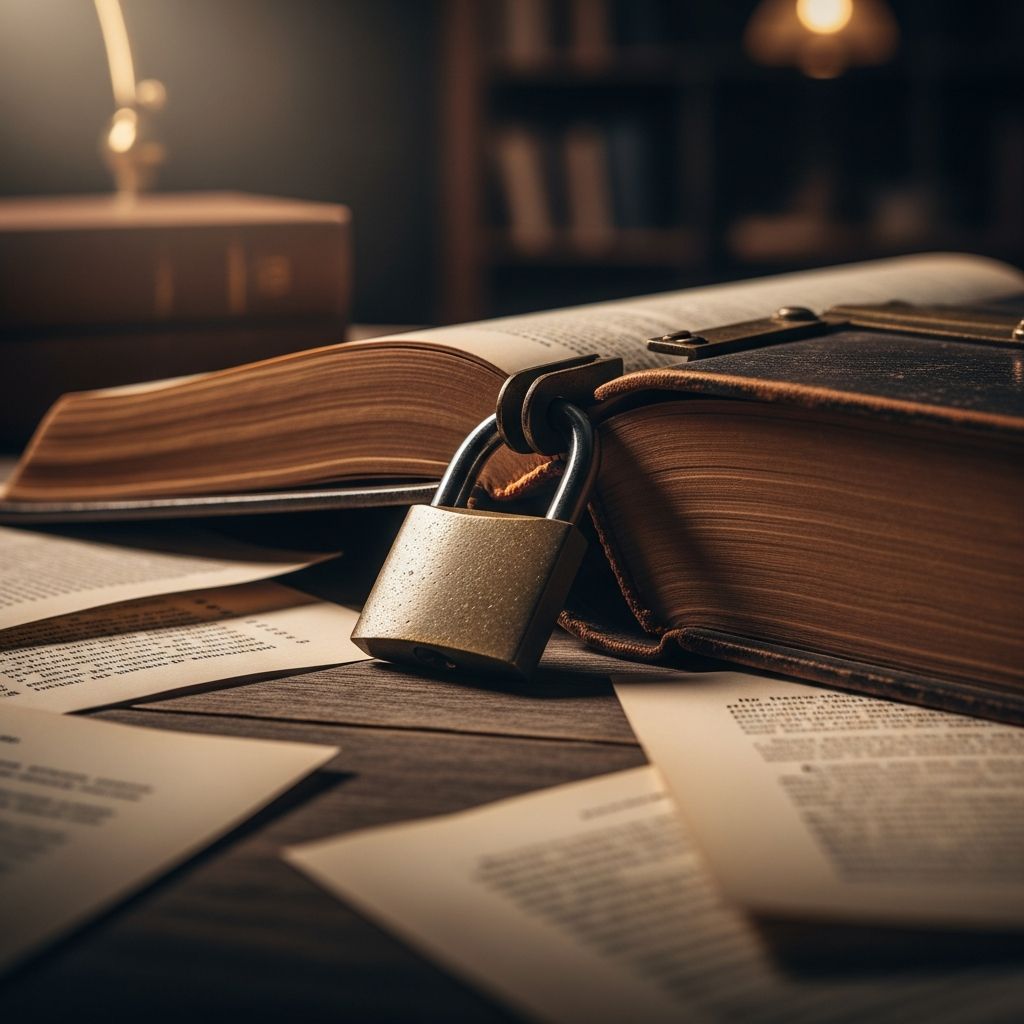
Banned books represent a critical intersection of literature, culture, and power dynamics. These are works removed from circulation, typically in educational or public settings, due to objections over their content. From classic novels to contemporary young adult fiction, bans highlight ongoing debates about what society deems appropriate for readers. This article examines the definitions, historical context, modern statistics, common reasons for challenges, notable examples, and the broader implications for intellectual freedom.
Defining Banned and Challenged Books
A banned book is one that has been completely prohibited from access in specific locations, such as schools, libraries, or countries, often by official decisions from authorities. In contrast, a challenged book faces formal complaints or requests for removal but may remain available pending review. According to the American Library Association (ALA), challenges involve attempts to restrict or remove materials based on content objections.
Distinctions matter: not all challenges lead to bans. In U.S. schools, for instance, books might be pulled from shelves temporarily or permanently. Globally, governments impose outright bans on titles threatening political narratives. PEN America tracks school bans, documenting thousands of instances where titles are restricted.
Historical Roots of Book Censorship
Book banning predates modern printing presses, rooted in religious and political control. During the Inquisition, texts contradicting Catholic doctrine were burned. In the 20th century, authoritarian regimes like Nazi Germany destroyed works by Jewish authors and political dissidents.
In the U.S., early challenges targeted Mark Twain’s Adventures of Huckleberry Finn for racial slurs, despite its anti-racism message. Judy Blume’s coming-of-age stories faced scrutiny for discussing puberty and sexuality. Classics like George Orwell’s 1984 have been repeatedly contested for political themes.
- Key Historical Bans: J.D. Salinger’s The Catcher in the Rye for profanity; Harper Lee’s To Kill a Mockingbird for racial content.
- Religious objections often cite “witchcraft” in J.K. Rowling’s Harry Potter series.
- Political censorship abroad, like China’s ban on Mao: The Unknown Story for critiquing leadership.
Recent Trends: Explosive Growth in School Bans
Book challenges have surged in recent years, particularly in U.S. public schools. The ALA reported 821 attempts to censor materials in 2024, targeting 2,452 unique titles—a decrease from 2023’s 4,240 but still far above pre-2020 levels. PEN America recorded nearly 23,000 bans since 2021, with 6,870 instances in the 2024-2025 school year affecting about 4,000 titles.
Florida led with 2,304 bans, followed by Texas. Targets disproportionately include books on race, LGBTQ+ themes, and sexual content, often mobilized by conservative groups.
| Rank | Title | Author | Ban Instances | Common Objections |
|---|---|---|---|---|
| 1 | A Clockwork Orange | Anthony Burgess | 23 | Violence, sexual content |
| 2 | (Data incomplete; see PEN for full list) | – | – | – |
| 3 | A Court of Mist and Fury | Sarah J. Maas | 18 | Sexuality, fantasy romance |
| 4 | – | – | – | – |
| 5 | – | – | – | – |
Sarah J. Maas titles dominate, reflecting BookTok popularity clashing with content concerns.
Why Books Get Targeted: Common Objections
Objections cluster around sensitive topics. In schools, parents and activists cite:
- LGBTQ+ Representation: Titles like All Boys Aren’t Blue by George M. Johnson challenged for explicit queer content.
- Racial Themes: The Hate U Give by Angie Thomas or The Bluest Eye by Toni Morrison for depicting racism.
- Sexuality and Profanity: Judy Blume’s Are You There God? It’s Me, Margaret for puberty discussions.
- Violence/Politics: Dystopians like The Handmaid’s Tale by Margaret Atwood.
Globally, bans protect regimes: Iran’s prohibition of Salman Rushdie’s The Satanic Verses for blasphemy.
Global Perspectives on Book Bans
Beyond the U.S., censorship varies. China bans investigative works like Will the Boat Sink the Water? on peasant unrest. In Iran, critical biographies of religious figures are suppressed. Banned Books Week, held October 5-11, 2025, promotes global awareness.
ALA and PEN emphasize data collection to counter underreporting, as many challenges go undocumented.
Impact on Readers and Society
Bans limit access to diverse viewpoints, potentially harming marginalized youth who see themselves in targeted books. Studies link reading such works to empathy and critical thinking. Restrictions echo historical suppressions, threatening free expression.
Libraries defend access via policies like ALA’s Library Bill of Rights, prioritizing intellectual freedom.
Fighting Back: Advocacy and Events
Organizations like PEN America and ALA track bans and litigate challenges. Banned Books Week encourages reading prohibited titles. Events feature author panels and read-alouds.
- Support local libraries reporting challenges.
- Participate in readathons during awareness weeks.
- Advocate for transparent review processes.
Frequently Asked Questions (FAQs)
What is the most banned book ever?
1984 by George Orwell tops many lists for its political critique and sexual content.
Are book bans legal in the U.S.?
Public schools can remove books if processes are viewpoint-neutral, but courts strike down targeted censorship.
How can I find banned books?
Check ALA or PEN lists; many libraries highlight them during Banned Books Week.
Why do fantasy books like Sarah J. Maas get banned?
They often include romance and mature themes deemed inappropriate for youth.
Preserving Literary Freedom
The fight against book bans underscores literature’s power to challenge norms. By understanding these dynamics, readers can champion access to all ideas, ensuring future generations benefit from unfiltered stories. Ongoing vigilance through data, advocacy, and education is essential.
References
- Banned Books List 2025 — PEN America. 2025. https://pen.org/banned-books-list-2025/
- Banned Books Week 2025, October 5-11 — University of Michigan Library. 2025. https://www.lib.umich.edu/about-us/news/banned-books-week-2025-october-5-11
- Banned Books – Curriculum Materials Collection — Loyola Marymount University Library. Accessed 2025. https://libguides.lmu.edu/CMC/BannedBooks
- List of books banned by governments — Wikipedia (informational). Ongoing. https://en.wikipedia.org/wiki/List_of_books_banned_by_governments
- Book Ban Data — American Library Association. 2025. https://www.ala.org/bbooks/book-ban-data
- Banned & Challenged Books — American Library Association. 2025. https://www.ala.org/bbooks
- PEN America’s Index of School Book Bans — U.S. House of Representatives Document. 2022-04-07. https://docs.house.gov/meetings/GO/GO02/20220407/114616/HHRG-117-GO02-20220407-SD018.pdf
- Banned Books Week — Banned Books Week Coalition. 2025. https://bannedbooksweek.org

Medha Deb is an editor with a master's degree in Applied Linguistics from the University of Hyderabad. She believes that her qualification has helped her develop a deep understanding of language and its application in various contexts. Medha specializes in the areas of beauty, health, sports, and wellness and is committed to ensuring that the content on the website is…