
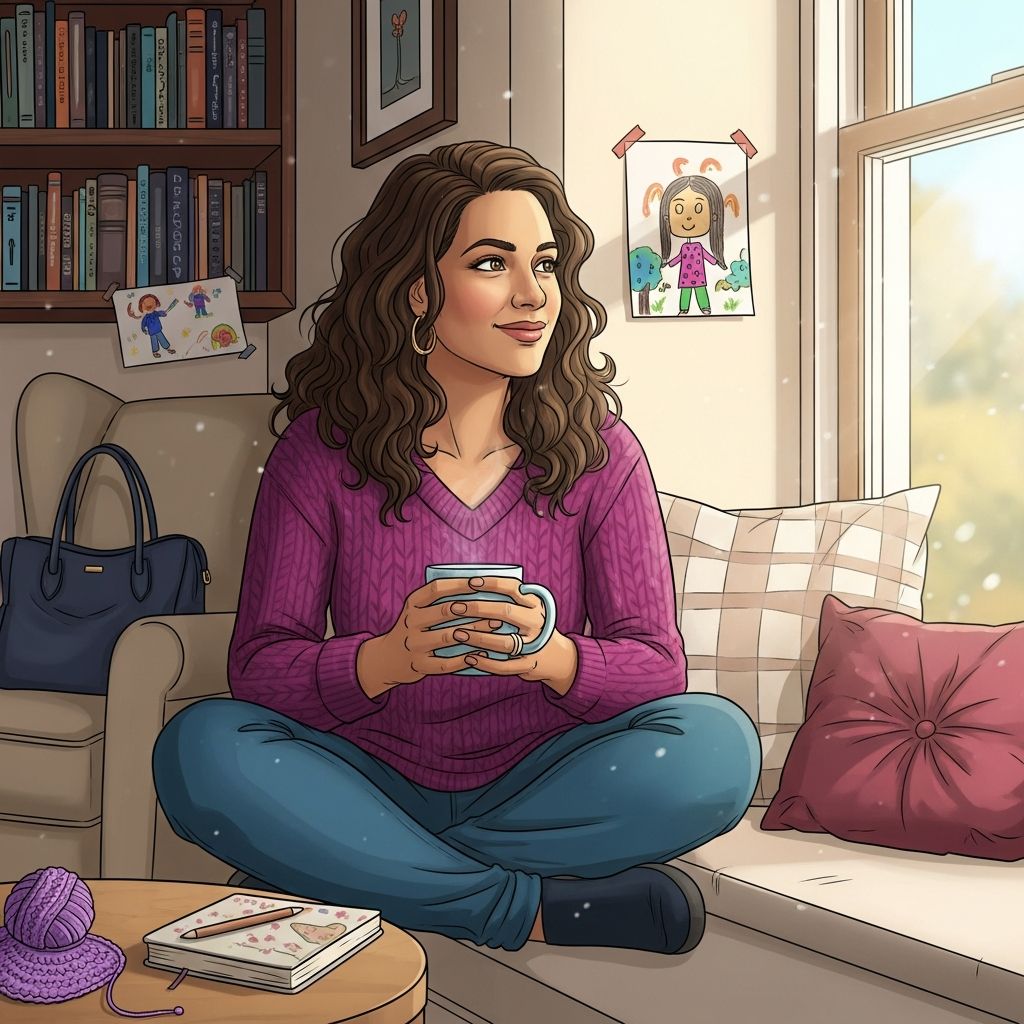
Choosing to step away from a traditional career to care for children full-time is one of the most personal and complex decisions a person can make. For many women, it involves not only financial tradeoffs but also profound questions about identity, ambition, and what a meaningful life looks like. This article explores how becoming a stay-at-home mom reshapes your sense of self, your relationships, and your long-term goals—and how you can navigate this transition with clarity and self-respect.
Why the Decision Feels So Big
Modern parents are raising children in a context where dual-earner households are now the norm, and where women have historically fought hard to gain access to education and paid work. According to the Pew Research Center, about two-thirds of U.S. mothers with children under 18 are in the labor force, compared with roughly half in the 1970s. At the same time, caregiving remains heavily gendered: women still perform more unpaid household and childcare labor than men across most countries.
Choosing stay-at-home motherhood, then, does not occur in a vacuum. It is shaped by:
- Economic realities such as childcare costs, wages, and job security.
- Cultural expectations about what a “good mother” and a “successful woman” should look like.
- Personal values around presence, family life, independence, and achievement.
Because this decision touches each of these layers, it can feel like much more than a simple career choice—it can feel like choosing between competing versions of who you are.
The Identity Shift: From Professional to Primary Caregiver
Many women grow up learning to measure success in academic performance, career progress, and financial independence. Leaving a job, a title, or an office can feel like leaving behind the symbols that once confirmed your value to the outside world.
Common emotional experiences during this shift include:
- Loss of professional identity: Missing the clarity of a defined role, performance reviews, and external recognition.
- Invisible labor: Realizing that the work of caregiving rarely comes with feedback, promotions, or paychecks.
- Social disconnection: Feeling out of sync with former colleagues or friends who remain in the workforce.
- Ambivalence: Experiencing love and gratitude for time with children alongside boredom, frustration, or restlessness.
None of these feelings negate your love for your children. They simply reflect that you are a multifaceted person whose needs extend beyond any single role.
Unpaid Work Is Still Work
Economists and sociologists have long emphasized that unpaid household labor has significant economic value, even when it is not reflected in GDP or salaries. Cooking, cleaning, scheduling, emotional support, and childcare are all forms of labor that keep households—and societies—functioning.
Yet, because this work is traditionally done by women and performed in private, it is often undervalued or treated as a personal “choice” rather than a structural necessity. Understanding this context can help stay-at-home mothers:
- Recognize that their contribution has economic and social value.
- Push back on narratives that equate income with worth.
- Frame their responsibilities accurately when discussing them with partners, family, or future employers.
| Aspect | Paid Employment | Stay-at-Home Caregiving |
|---|---|---|
| Compensation | Salary, benefits, bonuses | No direct pay; value realized through reduced childcare and household costs |
| Recognition | Titles, performance reviews, promotions | Often informal; appreciation from family, limited external validation |
| Schedule | Defined working hours (in theory) | Long, often unpredictable hours; nights and weekends included |
| Skill Development | Technical, industry-specific, leadership skills | Time management, conflict resolution, emotional regulation, logistics |
| Social Status | Widely recognized as productive | Socially contested; sometimes idealized, sometimes dismissed |
How Gender Norms Shape the Experience
Research in gender and labor consistently shows that even when both partners work outside the home, women tend to carry a larger share of childcare and housework—the “second shift.” For stay-at-home mothers, this dynamic may intensify: other family members can unconsciously assume that because you are “home,” every domestic task is automatically yours.
Social norms also influence how people talk about your decision:
- Working mothers may be asked how they “manage it all,” as if paid work is an optional extra.
- Stay-at-home mothers may be praised as “selfless” or criticized as “wasting their education,” sometimes in the same conversation.
- Fathers who reduce paid work to care for children may be treated as unusual or heroic, highlighting that full-time caregiving is still gendered.
Being aware of these patterns does not solve them, but it can help you recognize that many of the pressures you feel are not purely personal—they are cultural.
Money, Security, and Long-Term Planning
Beyond day-to-day emotions, becoming a stay-at-home parent carries long-term financial implications. Time out of the workforce can affect future earnings, retirement savings, and professional networks. That does not mean the choice is wrong, but it does mean it should be made with eyes open and with a plan.
Key financial questions to consider with your partner or trusted advisor include:
- How will we cover current expenses, savings, and debt payments on one income?
- How will we protect ourselves against unexpected events like job loss, illness, or separation?
- What is our plan for retirement savings while one partner is out of the labor force?
- Do we want to treat unpaid caregiving as a shared investment, for example through life insurance, spousal retirement contributions, or written agreements?
Data from the Institute for Women’s Policy Research suggests that women can lose hundreds of thousands of dollars in lifetime earnings due to career interruptions for caregiving. Discussing these realities openly is an act of respect for both the caregiver and the wage earner.
Protecting Your Sense of Self
One of the biggest risks of full-time caregiving is that your sense of self can gradually shrink to the boundaries of your home. To counter that, it helps to actively cultivate an identity that is broader than any single role.
Supportive practices include:
- Maintaining intellectual stimulation through reading, classes, or creative projects.
- Protecting personal time, even in small pockets, for exercise, hobbies, or rest.
- Building adult relationships with friends, mentors, or parent groups where you can be seen as a whole person.
- Continuing professional engagement in small ways—such as following industry news, attending occasional events, or taking low-pressure courses.
Psychology research suggests that having multiple sources of identity (for example, parent, friend, volunteer, learner) can buffer against stress when one area of life feels difficult. Investing in yourself is therefore not selfish; it is protective.
Negotiating Roles at Home
Many couples drift into arrangements where the stay-at-home parent silently takes on nearly all domestic work. Over time, this can fuel resentment and burnout. Clear communication and shared expectations are crucial.
Helpful topics to discuss with your partner include:
- Which tasks are tied to being home (for example, daytime childcare) and which should remain shared (for example, bedtime, weekends, long-term planning).
- What a “typical” weekday and weekend should look like for each of you.
- How you will both get downtime and rest, not just the wage earner.
- How you can each support the other’s goals—career, creative, or educational.
Many couples find it helpful to put agreements in writing or to revisit them regularly as children grow and needs change.
Keeping a Bridge to Future Work
Some stay-at-home mothers are confident they will return to paid work at a specific time; others are unsure. Either way, it is wise to preserve options. Research on career interruptions indicates that maintaining even a light connection to your field can ease reentry and reduce wage penalties.
Low-pressure ways to keep a professional bridge include:
- Volunteering in roles that use your skills (for example, budgeting, communications, project management).
- Taking occasional freelance or consulting projects when feasible.
- Joining professional associations or online communities in your industry.
- Updating a simple record of what you do—courses, projects, relevant parenting-related skills—to make future resumes easier.
These activities are not obligations but tools you can use if and when you want them.
Handling Judgment and Mixed Reactions
Whether you leave a job or stay in one, someone will likely question your choice. Comments may come from relatives, coworkers, or even strangers. Preparing a few grounded responses can help you protect your boundaries without inviting a debate.
Possible approaches:
- Values-based: “We’ve made decisions that reflect what our family needs right now.”
- Time-based: “This is the right choice for this season. We’ll reassess as things change.”
- Boundary-setting: “I appreciate your concern, but we’re comfortable with our plan.”
Remember that you are not required to justify your life to anyone. Being at peace with your own reasoning matters far more than convincing critics.
When Staying Home Doesn’t Feel Like You Expected
Even when you make a thoughtful decision, reality can be surprising. Some mothers find more joy in full-time caregiving than they imagined; others feel more trapped than they anticipated. Both reactions are valid. Signs that you might need extra support include:
- Persistent sadness, numbness, or anxiety that lasts for weeks.
- Loss of interest in activities you once enjoyed.
- Feeling hopeless about the future or intensely guilty no matter what you do.
Perinatal and maternal mental health organizations emphasize that mood and anxiety disorders around pregnancy and early parenthood are common and treatable with therapy, medication, or both. Seeking help is a sign of responsibility, not failure.
Designing a Life That Honors All of You
Ultimately, the question is not whether staying home is “right” or “wrong” but whether your life reflects your deepest values and constraints as honestly as possible. For some women, that means full-time caregiving for many years. For others, it means returning to paid work as soon as possible, or experimenting with part-time, remote, or flexible arrangements.
Over a lifetime, family and career are less like a single yes-or-no choice and more like a series of adjustments. As children age, financial circumstances change, and your own desires evolve, you are allowed to revise the balance. What matters is that you treat your needs as worthy of consideration alongside everyone else’s.
Frequently Asked Questions (FAQs)
Is it a mistake to leave a good career to be a stay-at-home mom?
There is no universal answer. Research shows that career breaks can reduce long-term earnings, but those numbers cannot measure personal fulfillment, mental health, or the value of time with children. The key is to understand the tradeoffs, make a financially informed plan, and give yourself permission to adjust in the future.
How can I explain my time as a stay-at-home parent on a resume later?
You can frame this period as family management or caregiving and highlight relevant skills: scheduling, budgeting, conflict resolution, event planning, or volunteer roles. Many employers increasingly recognize that caregiving develops transferable competencies such as adaptability and emotional intelligence.
What if my partner assumes I should do everything at home because I don’t earn a paycheck?
This is a common tension. Clarifying the difference between “being at home” and “being solely responsible” can help. You might share concrete examples of your daily workload and discuss how both of you can have rest, personal time, and long-term growth, regardless of who earns income.
How do I deal with feeling guilty no matter what I choose?
Guilt often reflects internalized cultural expectations rather than actual harm to your children. Studies suggest that what matters most for child well-being is not whether a parent works for pay but the quality of relationships, stability, and support at home. Talking with a therapist or trusted friend can help separate your values from external pressure.
Can I be a feminist and still choose to be a stay-at-home mom?
Yes. Feminist perspectives emphasize the right to self-determination, economic fairness, and shared responsibility for care—not a single mandated lifestyle. Many advocates argue that truly valuing caregiving work, ensuring social protections for caregivers, and expanding options for men and women alike are central feminist goals.
References
- Moms and Dads in the U.S. Labor Force — Pew Research Center. 2019-09-24. https://www.pewresearch.org/short-reads/2019/09/24/moms-and-dads-in-the-u-s-labor-force/
- Unpaid care work: From recognition to transformation — UN Women. 2019-06-27. https://www.unwomen.org/en/digital-library/publications/2019/06/discussion-paper-unpaid-care-work
- Child Development and Parental Employment — OECD Family Database. 2016-12-15. https://www.oecd.org/els/family/LMF_2_4_Child-Development-and-Employment.pdf
- Paying Today and Tomorrow: Charting the Financial Costs of Family Caregiving — Institute for Women’s Policy Research. 2018-11-29. https://iwpr.org/iwpr-issues/employment-and-earnings/paying-today-and-tomorrow-charting-the-financial-costs-of-family-caregiving/
- Multiple Identities and Psychological Well-Being — Thoits, P.A., American Sociological Review. 1983-06-01. https://www.jstor.org/stable/2095103
- Perinatal Mental Health — World Health Organization. 2022-06-17. https://www.who.int/teams/mental-health-and-substance-use/maternal-mental-health

- Integrated M.A. in Applied Linguistics, University of Hyderabad
- 5+ years in editorial, instructional, SEO, and research-based writing
Sneha is a relationships and lifestyle writer with a strong foundation in applied linguistics and certified training in relationship coaching. She brings over five years of writing experience to theskillvault, crafting thoughtful, research-driven content that empowers readers to build healthier relationships, boost emotional well-being, and embrace holistic living. Her writing and insights reflect the belief that beauty, happiness, and wellness…