
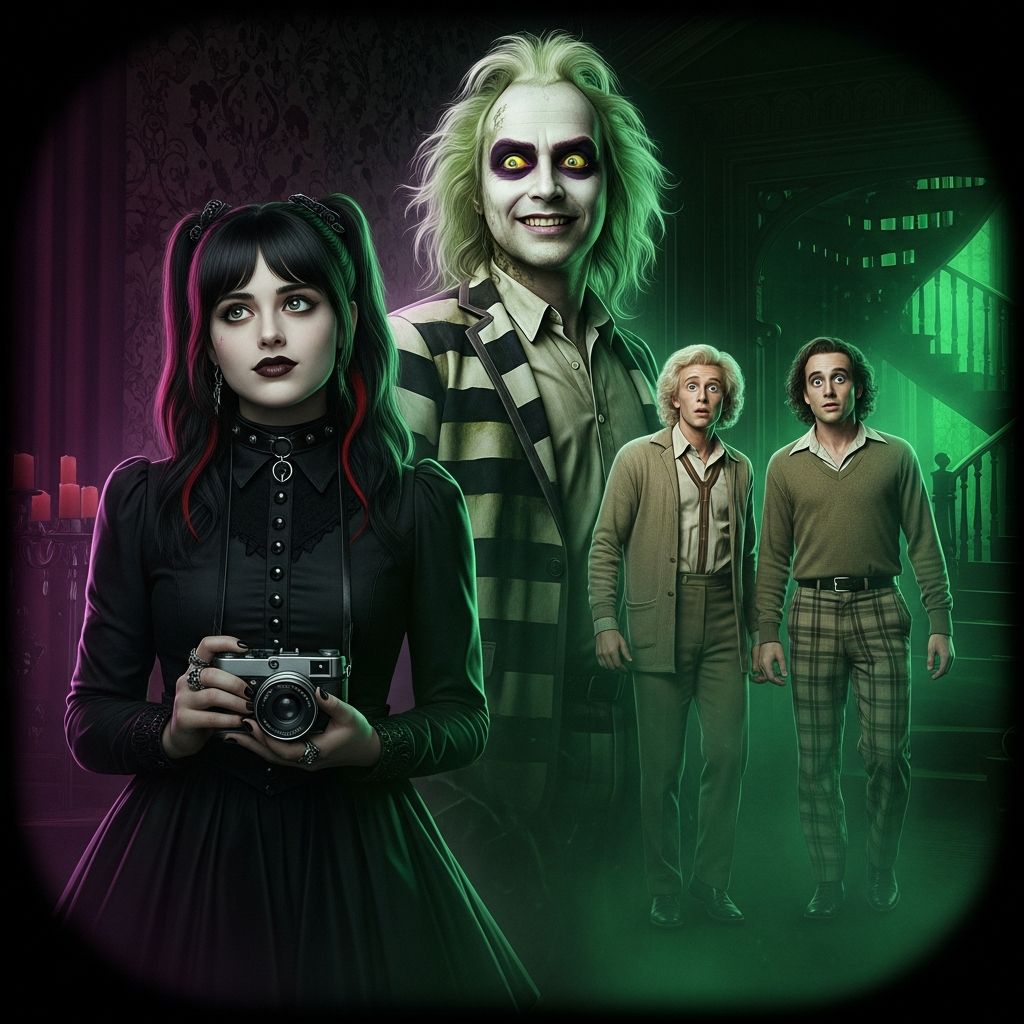
Understanding Character Depths Through Psychological Frameworks
Tim Burton’s 1988 masterpiece Beetlejuice transcends typical comedy by presenting characters with surprisingly nuanced personalities that resonate across decades. Rather than functioning as simple archetypes, each character embodies distinct psychological traits that drive their motivations and relationships. The film’s enduring popularity stems partly from how authentically these personalities are portrayed, making supernatural events feel grounded within believable human (and posthuman) dynamics. By examining the film through the lens of personality psychology, viewers gain deeper appreciation for why certain character interactions feel so compelling and why the film continues to influence contemporary culture.
The Maitlands: Earnest Conformists in Transition
Adam and Barbara Maitland represent a particular personality archetype: conscientious, stability-seeking individuals whose worldview centers on tradition and proper conduct. These newly deceased homeowners embody the characteristics of personalities that value order, responsibility, and doing things by the book. Their initial approach to haunting—following the handbook rules meticulously—demonstrates their fundamental reliance on established systems and guidance. Rather than embracing their newfound supernatural status as an opportunity for chaos, they attempt to navigate death the same way they navigated life: through careful planning and adherence to protocol.
The Maitlands’ journey becomes one of psychological growth. Forced to abandon their rigid adherence to rules, they gradually discover capacities for improvisation and spontaneity previously dormant within their personalities. Their initial discomfort with Beetlejuice’s crude behavior masks a growing recognition that flexibility and unconventional thinking sometimes prove more effective than regulation-bound approaches. This transformation illustrates how circumstances can expand personality expression, pushing individuals beyond their comfort zones toward more adaptive behaviors.
The Deetzes: Ambitious Individualists and Status Seekers
Charles, Delia, and Demetrius Deetz represent personalities driven by ambition, external validation, and the pursuit of elevated social status. Charles’s entrepreneurial schemes and vision for transforming the town into an amusement park reveal a personality type motivated by grand ambitions and material success. He embodies characteristics associated with individuals who view problems as opportunities for personal advancement and profit, reflecting the era’s yuppie culture with its emphasis on acquisition and status.
Delia Deetz, meanwhile, demonstrates creative individuality expressed through unconventional artistic pursuits. Her eccentric sculptures and theatrical sensibilities reveal a personality oriented toward self-expression and aesthetic exploration. Unlike Charles’s goal-oriented pragmatism, Delia’s personality gravitates toward subjective creative experience, even when that creativity produces jarring, discordant results. Her character challenges viewers to reconsider what constitutes legitimate self-expression and individuality, suggesting that personality authenticity matters more than conventional aesthetic judgment.
Lydia: The Sensitive Seeker of Meaning
Lydia Deetz stands as the film’s psychological and moral center, embodying personality characteristics associated with depth-seeking, authenticity-conscious individuals who resist superficial conformity. Her embrace of gothic aesthetics and fascination with death represent not morbid pathology but rather psychological sophistication—a refusal to accept empty materialism as life’s ultimate purpose. Her personality type gravitates toward questioning mainstream values and seeking authentic meaning, making her the character most capable of recognizing genuine connection despite its supernatural origins.
Lydia’s relationship with Beetlejuice demonstrates how personalities with different orientations toward authenticity can still form meaningful bonds. Despite his chaotic nature, Beetlejuice represents authenticity and liberation from pretense—qualities Lydia’s personality deeply values. Her character arc reveals how individuals with introspective, meaning-seeking personalities often find conventional society stifling, leading them toward unconventional connections and experiences that provide genuine fulfillment.
Beetlejuice: The Chaotic Iconoclast
Beetlejuice himself embodies personality traits associated with spontaneity, rule-breaking, and complete indifference to social conventions. His personality gravitates entirely toward present-moment experience, immediate gratification, and subversive enjoyment of chaos. He represents the antithesis of the Maitlands’ conscientiousness—displaying impulsivity, disregard for established procedures, and shameless self-interest. Yet this very recklessness becomes oddly appealing; his complete authenticity and refusal to perform for social approval create a magnetic presence.
Michael Keaton’s portrayal reveals the psychological complexity lurking beneath Beetlejuice’s crude exterior. His desperation for escape and freedom, expressed through bombastic behavior, suggests an underlying personality motivated by autonomy and liberation from constraint. Understanding Beetlejuice through personality psychology transforms him from simple comic relief into a character driven by comprehensible (if morally questionable) psychological needs, making his eventual partial redemption feel earned rather than arbitrary.
Personality Dynamics: How Characters Create Conflict and Resolution
The film’s central conflicts emerge directly from personality incompatibilities and misalignments. The Maitlands’ conscientious, rule-following nature clashes fundamentally with Beetlejuice’s anarchic spontaneity. The Deetzes’ ambitious materialism conflicts with both the Maitlands’ traditionalism and Lydia’s meaning-seeking individualism. These personality tensions feel authentic because they represent genuine psychological incompatibilities rather than shallow plot devices.
The narrative resolution requires character growth from multiple personality types simultaneously. The Maitlands must embrace flexibility; the Deetzes must recognize limits to their ambitions; Lydia must acknowledge that authentic connection transcends conventional categories; and even Beetlejuice must demonstrate capacity for something beyond pure self-interest. The film’s genius lies in suggesting that personality differences need not produce permanent division—that understanding and compromise between different temperamental types creates richer outcomes than any single personality type could achieve independently.
The Bureaucratic Afterlife: Personality Types in System Design
The film’s most innovative psychological element involves its depiction of the afterlife bureaucracy itself. This system represents institutionalized rigidity taken to cosmic extremes, staffed by personalities fundamentally incapable of genuine helpfulness or adaptive thinking. The afterlife workers embody conscientiousness divorced from genuine care—rule-following without purpose, procedure without compassion. Their personalities are essentially hollow, defined entirely by their administrative roles rather than authentic individual characteristics.
This bureaucratic setting becomes a personality incubator that either crushes individuality or forces creative adaptation. The Maitlands must develop flexibility within this system; Beetlejuice must exploit it; Lydia must navigate it despite her fundamental alienation from its values. The afterlife bureaucracy thus functions as a psychological pressure cooker that reveals and transforms each character’s essential personality traits.
Cultural Legacy Through Personality Recognition
Beetlejuice’s unprecedented cultural impact stems partly from its nuanced character psychology. Audiences recognize themselves and people they know within these personalities—the conscientious Maitlands, the ambitious Deetzes, the authentic Lydia, the anarchic Beetlejuice. This psychological realism creates identification across demographics and generations, explaining why the film transcends typical comedy lifespan to achieve genuine classic status.
The film’s various adaptations—Broadway musical, animated series, merchandise—perpetually reintroduce audiences to these psychologically complex characters, reinforcing their psychological resonance across different media and eras. The 2024 sequel’s success similarly demonstrates that audiences continue finding meaning in these personality archetypes, recognizing their continued relevance to contemporary experience.
Frequently Asked Questions
Q: What personality type does Lydia Deetz represent?
A: Lydia embodies personalities oriented toward authenticity, introspection, and meaning-seeking. She rejects superficial materialism in favor of genuine emotional and intellectual connection, making her drawn to the supernatural and the unconventional.
Q: Why do the Maitlands struggle initially as ghosts?
A: Their conscientious, rule-following personalities expect bureaucratic systems to function logically and helpfully. When the afterlife bureaucracy proves dysfunctional, they must adapt their personality approaches by embracing improvisation and unconventional thinking.
Q: How does Beetlejuice’s personality create conflict?
A: Beetlejuice’s complete indifference to rules and social conventions directly opposes the Maitlands’ conscientiousness and the Deetzes’ status-consciousness, creating personality friction that drives the film’s central conflicts.
Q: What does Charles Deetz’s personality reveal about the film’s themes?
A: Charles’s ambitious entrepreneurship represents personalities driven by material success and status accumulation. His character arc suggests limitations to purely acquisitive personality orientations, critiquing 1980s materialism through his character’s evolution.
Q: How do different personality types achieve resolution in the film?
A: The film suggests that understanding personality differences and compromising across temperamental types creates superior outcomes. Characters must develop beyond their initial personality expressions to achieve meaningful connection and resolution.
References
- The Influence of Beetlejuice in Pop Culture — Collater.al. 2024. https://www.collater.al/en/beetlejuice-pop-culture-art/
- Tiny Houses: Beetlejuice, Modernity, and the Decline of “Good Taste” — Fashion X Film. 2024. https://fashionxfilm.com/tiny-houses-beetlejuice-modernity-and-the-decline-of-good-taste/
- How Beetlejuice Conquered Its Strangeness to Become a Cult Classic — The Independent. 2024. https://www.the-independent.com/arts-entertainment/films/features/beetlejuice-movie-michael-keaton-cast-b2608737.html
- 35 Years of Showtime: How Beetlejuice Possessed Our Hearts — Sideshow. 2023. https://www.sideshow.com/blog/35th-anniversary-beetlejuice-movie-musical

Medha Deb is an editor with a master's degree in Applied Linguistics from the University of Hyderabad. She believes that her qualification has helped her develop a deep understanding of language and its application in various contexts. Medha specializes in the areas of beauty, health, sports, and wellness and is committed to ensuring that the content on the website is…