
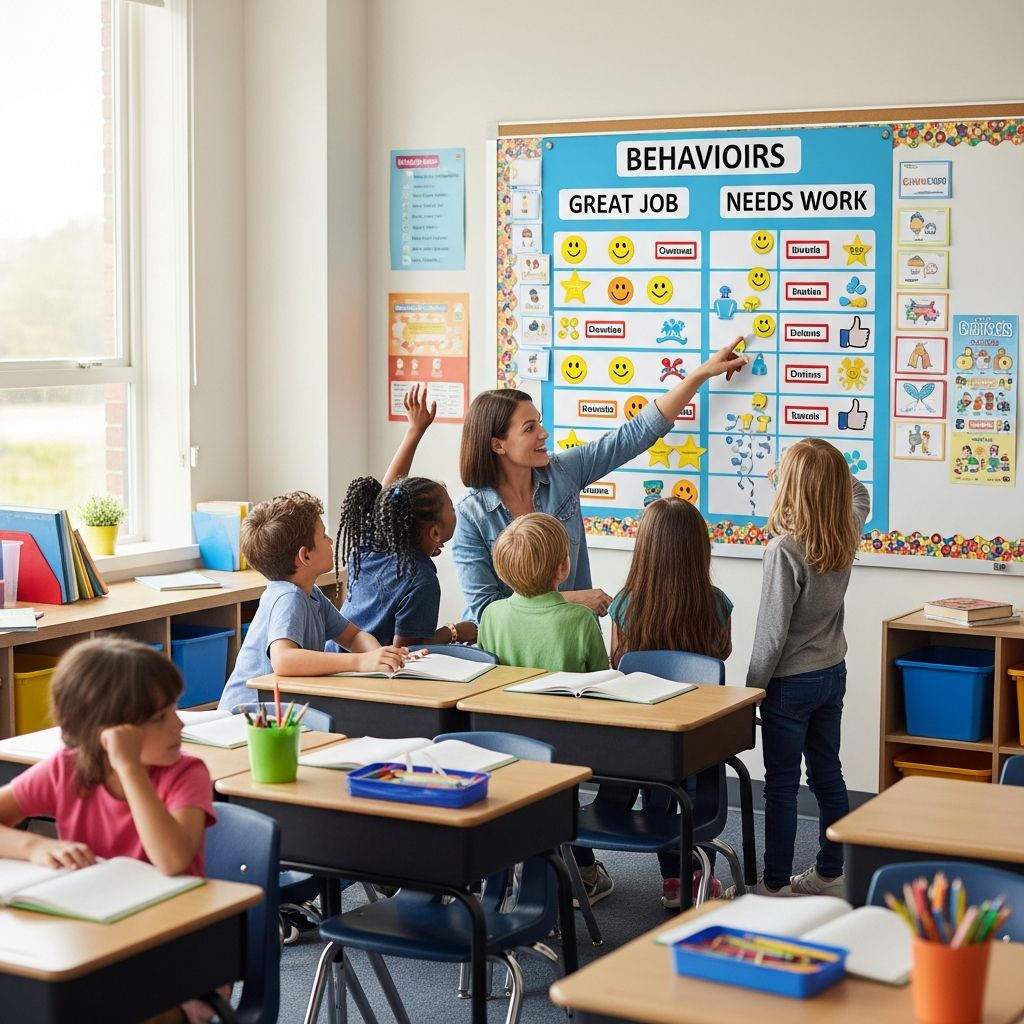
Behavior charts serve as powerful visual tools in educational settings, helping teachers promote positive actions, build routines, and create a supportive learning environment. These systems encourage students to take ownership of their conduct through clear goals and immediate feedback, leading to improved focus and cooperation.
Understanding the Role of Behavior Charts in Modern Classrooms
At their core, behavior charts provide a structured way to track progress toward specific objectives, whether for an entire group or individual learners. By displaying daily achievements visibly, they tap into students’ natural desire for recognition and growth. Research from educational psychology highlights how such visual aids enhance self-regulation skills, particularly in young children developing executive function. Teachers often customize these charts to align with class themes or seasonal events, making them engaging and relevant.
Unlike punitive measures, effective charts emphasize positive reinforcement, shifting focus from missteps to successes. This approach aligns with principles from positive behavior interventions and supports (PBIS), a framework used in many schools to foster a proactive culture. When implemented thoughtfully, charts reduce disruptions and increase time on task, benefiting both educators and pupils.
Key Benefits of Implementing Behavior Tracking Systems
- Boosts Motivation: Visual progress builds excitement as students see themselves advancing toward rewards.
- Promotes Consistency: Daily tracking reinforces routines, helping children internalize good habits over time.
- Encourages Accountability: Students learn to reflect on choices, developing emotional intelligence.
- Simplifies Management: Teachers spend less time addressing issues, freeing energy for instruction.
- Fosters Community: Whole-class versions unite groups around shared goals, enhancing peer support.
Studies indicate that consistent use of these tools can lead to a 20-30% reduction in off-task behaviors within weeks, especially when paired with specific, achievable targets.
Designing Whole-Class Motivation Boards
Whole-class boards unite students in collective efforts, turning individual actions into group triumphs. Start by selecting a central theme, such as building a character or filling a progress bar, to captivate attention. Define one clear goal per chart, like ‘listening actively’ or ‘helping others,’ using simple icons for accessibility.
For setup, use pocket charts or magnetic boards for easy updates. Add body parts, stars, or puzzle pieces incrementally as the class meets milestones. For instance, after ten instances of on-task transitions, reveal a new section. This gamified element keeps energy high and teaches teamwork.
Customize increments based on class size—smaller groups might need fewer markers. Rotate goals weekly to maintain freshness, and involve students in choosing rewards, such as extra recess or a class party. This ownership increases buy-in and effectiveness.
Individual Progress Trackers for Personalized Support
While group charts build unity, individual trackers address unique needs, ideal for students requiring extra guidance. These portable systems, like clipboards or desk tents, allow discreet monitoring without public shaming. Each child starts at a neutral point and moves markers up for positive choices or maintains position for steady performance.
Key to success: Set 3-5 specific, observable behaviors, such as ‘raise hand to speak’ or ‘complete work quietly.’ Use colors or emojis for quick visual cues—green for great, yellow for thinking, etc. Provide small, immediate rewards at intervals, like stickers or break time privileges.
Low-prep versions can be printed on cardstock with Velcro pieces, reusable across students. Track data privately to inform parent conferences or interventions, ensuring privacy and positivity.
Creative Themes to Engage Every Learner
Infuse fun with age-appropriate designs: rockets launching to space for elementary, treasure maps for adventurers, or superhero capes assembling piece by piece. Seasonal twists, like pumpkin patches in fall or snowmen in winter, tie into curriculum for deeper relevance.
For older students, abstract concepts like ‘energy bars’ or ‘skill trees’ mimic video games, appealing to digital natives. Digital options via apps offer real-time updates, though printable versions remain popular for their tactile appeal.
| Theme | Age Group | Key Elements | Reward Idea |
|---|---|---|---|
| Monster Builder | Kindergarten-2nd | Add limbs for good choices | Class dance party |
| Rocket Launch | 3rd-5th | Fuel stages | Extra tech time |
| Habit Tree | 6th+ | Growing branches | Group outing vote |
Best Practices for Lasting Results
Success hinges on consistency and positivity. Praise publicly when advancing, but address setbacks privately. Avoid moving backward to prevent discouragement; instead, reset daily for fresh starts. Pair charts with teachable moments, explaining why behaviors matter.
Monitor efficacy weekly: If a chart stalls, tweak goals or rewards. Involve parents by sharing photos or progress reports, extending reinforcement home. For diverse needs, offer choices in trackers to build autonomy.
Common Mistakes and How to Avoid Them
Publicly highlighting poor performance breeds anxiety, countering goals. Opt for private check-ins. Overly complex charts overwhelm; keep them simple with 1-2 goals max. Inconsistent use erodes trust—commit to daily updates.
Neglecting rewards disappoints; ensure they’re meaningful and delivered promptly. Finally, ignoring data means missing patterns; log trends to refine strategies.
Customizing for Different Age Groups and Needs
Preschoolers thrive on picture-heavy, playful boards emphasizing basics like sharing. Elementary students handle multi-goal systems with team elements. Tweens prefer subtle, self-managed trackers to avoid embarrassment.
For special needs, simplify visuals and add sensory rewards. Multilingual classes benefit from icons over text. Always pilot new charts briefly to gauge fit.
Integrating Technology and Printables
Free printables abound online, offering instant customization. Apps like ClassDojo digitize tracking with parent portals. Hybrid approaches—print for display, digital for data—maximize impact.
Frequently Asked Questions (FAQs)
What makes a behavior chart effective?
A good chart is visual, positive, goal-specific, consistent, and paired with meaningful rewards that match student interests.
How often should I change goals?
Weekly or bi-weekly to keep engagement high, based on class progress and seasonal ties.
Can these work for older students?
Yes, with mature themes like progress ladders or point systems disguised as gamified challenges.
What if a student never advances?
Break goals into micro-steps, offer one-on-one support, and celebrate small wins to build momentum.
Are digital charts better than paper?
Neither is superior; choose based on class needs—paper for hands-on, digital for data and remote access.
Advanced Strategies: Combining Charts with Other Tools
Layer charts with calm corners for self-regulation or morning meetings for goal-setting. Token economies extend rewards, exchanging points for privileges. Long-term, transition to self-assessment for independence.
Inclusive practices ensure equity: Adapt for IEPs, cultural relevance, and varying abilities. Professional development on PBIS amplifies results.
Behavior charts evolve with classrooms, blending tradition and innovation for enduring impact. By prioritizing positivity and personalization, educators cultivate not just compliance, but thriving learners.
References
- Positive Behavior Reward Chart Idea for Kindergarten — Teaching Exceptional Kinders by Amy Murray. 2021-12. https://teachingexceptionalkinders.com/2021/12/positive-behavior-reward-chart-idea-for-kindergarten.html
- Behavior Charts: A Teacher’s Guide To Regulating Behavior Correctly — Big City Readers. Accessed 2026. https://www.bigcityreaders.com/blog/behavior-charts
- Whole Class Reward Positive Behavior Chart Idea — YouTube (Teaching Exceptional Kinders). 2021. https://www.youtube.com/watch?v=yIqY_3j-q1c
- How to Set up Low-prep Individual Behavior Charts that Work — YouTube. Accessed 2026. https://www.youtube.com/watch?v=MHdcD_bLrtA
- Free Printable Behavior Charts for Kids — FreePrintableBehaviorCharts.com. Accessed 2026. https://www.freeprintablebehaviorcharts.com

Medha Deb is an editor with a master's degree in Applied Linguistics from the University of Hyderabad. She believes that her qualification has helped her develop a deep understanding of language and its application in various contexts. Medha specializes in the areas of beauty, health, sports, and wellness and is committed to ensuring that the content on the website is…