
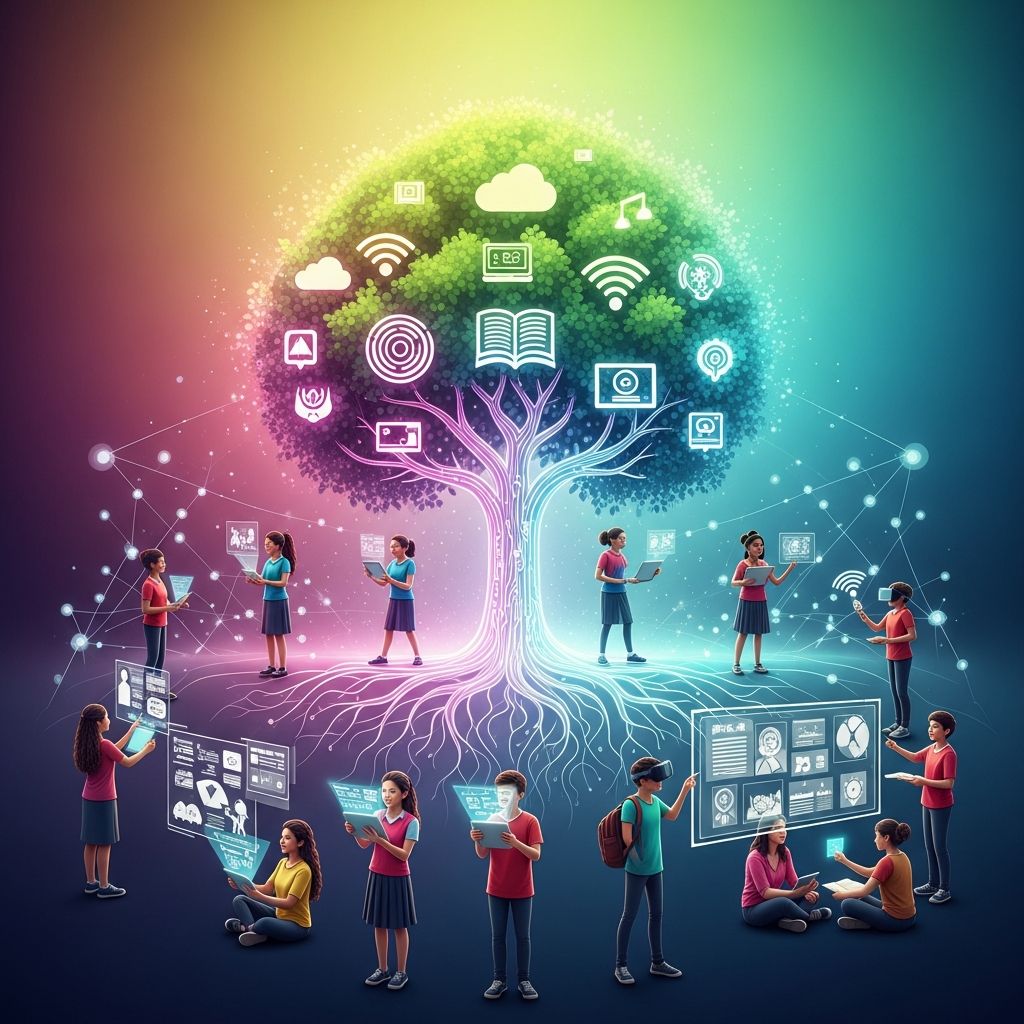
Information and Communication Technology (ICT) has emerged as a cornerstone of contemporary education, reshaping how knowledge is delivered, absorbed, and applied. By integrating digital tools like interactive software, online platforms, and multimedia resources, educators can create dynamic learning environments that cater to diverse needs. This shift not only amplifies student engagement but also equips learners with essential 21st-century skills, making education more inclusive and efficient.
Empowering Personalized Learning Pathways
One of the most significant advantages of ICT lies in its ability to tailor education to individual student profiles. Traditional classrooms often follow a one-size-fits-all approach, but digital platforms allow for adaptive learning experiences. Students can progress at their own pace, revisiting challenging concepts or accelerating through familiar material, which fosters deeper understanding and retention.
For instance, educational apps and AI-driven systems analyze performance data in real-time, recommending customized resources. This personalization is particularly beneficial for students with varying learning styles or those requiring additional support, ensuring no one is left behind. Research highlights that such tailored approaches significantly improve outcomes by addressing individual strengths and weaknesses proactively.
- Adaptive pacing: Learners advance based on mastery, not rigid timelines.
- Custom content delivery: Multimedia options like videos and simulations suit visual, auditory, or kinesthetic preferences.
- Progress tracking: Instant feedback loops help students self-regulate their learning.
Boosting Student Engagement Through Interactivity
ICT transforms passive lectures into immersive, interactive sessions. Gamified learning platforms, where students earn badges or compete in virtual challenges, make abstract concepts tangible and enjoyable. Interactive e-books with embedded quizzes and animations keep learners actively involved, turning education into an adventure rather than a chore.
Studies show that technology-enhanced environments lead to higher participation rates, with students reporting greater motivation and confidence. Tools like collaborative whiteboards and real-time polling enable immediate responses, encouraging even shy learners to contribute. This heightened engagement not only improves knowledge acquisition but also cultivates critical thinking and problem-solving abilities.
| Traditional Method | ICT-Enhanced Method | Impact on Engagement |
|---|---|---|
| Lecture-based delivery | Interactive simulations and quizzes | 40-50% increase in participation |
| Static textbooks | Gamified apps with rewards | Higher retention and enjoyment |
| Individual note-taking | Collaborative digital tools | Enhanced peer interaction |
Enhancing Accessibility and Inclusivity
ICT breaks down geographical and physical barriers, making quality education reachable for remote or underserved communities. Online platforms deliver lessons via video conferencing, ensuring continuity even during disruptions like pandemics. For students with disabilities, assistive technologies such as text-to-speech software or adaptive interfaces provide equitable access.
This inclusivity extends to global exposure, where learners connect with international peers through virtual exchanges, broadening cultural horizons. Digital resources eliminate the need for expensive physical materials, democratizing education and promoting lifelong learning opportunities beyond classroom walls.
Streamlining Administrative and Collaborative Processes
Beyond the classroom, ICT optimizes school management by automating routine tasks like attendance tracking, grading, and scheduling. Digital platforms enable seamless communication among teachers, parents, and administrators, fostering transparency and quick issue resolution. Real-time data analytics help identify trends, allowing for data-driven decisions that enhance overall efficiency.
For educators, professional development becomes accessible through online courses and webinars, keeping them abreast of innovative pedagogies. This continuous upskilling ensures teaching methods evolve with technological advancements, maximizing instructional quality.
Developing Essential Digital Competencies
In an increasingly digital world, ICT integration instills vital skills like digital literacy, data analysis, and online collaboration. Students learn to navigate vast information landscapes critically, discerning credible sources amid digital noise. Project-based activities using coding tools or data visualization software prepare them for future careers, bridging the gap between education and employment.
Moreover, ICT encourages creativity by enabling multimedia content creation—podcasts, videos, or interactive presentations—allowing students to express ideas innovatively. These competencies extend to ethical digital citizenship, teaching responsible technology use.
Promoting Global Connectivity and Collaboration
ICT facilitates borderless learning communities, where students collaborate on projects with peers worldwide. Virtual reality field trips simulate global explorations, while language exchange apps build intercultural competence. This exposure nurtures empathy, teamwork, and a global mindset essential for tomorrow’s leaders.
Teachers benefit similarly, sharing best practices via professional networks, which accelerates innovation diffusion across institutions.
Cost-Effectiveness and Sustainability in Education
While initial investments are required, ICT yields long-term savings by reducing reliance on printed materials and physical infrastructure. Cloud-based storage minimizes paper use, supporting environmental sustainability. Scalable digital solutions make education affordable, especially in resource-limited settings.
Challenges and Strategies for Effective ICT Implementation
Despite its benefits, ICT adoption faces hurdles like infrastructure gaps, teacher training needs, and digital divides. Successful integration requires robust policies, ongoing professional development, and equitable access initiatives. Schools that prioritize these elements reap substantial rewards in learning outcomes and operational efficiency.
Frequently Asked Questions (FAQs)
What is ICT in the context of education?
ICT refers to technologies like computers, internet, software, and multimedia used to support teaching, learning, and administration in schools.
How does ICT improve student engagement?
Through interactive tools, gamification, and multimedia, ICT makes lessons dynamic, encouraging active participation and motivation.
Can ICT help students with special needs?
Yes, assistive technologies like screen readers and adaptive software ensure inclusive learning for diverse abilities.
What are the cost benefits of using ICT?
It reduces expenses on physical resources, automates admin tasks, and provides scalable access to vast educational content.
How can teachers prepare for ICT integration?
Via professional development programs, online courses, and hands-on practice with edtech tools.
References
- Teaching and Learning with Technology: Effectiveness of ICT — ERIC. 2016-01-01. https://files.eric.ed.gov/fulltext/EJ1105224.pdf
- Benefits of Information and Communication Technology (ICT) in the Successful Management of Schools — RSI International. 2023-01-01. https://rsisinternational.org/journals/ijriss/articles/benefits-of-information-and-communication-technology-ict-in-the-successful-management-of-schools-in-the-world-increasing-the-efficiency-and-quality-of-education/
- Technology in the Classroom: Benefits and the Impact on Education — Grand Canyon University. 2023-01-01. https://www.gcu.edu/blog/teaching-school-administration/how-using-technology-teaching-affects-classrooms
- Top 5 Benefits of Technology in the Classroom — Walden University. 2023-01-01. https://www.waldenu.edu/programs/education/resource/top-five-benefits-of-technology-in-the-classroom
- Benefits of ICT in Education — IDOSR Journals. 2020-02-01. https://www.idosr.org/wp-content/uploads/2020/02/IDOSR-JAM-51-51-57-2020.-1.pdf

Medha Deb is an editor with a master's degree in Applied Linguistics from the University of Hyderabad. She believes that her qualification has helped her develop a deep understanding of language and its application in various contexts. Medha specializes in the areas of beauty, health, sports, and wellness and is committed to ensuring that the content on the website is…