
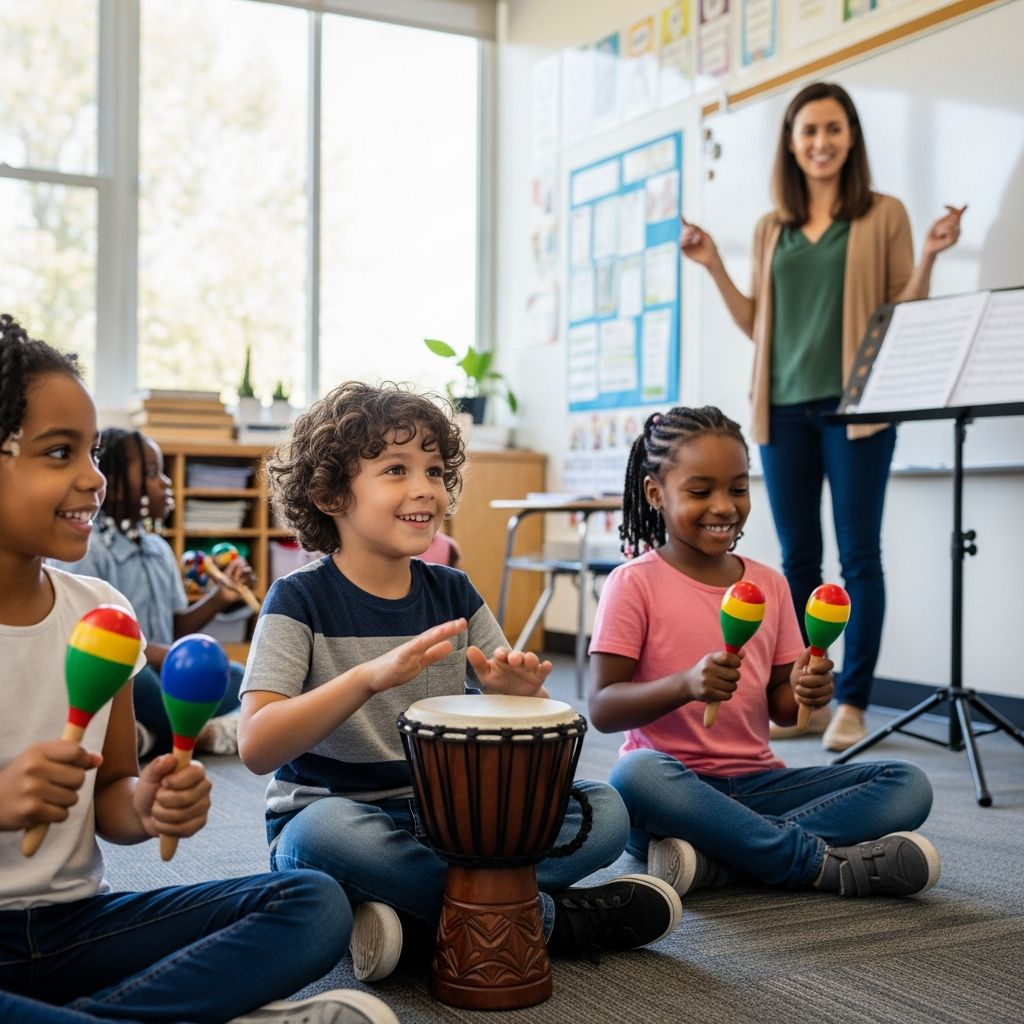
Music serves as a powerful catalyst for academic success and personal development in educational settings. By weaving musical elements into daily routines, educators can elevate student engagement, sharpen cognitive abilities, and nurture emotional resilience.
Cognitive Advantages of Musical Exposure
Exposure to music during learning activities significantly strengthens memory retention and focus. Research demonstrates that musical rhythms activate the hippocampus, the brain region responsible for long-term memory formation, enabling students to recall information more effectively even years later[10].
Furthermore, moderate-tempo music enhances concentration during independent work sessions, creating an optimal environment for deep thinking without overwhelming the senses. Students listening to structured melodies show improved problem-solving skills and quicker information processing, as music stimulates neural pathways linked to executive functions.
Memory and Recall Boost
- Rhythmic patterns make abstract concepts memorable, turning lessons into catchy sequences.
- Background music during study reinforces neural connections for better retention.
- Even instrumental tracks without lyrics aid in encoding complex data.
Studies confirm that children engaged in musical activities outperform peers in standardized tests, particularly in mathematics and reading comprehension.
Emotional and Psychological Well-Being
Music acts as a natural mood enhancer by triggering endorphin release, which calms anxiety and elevates overall disposition. In high-stress school environments, soothing tracks reduce cortisol levels, preparing students for challenging tasks like exams.
Emotional development flourishes as music helps learners identify and articulate feelings. Divergent thinking surges with upbeat tunes, sparking creativity essential for innovative problem-solving. For adolescents, early musical training correlates with heightened hopefulness and positive youth development metrics, including confidence and competence.
| Emotional Benefit | Mechanism | Impact on Students |
|---|---|---|
| Stress Reduction | Endorphin release | Improved focus pre-tests |
| Mood Improvement | Rhythmic entrainment | Enhanced daily engagement |
| Emotional Expression | Lyric and melody association | Better self-regulation |
Social Skills and Collaborative Growth
Group musical activities cultivate teamwork and empathy. Ensemble playing requires synchronization, teaching patience, listening, and mutual support—skills transferable to group projects.
Music fosters a sense of belonging, countering isolation especially post-pandemic. Shared performances build community, boosting self-esteem and interpersonal bonds. Research from the National Association for Music Education highlights how these experiences enhance discipline and confidence.
Practical Group Activities
- Choral singing for unified voice projection.
- Rhythm circles using simple percussion.
- Collaborative song composition tied to curriculum themes.
Language, Literacy, and Academic Integration
Songs and rhymes accelerate vocabulary acquisition and phonological awareness. Repetitive lyrics introduce new terms naturally, strengthening letter recognition and reading fluency.
Across subjects, music reinforces concepts: historical events via ballads, scientific processes through mnemonic chants, or math patterns in beats. This multisensory approach benefits diverse learners, including those with ADHD, by engaging whole-body movement.
Longitudinal studies link instrumental training to superior SAT scores and IQ gains, underscoring music’s role in holistic academic elevation.
Strategies for Seamless Music Incorporation
Teachers can embed music without dedicated classes. Start transitions with thematic tunes to signal shifts smoothly. Use playlists for calm zones during reading or brainstorming.
- Select Appropriate Genres: Match tempo to activity—slow for reflection, upbeat for energizing.
- Multisensory Pairing: Combine gestures with songs like body percussion for kinesthetic reinforcement.
- Student-Led Choices: Incorporate preferences to personalize and increase buy-in.
- Curriculum Alignment: Adapt folk songs for geography or anthems for civics.
For younger grades, nursery rhymes build foundational literacy; older students benefit from analytical listening to dissect lyrical structures.
Addressing Diverse Learner Needs
Music’s versatility supports inclusivity. For neurodiverse students, it provides structure amid chaos, improving focus and reducing sensory overload. Calming classical pieces mitigate distractions in open-plan rooms.
Evidence from USC research shows early music exposure (before age 8) yields lasting developmental advantages, particularly in emotional stability and creativity. Programs prioritizing music report fewer behavioral issues and higher attendance.
Evidence from Classroom Implementation
Educators report transformative shifts: increased participation, fewer disruptions, and sustained motivation. One study placed struggling students in pre-lesson music sessions, resulting in measurable academic upticks across subjects.
NAfME advocates music listening for well-being, noting its role in emotional regulation and social integration regardless of genre. Consistent integration yields compounding benefits, priming brains for high-level cognition via deep breathing and relaxation embedded in activities.
Frequently Asked Questions
Does music help students with ADHD?
Yes, music enhances focus for ADHD students by providing rhythmic structure and multisensory engagement, leading to better task completion.
What types of music are best for studying?
Instrumental tracks at moderate tempos (60-80 BPM) optimize concentration without lyrical distractions.
Can music improve test scores?
Absolutely; studies link music education to higher SAT performance and cognitive gains.
How much music is needed daily?
Even 10-15 minutes yields benefits; consistency trumps duration.
Is formal training required?
No, informal activities like singing or listening provide equal or greater cognitive boosts.
Overcoming Common Implementation Barriers
Time constraints? Integrate via short bursts. Noise concerns? Opt for headphones or low-volume ambient play. Budget issues? Free online resources and student-generated content suffice. Start small to build momentum and observe results firsthand.
Music transcends barriers, offering universal access to growth. Its integration promises not just better learners, but more empathetic, resilient individuals ready for life’s symphony.
References
- The Benefits of Music in the Classroom — CCEI Online. 2023. https://www.cceionline.com/the-benefits-of-music-in-the-classroom/
- Rhythm and Reasoning: Music in the Classroom — TeachHUB. 2024-08. https://www.teachhub.com/teaching-strategies/2024/08/rhythm-and-reasoning-music-in-the-classroom/
- The Incredible Benefits Of Incorporating Music In Your Classroom — Everway. 2023. https://www.everway.com/blog/the-incredible-benefits-of-incorporating-music-in-yourclassroom/
- Why Music Should Be in Every Classroom — ASCD. 2023. https://www.ascd.org/el/articles/why-music-should-be-in-every-classroom
- The Benefits of Music in the Classroom — ProSolutions Training. 2023. https://prosolutionstraining.com/resources/articles/the-benefits-of-music-in-the-classroom.cfm
- Music Listening for Student Well-Being — NAfME. 2023. https://nafme.org/blog/music-listening-for-student-well-being/
- Surprising Benefits of Learning Music — Cambridge-Isanti Schools. 2023. https://cionline.c-ischools.org/about/communication/story/~board/news/post/benefits-learning-music

- Integrated M.A. in Applied Linguistics, University of Hyderabad
- 5+ years in editorial, instructional, SEO, and research-based writing
Sneha is a relationships and lifestyle writer with a strong foundation in applied linguistics and certified training in relationship coaching. She brings over five years of writing experience to theskillvault, crafting thoughtful, research-driven content that empowers readers to build healthier relationships, boost emotional well-being, and embrace holistic living. Her writing and insights reflect the belief that beauty, happiness, and wellness…