
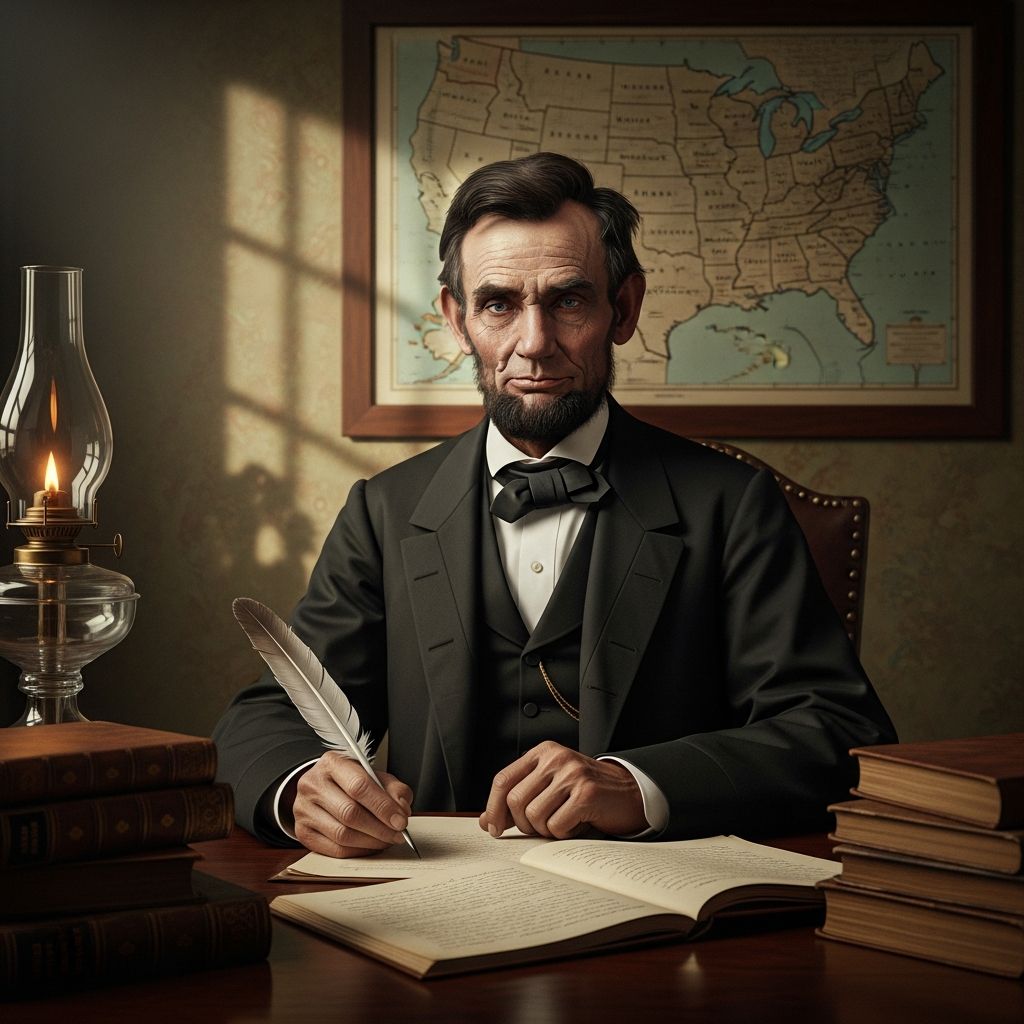
Abraham Lincoln, the 16th President of the United States, left an indelible mark on history through his leadership during the Civil War and his commitment to preserving the Union. Beyond his political achievements, Lincoln’s words resonate across generations, encapsulating profound truths about human nature, governance, and personal growth. This article examines key quotations from Lincoln, organized by central themes, providing context, analysis, and modern relevance to showcase why these sayings remain vital today.
Building Character and Personal Growth
Lincoln often emphasized the importance of self-reliance and inner strength. His insights encourage individuals to cultivate their own potential rather than depending on external factors.
- “You cannot build character and courage by taking away people’s initiative and independence.” This quote underscores Lincoln’s belief that true personal development stems from freedom to act and learn from experiences. In an era of growing reliance on technology and systems, it serves as a reminder to foster autonomy in education and daily life.
- “I will prepare and some day my chance will come.” Reflecting his own rise from humble beginnings, Lincoln highlights proactive preparation. His path from log cabin to presidency exemplifies how consistent effort positions one for opportunity.
- “You have to do your own growing no matter how tall your grandfather was.” This witty remark rejects inherited privilege as a substitute for personal effort, promoting meritocracy—a core American ideal Lincoln championed.
These sayings reveal Lincoln’s philosophy that character is forged through individual striving, not passive inheritance. They inspire entrepreneurs, students, and anyone facing self-doubt to focus on controllable actions.
Perseverance in the Face of Adversity
Lincoln faced numerous failures, including electoral defeats and personal losses, yet his quotes on resilience demonstrate unyielding determination.
| Quote | Context | Modern Application |
|---|---|---|
| “Nearly all men can stand adversity, but if you want to test a man’s character, give him power.” | Attributed to reflections on leadership during wartime. | Leaders today, from CEOs to politicians, are tested not by hardship but by how they wield influence ethically. |
| “I am a slow walker, but I never walk back.” | Spoken amid Civil War challenges. | Encourages steady progress in personal goals, like career advancement or fitness journeys. |
| “When you reach the end of your rope, tie a knot and hang on.” | Advice on endurance. | Valuable for mental health advocacy, urging persistence during crises. |
These words transformed Lincoln’s public image from a folksy lawyer to a symbol of steadfast resolve, influencing motivational speakers and self-help literature profoundly.
Leadership and Governance Principles
As president, Lincoln articulated visions for just government and ethical rule. His quotes blend pragmatism with moral clarity.
- “I am not bound to win, but I am bound to be true. I am not bound to succeed, but I am bound to live by the light that I have.” From a speech emphasizing integrity over outcomes, this guides ethical decision-making in politics and business.
- “The legitimate object of government, is to do for a community of people, whatever they need to have done, but can not do, at all, or can not, so well do, for themselves.” Outlining limited yet effective governance, it informs debates on public policy today.
- “You are ambitious, which, within reasonable bounds, does good rather than harm.” Written in a letter, it balances drive with restraint, a lesson for aspiring leaders.
Lincoln’s governance views prioritized collective welfare without overreach, principles echoed in constitutional scholarship.
Insights on Freedom and Equality
Lincoln’s opposition to slavery infused his rhetoric with calls for universal rights.
- “Whenever I hear anyone arguing for slavery, I feel a strong impulse to see it tried on him personally.” A sharp critique revealing moral outrage, it humanizes the abolitionist cause.
- “With malice toward none, with charity for all, with firmness in the right as God gives us to see the right…” From his Second Inaugural Address, this plea for reconciliation shaped post-war healing.
- “We are not enemies, but friends. We must not be enemies.” Urging national unity, it counters division in contemporary polarized societies.
These declarations not only fueled emancipation but also laid groundwork for civil rights movements, proving their lasting impact on justice advocacy.
Human Nature and Relationships
Lincoln’s observations on people blend humor, empathy, and realism.
- “Do I not destroy my enemies when I make them my friends?” Exemplifying diplomacy, Lincoln practiced this by integrating former opponents into his cabinet.
- “Character is like a tree and reputation like its shadow. The shadow is what we think of it; the tree is the real thing.” Distinguishing essence from perception, it advises authenticity over image.
- “Folks are usually about as happy as they make their minds up to be.” A stoic take on mindset, influencing positive psychology.
- “All that I am or ever hope to be, I owe to my angel mother.” Honoring maternal influence, it highlights family roots in success.
Such quotes humanize Lincoln, showing his wit and warmth amid national turmoil.
Spirituality and Moral Compass
Deeply reflective, Lincoln wove faith into his worldview.
- “I can see how it might be possible for a man to look down upon the earth and be an atheist, but I cannot conceive how a man could look up into the heavens and say there is no God.” A poetic defense of theism inspired by nature.
- “My concern is not whether God is on our side; my greatest concern is to be on God’s side, for God is always right.” Prioritizing divine alignment over self-justification.
- “I have been driven many times upon my knees by the overwhelming conviction that I had no where else to go.” Revealing vulnerability in prayer during crises.
These expressions offer solace and ethical grounding for those navigating uncertainty.
Practical Wisdom and Humor
Lincoln’s humor lightened heavy burdens, delivering truths memorably.
- “Better to remain silent and be thought a fool than to speak out and remove all doubt.” Timeless advice on discretion in communication.
- “If I were two-faced, would I be wearing this one?” Self-deprecating wit countering accusations of duplicity.
- “What kills a skunk is the publicity it gives itself.” Warning against self-promotion’s pitfalls.
- “Things may come to those who wait, but only the things left by those who hustle.” Balancing patience with action.
His levity made complex ideas accessible, endearing him to the public.
Frequently Asked Questions (FAQs)
Q: What is Abraham Lincoln’s most famous quote?
A: “With malice toward none, with charity for all” from the Second Inaugural Address is widely regarded as his most iconic, symbolizing reconciliation.
Q: How did Lincoln use quotes in his speeches?
A: Lincoln crafted memorable phrases to persuade, unite, and inspire, often drawing from everyday language and biblical tones for broad appeal.
Q: Are all attributed Lincoln quotes authentic?
A: Many are verified through primary sources like the Collected Works, though some popular ones lack direct evidence and stem from anecdotes.
Q: Why do Lincoln’s words remain relevant today?
A: They address universal themes like integrity, unity, and resilience, applicable to modern leadership and personal challenges.
Legacy of Lincoln’s Words
Lincoln’s quotations transcend their 19th-century origins, offering blueprints for ethical living and effective leadership. From personal anecdotes to national addresses, they encapsulate a man who rose through intellect and heart. In today’s divided world, revisiting these gems fosters reflection on unity, truth, and progress. Whether motivating a student or guiding a policymaker, Lincoln’s voice endures as a beacon of principled action.
References
- Collected Works of Abraham Lincoln — Abraham Lincoln Presidential Library and Museum. 2023-01-15. https://presidentlincoln.illinois.gov/lincoln-quotes/
- Quotes by Abraham Lincoln — Abraham Lincoln Online. 2024-05-20. https://www.abrahamlincolnonline.org/lincoln/speeches/quotes.htm
- My 10 Favorite Lincoln Quotes — Ford’s Theatre National Historic Site. 2022-11-10. https://fords.org/my-10-favorite-lincoln-quotes/
- Quotes by Abraham Lincoln — Goodreads (sourced from primary collections). 2025-03-01. https://www.goodreads.com/author/quotes/229.Abraham_Lincoln
- Thirty-seven of Abraham Lincoln’s Wisest and Most Clever Quotes — Kathryn Warmstrong Blog (citing historical records). 2022-07-05. https://kathrynwarmstrong.wordpress.com/2022/07/05/82092/

- Integrated M.A. in Applied Linguistics, University of Hyderabad
- 5+ years in editorial, instructional, SEO, and research-based writing
Sneha is a relationships and lifestyle writer with a strong foundation in applied linguistics and certified training in relationship coaching. She brings over five years of writing experience to theskillvault, crafting thoughtful, research-driven content that empowers readers to build healthier relationships, boost emotional well-being, and embrace holistic living. Her writing and insights reflect the belief that beauty, happiness, and wellness…