
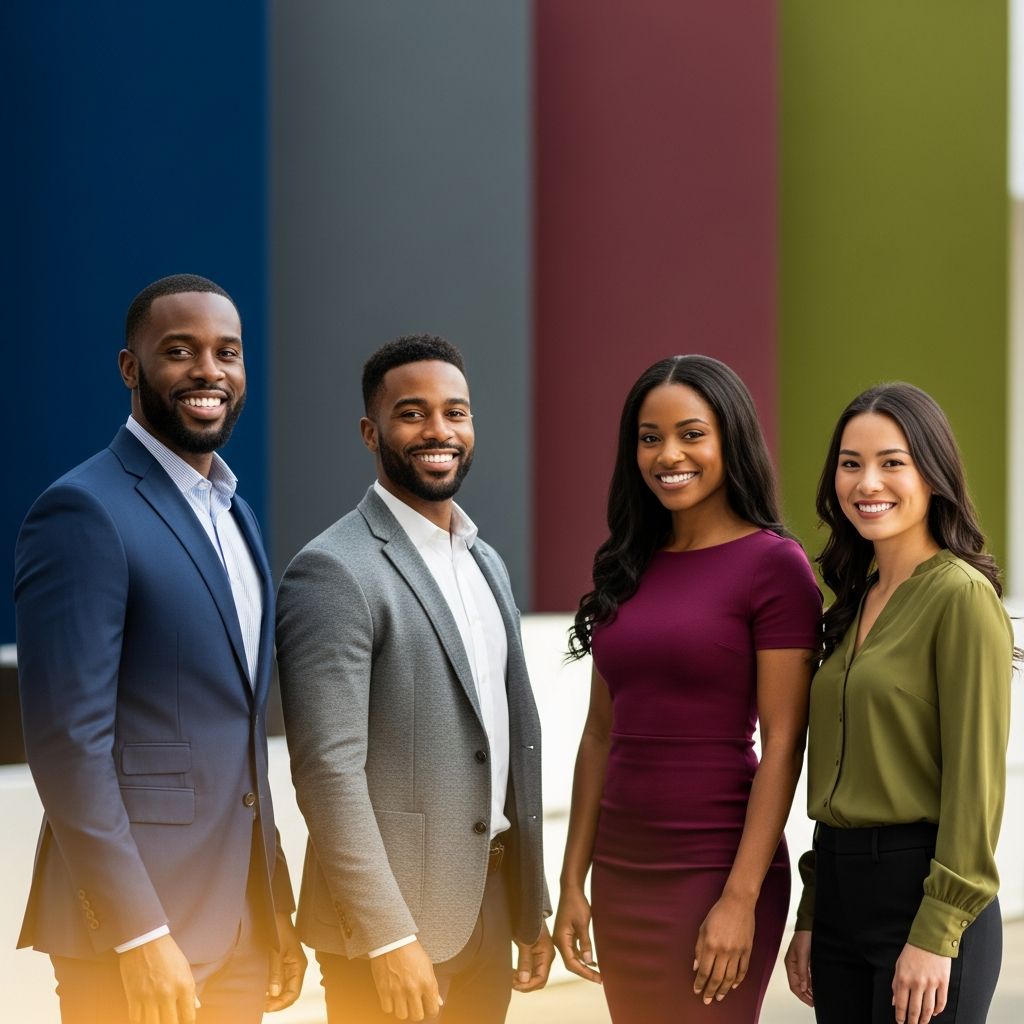
Understanding the Psychology Behind Interview Attire
The moment you step into an interview room, your appearance communicates a message before you speak a single word. Research demonstrates that hiring managers form initial impressions within seven seconds of meeting a candidate, and this critical first assessment significantly influences how they perceive your professionalism, competence, and suitability for the role. While many factors contribute to this rapid evaluation—including posture, handshake, and facial expression—the colors you choose to wear play a surprisingly influential role in shaping these snap judgments.
Color psychology represents a powerful yet often overlooked dimension of interview preparation. This field of study examines how different hues influence human emotions, perceptions, and behavioral responses. By understanding these psychological principles and applying them strategically to your wardrobe choices, you can subtly guide how interviewers perceive your character traits and professional capabilities. The goal isn’t to manipulate through artificial means but rather to present an authentic version of yourself in colors that naturally enhance both your appearance and your psychological presence in the room.
The Foundation: Why Color Matters in Professional Settings
Colors serve as silent communicators in professional environments, operating beneath the level of conscious awareness yet significantly impacting decision-making processes. When people encounter specific hues, particularly in high-stakes evaluative situations such as job interviews, their brains automatically associate those colors with particular qualities and attributes. This neurological response happens instantaneously and influences judgment formation even before substantive conversation occurs.
The stakes are particularly high during interviews because hiring managers are simultaneously processing multiple channels of information: your verbal responses, your body language, your eye contact, and your overall presentation. By strategically selecting colors that align with professional norms and psychological principles, you reduce cognitive load for your interviewer and allow them to focus more fully on your qualifications and personality rather than being distracted by sartorial choices.
Additionally, the colors you wear directly impact how you feel about yourself. Professionals who deliberately select clothing colors that complement their natural coloring—including skin tone, eye color, and hair color—consistently report increased confidence in high-pressure situations. This enhanced self-assurance manifests visibly through improved eye contact, clearer speech patterns, more positive body language, and superior decision-making capabilities under pressure.
Navy Blue: The Professional Standard
Navy blue consistently emerges as the most universally recommended color for job interview situations across industries and career levels. This preference isn’t arbitrary; rather, it’s grounded in both color psychology and practical professional culture standards. Navy projects an image of someone who maintains control and composure, communicating stability, trust, truthfulness, confidence, and security to interviewers. These qualities align precisely with what most hiring managers seek in potential employees regardless of the specific role or industry sector.
The versatility of navy blue extends across different professional contexts. In conservative industries such as finance, law, and corporate management, navy serves as the quintessential color choice because it conveys the stability, authority, and traditional professionalism these fields value. Simultaneously, navy works equally well in less formal environments because it maintains professional boundaries without appearing overly rigid or unapproachable.
Navy’s effectiveness partly stems from its status as a neutral color that doesn’t trigger the heightened arousal associated with warmer hues. Scientific research examining color’s impact on achievement settings reveals that cooler, lower-arousal hues like navy and charcoal tend to read as both calmer and more competent compared to high-saturation warm colors. For interview purposes, this means navy allows your competence and professionalism to remain the focal point rather than your clothing choices creating distraction or resistance.
Charcoal Gray and Black: Conveying Authority and Sophistication
Charcoal gray and black represent alternative foundational colors that serve similar psychological functions to navy while offering slightly different tonal qualities. Gray specifically suggests balance and reliability, reinforcing a professional image that positions you as someone dependable and measured. Hiring managers perceive gray-clad candidates as thoughtful and composed, qualities that translate across virtually all professional environments.
Black, conversely, carries stronger associations with authority and sophistication. Many professionals leverage black to project confidence and power, particularly in competitive or high-stakes interview situations where demonstrating assertiveness matters. Black’s psychological impact includes making wearers feel more powerful and commanding, which often translates into more confident verbal expression and assertive body language during interviews. However, some experts recommend using black strategically rather than as a complete outfit, reserving it for accent pieces to avoid appearing too dramatic or severe.
Both gray and black work exceptionally well when paired with lighter base layers, such as white or light blue shirts or blouses. This pairing creates visual contrast that makes the overall appearance more approachable while maintaining professional authority. The combination of dark and light also creates a polished, finished look that suggests attention to detail and sartorial sophistication.
Burgundy and Wine: Adding Conservative Personality
While darker neutrals form the safest foundation for interview attire, some professionals prefer injecting slightly more personality into their wardrobe while maintaining conservatism. Burgundy and wine represent excellent options for this approach, offering darker, muted tones that avoid the intensity of bright reds while still providing visual interest beyond standard blacks and grays.
These wine-family colors function effectively as primary garment choices—such as dresses, blazers, or suits—because they maintain conservative professional associations while distinguishing your appearance from candidates wearing standard navy or black. Burgundy particularly appeals to professionals in traditional industries seeking to demonstrate both conventionality and mild differentiation. The color conveys warmth and confidence without the confrontational quality sometimes associated with bright red.
White and Cream: Embracing Lighter Palettes
Some interview candidates prefer lighter color options, either because they feel more flattering to their skin tone or because they experience greater confidence in lighter hues. White and cream represent professionally appropriate alternatives to darker neutrals, particularly when worn as blouses, shirts, or complete lighter-toned suits. These colors maintain professionalism while projecting cleanliness, clarity, and approachability.
The key consideration with lighter colors involves ensuring sufficient visual weight through layering or accessorizing to maintain the authoritative presence expected in professional settings. Pairing a white blouse with a navy or charcoal blazer, for instance, achieves the visual impact of a classic dark suit while leveraging the approachability of white in the base layer.
Blue: The Competence Signal
Beyond navy specifically, the broader blue color family offers multiple interview-appropriate options depending on personal coloring and specific shade selection. Blue telegraphs peacefulness and calm, qualities that help emanate tranquility and diffuse stress in high-pressure interview environments. Since sincere professional connections often stem from a place of calm confidence, leveraging the full range of blues strategically can significantly enhance your interview performance.
The specific blue shade matters considerably. Individuals with cool undertones might select French blue or cobalt, while those with warm undertones often find azure or medium royal blue more flattering. The key principle involves choosing a blue shade that complements your natural coloring to maximize the polished, credible, and confident appearance that comes from color harmony.
Research indicates that blue particularly enhances perceived competence across evaluative settings. This association makes blue an especially strategic choice for interviews where demonstrating capability and expertise represents a primary goal.
Brown: Communicating Groundedness and Responsibility
Brown represents an underutilized but highly effective interview color choice for professionals seeking to convey security, responsibility, and comfort. While brown rarely appears in contemporary fashion discussions about professional attire, it offers unique psychological associations that align well with many organizational cultures, particularly those valuing stability and long-term commitment.
Brown works effectively in tailored blazers, well-fitted trousers, or structured dresses, particularly when paired with complementary neutral layers. A chocolate brown blazer with crisp white shirting creates a warm yet professional impression that distinguishes the wearer from navy and black-saturated interview environments while maintaining complete professionalism.
Industry-Specific Color Considerations
While foundational neutral colors apply broadly across industries, contextual variations warrant consideration based on your specific field and organizational culture.
Traditional and Regulated Industries
In sectors such as finance, law, corporate management, and banking, neutral hues maintain paramount importance. These industries prize signals of rigor, reliability, and composure, making conservative colors—navy, charcoal, black, and gray—the optimal choice. Accent colors, if used at all, should remain minimal and subtle, confined to small-scale pieces such as ties, pocket squares, scarves, or watchbands rather than dominant garment pieces.
Client-Facing and Healthcare Roles
Positions requiring client interaction or healthcare responsibilities benefit from colors balancing polish with approachability. Medium blues, charcoal, slate, and stone palettes communicate both professionalism and accessibility. Lower-arousal hues like mid-tone blue and gray keep focus on conversation while building trust with clients or patients who must feel comfortable and secure.
Creative and Innovation-Focused Fields
Creative industries, technology companies, and innovation-focused organizations often appreciate more personality in interview attire compared to traditional sectors. Starting with a neutral base remains advisable, but adding one deliberate accent color—such as deep green, aubergine, or cobalt—telegraphs imagination and non-linear thinking without sacrificing professionalism. Research even suggests that brief exposure to green can nudge creative performance on problem-solving tasks, making it a thoughtful accent choice for creative roles.
The Science of Color Perception and Performance
Understanding the mechanisms behind color psychology’s effectiveness enhances strategic color selection. In achievement settings—including tests, evaluations, and interviews—brief exposure to high-saturation red can activate avoidance motivation and dampen performance. This neurological response explains why dominant red outfits may feel confrontational during evaluative moments and why they’re generally discouraged as primary interview garments.
Conversely, large cross-cultural mapping studies demonstrate that cooler, lower-arousal hues like mid-tone blues and charcoals consistently read as calmer and more competent across diverse populations and cultural contexts. This cross-cultural consistency provides reassurance that core color psychology principles translate effectively regardless of your specific background or the interviewer’s cultural orientation.
Furthermore, when individuals wear colors that complement their personal coloring, they experience heightened self-assurance that becomes visible to observers. This confidence manifests through improved eye contact, clearer speech, more assertive communication, and more effective thinking under pressure—all critical elements of successful interview performance.
Practical Color Selection Strategy
When developing your interview color strategy, follow this hierarchical approach:
- Step 1: Select your neutral foundation. Choose navy, charcoal, black, or gray as your primary garment color, ensuring it aligns with your industry’s professional norms.
- Step 2: Determine your personal coloring. Consider your skin tone, eye color, and hair color to identify which specific shades within your neutral choice appear most polished and credible on you personally.
- Step 3: Add a light base layer. Pair your neutral garment with white, cream, or light blue for visual contrast and approachability.
- Step 4: Assess accent opportunities. Based on your industry and organizational culture, determine whether subtle accent colors are appropriate and select them strategically.
- Step 5: Prioritize fit and comfort. Choose your final outfit—the one you feel most confident wearing, the one that doesn’t require adjusting or fiddling, as nervous adjustment signals insecurity to observers.
Colors to Approach with Caution
While not universally prohibited, certain colors warrant careful consideration or limited use in interview contexts. High-saturation reds and oranges can trigger psychological responses associated with confrontation and avoidance, making them risky as dominant outfit pieces. Neon or extremely bright colors distract from your qualifications and may be perceived as lacking professional judgment. Overly casual colors—such as pastels in non-creative industries or earth tones in formal sectors—can undermine the authoritative presence that interviews typically require.
If you genuinely prefer any of these colors, consider relegating them to small accent pieces rather than primary garments, and always verify that your choice aligns with your specific industry and organizational culture.
Virtual Interview Color Considerations
Video-based interviews present slightly different color dynamics than in-person meetings, primarily because digital screens render colors with different intensity and saturation. Colors that appear muted and professional in person may appear washed out on camera, while colors that seem subtle in person might appear bold or distracting when pixelated and displayed on a video feed. When interviewing virtually, many professionals find that playing colors slightly more prominently—through bold blazers or slightly more saturated accent pieces—translates more effectively on screen while maintaining professionalism.
Personal Confidence as the Ultimate Factor
While color psychology provides evidence-based guidance for interview attire selection, personal confidence remains paramount. The most effective interview outfit is ultimately the one in which you feel genuinely self-assured, comfortable, and authentic. If you maintain concerns about a particular color despite it being technically appropriate, this anxiety may subtly manifest in your body language and demeanor, counteracting the psychological benefits of the color choice itself.
The strategic application of color psychology works best when it aligns with your natural preferences and comfort level. If navy represents your favorite color and makes you feel powerful and professional, that authentic alignment amplifies its benefits. Conversely, forcing yourself into colors that feel uncomfortable or inauthentic may undermine rather than enhance your interview performance.
Frequently Asked Questions
Q: Is there a universally safe color choice for all interview situations?
A: Navy or charcoal paired with a white or light-colored base layer represents the safest choice across virtually all industries and organizational types. These combinations project professionalism, competence, and stability while minimizing the risk of negative color-based judgments. However, understanding your specific industry and organizational culture allows for strategic variations within this foundation.
Q: Should I wear the same color if I have multiple interview rounds?
A: While wearing similar color palettes across multiple interview rounds creates brand consistency, you need not wear identical outfits. Varying your specific garment while maintaining your color foundation (such as different navy blazers or charcoal suits) prevents monotony while preserving the psychological benefits of your chosen colors.
Q: How do I incorporate color into my interview outfit without violating professional norms?
A: Limit color to strategic accent pieces such as ties, scarves, pocket squares, jewelry, or watches. Start with a neutral foundation garment and add personality through accessories, ensuring the overall impression remains professional and composed. This approach allows you to express individuality while respecting industry norms.
Q: Does the psychology of color vary by culture or geographic location?
A: While core color psychology principles translate across cultures—cooler colors read as calmer and more competent, for instance—specific cultural associations with particular colors may vary. Research indicates that cross-cultural principles around blue and neutral colors as professional choices remain fairly consistent, but when interviewing in unfamiliar cultural contexts, studying that organization’s or region’s specific professional norms provides valuable guidance.
Q: Can I wear bright or bold colors if I’m interviewing in a creative industry?
A: Creative industries offer more latitude for color expression than traditional sectors, but even in these environments, maintaining a professional foundation remains advisable. Rather than wearing a completely bold outfit, start with neutral base garments and add one strategic accent color—such as a statement scarf, blazer, or accessory in a deeper or more interesting hue. This approach demonstrates creativity while signaling that you understand professional norms.
Q: How important is color compared to other factors in interview success?
A: Color represents one influential factor among many contributing to interview performance. Your qualifications, communication skills, preparation level, enthusiasm, and ability to answer questions substantively all matter significantly. However, because hiring managers form initial impressions within seven seconds, strategic color selection removes potential obstacles and positions you optimally before substantive interaction begins.
References
- The Best Colors to Wear on a Job Interview, According to Experts — Elizabeth Kosich Styling. 2024. https://elizabethkosichstyling.com/press/buzz/what-color-to-wear-job-interview
- How to Dress for Success: The Color Guide for Job Interviews — Stoltz Image. 2024. https://stoltzimage.com/how-to-dress-for-success-the-color-guide-for-job-interviews/
- The Best Color to Wear to an Interview (Backed by Science) — AMTEC. 2024. https://www.amtec.us.com/blog/the-best-color-to-wear-to-an-interview
- Color Psychology and Interview Apparel — Human Ecology Extension, Cornell University. 2016. https://hecec.human.cornell.edu/2016/09/27/color-psychology-and-interview-apparel/
- There are colors for interviewing? — Michigan State University Extension. 2024. https://www.canr.msu.edu/news/there_are_colors_for_interviewing

Medha Deb is an editor with a master's degree in Applied Linguistics from the University of Hyderabad. She believes that her qualification has helped her develop a deep understanding of language and its application in various contexts. Medha specializes in the areas of beauty, health, sports, and wellness and is committed to ensuring that the content on the website is…