
The Case for Compact Fidgeting at Your Workspace
The modern workplace presents a unique challenge: managing stress and maintaining focus while remaining professional and unobtrusive. Unlike taking a walk or leaving your desk for a break, having a small fidget tool within arm’s reach offers immediate relief without disrupting your workflow or drawing unwanted attention. These miniature objects serve as silent partners in your productivity journey, providing tactile engagement that can shift your mental state from anxious to calm in moments.
The concept of fidgeting is not new, but recent research has validated what many workers intuitively know—that small, repetitive physical movements can have significant cognitive benefits. When stress builds up during demanding work tasks or challenging presentations, your body naturally seeks outlets for that tension. A properly chosen desk fidget provides a socially acceptable, discreet channel for this energy release.
Understanding How These Tools Support Your Mental State
Fidget toys operate on a principle of sensory engagement that redirects anxious energy toward productive physical interaction. When you engage your hands with a textured object, your brain receives input that competes with stress-related thoughts. This mechanism of distraction is not avoidance—it’s a strategic shift in attention that allows your nervous system to downregulate.
Research from Surley University demonstrated that individuals with access to fidget toys reported measurably lower anxiety levels and reduced discomfort. The mechanism behind this effectiveness involves several interconnected processes:
- Neural redirection: Your brain can only process a limited amount of information simultaneously. Tactile input from fidgeting consumes cognitive resources that would otherwise fuel worry.
- Physical tension release: Many fidget toys are specifically designed to provide resistance or texture that allows your muscles to release held tension.
- Mindful grounding: The repetitive, rhythmic nature of fidgeting can anchor you to the present moment rather than future concerns.
Beyond anxiety management, fidgeting supports sustained attention on complex tasks. Research at New York University’s Polytechnic School of Engineering found that workers using desktop distractions like stress balls and fidget objects demonstrated increased focus when tackling difficult assignments. This counterintuitive benefit—that a distraction can improve concentration—occurs because the fidget provides just enough cognitive engagement to prevent mind-wandering without fully consuming your attention.
Essential Characteristics of Workplace-Appropriate Fidget Tools
Not all fidget toys are suitable for professional environments. The most effective desk fidgets share several defining qualities that make them genuinely useful rather than merely distracting.
Silent Operation
Sound matters significantly in shared office spaces. The best desk fidgets produce minimal to no audible feedback. Unlike spinner toys that hum or click, silently operating fidgets allow you to find calm without creating distraction for colleagues. This stealth quality makes them appropriate for open offices, quiet focus areas, and client-facing environments.
Compact Dimensions
A fidget toy that truly fits on your desk should occupy minimal space and be easily concealable. The ideal size ranges from fitting comfortably in your palm to roughly the dimensions of a small paperweight. This portability means you can keep your stress relief tool in a desk drawer, pocket, or even a small pouch without it becoming a visual clutter concern.
Aesthetic Integration
High-quality fidget toys designed for workplace use often feature refined materials and finishes that complement professional settings rather than detract from them. Objects crafted from polished metals, quality plastics, or natural wood integrate seamlessly into your workspace aesthetics. When selected thoughtfully, stress relief desk toys can function as both functional tools and attractive additions to your work area.
Durability and Haptic Quality
The tactile experience matters immensely. Premium desk fidgets feature carefully engineered resistance, smooth gliding mechanisms, or satisfying texture that rewards repeated use. Cheap fidgets with poor build quality quickly lose their appeal and effectiveness.
Categories of Compact Fidgeting Solutions
Textured Sensory Tools
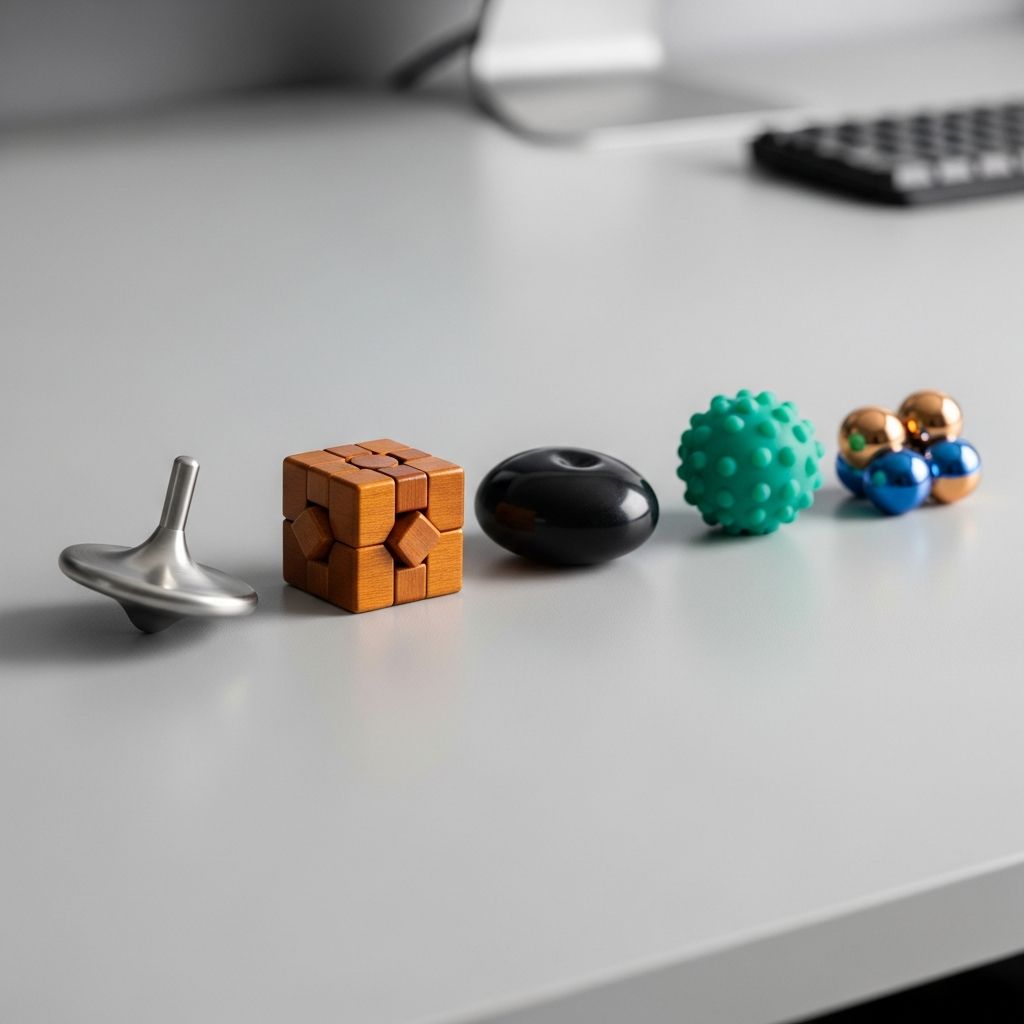
Textured fidgets provide firm, varied sensory feedback that particularly appeals to those preferring strong tactile input. These might include spiky finger fidgets that you roll across your palm, textured cubes with different surface treatments on each side, or bumpy massage tools. The varied tactile sensations stimulate nerve endings in your fingertips, creating engaging proprioceptive input. These work exceptionally well when you’re stuck on a problem and need physical sensation to complement your mental processing.
Squeeze and Pressure Tools
Compression-based fidgets like stress balls and hand grips work through a different mechanism—they allow you to apply force and feel resistance. Squeezing activates hand and forearm muscles, and regular use can contribute to improved grip strength while simultaneously providing immediate stress relief. Color-changing stress balls add a visual dimension that makes the experience more engaging. Many professionals keep these on their desks precisely because the compression action mirrors the physical release that exercise provides.
Gliding and Rotating Objects
Fidgets featuring smooth, continuous motion—such as magnetic sliders that glide effortlessly between your palms or weighted hand rollers—provide a meditative quality. These beautifully weighted and smooth hand rollers create a calming, anxiety-reducing effect through their continuous motion. The repetitive, flowing movement can induce a state similar to meditation, making them particularly useful when you need to calm rather than stimulate your nervous system.
Puzzle-Based Options
Emerging trends suggest hybrid fidgets combining strategic puzzle elements with tactile relief mechanisms. These appeal to individuals who want both mental engagement and physical sensory input, effectively satisfying multiple stress-relief pathways simultaneously.
Strategic Deployment in Your Work Environment
Timing and Awareness
The most effective fidgeting follows a deliberate approach rather than constant, absent-minded play. Consider keeping your fidget tool tucked away most of the time, then engaging with it during moments when you most need support: before important meetings, during challenging problem-solving sessions, or when you notice tension building in your shoulders and jaw.
Noise Considerations
When selecting a fidget for office environments, test the toy’s noise level beforehand, as loud spinners or clicking mechanisms can become distracting to yourself and others. Silent options and smooth squeeze balls serve professional settings far better than noisy alternatives. If you work in a particularly quiet environment or open floor plan, prioritize absolutely silent mechanisms.
Contextual Appropriateness
While fidgets are generally subtle enough for most work situations, certain contexts warrant extra discretion. During formal presentations, client calls, or important meetings, keeping your fidget out of sight maintains professional appearances. However, many modern workplaces recognize that discreet fidgeting during brainstorming sessions or focused work time actually enhances output rather than detracting from it.
Performance Comparison of Leading Options
| Fidget Type | Best For | Noise Level | Portability | Durability |
|---|---|---|---|---|
| Textured Finger Fidgets | Strong sensory seekers | Silent | Excellent | High |
| Stress Balls | Tension release | Silent | Good | Variable |
| Magnetic Sliders | Meditation-focused users | Silent | Excellent | Very High |
| Hand Rollers | Anxiety reduction | Silent | Good | Very High |
| Puzzle Fidgets | Strategy plus relief | Low to Silent | Good | High |
Maximizing the Benefits of Your Desk Fidget
Using fidget toys effectively means supporting genuine calmness rather than creating additional stress for yourself or colleagues. Several practical approaches enhance their utility:
Start with intentional selection: Rather than impulse-buying the first fidget you encounter, consider what sensory input appeals most to you. Do you prefer texture, resistance, smooth motion, or visual elements? Your personal preferences will determine which tool you’ll actually use consistently.
Establish reasonable usage patterns: While fidgeting can boost focus, excessive reliance can become counterproductive. Setting brief intervals for your fidget sessions—perhaps five to ten minutes during breaks or challenging work—prevents overuse while maintaining the tool’s effectiveness.
Maintain accessibility: Keep your fidget somewhere easily accessible—a desk drawer, your bag, or on a shelf near your workspace. The easier it is to reach when needed, the more likely you’ll use it preventatively rather than waiting until stress becomes overwhelming.
Match the tool to your environment: A loud spinner might suit a casual creative workspace but would be inappropriate in a quiet library or legal office. Choosing toys that operate silently ensures you can fidget discreetly without becoming a distraction in shared spaces.
The Broader Impact on Workplace Wellness
The availability of small, effective fidget tools represents a meaningful shift in workplace wellness. Rather than viewing stress as something to be conquered through willpower alone, these objects acknowledge that physical engagement can support mental regulation. They provide accessible stress management tools that don’t require complicated instructions or special preparation, making them genuinely practical for busy professionals.
Companies increasingly recognize that supporting employee stress management—even through small interventions like desk fidgets—contributes to overall productivity and job satisfaction. Stress relief toys offer a simple way to relieve anxiety, improve focus, and add a small sense of fun to work, transforming the workplace atmosphere in subtle but meaningful ways.
The beauty of these tools lies in their intersection of effectiveness and simplicity. Unlike programs requiring time commitment or techniques demanding special training, keeping a quality fidget on your desk costs little and demands nothing except occasional use. Yet the research consistently demonstrates measurable improvements in stress levels and focus for those who employ them strategically.
Frequently Asked Questions
Q: Can fidgeting actually help my anxiety, or is it just distraction?
A: Fidgeting provides both genuine anxiety relief and strategic distraction. Research shows it lowers measured anxiety levels by engaging your tactile senses in a way that competes with worry-related thoughts, allowing your nervous system to downregulate.
Q: Will a fidget toy be distracting to my coworkers?
A: If you select a silent option and use it discreetly, most desk fidgets won’t distract colleagues. Avoid loud spinners or mechanical toys that produce sound, and keep your fidgeting subtle rather than obvious.
Q: What’s the difference between fidgeting and just wasting time?
A: Strategic fidgeting with purpose—particularly during challenging tasks or moments of rising anxiety—actually enhances focus by preventing mind-wandering. Mindless fidgeting without intention differs fundamentally from purposeful tactile engagement.
Q: How long should I fidget during the workday?
A: There’s no strict rule, but brief sessions of five to ten minutes during breaks or difficult tasks work well for most people. The goal is supporting focus and calm, not creating dependence on constant fidgeting.
Q: Will a fidget toy work if I’m experiencing severe anxiety?
A: While desk fidgets help manage everyday workplace stress effectively, severe anxiety typically requires additional support such as professional counseling or medical intervention. Use fidgets as a complementary tool rather than sole treatment.
Q: Are expensive fidget toys better than cheap ones?
A: Generally, yes. Quality fidgets feature better engineering, more satisfying tactile feedback, and greater durability. Cheap fidgets often disappoint quickly, losing their appeal and effectiveness.
References
- How Fidget Toys Can Help Adults With Anxiety — The Sensory Specialist. 2024. https://www.thesensoryspecialist.com.au/blogs/blog/how-fidget-toys-can-help-adults-with-anxiety
- Why Are Stress Relief Toys So Popular Among People in the Workplace — EDNTOY. 2024. https://edntoy.com/blog/why-are-stress-relief-toys-so-popular-among-people-in-the-workplace
- Stress Relief Desk Toys — Bruce Charles Designs. 2024. https://www.brucecharlesdesigns.com/pages/stress-relief-desk-toys
- Your Desk Toys Are Making You Smarter — The Advisory Board Company. 2015. https://www.advisory.com/daily-briefing/2015/03/06/your-desk-toys-are-making-you-smarter
- Stress Balls: Effectiveness, Benefits, and Limits — Healthline. 2024. https://www.healthline.com/health/stress/do-stress-balls-work
- Fidget Toys: What Are They and How Can They Help Children and Adults — Brown Health. 2024. https://www.brownhealth.org/be-well/fidget-toys-what-are-they-and-how-can-they-help-children-and-adults
- What Are Stress Balls (and Do They Really Work)? — Calm Blog. 2024. https://www.calm.com/blog/stress-balls

Medha Deb is an editor with a master's degree in Applied Linguistics from the University of Hyderabad. She believes that her qualification has helped her develop a deep understanding of language and its application in various contexts. Medha specializes in the areas of beauty, health, sports, and wellness and is committed to ensuring that the content on the website is…