
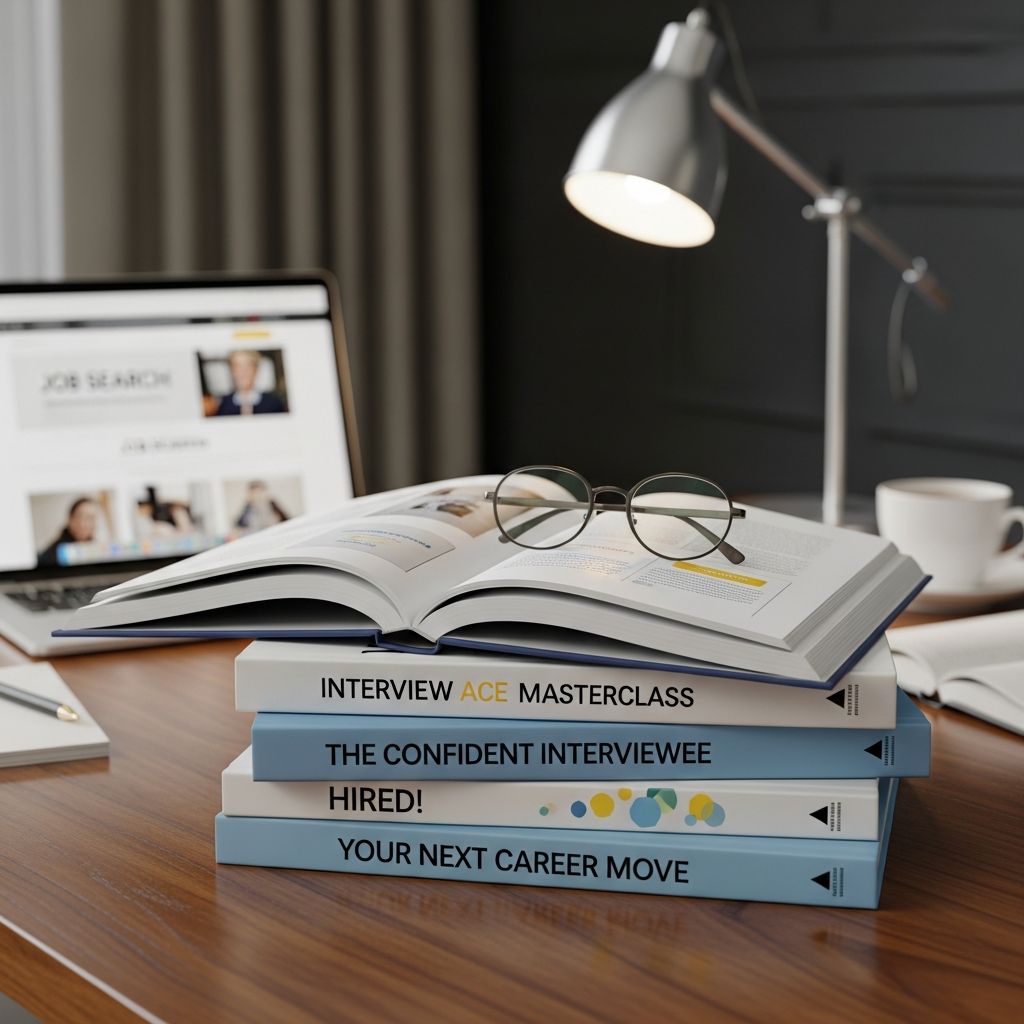
Thousands of interview books promise to change your career, but only a fraction offer practical, research-backed strategies you can apply immediately. This guide distills the most valuable types of interview books, explains what they teach, and shows you how to turn reading into real-world job offers.
Instead of a random reading list, you will learn how each kind of book fits into your overall interview preparation: mindset, storytelling, technical skill, employer research, and post-interview follow-up.
Why Interview Books Still Matter in a Digital World
Blogs and videos are helpful, but structured books offer depth and coherence that scattered online tips often lack. Well-written interview books typically:
- Provide a complete system from preparation to negotiation, instead of isolated tricks.
- Include practice questions, exercises, and sample answers to rehearse effectively.
- Explain the hiring manager’s perspective, helping you understand how decisions are made.
- Offer case studies and scenarios that build confidence for unfamiliar questions.
Career research consistently shows that structured preparation significantly improves interview performance and job search outcomes. Reading the right books turns vague advice into clear, repeatable habits you can apply across roles and industries.
Core Types of Interview Books (and When to Use Each)
Most high-quality interview books fall into a few practical categories. Knowing which category you need helps you choose the right next read instead of getting overwhelmed.
| Book Type | Main Focus | Best For |
|---|---|---|
| Foundational interview guides | Overall process, structure, and strategy | First-time job seekers or career switchers |
| Behavioral & storytelling books | STAR stories, soft skills, examples | Roles emphasizing teamwork, leadership, communication |
| Question-and-answer handbooks | Sample answers, phrasing, patterns | Anyone facing traditional or HR-led interviews |
| Technical & case-interview books | Coding, data, or business cases | Tech, consulting, finance, and analytics roles |
| Mindset & confidence books | Overcoming anxiety, self-advocacy, resilience | Professionals who know the content but underperform live |
Foundational Guides: Building a Complete Interview Strategy
Foundational interview books walk you through the full lifecycle of an interview, from reading a job description to negotiating the offer. They are especially useful if you:
- Have not interviewed in years and feel out of touch with current expectations.
- Are entering the job market for the first time.
- Have been rejected multiple times without understanding why.
Strong general interview guides typically cover:
- Role and company research: what matters beyond the job posting and how to use that information to tailor your answers.
- Interview formats: phone screens, video calls, panel interviews, and final rounds, with clear expectations for each.
- Common question families: strengths, weaknesses, motivation, achievements, failures, and salary expectations.
- Follow-up and negotiation: how to send meaningful thank-you notes and discuss compensation professionally.
These books act as the backbone of your preparation; once you understand the journey from the employer’s perspective, you can layer on more specialized resources.
Behavioral & Storytelling Books: Mastering Your Career Narrative
Many modern employers rely heavily on behavioral interviews, where you are asked to describe specific past experiences rather than talk in generalities. Books focused on storytelling and behavioral techniques teach you how to:
- Use the STAR or similar frameworks (Situation, Task, Action, Result) to structure your answers clearly.
- Translate everyday work into impactful stories that show initiative, ownership, and outcomes.
- Prepare a “story bank” of examples that can be adapted to many questions.
- Demonstrate soft skills such as leadership, conflict resolution, and collaboration.
These books are particularly valuable if you often think “I did the work, but I can’t explain it in an impressive way.” By working through guided prompts, you learn to highlight results, quantify impact where possible, and speak in a concise, compelling style that makes it easier for interviewers to remember you.
Q&A Handbooks: Practicing Real Interview Questions
Question-and-answer style books compile large sets of common interview questions, along with explanations of what the interviewer is really assessing. Many also provide sample answers or answer outlines. Effective Q&A books help you:
- Recognize patterns in questions instead of memorizing word-for-word replies.
- Practice answering under time pressure and with limited information.
- Understand hidden intentions behind questions like “Tell me about a time you failed” or “Why should we hire you?”
- Develop multiple angles for frequently asked prompts, so you avoid sounding rehearsed.
When used wisely, these books turn anxiety into familiarity: the more question types you have seen, the less likely you are to freeze when a variation appears. However, the goal is not to copy model answers; it is to study the structure, tone, and level of detail that works and then apply that style to your own experiences.
Technical & Case-Style Books: Succeeding in Specialized Interviews
If you are pursuing roles in software engineering, data science, analytics, consulting, or strategy, your interview process will likely include technical or case-based assessments. Books in this category are usually more practice-heavy and may resemble workbooks more than traditional guides.
High-quality technical and case-interview books typically include:
- Concept reviews: key algorithms, data structures, probability, statistics, or business frameworks you must recall quickly.
- Practice problems and full solutions: step-by-step walkthroughs that model the reasoning process.
- Checklists: what to clarify, what to write down, and how to communicate while solving.
- Evaluation criteria: how interviewers score your performance so you can practice accordingly.
Because these interviews test both knowledge and communication, books that emphasize thinking out loud and structuring your approach are especially useful. They help you move beyond simply getting the right answer to demonstrating how you think, which is often what employers care about most.
Mindset, Confidence & Communication: The Missing Ingredient
Many candidates focus solely on content—what to say—while underestimating how they say it. Communication style, confidence, and presence strongly influence hiring decisions, especially for leadership or client-facing roles. Mindset-focused interview books and broader career psychology titles can help you:
- Reframe interviews as two-way conversations rather than high-stakes interrogations.
- Overcome imposter feelings and speak about your achievements without sounding arrogant.
- Manage nerves through simple breathing, rehearsal, and visualization techniques backed by psychology research.
- Adopt a growth mindset that sees feedback and rejection as data, not personal failure.
These books are especially powerful when paired with more tactical guides. You might know exactly how to structure an answer, but if your voice shakes or you downplay your achievements, your performance still suffers. Mindset resources help align your inner narrative with the confident, capable person you want interviewers to see.
How to Build a Practical Reading Plan
Collecting books is easy; using them effectively is harder. The goal is not to read every interview book on the market—it is to read a handful deeply and apply their lessons. Use this simple, staged reading plan as a template:
Step 1: Start with a Comprehensive Overview
- Pick one foundational guide that covers the entire interview process.
- Read it with a notebook and create your own checklists: before the interview, during, and after.
- Highlight frameworks and templates you can reuse, such as answer structures or research steps.
Step 2: Add a Storytelling or Behavioral Book
- List 10–15 significant experiences from your work, studies, or projects.
- Use the book’s methods to turn each experience into a concise, measurable story.
- Group stories by theme: leadership, conflict, learning, failure, problem-solving, and influence.
Step 3: Use a Q&A Handbook for Rehearsal
- Schedule practice blocks where you answer 5–10 questions out loud.
- Record yourself and compare your responses against the patterns described in the book.
- Refine phrasing to be more specific, results-focused, and aligned with the role.
Step 4: Layer in Technical or Case Resources (If Relevant)
- Identify the key technical or business skills tested for your target role from job postings.
- Choose a book that matches that skill set: coding, data, finance, or consulting cases.
- Integrate daily or weekly problem practice, focusing on correct reasoning, not just answers.
Step 5: Strengthen Mindset and Confidence
- Use mindset or confidence books to build pre-interview routines that keep you calm and focused.
- Adopt simple rituals: review three success stories, revisit your values, or practice power poses if they help you feel composed.
- Reflect after each interview using prompts from these books to turn experiences into learning.
How to Evaluate Whether an Interview Book Is Worth Your Time
Not every popular book will be right for you. When considering a new interview book, use these criteria:
- Specificity: Does it give concrete examples, scripts, and exercises, or only vague motivational advice?
- Relevance: Is it updated for modern formats like video interviews and remote hiring?
- Depth: Does it explore fewer topics in detail rather than skimming everything?
- Credibility: Does the author have real hiring, coaching, or industry experience?
- Practical tools: Are there checklists, templates, or worksheets you can reuse?
If a book is mostly inspirational quotes and generic tips without actionable frameworks, it may not justify the time investment when you are actively job searching.
Turning Reading into Real Interview Performance
Reading alone does not get you hired; applied practice does. To bridge the gap between knowledge and performance, integrate these habits alongside your reading:
- Simulate the environment: rehearse in the clothes you will wear, sitting at a desk, with your camera on if it is a video interview.
- Practice with humans: ask friends, mentors, or career services to run mock interviews using questions from your Q&A books.
- Capture feedback: note down which answers felt weak and revisit the relevant book sections.
- Iterate stories: refine your examples over time as you discover which ones resonate with interviewers.
- Track metrics: record applications, interviews, rejections, and offers so you can see improvement over time.
Common Mistakes When Using Interview Books
Even strong resources can backfire if used poorly. Avoid these frequent traps:
- Memorizing verbatim answers: this makes you sound robotic and can collapse if an interviewer changes a single detail.
- Ignoring company context: books provide generic examples; you still need to tailor stories to the organization and role.
- Overloading on theory: reading five books and doing zero mock interviews is a recipe for polished notes and poor performance.
- Copying someone else’s style: use books to find structures, then adapt them to your natural language and personality.
FAQ: Using Interview Books Effectively
Q: How many interview books should I read before applying?
A: For most people, two to four focused books are enough: one general guide, one storytelling or Q&A book, and, if relevant, one technical or case resource plus a mindset book. Depth and practice matter more than the total number of titles.
Q: How far in advance should I start reading before interviews?
A: Ideally, begin several weeks before your first expected interview. Use the first week for a foundational guide, then spend the remaining time alternating between reading and mock practice so that your learning translates into performance.
Q: Are older interview books still useful in 2025?
A: Many classics remain valuable for mindset, storytelling, and fundamentals. However, you should pair them with more recent resources that address current hiring trends such as remote interviewing, online assessments, and modern recruiting tools.
Q: Can I rely only on technical interview books for engineering or data roles?
A: No. Technical skill is critical, but employers also evaluate communication, collaboration, and culture fit. Combine coding or data problem books with behavioral and communication resources to present yourself as a well-rounded professional.
Q: How do I know if a book is actually helping?
A: Look for measurable changes: clearer answers, fewer rambling responses, more confidence in mock interviews, and improved outcomes (more callbacks or offers). If you are not seeing progress, shift from more reading to more practice or choose a book with a different focus.
References
- Alison Wood Brooks, “Get Excited: Reappraising Pre-Performance Anxiety as Excitement” — Journal of Experimental Psychology: General. 2014-11-01. https://doi.org/10.1037/a0035325
- U.S. Bureau of Labor Statistics, “Job Openings and Labor Turnover Survey Overview” — U.S. Department of Labor. 2024-02-01. https://www.bls.gov/jlt/jltover.htm
- Victor Cheng, “Case Interview Secrets” (publisher overview) — Hacking the Case Interview. 2025-01-10. https://www.hackingthecaseinterview.com/pages/best-resources-to-prepare-for-mckinsey-case-interviews
- National Association of Colleges and Employers (NACE), “Job Outlook 2024” — NACE. 2023-11-01. https://www.naceweb.org/store/2024/job-outlook-2024/
- Interview Query, “The 8 Best Data Science Interview Books (Updated for 2025)” — Interview Query. 2025-03-01. https://www.interviewquery.com/p/data-science-interview-books

Medha Deb is an editor with a master's degree in Applied Linguistics from the University of Hyderabad. She believes that her qualification has helped her develop a deep understanding of language and its application in various contexts. Medha specializes in the areas of beauty, health, sports, and wellness and is committed to ensuring that the content on the website is…