
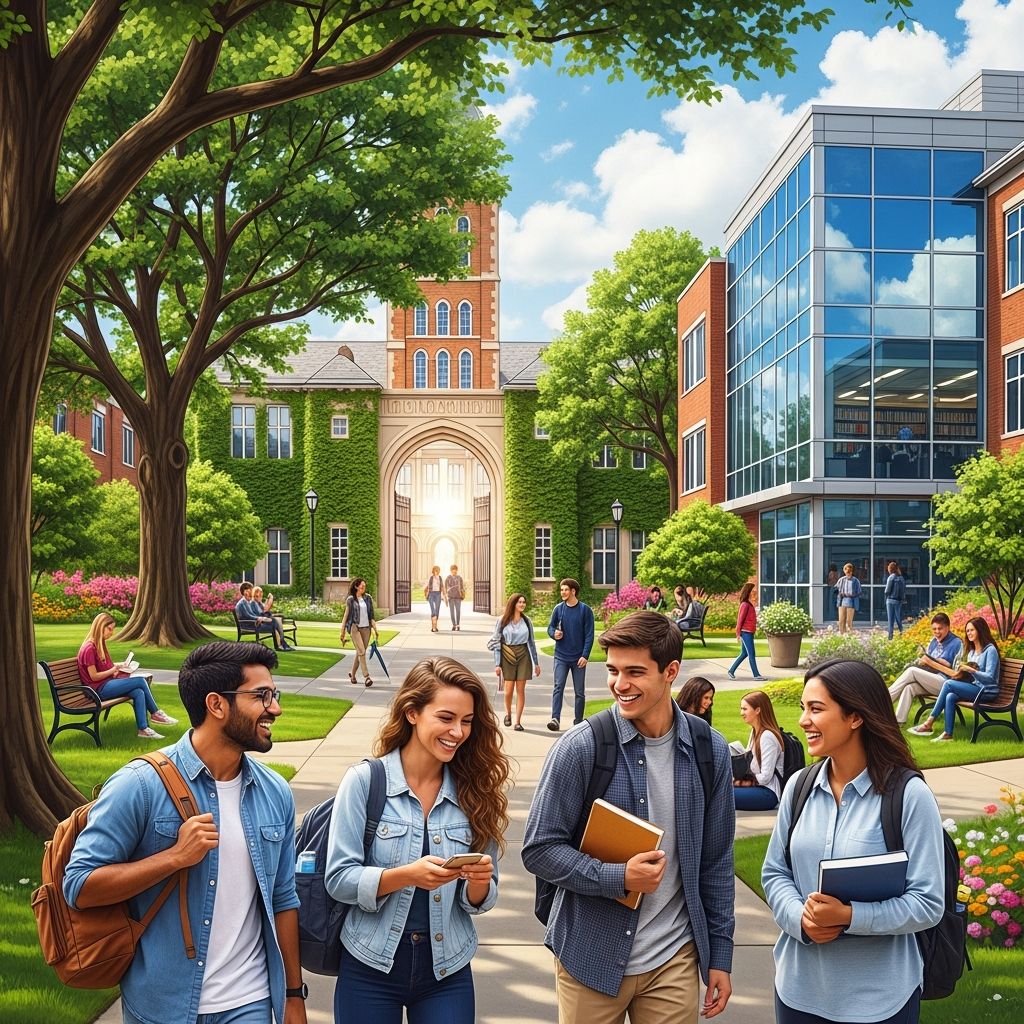
In today’s competitive college landscape, open admission policies at select 4-year institutions provide a vital pathway for students who may not meet stringent GPA or test score thresholds. These programs prioritize accessibility, allowing high school graduates or GED holders to pursue bachelor’s degrees without the usual hurdles of standardized testing or elite academic records.
Understanding Open Admission Policies
Open admission, also known as open enrollment, means that qualifying institutions accept all applicants who meet basic criteria, typically a high school diploma or equivalent. Unlike selective universities, these schools boast near-100% acceptance rates, making higher education attainable for diverse learners including adult students, career changers, and those from underrepresented backgrounds.
While most community colleges follow this model, about 25% of 4-year degree-granting institutions in the U.S. also adopt open policies, offering both associate and bachelor’s programs. This approach supports transfer pathways, online flexibility, and workforce-focused curricula.
Basic Eligibility for Open Enrollment
- High School Diploma or GED: Proof of completion is the cornerstone requirement.
- Age Minimums: Many programs require students to be 16-22 years old, with waivers for exceptional cases.
- No SAT/ACT Mandates: Standardized tests are generally waived, though some may request readiness assessments.
- Additional Documentation: Transcripts, resumes, or statements of goals for certain applicants, especially non-traditional ones.
States like Tennessee exemplify this with guaranteed admission at community colleges that feed into 4-year tracks, ensuring broad access regardless of prior GPA or test scores.
Advantages of Choosing Open Admission 4-Year Schools
These institutions democratize education by removing barriers, fostering inclusive environments where students can focus on growth rather than perfection. Key benefits include:
- Affordable tuition, often under $6,000 annually for in-state residents.
- Flexible formats like online and part-time options for working adults.
- Strong emphasis on practical skills, career preparation, and transfer credits.
- Support services such as tutoring, advising, and wraparound aid to boost retention.
For students rebuilding academic histories, open admission offers a fresh start, with high success rates in hands-on programs.
Top 4-Year Colleges with Open Admissions
Several accredited 4-year schools stand out for their open policies and quality offerings. Below is a comparison table highlighting key features.
| Institution | Accreditation | In-State Tuition (Annual) | Out-of-State Tuition | Popular Programs |
|---|---|---|---|---|
| Dixie State University | Northwest Commission on Colleges and Universities | $5,871 | $16,260 | Business, Education, Health Sciences |
| Walden University (Online) | Higher Learning Commission | $12,570 (Undergrad) | N/A | Nursing, Business, IT, Psychology |
| Bismarck State College (4-Year Options) | Higher Learning Commission | $4,160 | $9,624 | Energy, Business, Liberal Arts |
| South Texas College (Bachelor’s Tracks) | Southern Association of Colleges and Schools | $4,530 | $7,920 | Business, Criminal Justice, Education |
These schools provide bachelor’s degrees alongside open access, with accreditations ensuring credit transferability and employer recognition.
Community College Pathways to 4-Year Degrees
Many open admission journeys begin at 2-year colleges like Front Range Community College or Foothill College, which offer seamless transfers to 4-year partners. For instance:
- Front Range CC: $4,159 in-state; over 100 career programs leading to bachelor’s.
- Foothill College: Innovative teaching; $1,563 in-state for foundational credits.
- Tennessee Board of Regents Schools: Open enrollment with tuition-free options via state initiatives.
This 2+2 model minimizes costs and risks, allowing students to prove themselves before committing to upper-division coursework.
Challenges and Realistic Expectations
Open admission does not mean lax standards. While entry is easy, success demands self-motivation. Common hurdles include:
- Placement testing for math/English to ensure readiness.
- High attrition if support isn’t utilized.
- Program capacity limits leading to waitlists in popular fields.
Institutions counter this with mandatory orientations, skill-building courses, and career counseling.
Financial Considerations and Aid Opportunities
Affordability defines these programs. Average in-state tuition hovers around $4,500, far below national 4-year averages. Pell Grants, state aid, and work-study are widely available. Tennessee’s model even offers tuition-free community college paths to 4-year completion.
| Cost Factor | Average Savings vs. Selective 4-Years |
|---|---|
| In-State Tuition | 50-70% lower |
| Online Programs | No relocation costs |
| Transfer Credits | Reduces time/debt by 1-2 years |
Strategies for Thriving in Open Enrollment Programs
- Leverage Support: Engage advisors early for course planning.
- Build Habits: Attend orientations and use tutoring centers.
- Plan Transfers: Align credits with target 4-year goals.
- Explore Online: Schools like Walden suit busy schedules.
- Apply Early: Secure spots on first-come basis.
Spotlight: Regional Examples of Success
Tennessee’s Open Access Revolution
Tennessee’s 13 community colleges guarantee admission to all, with robust transfer agreements to universities like the University of Memphis. No GPA or ACT barriers— just apply and start.
Midwest and Western Hubs
Institutions like College of DuPage ($4,560 in-state) and Joliet Junior College provide open doors to bachelor’s via strong articulation agreements.
FAQs: Open Admission Essentials
What exactly qualifies as open admission?
It means acceptance for all with a high school diploma/GED, no tests or minimum GPA required.
Are there truly 4-year bachelor’s programs with open policies?
Yes, about 25% of 4-year schools, plus hybrids like community colleges offering bachelor’s tracks.
Do I need test scores?
Rarely; most waive SAT/ACT, opting for internal assessments if needed.
Is financial aid available?
Absolutely—federal, state, and institutional aid applies broadly.
Can I transfer from an open admission school?
Yes, many have agreements ensuring credits count toward selective universities.
Final Thoughts on Accessible Higher Education
Open admission 4-year colleges and pathways empower millions, proving that potential trumps perfection. By choosing wisely and committing fully, students unlock degrees, careers, and futures once deemed out of reach.
References
- Admissions | TCAT Memphis — TCAT Memphis. Accessed 2026. https://tcatmemphis.edu/future-students/admissions
- What Does Open Admission Mean & Best Open Colleges For 2025 — Empowerly. Accessed 2026. https://empowerly.com/grade-levels/high-school/what-does-open-admission-mean/
- Top Open Admission Colleges 2025 — EducationConnection. Accessed 2026. https://www.educationconnection.com/resources/top-open-admission-colleges/
- Undergraduate Admissions and Orientation – University of Memphis — University of Memphis (.edu). 2023. https://catalog.memphis.edu/content.php?catoid=30&navoid=1751
- Tennessee’s community colleges offer open enrollment, guaranteed admission — Tennessee Board of Regents (.edu). Accessed 2026. https://www.tbr.edu/news/tennessees-community-colleges-offer-open-enrollment-guaranteed-admission-and-opportunities
- Complete List: Open Admission Colleges With 100% Admission — PrepScholar. Accessed 2026. https://blog.prepscholar.com/open-admission-colleges
- COE – Characteristics of Degree-Granting Postsecondary Institutions — NCES (.gov). 2023. https://nces.ed.gov/programs/coe/indicator/csa/postsecondary-institutions

- Integrated M.A. in Applied Linguistics, University of Hyderabad
- 5+ years in editorial, instructional, SEO, and research-based writing
Sneha is a relationships and lifestyle writer with a strong foundation in applied linguistics and certified training in relationship coaching. She brings over five years of writing experience to theskillvault, crafting thoughtful, research-driven content that empowers readers to build healthier relationships, boost emotional well-being, and embrace holistic living. Her writing and insights reflect the belief that beauty, happiness, and wellness…