
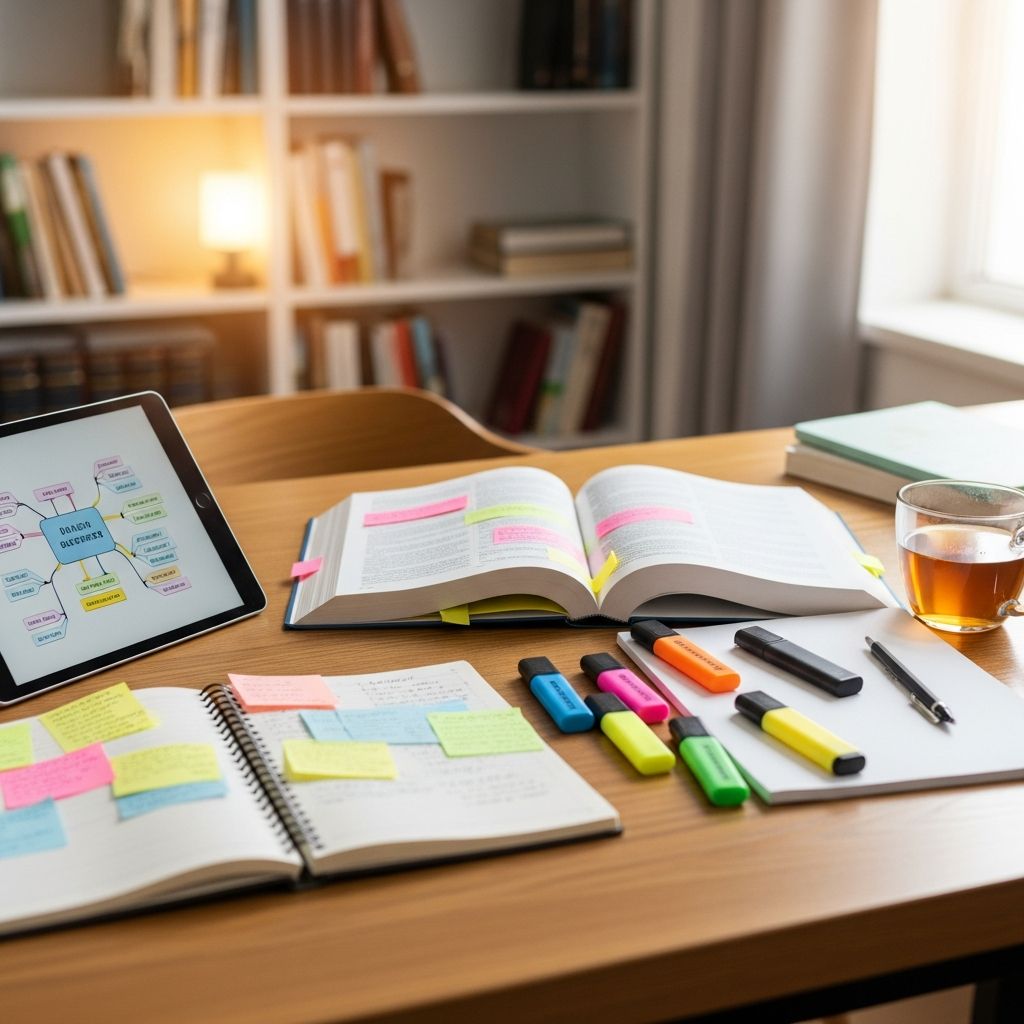
Excelling in exams requires more than just hard work; it demands smart, evidence-based approaches to learning and preparation. This comprehensive guide draws from expert recommendations to help you build habits that enhance retention, manage time effectively, and perform under pressure. Whether you’re a high school student facing finals or a college learner tackling midterms, these strategies will optimize your efforts for maximum results.
Building a Solid Foundation: Start with Strategic Planning
The cornerstone of successful exam preparation is beginning early and creating a structured plan. Procrastination undermines long-term memory formation, while spaced practice over weeks builds deeper understanding.
Assess your syllabus and prioritize topics based on complexity and exam weight. Craft a weekly timetable that allocates time proportionally—dedicate more slots to challenging subjects. Incorporate flexibility with buffer periods for review or unforeseen events. Digital tools like calendars or apps can send reminders, ensuring consistency.
- Review course outlines 3-4 weeks ahead to identify key chapters.
- Divide material into daily chunks, aiming for 1-2 hours per session initially.
- Track progress weekly to adjust as needed.
This methodical approach prevents overwhelm and fosters steady progress, turning preparation into a sustainable routine.
Optimizing Your Study Environment for Peak Focus
A distraction-free space is essential for concentration. Select a dedicated area—your desk, library corner, or quiet room—equipped with good lighting and minimal interruptions.
Eliminate digital temptations by using website blockers or keeping your phone in another room. Experiment with environments to find what boosts alertness; some thrive in natural daylight, aligning with peak cognitive hours. Consistency in location cues your brain to enter ‘study mode.’ Maintain organization: keep notes, textbooks, and supplies handy to avoid breaks in momentum.
| Element | Ideal Setup | Benefits |
|---|---|---|
| Lighting | Natural daylight or bright lamps | Enhances alertness and mood |
| Noise Level | Quiet or white noise | Reduces cognitive load |
| Seating | Ergonomic chair, flat desk | Prevents fatigue during long sessions |
| Tools | Notebook, pens, water | Maintains hydration and flow |
By curating this setup, you’ll maximize productive time and minimize wasted effort.
Harnessing Active Learning Techniques for Superior Retention
Passive reading yields fleeting results; active engagement cements knowledge. Techniques like self-quizzing, summarization, and teaching others activate multiple brain pathways, improving recall by up to 50% compared to re-reading.
Key Methods:
- Flashcards with Spaced Repetition: Tools like Anki schedule reviews based on forgetting curves, reinforcing memory efficiently.
- Mind Mapping: Visually link concepts to reveal relationships, ideal for visual learners.
- Feynman Technique: Explain ideas simply as if to a child; gaps in explanation highlight weak spots.
- Self-Testing: Quiz without notes to simulate retrieval under pressure.
Tailor to your style: visuals use diagrams, auditory learners record explanations, kinesthetic types practice problems hands-on. Rotate methods to avoid plateaus.
Mastering Time Management: The Power of Structured Breaks
Sustained focus wanes after 25-50 minutes; strategic breaks restore it. The Pomodoro Technique—25 minutes study, 5-minute rest—boosts productivity and prevents burnout.
After four cycles, extend to 15-30 minutes for movement or snacks. Use breaks actively: stretch, hydrate, or walk to oxygenate the brain. Avoid screens to allow mental recharge.
Chunk sessions by subject or topic, switching every hour to maintain freshness. Track sessions to refine durations matching your rhythm.
Simulating Exam Day: Practice Under Pressure
Nothing bridges the gap between study and success like realistic drills. Replicate test conditions: timed sessions in a quiet space, no aids, full format.
Source past papers or create mocks from notes. Review errors deeply—what caused them? Adjust strategies accordingly. This builds stamina, time sense, and familiarity, slashing anxiety.
Practice progressively: start untimed, then add constraints. Aim for 3-5 full simulations per exam.
Prioritizing Health: Sleep, Nutrition, and Balance
Cognitive function hinges on well-being. Sleep consolidates memories; 7-9 hours nightly enhances performance and stress resilience.
Fuel with balanced meals—protein, complex carbs, avoid sugar crashes. Pre-exam breakfast stabilizes blood sugar. Exercise moderately to sharpen focus; monitor stress via journaling or meditation.
- Sleep: No all-nighters; review lightly before bed.
- Diet: Nuts, fruits, whole grains over junk.
- Activity: 20-minute walks daily.
Balance with hobbies to sustain motivation.
Adapting to Your Learning Style for Personalized Success
One-size-fits-all fails; customize based on preferences.
| Style | Strategies | Examples |
|---|---|---|
| Visual | Diagrams, colors | Mind maps, infographics |
| Auditory | Recordings, discussions | Podcasts, group study |
| Kinesthetic | Hands-on, movement | Practice tests, role-play |
| Reading/Writing | Notes, lists | Summaries, essays |
| Logical | Patterns, problems | Puzzles, step breakdowns |
Assess via quizzes; blend styles for versatility.
Common Pitfalls and How to Avoid Them
Steer clear of cramming—it’s short-term and anxiety-inducing. Multitasking fragments attention; single-task fully. Over-highlighting dilutes focus; summarize instead.
Ignore perfectionism; progress over flawlessness. If stuck, seek help promptly from teachers or peers.
Frequently Asked Questions (FAQs)
How far in advance should I start studying?
Ideally 3-4 weeks early, spacing sessions for optimal retention.
What’s better: studying alone or in groups?
Alone for deep focus, groups for explanation practice—balance both.
Does music help during study?
Instrumental yes for some; lyrics distract. Test personally.
How many hours daily for effective prep?
4-6 focused hours with breaks, quality over quantity.
Can naps improve performance?
Short 20-minute naps refresh; avoid long ones disrupting night sleep.
Implement these strategies consistently to transform your academic outcomes. Consistent application yields compounding results, paving the way for not just passing, but dominating exams.
References
- Exam preparation: Ten study tips — TopUniversities. 2023-05-15. https://www.topuniversities.com/student-info/health-and-support/exam-preparation-ten-study-tips
- 14 Tips for Test Taking Success — Harvard Summer School. 2024-02-10. https://summer.harvard.edu/blog/14-tips-for-test-taking-success/
- Preparing for College Final Exams: 7 Strategies for Success — Baker College. 2023-11-20. https://www.baker.edu/about/get-to-know-us/blog/seven-final-exam-strategies-for-success/
- Study Tips for Exams—Study Smarter, Not Harder — Oxford Learning. 2024-01-08. https://oxfordlearning.com/study-tips-for-exams-study-smarter-not-harder/
- Mastering the Art of Studying: Top 7 Study Techniques for Exam Success — URBE University. 2023-09-12. https://urbeuniversity.edu/blog/mastering-the-art-of-studying-top-7-study-techniques-for-exam-success
- Study Strategies: How to prepare for exams — Randolph-Macon College. 2023-04-05. https://www.rmc.edu/news/how-to-prepare-for-exams/

Medha Deb is an editor with a master's degree in Applied Linguistics from the University of Hyderabad. She believes that her qualification has helped her develop a deep understanding of language and its application in various contexts. Medha specializes in the areas of beauty, health, sports, and wellness and is committed to ensuring that the content on the website is…