
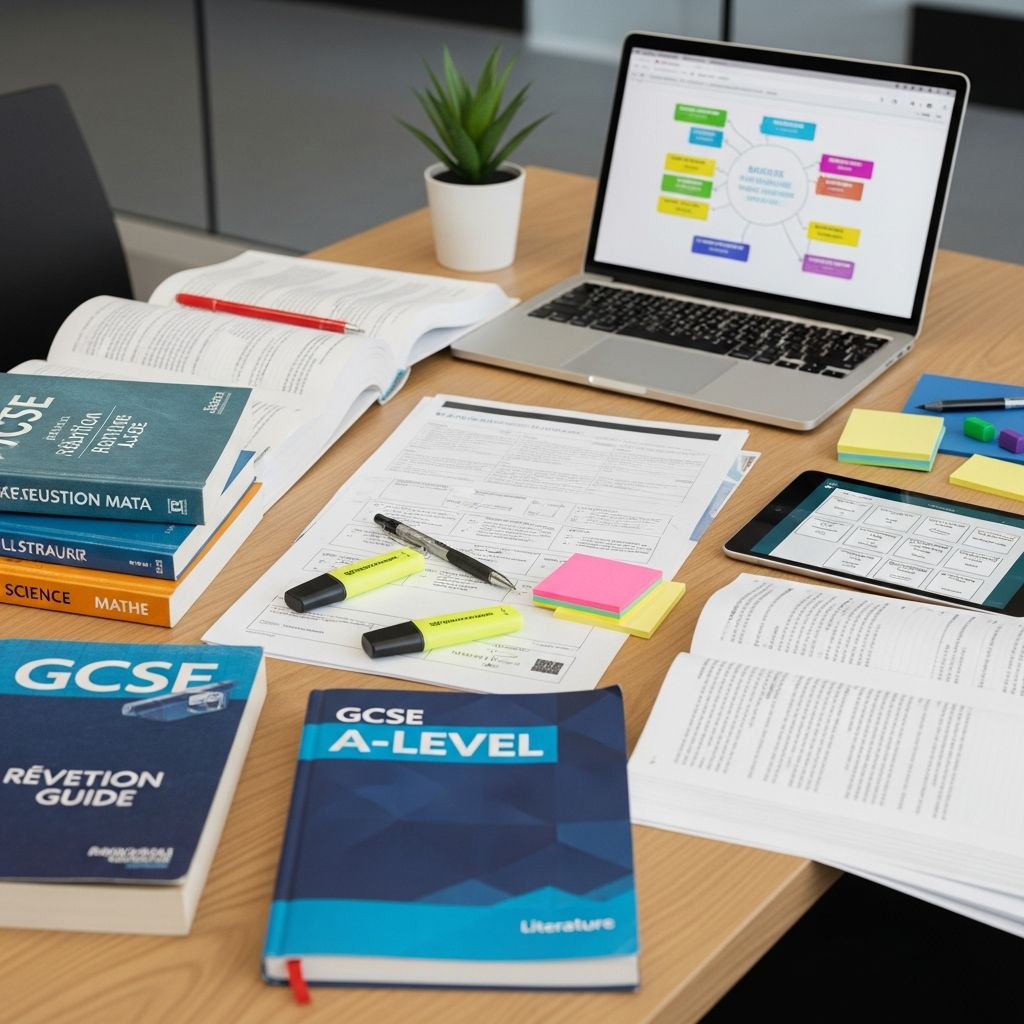
Excelling in GCSEs and A-Levels demands more than rote memorization; it requires smart, efficient study habits that build deep understanding and retention. High-achieving students prioritize targeted revision, sustained focus, and reflective practices to transform overwhelming syllabi into manageable goals. This guide outlines practical techniques drawn from successful learners, helping you create a personalized approach to secure top grades.
Building a Solid Foundation with Strategic Planning
Effective planning turns chaos into clarity, ensuring every hour counts toward exam readiness. Start by mapping your entire revision timeline backward from exam dates. Identify key milestones, such as completing past papers or mastering weak topics, and allocate time slots accordingly. Use digital tools like Google Calendar or physical planners to visualize progress, setting weekly and daily targets.
Break large subjects into smaller, thematic units—such as chapters or modules—to avoid overload. Prioritize based on confidence levels: rate each topic from 1 to 10 and tackle those below 7 first. This method not only boosts efficiency but also builds momentum as gaps close quickly.
- Set specific, achievable goals: Aim to cover two weak topics per session.
- Balance subjects: Rotate daily to maintain freshness and prevent burnout.
- Include buffer time: Reserve slots for unexpected delays or review.
Harnessing Active Recall for Long-Term Retention
Passive reading fades quickly, but active recall strengthens neural pathways, transferring knowledge to long-term memory. Test yourself without notes using flashcards, quizzes, or verbal explanations. Techniques like the Feynman Method—teaching concepts simply as if to a child—expose misunderstandings early.
Implement spaced repetition: review material at increasing intervals (daily, then weekly, monthly). Tools like the Leitner system organize flashcards into boxes based on mastery, ensuring frequent testing of tricky items. For subjects like maths or sciences, solve problems from memory before checking solutions.
| Technique | How to Apply | Best For |
|---|---|---|
| Flashcards | Question on front, answer on back; shuffle daily | Vocab, formulas, dates |
| Self-Quizzing | Close book, write key points; check accuracy | Conceptual understanding |
| Practice Papers | Timed simulation under exam conditions | All subjects, especially essays |
Optimizing Focus and Concentration
Distraction is the enemy of productivity; top performers train focus like a muscle. Adopt the Pomodoro Technique: 25 minutes of uninterrupted work followed by a 5-minute break. Use apps like Forest to gamify sessions and block notifications. Create a dedicated study environment—quiet, well-lit, with minimal clutter.
Combat wandering thoughts by jotting them down for later. Fuel your brain with light snacks like fruit for sustained energy, and incorporate short physical activity between sessions to refresh. Gradually extend focus periods to match exam durations, building stamina.
- Eliminate multitasking: One subject per block.
- Music choice: Instrumental tracks to enhance flow without lyrics.
- Track progress: Log completed Pomodoros for motivation.
Advanced Note-Taking and Organization Systems
Notes are your revision lifeline; poor ones waste time. Employ the Cornell Method: divide pages into cues, main notes, and summaries for quick review. Mind maps visually connect ideas, ideal for interconnected topics like history or biology.
For dense subjects, use color-coding: highlighters for key terms, diagrams for processes. The SQ3R approach—Survey, Question, Read, Recite, Review—ensures active engagement from the start. Regularly condense notes to one-page overviews, reinforcing retention.
Leveraging Visual and Memory Aids
Visual learners thrive with diagrams, flowcharts, and infographics. Convert lists into mind maps branching from central themes, revealing relationships. Mnemonics, acronyms, and chunking break complex info into digestible parts—e.g., group historical events by era.
Visualization techniques: imagine concepts as vivid scenes. For languages, associate words with images or stories. These methods, backed by cognitive science, enhance recall during high-pressure exams.
Reflective Practices and Feedback Integration
Exams provide data; ignore it at your peril. After mocks, analyze errors: what patterns emerge? Adjust strategies accordingly—more practice for technique flaws, deeper review for knowledge gaps. Keep a reflection journal: weekly entries on what worked and tweaks needed.
Seek teacher feedback early; targeted input accelerates improvement. Study groups offer peer perspectives but stay focused—debate concepts, not chat.
Subject-Specific Tactics for Peak Performance
Sciences and Maths
Prioritize problem-solving: daily past paper questions, starting untimed then building speed. Explain derivations aloud.
Humanities
Timeline maps for history; essay skeletons for English. Debate arguments to solidify views.
Languages
Daily immersion: label objects, narrate routines. Record and self-assess pronunciation.
Sustaining Motivation and Avoiding Burnout
Growth mindset views challenges as opportunities. Celebrate small wins to dopamine-boost motivation. Schedule downtime: hobbies, exercise, sleep—non-negotiables for cognitive health.
Space revisions to combat cramming; consistency trumps intensity. Parental support: discuss plans without micromanaging.
Frequently Asked Questions (FAQs)
How many hours should I study daily for GCSEs/A-Levels?
Aim for 4-6 focused hours, quality over quantity. Include breaks and ramp up closer to exams.
What’s better: studying alone or in groups?
Alone for deep work; groups for clarification and motivation, limited to 1-2 hours weekly.
Can I use phones during study sessions?
Only for timers/apps; otherwise, airplane mode to eliminate distractions.
How do I handle exam anxiety?
Practice mindfulness, simulate exams, and visualize success. Consistent prep builds confidence.
Is cramming effective?
No—short-term gains, long-term loss. Spaced active recall is superior.
References
- The 5 study skills that high-performing students swear by — My Performance Learning. 2023. https://myperformancelearning.com/study-skills-revision-a-levels-gcse/
- The Complete Guide to Study Skills — Oxford Learning. 2023. https://oxfordlearning.com/the-complete-guide-to-study-skills/
- 11 Study Techniques To Ace Your Exams — Oxbridge Home Learning. 2023. https://oxbridgehomelearning.uk/blog/11-study-techniques-to-ace-your-exams/
- GCSE Study skills guide — Stanborough School. 2020-09-01. https://stanborough.herts.sch.uk/wp-content/uploads/2020/09/Y11-Study-Skills-Guide-2021.pdf
- A-Level preparation – Top tips from our successful graduates — DLD College. 2023. https://www.dldcollege.co.uk/a-level-preparation-top-tips-from-our-successful-graduates-and-helpful-learning-techniques/
- How to Study Effectively: 4 Top Tips | GCSEs and A Levels — YouTube (Jamie Miles). 2023. https://www.youtube.com/watch?v=QTH1OB7dtf4
- The EXACT STUDY TIPS that got me ALL 9s AND A*s — YouTube (Somya Garg). 2023. https://www.youtube.com/watch?v=d5v1f1L_hNs

- Integrated M.A. in Applied Linguistics, University of Hyderabad
- 5+ years in editorial, instructional, SEO, and research-based writing
Sneha is a relationships and lifestyle writer with a strong foundation in applied linguistics and certified training in relationship coaching. She brings over five years of writing experience to theskillvault, crafting thoughtful, research-driven content that empowers readers to build healthier relationships, boost emotional well-being, and embrace holistic living. Her writing and insights reflect the belief that beauty, happiness, and wellness…