
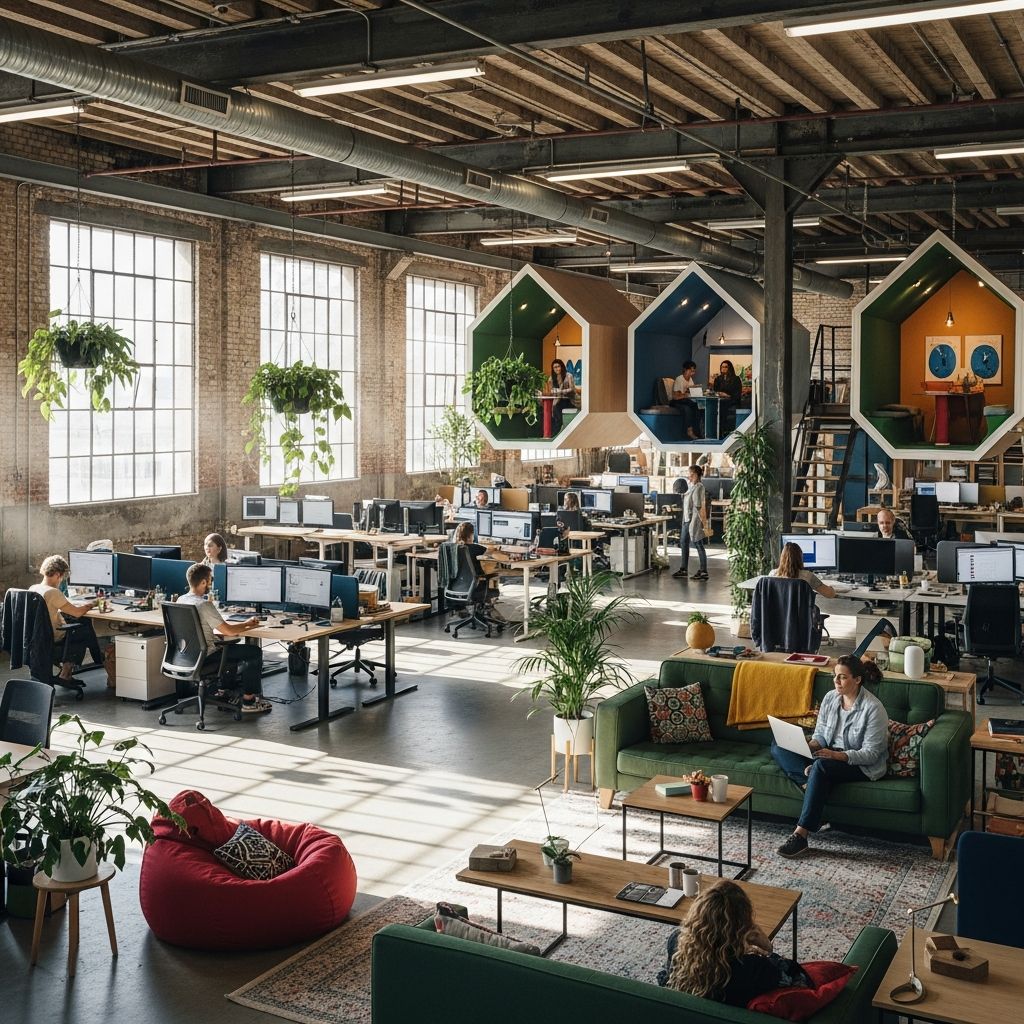
Reimagining Where Work Happens: Beyond the Traditional Desk
The modern workforce has undergone a fundamental transformation in recent years. Workers increasingly recognize that productivity is not confined to a single location or rigid environment. The spaces where we work profoundly influence our ability to concentrate, think creatively, and accomplish meaningful tasks. While home offices and corporate cubicles represent the default options for many professionals, emerging research and worker experiences reveal that unconventional locations can serve as powerful catalysts for enhanced performance and innovation.
The relationship between environment and productivity extends far deeper than simple comfort. Environmental psychology demonstrates that our surroundings directly affect cognitive function, emotional state, and work quality. By strategically selecting alternative workspaces suited to specific tasks, professionals can unlock previously untapped levels of efficiency and creative problem-solving.
Natural Light and Window-Adjacent Work Zones
Among the most overlooked yet impactful productivity enhancers is the presence of natural light. Spaces positioned near windows or in areas with abundant daylight create measurable improvements in cognitive performance and work output. Research into workplace design consistently shows that professionals working near natural light sources demonstrate enhanced alertness, better mood regulation, and improved sleep quality during off-work hours.
The biological mechanisms behind this phenomenon involve circadian rhythm regulation. When eyes receive exposure to natural light, particularly during morning hours, the body’s internal clock synchronizes more effectively. This synchronization improves focus duration, reduces afternoon energy crashes, and enhances decision-making capabilities throughout the workday. Beyond the physiological benefits, natural light creates a psychological shift that makes work feel less isolated and monotonous.
Professionals seeking to leverage this advantage should identify locations with southern or eastern exposure during morning work sessions. Libraries with abundant windows, coffee shops positioned near glass facades, and co-working spaces featuring skylights all provide access to this essential environmental factor. Even when full-time work from such locations proves impractical, scheduling critical thinking tasks or deep focus work during peak daylight hours in naturally lit spaces can yield significant productivity dividends.
Biophilic Environments: The Productivity Impact of Greenery
The presence of living plants in work environments produces measurable effects on both psychological wellbeing and task performance. Research indicates that incorporating live vegetation into workspaces increases productivity by approximately fifteen percent while simultaneously reducing stress levels and improving air quality. The biophilic design principle—which emphasizes our innate connection to natural elements—operates on both conscious and subconscious levels when implemented in work settings.
Gardens, parks, and outdoor courtyards represent particularly powerful biophilic workspaces. Beyond desktop plants or window gardens visible from indoor desks, actually working in spaces surrounded by vegetation creates a multisensory engagement with nature. The sights, sounds, and subtle scents of living plants activate parasympathetic nervous system responses, counteracting the stress-inducing effects of constant digital connectivity and mental strain.
For professionals unable to relocate work entirely to outdoor environments, hybrid approaches offer practical alternatives. Taking strategic breaks in green spaces—even brief five to fifteen minute intervals—provides restorative effects that extend productivity throughout remaining work hours. Some professionals describe this practice as filling a “restorative power bank,” allowing them to return to structured work tasks with renewed mental energy and emotional resilience. The key distinction involves actively engaging with natural environments rather than simply viewing them passively from a distance.
Dynamic Workspaces: Coffee Shops and Public Venues
Seemingly counterintuitive, bustling coffee shops and other semi-public venues function as surprisingly effective productivity environments for certain work types and individual preferences. The moderate ambient noise level, casual social atmosphere, and sensory variety present in these settings can paradoxically enhance focus and creative output. Many professionals report that the energy and purposeful activity surrounding them in coffee shop environments motivates sustained concentration on challenging projects.
The phenomenon operates through several psychological mechanisms. Background noise at appropriate levels—termed “stochastic resonance”—can enhance cognitive performance on certain creative tasks. The visual presence of other people engaged in work creates subtle social accountability, encouraging the individual to maintain consistent effort. Additionally, the lack of familiar distractions found at home offices—family members, household chores, pets—removes obstacles that frequently interrupt work flow in residential settings.
Strategic selection of public venues proves important for optimizing this approach. Quieter independent coffee shops typically support sustained focus work better than high-volume chains with loud music and frequent customer transitions. Libraries represent perhaps the most refined version of this concept, combining background activity sufficient to maintain motivation with noise restrictions and design elements explicitly intended to support concentration. Public libraries increasingly attract remote workers and entrepreneurs seeking this particular environmental balance.
The transition between different coffee shop locations deserves specific mention as a productivity technique. Changing venues when tackling specific projects—such as writing, complex analysis, or strategic planning—prevents the psychological staleness that develops from working in identical environments repeatedly. This novelty factor stimulates slightly different mental states and perspectives, often breaking through blocks that emerge from excessive environmental familiarity.
Transportation Hubs: Airports, Trains, and Transit Spaces
Travel environments present unusual opportunities for concentrated work sessions, particularly for tasks requiring focused attention without interruption. The bounded time frame of flights, train journeys, or layovers creates natural work sessions with built-in endpoints. This constraint forces prioritization and eliminates the open-ended quality of office work, where projects can expand indefinitely to fill available time.
Airport lounges and train station workspaces offer additional advantages: minimal social interruptions compared to coffee shops, reliable internet connectivity, and designated seating optimized for temporary work. The context of travel—being in transit toward a destination—creates a psychological state distinct from routine work environments. This mental shift frequently enhances motivation for focused task completion, particularly for projects that feel stalled in familiar settings.
Business travelers increasingly recognize these spaces as valuable productivity opportunities rather than merely gaps between destinations. Rather than viewing travel time as lost work capacity, strategic professionals treat transit hours as focused work blocks, often accomplishing more in flight or train cabin time than in multi-hour sessions within traditional offices interrupted by meetings and collegial interactions.
Acoustic and Sensory Optimization in Work Environments
Beyond location selection, the acoustic properties and sensory characteristics of chosen workspaces significantly impact sustained productivity. Music serves as a particularly useful environmental element when selected strategically. Instrumental music, nature sounds, or ambient audio at moderate volumes can enhance focus, block distracting background noise, and overcome negative emotional states including stress, anxiety, and fatigue.
The relationship between acoustic environment and cognitive performance suggests that personalized sound selection matters tremendously. Some individuals maintain peak performance with complete silence, while others require consistent background audio to achieve optimal focus. The key involves experimentation to identify personal preferences rather than assuming universal solutions apply to all workers.
Fresh air exposure represents another underestimated environmental factor affecting cognitive and decision-making abilities. The cognitive benefits of increased oxygen availability and the mood enhancement of air circulation create measurable improvements in work quality. Even in cold climates, brief exposure to outdoor air—opening windows for ventilation or stepping outside for minutes—delivers meaningful performance enhancements without requiring relocation of work entirely.
Designing Personal Productivity Spaces
Regardless of selected primary work location, personalizing the immediate environment produces significant benefits. Decluttering work surfaces provides one of the most immediate and impactful improvements to productivity. The visual complexity of disorganized spaces consumes cognitive resources through continuous low-level distraction processing. Removing unnecessary items frees mental energy for actual work tasks.
Temperature regulation contributes substantially to sustained focus and comfort. Spaces that maintain moderate temperatures—typically between sixty-eight and seventy-two degrees Fahrenheit—support optimal cognitive function. Both excessive heat and cold create physiological stress responses that compete with work concentration for mental resources.
Lighting quality extends beyond natural daylight to encompass artificial illumination characteristics. Harsh fluorescent lighting creates fatigue and headaches in many workers. Where natural light remains unavailable, full-spectrum artificial lighting that mimics daylight quality provides superior support for sustained concentration compared to standard office fluorescents.
The Role of Movement and Environmental Change
Movement serves as a crucial productivity enhancer frequently overlooked in discussions of work environment optimization. Rising from seated positions and moving, ideally every hour, meaningfully increases energy levels and subsequent task performance. This movement can take various forms: walking to retrieve water, moving to different spaces within a facility, or transitioning between alternative work locations.
The connection between physical movement and cognitive refresh operates through multiple physiological pathways. Increased circulation delivers enhanced oxygen and glucose availability to the brain. Postural changes prevent physical strain from prolonged static positioning. Environmental change accompanying movement provides the sensory novelty that supports sustained attention.
Strategic professionals structure work days with intentional location transitions. Morning focus work might occur in a well-lit space near windows, midday collaborative tasks in semi-public venues facilitating casual interaction, and afternoon administrative work in quieter library environments. This deliberate variation maintains alertness while matching environmental characteristics to specific task requirements.
Unstructured Time and Creative Environments
Paradoxically, some of the most valuable work occurs during apparently unstructured time in environments explicitly not designated as work spaces. Walking, engaging with nature, or working on unrelated activities allows subconscious processing that generates innovative solutions and creative insights. These breakthroughs frequently emerge when conscious effort ceases and cognitive resources remain available for associative thinking.
The relationship between apparent goofing off and elevated productivity creates apparent contradictions only when productivity is misunderstood as constant visible task completion. Peak creative output actually requires periods of mental wandering and environmental engagement that support subconscious processing. Activities including puzzle work, music making, viewing natural landscapes, or gentle walking all function as shortcuts to highest-level productivity and innovative thinking.
Scheduling explicit unstructured time—treating it as seriously as scheduled meetings rather than optional—proves essential for professionals seeking sustained high-level performance. This might involve morning walks before work begins, afternoon breaks involving activities unrelated to work responsibilities, or weekend activities that engage different cognitive pathways than primary work domains.
Matching Workspace Selection to Task Requirements
Different work tasks benefit from different environmental conditions. Administrative tasks requiring attention to detail might thrive in quiet library settings with minimal distractions. Creative brainstorming sessions often flourish in livelier environments with moderate ambient activity and social presence. Strategic planning or complex analysis might benefit from outdoor settings supporting free thinking and perspective.
Experimentation with various workspaces and task types reveals personal patterns regarding optimal environmental matches. Some individuals discover that specific work consistently improves when relocated to particular spaces, while others find success through systematic variation preventing environmental monotony.
The key principle involves recognizing that productivity enhancement extends far beyond pushing harder or scheduling longer hours. Strategic environmental selection represents a powerful, often underutilized lever for improving work output, cognitive function, and sustained motivation.
Frequently Asked Questions
Q: How long should work sessions in alternative locations typically last?
A: Optimal session length varies by individual and task type, ranging from focused two-hour blocks to full workdays. Most professionals benefit from changing locations every three to four hours to maintain freshness and prevent environmental staleness.
Q: Can alternative workspaces replace traditional offices entirely?
A: For many professionals, a hybrid approach works best—combining multiple environments strategically rather than relying exclusively on single locations. This variation prevents adaptation and maintains the productivity benefits of environmental novelty.
Q: What types of work are least suitable for alternative workspace arrangements?
A: Work requiring secure document handling, confidential communications, or specialized equipment typically necessitates traditional office environments. Tasks requiring extensive collaboration with specific team members may also benefit from consistent location sharing.
Q: How can professionals minimize distractions in public workspaces?
A: Noise-canceling headphones, ambient audio selection, positioning away from high-traffic areas, and scheduling public workspace work during quieter periods all contribute to distraction reduction in semi-public environments.
Q: Does weather significantly impact outdoor workspace productivity?
A: Yes, extreme temperatures or precipitation generally reduce outdoor workspace viability. Mild weather conditions typically support outdoor work best, while poor weather may necessitate transition to covered or indoor alternative spaces.
References
- The Impact of Office Design on Productivity and Employee Wellbeing — Cornell University, Department of Design and Environmental Analysis. 2024-06-15. https://www.human.cornell.edu/
- Natural Light Exposure and Cognitive Performance in Work Environments — American Psychological Association. 2023-11-10. https://www.apa.org/science/about/psa
- Biophilic Design: The Impact of Plants on Workplace Productivity and Stress Reduction — International Journal of Environmental Research and Public Health. 2024-02-20. https://www.mdpi.com/journal/ijerph
- Environmental Psychology: Workplace Design and Cognitive Function — Journal of Environmental Psychology, Elsevier. 2023-09-12. https://www.journals.elsevier.com/journal-of-environmental-psychology
- Ambient Noise and Creative Cognitive Performance — Journal of Consumer Research, University of Chicago Press. 2024-01-08. https://www.journals.uchicago.edu/doi/full/10.1086/jcr
- The Restorative Effects of Nature Exposure on Mental Fatigue and Cognitive Restoration — Environmental Science & Technology, American Chemical Society. 2023-12-05. https://pubs.acs.org/journal/esthag

Medha Deb is an editor with a master's degree in Applied Linguistics from the University of Hyderabad. She believes that her qualification has helped her develop a deep understanding of language and its application in various contexts. Medha specializes in the areas of beauty, health, sports, and wellness and is committed to ensuring that the content on the website is…