
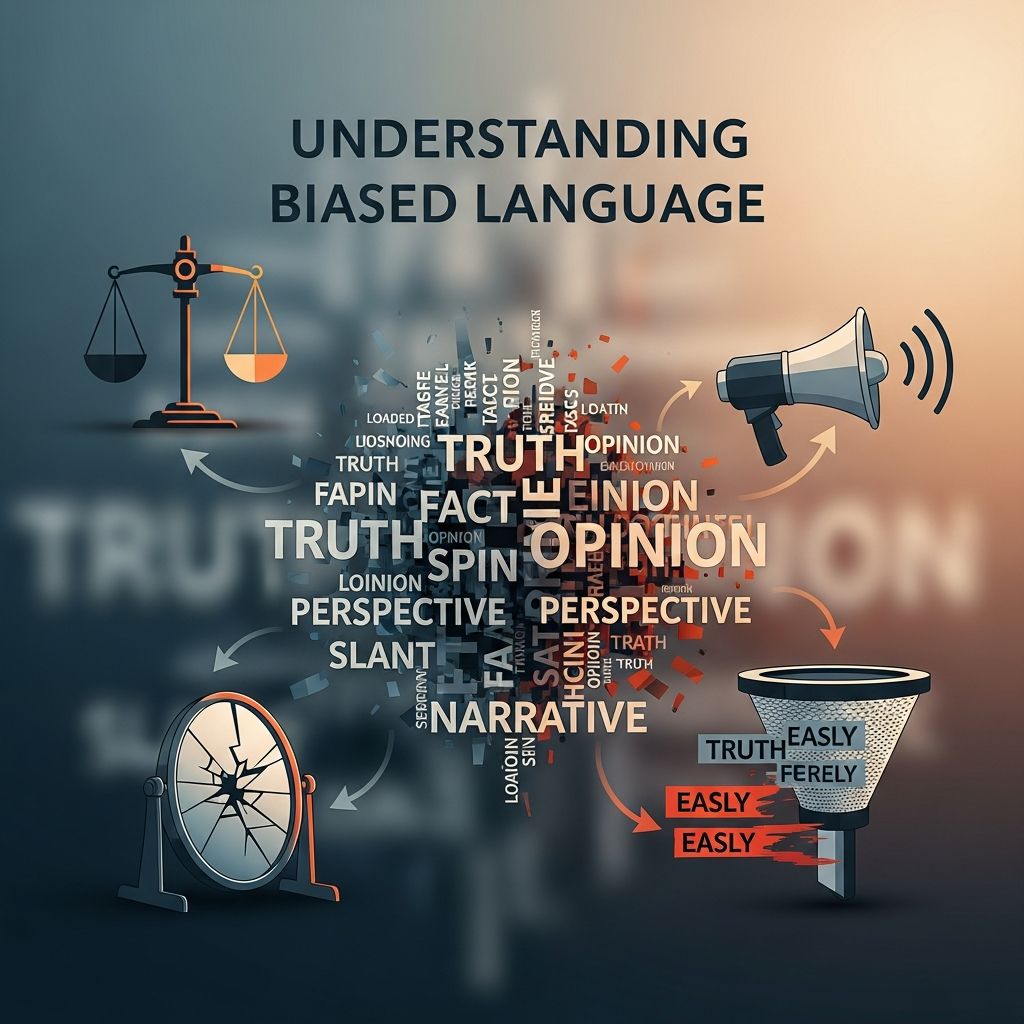
Biased language refers to words, phrases, or structures that unintentionally or deliberately convey prejudice, stereotypes, or exclusion toward individuals or groups based on characteristics like gender, race, age, disability, or culture. It undermines clear communication and perpetuates inequality, making it essential for writers, speakers, and organizations to recognize and replace it with neutral, respectful alternatives.
The Hidden Power of Words in Shaping Perceptions
Language is more than a tool for conveying information; it molds thoughts, influences behaviors, and reinforces societal norms. When bias creeps into everyday expressions, it can marginalize groups without overt intent. For instance, habitual use of gendered terms like ‘manpower’ implies labor is male-dominated, excluding women’s contributions and embedding outdated assumptions. This subtlety makes biased language pervasive in professional emails, marketing copy, news articles, and casual conversations.
Research from academic institutions highlights how such language creates barriers in diverse settings. At universities like Stony Brook, guidelines emphasize that biased terms reflect personal predispositions, turning civil discourse uncivil by alienating audiences. Similarly, Purdue OWL notes its frequency across gender, ethnicity, and other identities, urging objective alternatives to maintain credibility.
Core Categories of Language Bias
Biased language manifests in distinct forms, each tied to specific social dynamics. Understanding these categories helps in systematic identification and correction.
Gender Bias in Everyday Terms
Gendered language often defaults to male pronouns or roles, sidelining non-binary and female identities. Phrases like ‘mankind’ or ‘he’ for generic persons perpetuate exclusion. Alternatives such as ‘humanity’ or ‘they’ promote inclusivity.
- Common culprits: Fireman (use firefighter), businessman (use businessperson).
- Impact: Reinforces stereotypes in job descriptions and media, affecting hiring perceptions.
Racial and Ethnic Stereotypes
Terms rooted in historical oppression, like ‘blacklist’ (implying negativity) or ‘low man on the totem pole’ (cultural insensitivity), carry loaded connotations. Opt for ‘blocklist’ or ‘lowest priority’ to neutralize.
Media examples include portraying certain ethnic groups through limiting lenses, such as ‘exotic’ for non-Western features, which otherizes rather than humanizes.
Age-Related Assumptions
Ageism appears in dismissive labels like ‘tech-savvy millennial’ or ‘senile elder,’ generalizing capabilities. Neutral phrasing focuses on individuals: ‘experienced professional over 50’ instead of ‘ Boomer.’
Disability and Ability Bias
Person-first language shifts focus from condition to individual: ‘person with autism’ over ‘autistic person.’ Avoid idioms like ‘blind eye’ that trivialize experiences; use ‘ignore deliberately.’
| Biased Term | Inclusive Alternative | Reason |
|---|---|---|
| Handicapped parking | Accessible parking | Emphasizes usability, not limitation. |
| Crazy idea | Unconventional idea | Avoids mental health stigma. |
| Manpower shortage | Workforce shortage | Gender-neutral, inclusive of all. |
| Deaf to criticism | Ignore criticism | Respects sensory disabilities. |
Why Biased Language Persists and Its Consequences
Biased language endures due to cultural conditioning and linguistic inertia. Unintentional bias arises from habits learned in childhood, while intentional use serves to demean. In workplaces, it erodes trust: a Microsoft study notes it makes groups feel ‘cast out,’ harming collaboration.
Societally, it amplifies divisions. Journalism stereotyping women as ’emotional’ versus men as ‘decisive’ skews public views. Professionally, it risks legal issues under diversity policies and damages brand reputation. Quantitatively, organizations using inclusive language see 20-30% higher engagement in diverse teams, per DEI research.
Strategies for Detecting and Eliminating Bias
Audit your language systematically. Pause to question assumptions: Does this term assume gender, ability, or origin? Tools like Microsoft Editor flag issues in real-time.
- Adopt person-first phrasing: Prioritize the human element.
- Use active listening: Ask preferences from individuals.
- Diversify review teams: Multiple perspectives catch blind spots.
- Build vocabulary: Maintain lists of neutral synonyms.
In editing, read aloud for tone; revise generalizations. For global audiences, consider cultural variances—e.g., color symbolism where ‘black’ denotes negativity.
Practical Applications Across Contexts
In Professional Writing and Emails
Job postings with ‘aggressive salesman’ deter women; ‘dynamic sales role’ attracts broadly. Inclusive emails use ‘team’ over ‘guys.’
Marketing and Advertising
Ads avoiding ethnic tokenism resonate universally. Replace ‘exotic beauty’ with descriptive traits.
Educational and Academic Settings
Teachers model bias-free language; NIU guidelines stress stereotype avoidance for equitable learning. Purdue OWL aids students in academic writing.
Building a Culture of Inclusive Communication
Organizations thrive by training on bias awareness. Workshops simulate scenarios, fostering empathy. Leaders set examples: replace ‘master/slave’ in tech with ‘primary/replica.’
Long-term, inclusive language evolves norms. As society diversifies, neutral terms become standard, reducing conflicts and enhancing unity.
Frequently Asked Questions (FAQs)
What counts as biased language?
Any expression promoting stereotypes or exclusion based on identity traits, often subtle like gendered generics.
Is biased language always intentional?
No, most stems from habit; awareness is key to change.
How does biased language affect workplaces?
It alienates talent, lowers morale, and invites complaints.
Can AI help detect bias?
Yes, tools like Microsoft 365 scan for issues automatically.
What’s person-first language?
Phrasing like ‘person with disability’ to humanize, not define by trait.
References
- How to Avoid Biased Language in Communication — Tomedes. 2023. https://www.tomedes.com/translator-hub/how-to-avoid-biased-languages
- What Is Biased Language? Definition, Examples & Impact — ASAP Translate. 2023. https://www.asaptranslate.com/blog/what-is-biased-language-0x5ti
- What Is Biased Language and How Can You Avoid It? — Microsoft. 2023-10-01. https://www.microsoft.com/en-us/microsoft-365-life-hacks/writing/what-is-biased-language-and-how-can-you-avoid-it
- Biased Language — Stony Brook University. 2023. https://www.stonybrook.edu/commcms/studentaffairs/pledge/resources/biased-language.php
- Stereotypes and Biased Language — Purdue OWL. 2023. https://owl.purdue.edu/owl/general_writing/academic_writing/using_appropriate_language/stereotypes_and_biased_language.html
- Language Bias – Definition and Explanation — The Oxford Review. 2023. https://oxford-review.com/the-oxford-review-dei-diversity-equity-and-inclusion-dictionary/language-bias-definition-and-explanation/

- Integrated M.A. in Applied Linguistics, University of Hyderabad
- 5+ years in editorial, instructional, SEO, and research-based writing
Sneha is a relationships and lifestyle writer with a strong foundation in applied linguistics and certified training in relationship coaching. She brings over five years of writing experience to theskillvault, crafting thoughtful, research-driven content that empowers readers to build healthier relationships, boost emotional well-being, and embrace holistic living. Her writing and insights reflect the belief that beauty, happiness, and wellness…