
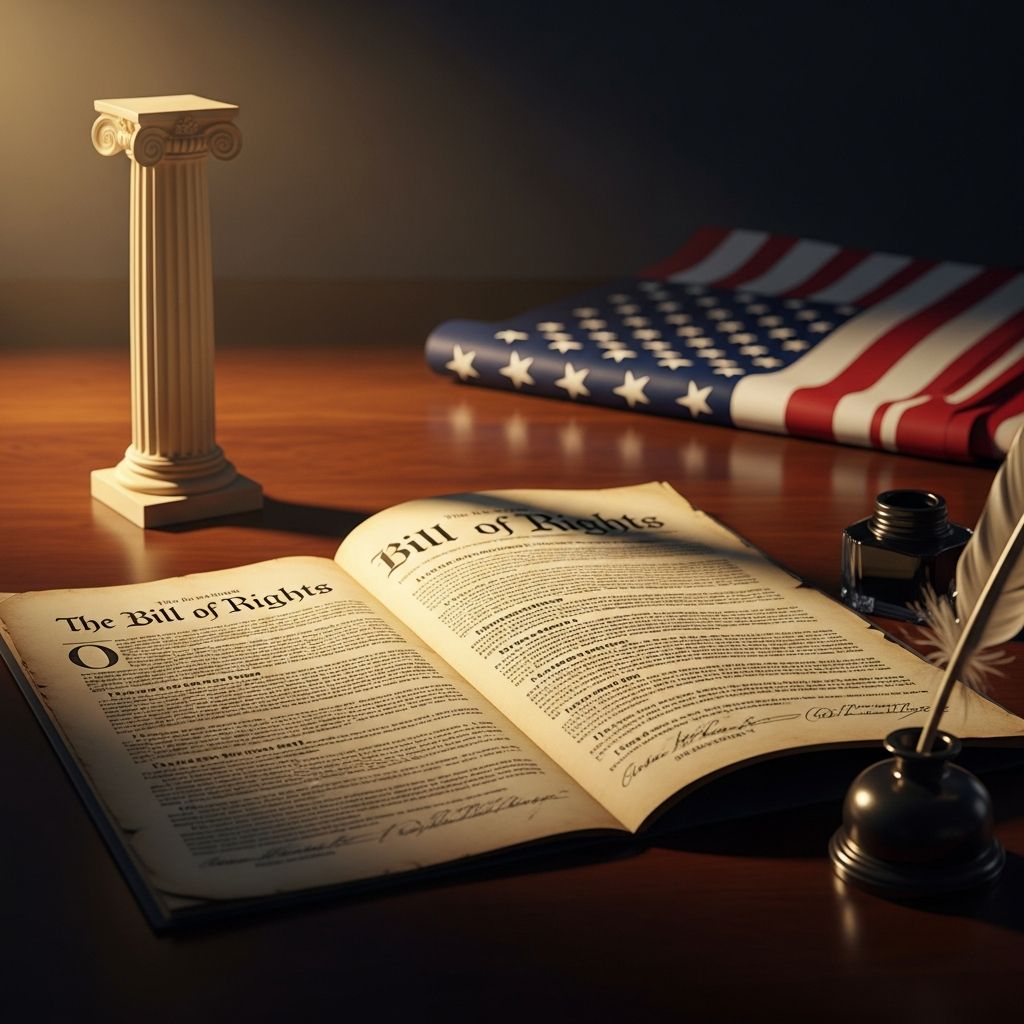
The Foundation of American Liberty: Understanding the Bill of Rights
At the heart of American democracy lies a document that has shaped the nation’s character for more than two centuries: the Bill of Rights. Comprising the first ten amendments to the United States Constitution, the Bill of Rights serves as a foundational safeguard of individual freedoms and a critical counterbalance to governmental authority. Ratified in 1791, these amendments emerged from the concerns of early American leaders who believed the original Constitution lacked sufficient protections for personal liberties. Today, the Bill of Rights remains as vital to American governance and individual life as it was during the nation’s founding era, serving as a living framework that continues to protect citizens across generations.
How the Bill of Rights Became Part of the Constitution
The path to the Bill of Rights’ inclusion in the Constitution reveals much about the priorities of America’s founders. When the Constitutional Convention drafted the original framework of American government, many delegates emphasized creating a system of checks and balances that distributed power among three branches. However, this focus on structural protections left a significant gap: the document contained no explicit guarantees of individual rights.
Concerns about this omission grew rapidly during the ratification process. Several states, fearing that the Constitution granted excessive power to the federal government without explicitly protecting individual liberties, hesitated to ratify it. Anti-Federalist leaders argued that citizens needed explicit assurances that their natural rights would be protected from governmental encroachment. These objections created a critical impasse that threatened the Constitution’s adoption. To resolve this deadlock and secure ratification, the framers agreed that amendments addressing personal rights would be added immediately following the Constitution’s approval. This commitment proved essential to gaining the necessary state approvals.
James Madison undertook the task of drafting these amendments, drawing on various state constitutions, political philosophy, and the expressed concerns of Anti-Federalists. After reviewing numerous proposed amendments from various states, Madison synthesized these ideas into ten amendments that captured the most essential protections for individual liberty. Congress approved Madison’s draft, and the states ratified these ten amendments in 1791, creating the Bill of Rights as we know it today. This process established an important precedent: the Constitution could be amended to protect citizens’ rights, a principle that would enable future generations to expand protections for additional groups and causes.
The Ten Amendments: A Comprehensive Overview
The Bill of Rights addresses fundamental categories of protection that the founders considered essential to free governance:
| Amendment | Primary Focus | Key Protections |
|---|---|---|
| First | Expression and Conscience | Freedom of speech, religion, press, assembly, and petition |
| Second | Right to Bear Arms | Protection of militia service and firearm ownership rights |
| Third | Quartering of Soldiers | Prohibition against forced housing of military personnel |
| Fourth | Search and Seizure | Protection from unreasonable searches; warrant requirements |
| Fifth | Due Process and Self-Incrimination | Grand jury protections, double jeopardy prohibition, self-incrimination rights |
| Sixth | Criminal Trial Rights | Right to speedy trial, counsel, confrontation of witnesses |
| Seventh | Civil Trial Rights | Right to jury trial in civil cases |
| Eighth | Punishment Protections | Prohibition of cruel and unusual punishment; excessive bail limits |
| Ninth | Unenumerated Rights | Recognition that rights exist beyond those explicitly listed |
| Tenth | Reserved Powers | Powers not delegated to federal government reserved to states and people |
Protecting Civil Liberties Through Constitutional Guardrails
One of the most significant functions the Bill of Rights performs is the protection of civil liberties from governmental interference. Civil liberties represent fundamental freedoms that define what it means to live in a free society—the ability to think, speak, worship, and associate according to individual conscience. Without explicit constitutional protections, these freedoms remain vulnerable to political pressure, shifting majorities, and governmental overreach.
The First Amendment exemplifies this protective function. By guaranteeing freedom of speech, the amendment ensures that citizens can criticize government policies, elected officials, and even the president without fear of arrest or censorship. This protection extends beyond politics to encompassing artistic expression, scientific inquiry, and personal communication. Similarly, freedom of religion protects individuals’ rights to worship according to their beliefs—or to hold no religious beliefs—without governmental compulsion or discrimination. These protections prove especially valuable during times of political tension or social upheaval, when majorities might otherwise restrict minority viewpoints or religious practices.
The Fourth Amendment’s protection against unreasonable searches and seizures establishes important boundaries around governmental intrusion into private spaces. By requiring law enforcement to obtain warrants based on probable cause before conducting searches, this amendment recognizes that citizens possess a sphere of privacy protected from arbitrary government investigation. This protection reflects a fundamental principle: individuals retain certain rights that government cannot violate regardless of circumstances.
The Fifth and Sixth Amendments create a system of legal protections that ensures fairness in criminal proceedings. These amendments guarantee due process of law, protection against self-incrimination, right to legal counsel, and the right to confront accusers. Together, these protections prevent the government from using its vast power to arbitrarily punish citizens without proper legal procedures and safeguards.
Limiting Government Power and Preventing Tyranny
Beyond protecting specific rights, the Bill of Rights serves a broader constitutional purpose: limiting government power and preventing the concentration of authority that historically leads to tyranny. The founders, having experienced British colonial rule and studied history extensively, understood that power unchecked tends toward abuse. The Bill of Rights establishes explicit boundaries defining what government cannot do, regardless of circumstances or political pressure.
This limitation operates through several mechanisms. First, the Bill of Rights reserves certain decisions to individuals rather than government. Citizens retain the right to make choices about religion, speech, and conscience that remain beyond government’s legitimate authority. Second, the amendments impose procedural requirements that slow governmental action and require justification. Law enforcement must obtain warrants, prosecutors must follow established trial procedures, and courts must respect specific rights even during criminal prosecutions. These procedures create accountability mechanisms that check governmental power.
The Tenth Amendment crystallizes this principle by explicitly reserving to the states and people all powers not delegated to the federal government. This provision reinforces that governmental power is limited and derivative—governments possess only those powers that people have consented to delegate. All other authority remains with individuals and their state governments. This framework prevents the federal government from consolidating power at the expense of state and individual authority.
The Bill of Rights in Daily American Life
While the Bill of Rights often seems like an abstract historical document, its protections permeate everyday American life in concrete ways:
- Religious Practice: Americans worship freely according to conscience, attend churches of their choosing, or practice no religion—all protected by the First Amendment
- Political Engagement: Citizens criticize government policies, support causes, and engage in political speech without governmental retaliation
- Legal Protection: Individuals accused of crimes receive representation, fair trials, and protection against self-incrimination
- Privacy: Citizens maintain spaces—homes, communications, medical records—where government intrusion requires proper legal authorization
- Property Rights: Inheritance, property ownership, and financial decisions benefit from due process protections and privacy rights
- Family Decisions: Medical, educational, and personal choices remain within individual and family authority rather than governmental mandate
Evolution and Interpretation Over Two Centuries
The Bill of Rights has remained remarkably resilient while also evolving through interpretation and application to new circumstances. The Constitution’s framers could not have anticipated technologies like the internet, surveillance systems, or digital communications, yet courts apply the Bill of Rights’ principles to protect privacy and speech in these contexts. The Ninth Amendment’s recognition that rights extend beyond those explicitly enumerated acknowledges that societal understanding of freedom expands over time.
Federal courts have played a central role in interpreting the Bill of Rights’ protections and applying them to novel situations. Supreme Court decisions have extended Bill of Rights protections to the states through the Fourteenth Amendment, ensuring that citizens receive consistent protections regardless of where they live. Court decisions have also clarified ambiguous language and balanced competing rights when different protections come into tension.
The Bill of Rights has also provided the foundation for subsequent constitutional amendments that expanded protections to previously excluded groups. The Thirteenth Amendment abolished slavery, the Fourteenth Amendment guaranteed equal protection and due process to all citizens, the Fifteenth Amendment protected voting rights regardless of race, and the Nineteenth Amendment extended voting rights to women. The Bill of Rights established the principle that constitutional amendments could address injustices and expand freedoms, enabling these later expansions of liberty.
Foundational Principles Embedded in the Amendments
Several core philosophical principles unite the Bill of Rights and explain their enduring importance:
- Natural Rights Philosophy: The amendments recognize that certain rights derive from human nature itself, not from government, and therefore cannot be legitimately violated
- Limited Government: These amendments embody the principle that governmental power should be restricted to specific purposes and cannot extend to controlling personal conscience or restricting fundamental freedoms
- Popular Sovereignty: The Tenth Amendment explicitly reserves unenumerated powers to the people, reinforcing that ultimate authority rests with citizens, not government
- Procedural Justice: Multiple amendments establish procedures that government must follow, ensuring accountability and preventing arbitrary exercise of authority
- Checks and Balances: The Bill of Rights adds another dimension to the Constitution’s system of checks by creating rights that even majorities cannot violate
Relevance in Contemporary American Society
More than two centuries after ratification, the Bill of Rights remains contested and vital. Contemporary debates about free speech on social media platforms, religious accommodation in public institutions, voting rights protections, gun ownership regulations, and privacy in the digital age all invoke Bill of Rights principles. These ongoing discussions demonstrate that the amendments’ core protections continue addressing genuine tensions between individual liberty and collective needs.
Courts continuously apply the Bill of Rights to situations the founders could never have imagined. Yet the foundational principles—that individuals retain fundamental rights, that government power is limited, and that proper procedures must be followed—prove remarkably flexible and applicable to new circumstances. This adaptability explains why a document written in 1791 remains central to American law and governance.
The Bill of Rights as a Catalyst for Constitutional Amendment
Perhaps equally important as the specific rights protected by these ten amendments was the precedent they established: the Constitution could be amended to address injustice and expand protections for liberty. This precedent opened the door for seventeen subsequent amendments that have expanded voting rights, abolished slavery, prohibited discrimination, and addressed other issues the original framers either did not contemplate or deliberately avoided. Without the Bill of Rights’ successful demonstration that constitutional amendment was possible and appropriate, American democracy might never have expanded protections to previously excluded citizens.
Frequently Asked Questions
Q: When was the Bill of Rights ratified?
A: The Bill of Rights was ratified on December 15, 1791, two years after the Constitution’s ratification. Bill of Rights Day on December 15 commemorates this ratification annually.
Q: Why wasn’t the Bill of Rights included in the original Constitution?
A: The Constitution’s framers focused on creating governmental structure and checks and balances. Many delegates believed a bill of rights was unnecessary, but Anti-Federalists demanded explicit protections for individual liberties before they would ratify the Constitution.
Q: Who wrote the Bill of Rights?
A: James Madison drafted the Bill of Rights by synthesizing proposed amendments from various states, political philosophers’ writings, and concerns raised by Anti-Federalists. Congress approved his draft, which was then ratified by the states.
Q: Can the Bill of Rights be amended or repealed?
A: Technically, yes. The Constitution can be amended through the formal amendment process requiring two-thirds of Congress and three-fourths of state legislatures. However, the Bill of Rights has become so fundamental to American identity that any serious attempt at repeal would face enormous political obstacles.
Q: Do the Bill of Rights protections apply only to the federal government?
A: Originally, yes. The Bill of Rights restricted federal government actions only. However, through the Fourteenth Amendment and Supreme Court interpretation, most Bill of Rights protections now apply to state and local governments as well.
Q: How does the Bill of Rights apply to private companies?
A: Generally, the Bill of Rights restricts government action, not private conduct. Private companies do not have constitutional obligations to respect these rights, though federal and state laws may impose additional restrictions on private conduct regarding speech, discrimination, and privacy.
References
- The Bill of Rights: What Does it Say? — National Archives. Accessed April 2026. https://www.archives.gov/founding-docs/bill-of-rights/what-does-it-say
- First 10 Amendments | What is the Bill of Rights? — Bill of Rights Institute. Accessed April 2026. https://billofrightsinstitute.org/primary-sources/bill-of-rights/
- Why Is the Bill of Rights Important to Me and My Ancestors? — FamilySearch. Accessed April 2026. https://www.familysearch.org/en/blog/why-is-the-bill-of-rights-important
- Eight Basic Facts About the Bill of Rights — Constitution Center. Accessed April 2026. https://constitutioncenter.org/blog/everything-you-ever-wanted-to-know-about-the-bill-of-rights-2
- Bill of Rights Day: Why the Bill of Rights Still Matters Today — Estate Planning People. Accessed April 2026. https://estateplanningpeople.com/blog/bill-of-rights-day-why-the-bill-of-rights-still-matters-today/
- Analysis: The Bill of Rights — EBSCO Research Starters. Accessed April 2026. https://www.ebsco.com/research-starters/history/analysis-bill-rights
- The Blessings of Liberty and Bills of Rights — Constitution Center. Accessed April 2026. https://constitutioncenter.org/essays/the-blessings-of-liberty-and-bills-of-rights

- Integrated M.A. in Applied Linguistics, University of Hyderabad
- 5+ years in editorial, instructional, SEO, and research-based writing
Sneha is a relationships and lifestyle writer with a strong foundation in applied linguistics and certified training in relationship coaching. She brings over five years of writing experience to theskillvault, crafting thoughtful, research-driven content that empowers readers to build healthier relationships, boost emotional well-being, and embrace holistic living. Her writing and insights reflect the belief that beauty, happiness, and wellness…