
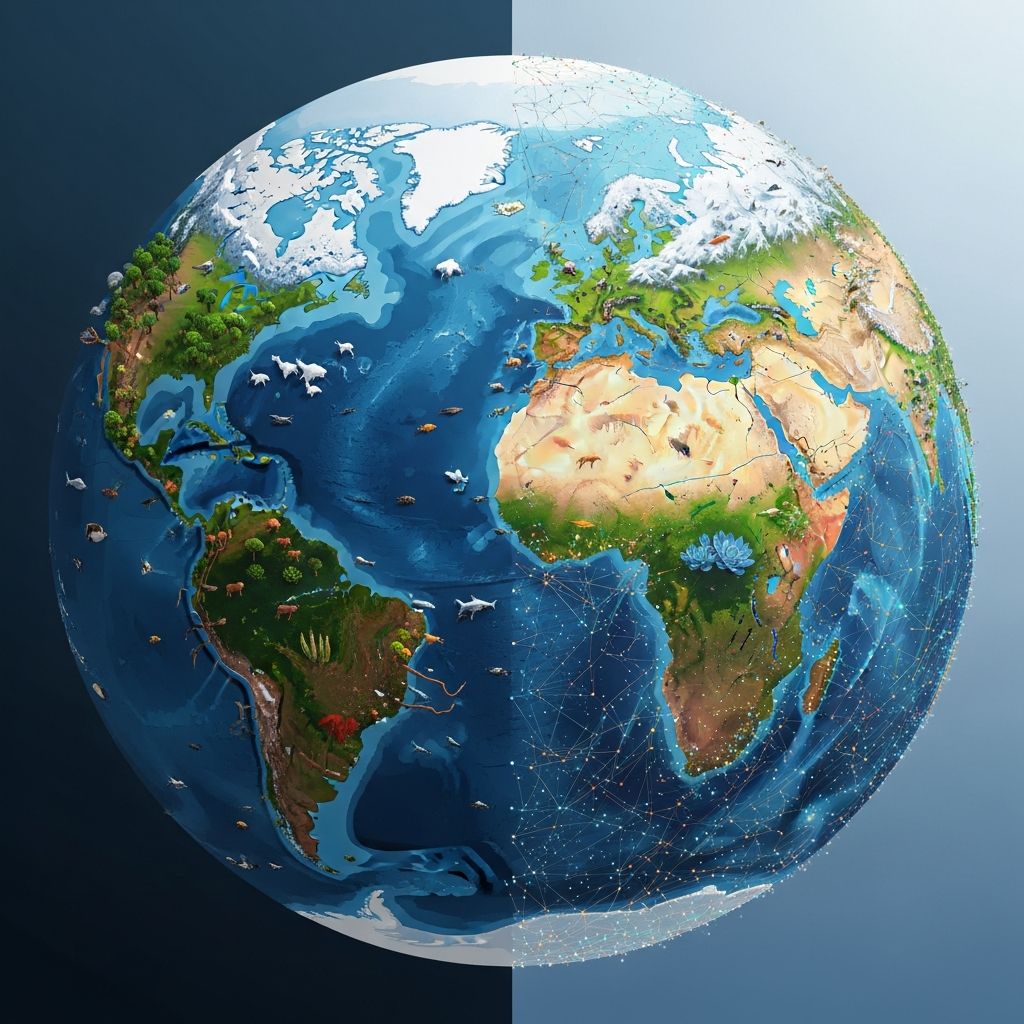
Biogeography examines how living organisms are distributed across the planet, revealing patterns influenced by environmental factors, evolutionary processes, and historical events. This interdisciplinary field integrates biology, geology, and climatology to explain why certain species thrive in specific locations while absent elsewhere.
Core Principles of Species Distribution
The foundation of biogeography lies in understanding why life forms cluster in particular regions. Abiotic factors like temperature, precipitation, soil composition, and elevation create gradients that dictate habitable zones. For instance, latitude profoundly affects climate, with tropical regions hosting higher diversity due to stable warmth and moisture.
Biotic interactions, such as competition, predation, and symbiosis, further refine these distributions. Generalist species adapt to varied conditions, while specialists, or endemics, are confined to unique habitats. Over geological timescales, these patterns emerge from long-term evolutionary pressures, linking biogeography to the dawn of evolutionary theory in the 18th century.
Ecological vs. Historical Approaches
Biogeographers divide their work into two main traditions: ecological and historical. Ecological biogeography focuses on contemporary processes, analyzing how climate, dispersal barriers, and habitat fragmentation shape current distributions. It addresses short-term dynamics, like how disturbances from fires or storms alter community structures.
Historical biogeography, conversely, reconstructs past events through fossils, phylogenetics, and plate tectonics. It explains why related species share geographic patterns, such as marsupials dominating Australia, reflecting continental drift and isolation. These approaches complement each other, providing a full picture from immediate ecology to deep-time evolution.
Key Drivers Shaping Biodiversity Patterns
- Climate and Abiotic Gradients: Temperature and rainfall vary predictably with latitude and altitude, fostering distinct biomes like rainforests, tundras, and deserts.
- Geological History: Plate tectonics has reshaped landmasses, creating barriers like oceans and mountains that isolate populations, driving speciation.
- Dispersal Mechanisms: Seeds, wind, animals, or ocean currents enable migration, but barriers limit spread, leading to disjunct distributions.
- Evolutionary Processes: Immigration, extinction, and adaptation rates determine diversity hotspots.
These drivers interact dynamically. For example, island biogeography theory posits that larger, closer islands support more species due to balanced colonization and extinction rates.
Global Biogeographic Realms
Earth’s surface divides into realms based on flora and fauna compositions, products of historical isolation. The table below outlines major realms:
| Realm | Key Characteristics | Representative Species |
|---|---|---|
| Nearctic | North America; temperate forests, prairies | Grizzly bears, maple trees |
| Neotropical | Central/South America; rainforests | Jaguars, orchids |
| Paleotropical | Africa/Asia; savannas, jungles | Elephants, baobabs |
| Australasian | Australia/Oceania; unique marsupials | Kangaroos, eucalyptus |
| Antarctic | Southern polar regions; cold-adapted | Penguins, seals |
These divisions highlight how geology and climate have sculpted distinct evolutionary trajectories.
Island Dynamics and Endemism
Islands serve as natural laboratories for biogeography. Remote archipelagos like Hawaii or Galápagos exhibit high endemism—species found nowhere else—due to isolation fostering unique adaptations. Darwin’s finches exemplify adaptive radiation, where one ancestor diversifies into multiple forms exploiting niches.
Small islands face higher extinction risks, underscoring vulnerability. Australia’s 600,000–700,000 species, many endemic, trace to Gondwanan origins and prolonged separation.
Phytogeography, Zoogeography, and Beyond
Specialized branches dissect organism groups. Phytogeography maps plant distributions, revealing patterns like temperate flora rings. Zoogeography tracks animals, noting mammal disparities between Old and New Worlds. Mycogeography studies fungi, often overlooked but crucial for ecosystems.
Modern studies incorporate genetics, tracking microbial and genetic variations across landscapes.
Biogeography’s Role in Evolution Evidence
Species distributions strongly support evolution. Closely related taxa cluster geographically, with nested hierarchies across lineages matching predicted common ancestry. Island radiations demonstrate rapid evolution, contradicting static creation models.
Continental patterns, like placental mammals in Eurasia versus marsupials in Australia, align with vicariance from Pangaea breakup.
Human Impacts on Modern Distributions
Anthropogenic forces now dominate: habitat loss, invasive species, and climate change disrupt patterns. Introduced predators decimate island endemics, while warming shifts ranges poleward.
Biogeography informs conservation, identifying hotspots like Madagascar (90% endemism) for protection. Predictive models forecast biodiversity shifts under global change.
Tools and Methods in Contemporary Research
Today, GIS mapping, remote sensing, and DNA barcoding revolutionize the field. Phylogenetic trees reconstruct historical dispersals, while climate models simulate future scenarios.
Integrating big data from satellites and genomics yields precise distribution forecasts, vital for policy.
Frequently Asked Questions (FAQs)
What is the primary focus of biogeography?
It studies the geographic distribution of species and ecosystems, influenced by abiotic factors, evolution, and history.
How does island size affect biodiversity?
Larger islands sustain more species due to greater habitat and lower extinction rates.
Why are endemics conservation priorities?
They are uniquely adapted to specific locales, highly vulnerable to changes.
What role did plate tectonics play?
It separated populations, promoting divergence and unique regional faunas.
Can biogeography predict climate change effects?
Yes, by modeling range shifts based on historical patterns and projections.
Future Directions in Biogeographic Inquiry
Emerging challenges include urbanization, ocean acidification, and pandemics altering distributions. Macroecology scales patterns globally, while microbial biogeography uncovers hidden diversity.
By bridging disciplines, biogeography equips us to safeguard Earth’s life amid rapid change, ensuring resilient ecosystems for generations.
References
- Biogeography — Wikipedia. 2023-10-01. https://en.wikipedia.org/wiki/Biogeography
- 44.2A: Biogeography — Biology LibreTexts. 2023-08-15. https://bio.libretexts.org/Bookshelves/Introductory_and_General_Biology/General_Biology_(Boundless)/44:_Ecology_and_the_Biosphere/44.02:_Biogeography/44.2A:_Biogeography
- Biogeography | Description & Facts — Britannica. 2024-01-20. https://www.britannica.com/science/biogeography
- Physical Geography: Biogeography — Dartmouth College Research Guides. 2023-05-10. https://researchguides.dartmouth.edu/physical_geography/biogeography
- Biogeography — National Center for Science Education. 2022-11-05. https://ncse.ngo/biogeography
- Biogeography — Understanding Evolution, UC Berkeley. 2023-02-14. https://evolution.berkeley.edu/lines-of-evidence/distribution-in-time-and-space/biogeography/

Medha Deb is an editor with a master's degree in Applied Linguistics from the University of Hyderabad. She believes that her qualification has helped her develop a deep understanding of language and its application in various contexts. Medha specializes in the areas of beauty, health, sports, and wellness and is committed to ensuring that the content on the website is…