
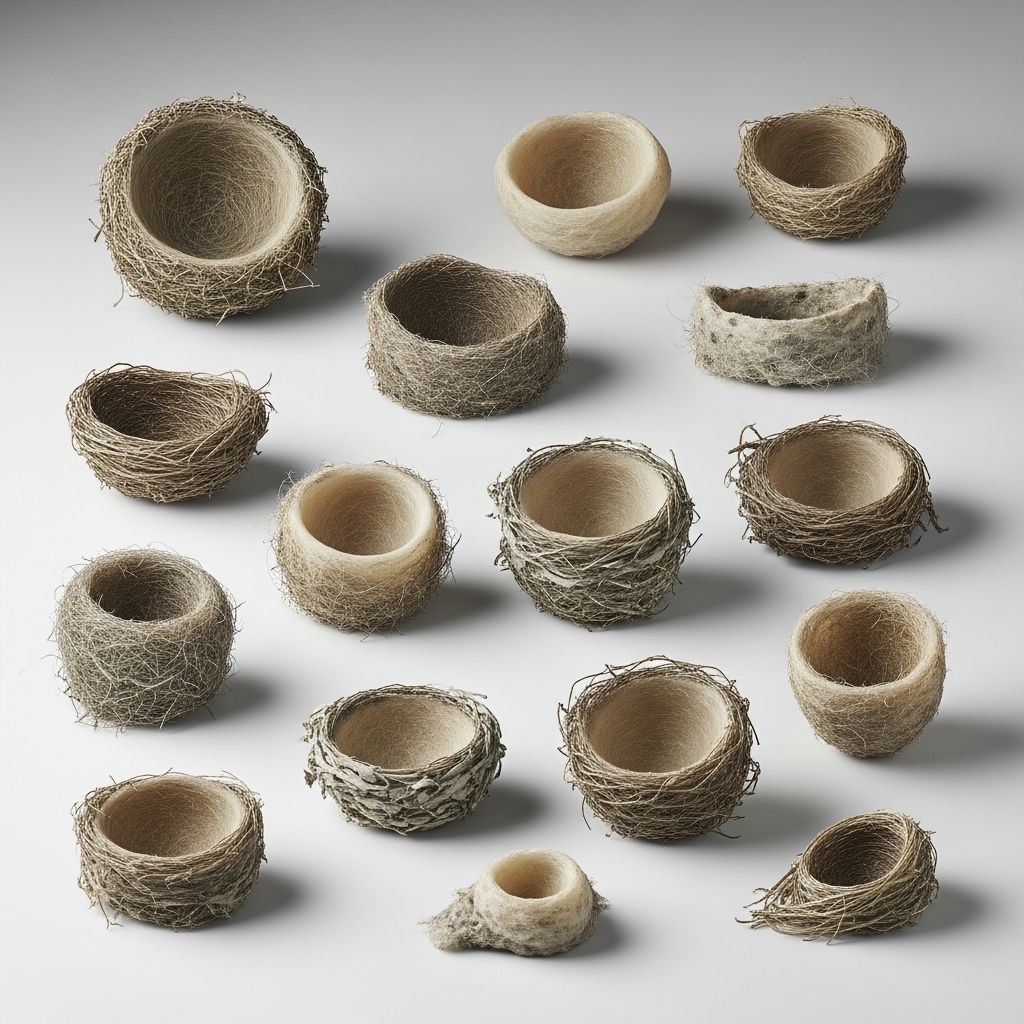
Birds construct an astonishing array of nests tailored to their environments, species needs, and survival strategies. These structures serve as secure cradles for eggs and chicks, showcasing remarkable engineering feats using natural and sometimes human-made materials. From ground-level scrapes to towering communal edifices, nest diversity reflects evolutionary adaptations that ensure reproductive success across ecosystems.
Evolutionary Foundations of Nest Building
Nest building represents a critical behavioral trait in avian biology, evolved over millions of years to protect offspring from predators, weather, and other threats. While some primitive birds like kiwis lay eggs in burrows without much construction, most species invest significant energy in nest fabrication. This process not only provides physical support but also regulates temperature and humidity for optimal incubation. Research from ornithological studies indicates that nest complexity correlates with parental investment, with more elaborate designs often seen in species facing higher predation risks.
The materials birds select—ranging from twigs and grasses to mud, saliva, and spider silk—demonstrate resourcefulness. For instance, many species camouflage nests using lichen or moss to blend seamlessly with surroundings. Understanding these foundations reveals how nests contribute to biodiversity and ecosystem health.
Simple Ground-Based Constructions
Among the most rudimentary nest types are ground scrapes, where birds merely clear a shallow depression in soil, gravel, or sand, sometimes lining it minimally with pebbles, feathers, or vegetation. Killdeer, plovers, and some sandpipers favor these open, exposed sites on beaches, fields, or tundra. The simplicity allows quick construction, ideal for migratory species with tight breeding schedules. These nests rely on camouflage and distraction displays for defense rather than structural barriers.
Scrape nests highlight a trade-off: minimal effort versus heightened vulnerability. Parents often add small stones to prevent eggs from sinking into soft ground or to roll them back if displaced. Observations show success rates vary by location, with Arctic scrapes benefiting from fewer mammalian predators.
Cavity and Burrow Homes
Cavity nests exploit natural or excavated holes in trees, banks, or cliffs, offering enclosed protection. Woodpeckers chisel precise chambers in dead wood, complete with entrance holes sized to deter intruders. Chickadees and bluebirds repurpose these or natural cavities, adding soft linings like moss and fur. These nests maintain stable microclimates, crucial for brooding in variable weather.
Burrows take cavity nesting underground. Bee-eaters and kingfishers tunnel into sandbanks, creating linear passages ending in egg chambers. Some puffbirds dig deep vertical shafts to avoid flooding, demonstrating hydraulic foresight. Burrow depth and angle prevent collapse and predation, with entrances often camouflaged by loose soil.
- Woodpecker cavities: Freshly carved, with wood chips for drainage.
- Bank burrows: Multi-chambered for extended family use.
- Tree holes: Lined with feathers for insulation.
Cup and Saucer Designs: The Classics
Cup nests, the archetypal bird home, form deep, hemispherical bowls supporting eggs upright. Robins weave an outer layer of twigs, grasses, and mud, then line interiors with hair, fur, or cattail fluff for cushioning. These are sited in tree forks, shrubs, or ledges, taking days to days to complete. Hummingbirds scale down this design, binding lichens with spider silk on slender branches.
Saucer or plate nests are shallower cousins, used by ground-nesters like quail. They’re thinly lined and blend into grass, prioritizing concealment over depth. Both types showcase weaving skills, with spider webs often binding components for durability.
| Nest Type | Typical Builders | Key Materials | Common Locations |
|---|---|---|---|
| Cup | Robins, thrushes, warblers | Grasses, mud, fur | Tree forks, shrubs |
| Saucer | Quail, pheasants | Leaves, feathers | Ground cover |
Platform Nests: Aerial Strongholds
Large raptors and waterbirds construct platform nests from bulky twigs layered into broad bases, often with central depressions. Bald eagles and ospreys build massive versions in trees or cliffs, reusing and enlarging them annually into multi-ton behemoths. Herons and storks add reeds or sticks atop shrubs or platforms. These endure winds and support growing broods, sometimes hosting multiple generations.
Platforms exemplify reuse: eagle nests can span 10 feet wide after decades. Linings of pine needles or moss prevent rot. Human-provided platforms aid endangered species like ospreys, boosting populations.
Hanging and Pendant Marvels
Pendant nests dangle from branch tips like woven baskets, swaying to evade climbers. Orioles knot plant fibers into slip-proof pouches with side entrances. Weavers in Africa craft intricate grass cylinders, sometimes in colonies. These pendants use flexibility as defense, with slippery exteriors thwarting predators.
Sunbirds and caciques suspend purse-like nests over water or foliage, entrances downward. Construction involves trial-and-error weaving, taking weeks for perfection.
Enclosed Sphere and Dome Structures
Sphere nests are fully enclosed balls with tiny side holes, woven from grass and camouflaged with lichen. Penduline tits felt wool into waterproof orbs featuring decoy entrances lined with spider silk. Cisticolas tuck oval spheres in grass tussocks, invisible to hawks.
Dome nests roof cup shapes with arches, used by meadowlarks. These grassy hemispheres hide in fields, entrances hooded against rain.
Mud and Mound Engineering
Mud nests, cup variants adhered to cliffs or eaves, dry into durable adobe. Swallows plaster gourd or half-cup shapes with saliva-mud mixes, colonies dotting structures. Flamingos pile mud turrets on lagoons, elevating eggs above floods. Coots float rafts of reeds, anchored in shallows.
Mound nests, rare and thermoregulated, involve megapodes composting vegetation into solar-heated piles. No parental brooding needed—heat hatches eggs.
Communal and Colonial Nesting Wonders
Sociable weavers erect apartment-like fortresses housing hundreds, thatched from straw on acacia crowns. These multi-roomed haystacks withstand elements, shared year-round. Other colonials, like murres, pack cliff ledges platform-style.
Benefits include predator dilution and social thermoregulation, though disease risks exist.
Nest Materials: Nature’s Toolkit
Birds improvise with sticks, leaves, moss, feathers, spider webs, fur, and synthetics like string. Urban adapters use plastic or foil for shine-deterrence. Linings prioritize softness and insulation; mud binds; webs seal.
- Natural insulators: Moss, feathers, fur.
- Binders: Spider silk, saliva, mud.
- Camouflage: Lichen, bark strips.
Seasonal Reuse and Maintenance
Many nests endure multiple seasons—eagles refurbish annually—while cups are one-offs to avoid parasites. Cleanup behaviors, like eating fecal sacs, maintain hygiene.
Human Impacts and Conservation Strategies
Habitat loss threatens nesting sites; pesticides reduce insect food. Aid birds by preserving dead trees, minimizing disturbances, and offering nest boxes. Avoid removing old nests—some host overwintering life.
Frequently Asked Questions
What is the most common bird nest type?
Cup nests are ubiquitous, built by robins, warblers, and flycatchers worldwide.
Do birds reuse nests?
Yes, platforms like eagle aeries are reused and expanded yearly.
How long does nest building take?
From hours for scrapes to weeks for pendants.
Can humans help nesting birds?
Provide platforms, boxes, and native plants; avoid pesticides.
Why do some nests have false entrances?
To mislead predators, as in penduline tit spheres.
References
- Bird Nests – Types, Material, & How You Can Help — Buffalo Bill Center of the West. 2023-04-06. https://centerofthewest.org/2023/04/06/bird-nests-types-material-how-you-can-help/
- 8 different types of birds’ nests — Learn the Birds. N/A. https://learnthebirds.com/8-different-types-of-birds-nests/
- VIDEO: 5 Common Nest Types — All Seasons Wild Bird Store. 2022-07-14. https://wildbirdstore.com/2022/07/14/video-5-common-nest-types/
- Bird nest — Wikipedia. N/A. https://en.wikipedia.org/wiki/Bird_nest
- A Diversity of Bird Nests — Schlitz Audubon Nature Center. 2024-04-29. https://www.schlitzaudubon.org/2024/04/29/a-diversity-of-bird-nests/

- Integrated M.A. in Applied Linguistics, University of Hyderabad
- 5+ years in editorial, instructional, SEO, and research-based writing
Sneha is a relationships and lifestyle writer with a strong foundation in applied linguistics and certified training in relationship coaching. She brings over five years of writing experience to theskillvault, crafting thoughtful, research-driven content that empowers readers to build healthier relationships, boost emotional well-being, and embrace holistic living. Her writing and insights reflect the belief that beauty, happiness, and wellness…