
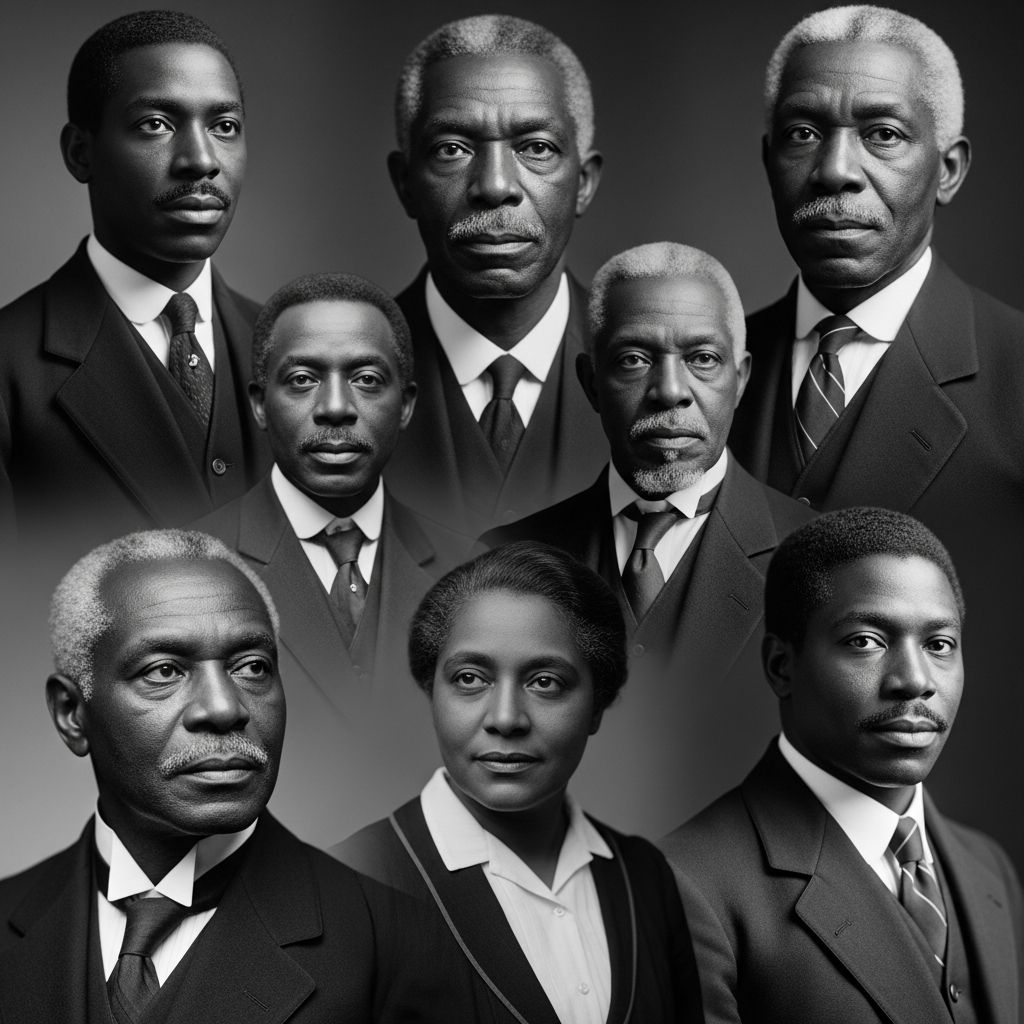
Throughout American history, Black educators have stood as beacons of hope, challenging systemic inequalities and opening doors to knowledge for marginalized communities. Facing slavery, segregation, and discrimination, these visionaries built institutions, advocated for access, and instilled resilience in countless students. Their work not only transformed individual lives but also laid the groundwork for broader social change. This article delves into the lives and contributions of key figures whose dedication to education echoes through generations.
The Foundations of Empowerment: Early Pioneers in Black Education
In the shadow of enslavement and post-Civil War reconstruction, early Black educators emerged as catalysts for progress. They recognized education as the ultimate weapon against oppression, establishing schools and programs that prioritized literacy, skills, and self-reliance.
- Charlotte Forten Grimké: Born in 1837 in Philadelphia, Grimké became one of the first Black teachers at the Penn School in South Carolina during Reconstruction. She taught newly freed African Americans, emphasizing education’s role in empowerment. Later, she collaborated with the U.S. Treasury Department to recruit more Black educators, breaking barriers in the profession.
- Fanny Jackson Coppin: Also born in 1837 in Washington, D.C., Coppin rose from slavery to become the first Black principal in the U.S. and later a superintendent. A graduate of Oberlin College, she led the Institute for Colored Youth, focusing on rigorous academics and vocational training. Her legacy endures through Coppin State University, named in her honor in 1926.
These women exemplified perseverance, turning personal hardships into platforms for communal upliftment. Their efforts highlighted education’s potential to foster dignity and economic independence.
Architects of Institutions: Building Lasting Educational Legacies
Beyond individual teaching, some Black educators founded enduring institutions that became pillars of Black intellectual life. These schools provided not just academics but holistic development amid exclusion from mainstream systems.
| Educator | Key Institution Founded | Impact |
|---|---|---|
| Booker T. Washington | Tuskegee Institute (1881, now Tuskegee University) | Emphasized practical skills, agriculture, and self-help for economic advancement post-Civil War. |
| Mary McLeod Bethune | Daytona Normal and Industrial Institute (1904, now Bethune-Cookman University) | Grew from 5 students to over 250, advocating for Black women; advised presidents on education. |
| Daniel Payne | First higher learning institution for African Americans | Proved Black intellectual equality, fighting for citizenship rights through education. |
Booker T. Washington, often hailed as one of the most influential Black educators, championed vocational training as a path to self-sufficiency. Despite controversies over his accommodationist views, his Tuskegee model influenced national education policies. Mary McLeod Bethune, born to formerly enslaved parents in 1875, walked miles to school and later built her institute with scraps and faith. Her work extended to national advisory roles, amplifying Black voices in policy.
Civil Rights Through Classrooms: Education as Activism
Many Black educators wove civil rights into their curricula, using literacy and civic education to combat disenfranchisement. Their classrooms became training grounds for democracy.
- Septima Poinsette Clark: Known as the ‘Queen Mother’ of the Civil Rights Movement, Clark developed citizenship schools teaching literacy for voting. Her programs empowered thousands to pass literacy tests, fueling voter registration drives.
- Esau Jenkins: In 1954, Jenkins co-founded the South’s first Citizenship School on Johns Island, South Carolina, focusing on reading for ballot access amid Jim Crow laws.
- Carlotta Walls LaNier: The youngest of the Little Rock Nine in 1957, LaNier endured violence to integrate Central High School. She later founded the Little Rock Nine Foundation to promote equal education.
These activists understood that informed citizens could dismantle injustice. Clark’s model, for instance, spread across the South, directly contributing to the Voting Rights Act of 1965.
Intellectual Giants: Scholars and Advocates for Higher Learning
Black educators also advanced academia, authoring works and pushing for college access in an era of exclusion.
- Kelly Miller: A mathematician and Howard University dean, Miller advocated for Black higher education enrollment. He retired in 1931 after decades of promoting education as freedom’s pathway.
- Carter G. Woodson: Dubbed the ‘Father of Black History,’ Woodson initiated Negro History Week in 1926, evolving into Black History Month. His scholarly work preserved African American narratives.
- Nannie Helen Burroughs: Founder of the National Training School for Women and Girls in 1909, Burroughs delivered powerful speeches on Black women’s roles, blending faith and education.
Woodson’s efforts institutionalized Black historical study, countering erasure in textbooks. Miller’s administrative prowess at Howard expanded opportunities for Black scholars.
Modern Echoes: Contemporary Influences and Ongoing Challenges
The legacies of these pioneers persist, inspiring today’s educators amid debates on equity, curriculum diversity, and access. Figures like Hallie Quinn Brown, who funded women’s scholarships in the 1880s, paved ways for inclusive academia. Recent advocates continue bridging gaps, ensuring Black history permeates syllabi.
Challenges remain: disparities in funding, discipline rates, and representation. Yet, data from the U.S. Department of Education shows progress, with Black college enrollment rising, echoing these trailblazers’ visions. (U.S. Department of Education, National Center for Education Statistics, 2023 data on enrollment trends.)
Frequently Asked Questions (FAQs)
What was Mary McLeod Bethune’s most significant contribution to education?
She founded Bethune-Cookman University, growing it from humble beginnings and advising U.S. presidents on Black affairs, championing women’s education.
How did Booker T. Washington influence Black education?
By establishing Tuskegee Institute with a focus on vocational skills, promoting self-reliance and economic empowerment for African Americans.
Who were the Little Rock Nine, and what role did education play?
Nine Black students, including Carlotta Walls LaNier, who integrated Central High School in 1957, symbolizing the fight for equal educational access.
Why are citizenship schools historically important?
Developed by Septima Clark and Esau Jenkins, they taught literacy for voting, enabling civil rights participation during segregation.
How did Fanny Jackson Coppin break barriers?
As the first Black principal and Oberlin alumna, she led schools emphasizing academics and vocational training for Black youth.
These FAQs highlight core impacts, underscoring education’s role in justice.
Broader Implications for Today’s Classrooms
Integrating these stories fosters empathy and critical thinking. Teachers can use biographies for lessons on resilience, drawing from primary sources like Bethune’s speeches or Washington’s Up from Slavery. Modern curricula increasingly include diverse perspectives, aligning with No Child Left Behind evolutions toward equity-focused standards. (U.S. Department of Education equity guidelines, 2022.)
Statistics reveal ongoing needs: Black students face higher suspension rates (3.8% vs. 2.1% national average, per 2021-2022 data). Honoring pioneers motivates reforms like culturally responsive teaching.
References
- Celebrating Black Educators: Pioneers Who Shaped History — Heartland School Solutions Blog. 2023. https://blog.heartlandschoolsolutions.com/celebrating-black-educators-pioneers-who-shaped-history
- Great Teachers in Black History — College Football Playoff Foundation. 2021-02-04. https://cfp-foundation.org/extra-yard-blog/2021/2/4/great-teachers-in-black-history
- Celebrating Black History Month: Seven Black Educators Who Made a Lasting Impact — ScholarsEd. 2023. https://www.scholarsed.com/celebrating-black-history-month-seven-black-educators-who-made-a-lasting-impact/
- 10 Black Educators Who Changed History — Spencer Clarke Group. 2023. https://www.spencerclarkegroup.co.uk/career-hub/blog/10-black-educators-who-changed-history/
- 4 Black Educators Who Changed U.S. History — TEACH.org. 2023. https://www.teach.org/articles/4-black-educators-who-changed-us-history
- 12 Black Educators Who Changed History That We Should All Know About — Bored Teachers. 2023. https://www.boredteachers.com/post/12-black-educators-who-changed-history-that-we-should-all-know-about

- Integrated M.A. in Applied Linguistics, University of Hyderabad
- 5+ years in editorial, instructional, SEO, and research-based writing
Sneha is a relationships and lifestyle writer with a strong foundation in applied linguistics and certified training in relationship coaching. She brings over five years of writing experience to theskillvault, crafting thoughtful, research-driven content that empowers readers to build healthier relationships, boost emotional well-being, and embrace holistic living. Her writing and insights reflect the belief that beauty, happiness, and wellness…