
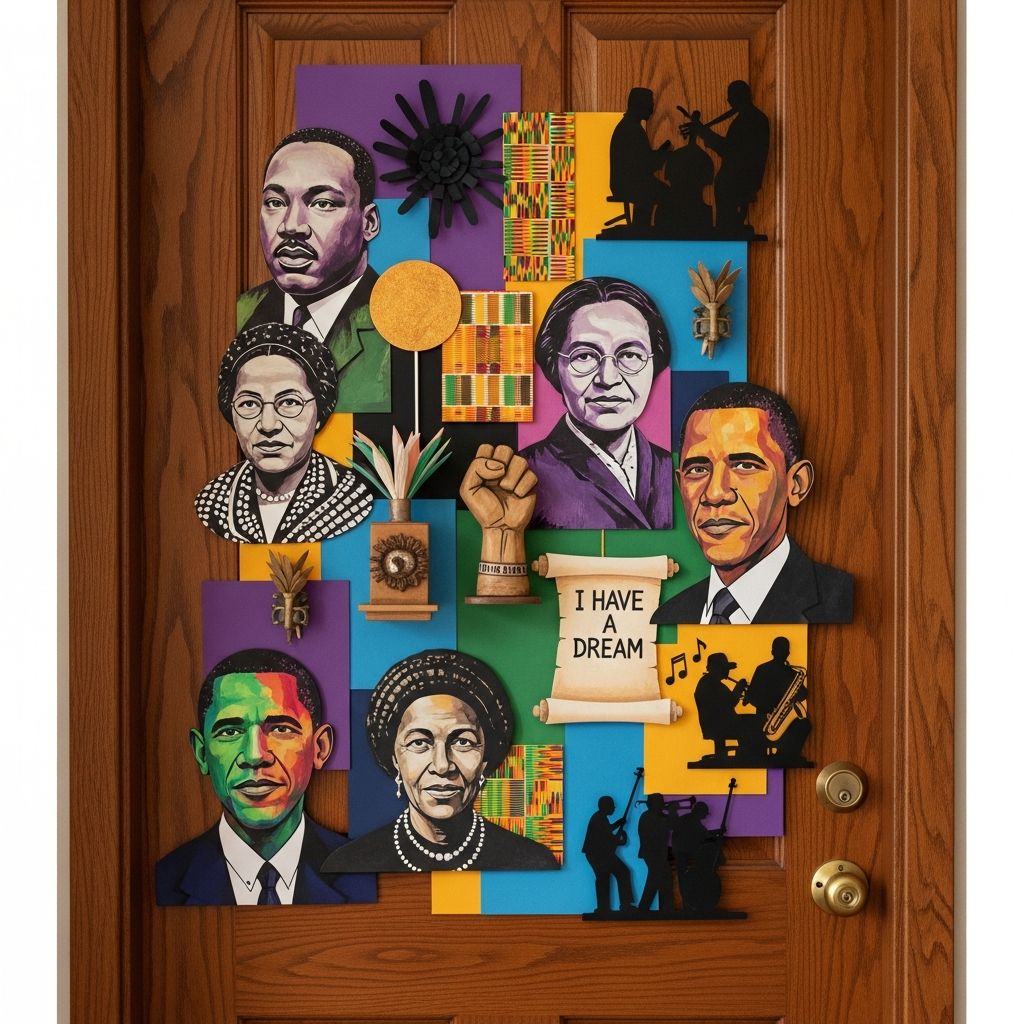
Classroom doors serve as powerful canvases for education, especially during Black History Month in February. These displays not only beautify hallways but also immerse students in stories of resilience, innovation, and leadership from Black history. By incorporating visuals, quotes, and interactive elements, teachers can spark curiosity and dialogue that extend beyond the month.
Why Door Decorations Matter in Education
Visual learning tools like door decorations reinforce curriculum goals by making history accessible and memorable. They encourage passersby—students, staff, and visitors—to pause and reflect on contributions often overlooked in standard texts. Research from the National Council for the Social Studies emphasizes that such immersive environments boost retention of historical facts by up to 65% through repeated exposure.
These setups also promote inclusivity, helping diverse student bodies see themselves represented. Involving learners in the creation process builds ownership and deepens understanding, turning passive observers into active historians.
Honoring Trailblazers: Iconic Figure Spotlights
Focus on individuals who shattered barriers with dedicated panels. Start with a large central image crafted from butcher paper or printed posters, surrounded by timelines of achievements.
- Martin Luther King Jr.: Center his portrait amid peace doves, with quotes like “Darkness cannot drive out darkness; only light can do that.” Add student-drawn dream bubbles listing personal hopes.
- Harriet Tubman: Depict her as a conductor on the Underground Railroad, using chain-link borders transforming into freedom paths. Include facts on her 13 rescue missions.
- Rosa Parks: Illustrate the bus seat moment with fabric scraps for realism, paired with her words: “I would like to be remembered as a person who wanted to be free.”
These designs humanize history, showing figures as relatable heroes whose actions resonate today.
Cultural Heritage Celebrations
Capture the richness of African and African American traditions through bold patterns and symbols. Use kente cloth prints or adinkra symbols for authenticity, explaining their meanings via small placards.
- Africa continent outline filled with tribal motifs and modern diaspora icons, merging geography with heritage.
- African queen silhouette with intricate crown braids, symbolizing matriarchal strength across eras.
- Adinkra puzzle pieces interlocking to form unity messages, each piece highlighting a cultural value like Sankofa (learning from the past).
Such themes instill pride and connect students to global roots, supported by the Smithsonian’s resources on African art influences.
Empowerment Through Quotes and Symbols
Inspirational sayings from poets and activists form the backbone of motivational doors. Select age-appropriate excerpts, enlarged and stylized with colorful backdrops.
| Figure | Quote | Design Element |
|---|---|---|
| Maya Angelou | “Be a rainbow in somebody else’s cloud.” | Rainbow arcs with student kindness pledges. |
| Marcus Garvey | “A people without knowledge of their history is like a tree without roots.” | Tree roots morphing into historical portraits. |
| Bob Marley | “One love.” | Heart garlands naming unity in diversity. |
Pair quotes with symbolic imagery to amplify impact, encouraging daily reflections.
Student-Centered Collaborative Projects
Engage classes by assigning research on figures or inventions, culminating in door contributions. This fosters teamwork and research skills.
- Puzzle of inventors like Madam C.J. Walker or George Washington Carver, each piece a student bio.
- Photo collage of “Black Excellence” spanning past athletes, artists, and leaders to present-day idols.
- Timeline chains linking eras, with student paragraphs on lessons learned.
Display student work prominently to celebrate their efforts, aligning with project-based learning principles from Edutopia.
Seasonal Fusion Ideas
Blend Black History Month with holidays like Valentine’s Day for inclusive themes. A “Love for Heritage” door uses heart frames around freedom fighters, emphasizing unity.
Incorporate mixed media: fabric for clothing on giant portraits, glitter for crowns atop celebrities, and QR codes linking to videos—echoing Apple Education’s digital integration tips.
Practical Tips for Lasting Impact
Ensure decorations withstand hallway traffic with these strategies:
- Laminate all elements for durability.
- Use removable hooks to avoid door damage.
- Opt for large, bold fonts readable from afar.
- Incorporate glow-in-the-dark accents for evening events.
- Rotate content weekly to maintain freshness.
Budget-friendly supplies from dollar stores keep costs low while maximizing creativity.
Advanced Techniques for Standout Doors
Elevate designs with 3D effects: tissue paper ruffles for clothing, pipe cleaners for hair textures, or shadow boxes for artifacts. For tech-savvy classes, embed iPads with looping documentaries.
Coordinate wing-wide themes, like a “Hall of Heroes” where adjacent doors profile connected figures, creating a walkthrough museum.
Frequently Asked Questions (FAQs)
What materials work best for Black History Month doors?
Construction paper, butcher paper, fabric scraps, markers, and laminating sheets provide vibrant, durable results suitable for school settings.
How can I involve young students safely?
Assign simple tasks like coloring outlines or writing short facts, with teachers handling cutting and assembly for safety.
Are there themes for different grade levels?
Elementary: Simple portraits and rhymes. Middle: Timelines and debates. High school: Complex collages with current events ties.
How do I make doors inclusive for all students?
Highlight diverse Black experiences globally and include collaborative elements where every child contributes.
Can these ideas extend beyond February?
Absolutely—repurpose for cultural fairs or year-round diversity corners to sustain learning momentum.
Measuring Success and Extending Learning
Track impact via student journals on what they learned or hallway feedback polls. Extend with assemblies, book drives, or guest speakers inspired by door themes. These displays plant seeds for lifelong appreciation of Black contributions, aligning with goals from the Association for Supervision and Curriculum Development.
In total, these ideas transform mundane doors into portals of knowledge, empowering the next generation to carry forward legacies of excellence.
References
- National Council for the Social Studies: Visual Learning in Social Studies — NCSS. 2023-01-15. https://www.socialstudies.org/standards
- Smithsonian National Museum of African Art: Adinkra Symbols Guide — Smithsonian Institution. 2024-02-10. https://africa.si.edu/collections/view/symbols
- Edutopia: Project-Based Learning in History Classrooms — Edutopia. 2025-09-20. https://www.edutopia.org/project-based-learning-history
- Apple Education: Digital Tools for Classroom Commemorations — Apple Inc. 2025-01-01. https://education.apple.com/resource/250012268
- Association for Supervision and Curriculum Development: Sustaining Cultural Education — ASCD. 2024-11-05. https://www.ascd.org/el/articles/sustaining-cultural-education

Medha Deb is an editor with a master's degree in Applied Linguistics from the University of Hyderabad. She believes that her qualification has helped her develop a deep understanding of language and its application in various contexts. Medha specializes in the areas of beauty, health, sports, and wellness and is committed to ensuring that the content on the website is…