
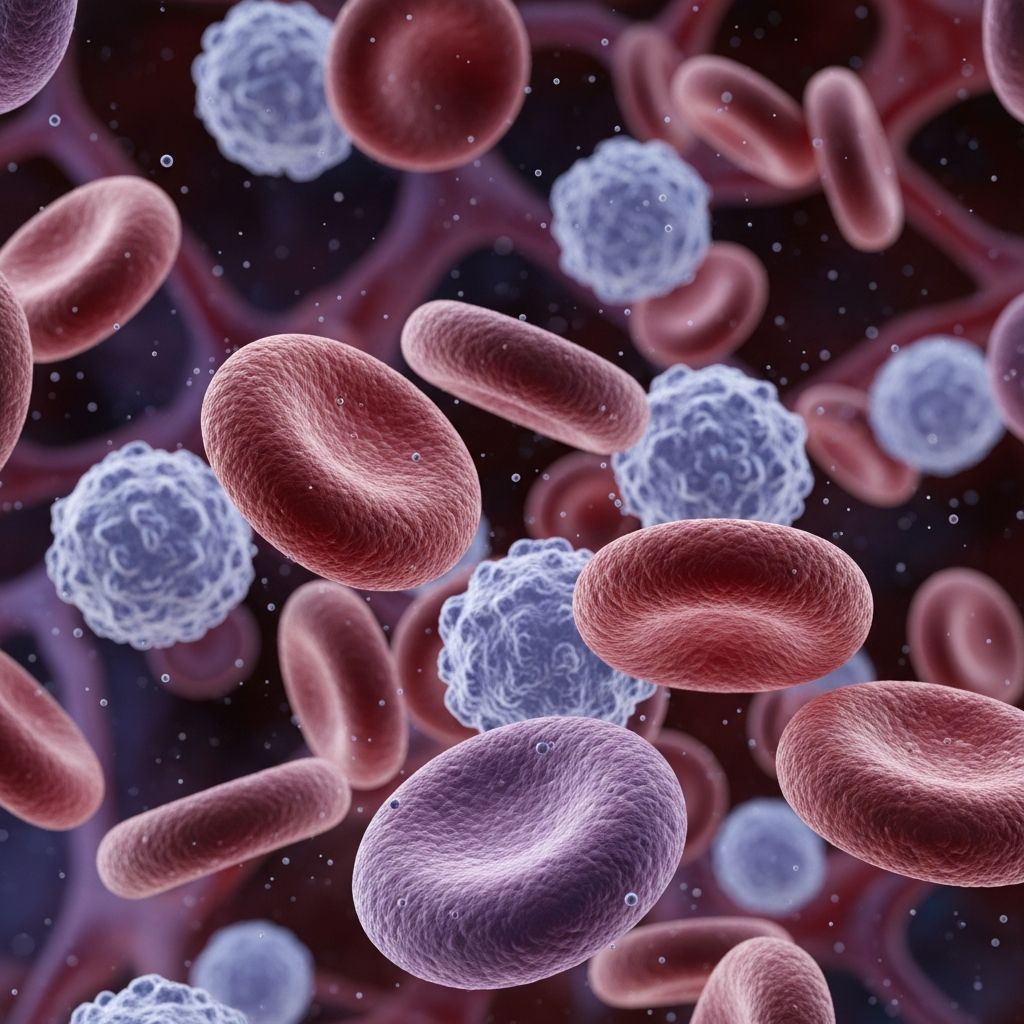
Blood types classify human blood based on specific antigens on red blood cells, primarily through the ABO and Rh systems, determining safe transfusions and donations.
The Science Behind Blood Classification
Human blood is categorized mainly by the ABO blood group system and the Rh factor. The ABO system identifies four primary types—A, B, AB, and O—based on the presence or absence of A and B antigens on red blood cell surfaces. Type A has A antigens, type B has B antigens, type AB has both, and type O has neither. These antigens are carbohydrates attached to proteins or lipids.
The Rh system adds another layer, focusing on the RhD protein. Blood is Rh-positive if present (about 85% of people) or Rh-negative if absent. This combines to eight main types: A+, A-, B+, B-, AB+, AB-, O+, O-.
Antigens trigger immune responses; mismatched transfusions cause agglutination, where red cells clump and potentially block vessels, leading to severe reactions.
Genetic Foundations of Blood Groups
Blood types are inherited via genes from parents. The ABO locus on chromosome 9 has three alleles: A, B, and O. A and B are codominant, while O is recessive. Possible genotypes include AA or AO for type A, BB or BO for type B, AB for type AB, and OO for type O.
A and B subtypes exist; A divides into A1 (80% of A types) and A2, reacting differently to certain antibodies. Rh factor inheritance involves the RHD gene; Rh+ requires at least one functional allele.
Children inherit one allele per parent. For example, two O parents produce only O children, while A and B parents can yield AB offspring.
Global Distribution and Prevalence
Blood type frequencies vary by population. In Caucasians, O is 44%, A1 33%, B 9%; in Blacks, O 49%, B 20%; in Asians, O 43%, B 25%. In the US, O+ is most common (37-38%), O- rarest at 7%.
Diversity matters for donations; minority groups supply rare types needed for conditions like sickle cell disease. O types dominate many regions, aiding emergency supplies.
| Blood Type | US Prevalence (%) | Global Notes |
|---|---|---|
| O+ | 37-38 | Most common worldwide |
| A+ | 35 | High in Europe |
| B+ | 9 | More prevalent in Asia |
| AB+ | 4 | Rarest common type |
| O- | 7 | Universal donor, low supply |
Transfusion Compatibility Rules
Compatibility prevents immune reactions. Recipients accept blood without foreign antigens their plasma antibodies target.
- O-: Universal donor; gives to all, receives only O-.
- AB+: Universal recipient; receives all, gives only to AB+.
- O+: Donates to all positives, receives O+, O-.
Plasma rules reverse: AB plasma donates universally due to no anti-A/B.
| Donor Type | Can Donate Red Cells To | Can Receive Red Cells From |
|---|---|---|
| A+ | A+, AB+ | A+, A-, O+, O- |
| A- | A+, A-, AB+, AB- | A-, O- |
| B+ | B+, AB+ | B+, B-, O+, O- |
| B- | B+, B-, AB+, AB- | B-, O- |
| AB+ | AB+ | All types |
| AB- | AB+, AB- | AB-, A-, B-, O- |
| O+ | O+, A+, B+, AB+ | O+, O- |
| O- | All types | O- |
Beyond ABO and Rh: Other Systems
Over 30 blood group systems exist with 600+ antigens, including Kell, Duffy, Kidd, Lutheran. These cause rarer reactions but are screened in transfusions.
Some are ethnicity-specific; Duffy-negative common in Africans, protecting against malaria.
Health Risks Linked to Blood Types
Blood type correlates with disease risks. Non-O types (A, B, AB) face higher coronary heart disease and clotting risks than O.
AB may have elevated cognitive issues; type A links to gastric cancer; O to ulcers. COVID-19 severity varied, with O somewhat protective. These are associations, not causations; lifestyle dominates.
- Heart Disease: A, B, AB higher risk vs. O.
- Clotting: Non-O types prone.
Determining Your Blood Type
Tests mix blood with anti-A, anti-B, anti-Rh sera; agglutination indicates antigens. Forward typing uses cells, reverse uses plasma antibodies.
Pregnancy screens Rh to prevent hemolytic disease via RhoGAM for Rh- mothers.
Frequently Asked Questions
What is the rarest blood type?
AB- is rarest in most populations, around 1%, though rarities like Bombay exist outside ABO/Rh.
Can blood type change?
Rarely; leukemia or bone marrow transplants can alter it.
Does diet depend on blood type?
No scientific support; ‘Blood Type Diet’ lacks evidence.
Why donate O- blood?
It’s the universal donor, critical for emergencies without typing time.
Can siblings have different blood types?
Yes, due to parental allele combinations.
Importance in Medicine and Donation
Blood typing ensures safe transfusions, organ matches, prenatal care. Diverse donors vital; O- demand high at 7% supply.
Plasma from AB universal; platelets less restricted. Regular donation maintains supplies.
In emergencies, O- used blindly. Matching reduces risks.
References
- The ABO blood group – Blood Groups and Red Cell Antigens — NCBI Bookshelf. 2005 (authoritative reference). https://www.ncbi.nlm.nih.gov/books/NBK2267/
- Understanding Blood Types (for Teens) — Nemours KidsHealth. Accessed 2026. https://kidshealth.org/en/teens/blood-types.html
- Blood Types: What They Are and Mean for Your Health — Cleveland Clinic. 2023-10-30. https://my.clevelandclinic.org/health/treatments/21213-blood-types
- Blood groups — NHS. Accessed 2026. https://www.nhs.uk/tests-and-treatments/blood-groups/
- Blood groups — Better Health Channel (Vic.gov.au). Accessed 2026. https://www.betterhealth.vic.gov.au/health/conditionsandtreatments/blood-groups
- Blood Types Explained – A, B, AB and O — American Red Cross. Accessed 2026. https://www.redcrossblood.org/donate-blood/blood-types.html
- What Your Blood Type Can Tell You About Your Health — Tufts University School of Medicine. 2023-01-23. https://medicine.tufts.edu/news-events/news/what-your-blood-type-can-tell-you-about-your-health

- Integrated M.A. in Applied Linguistics, University of Hyderabad
- 5+ years in editorial, instructional, SEO, and research-based writing
Sneha is a relationships and lifestyle writer with a strong foundation in applied linguistics and certified training in relationship coaching. She brings over five years of writing experience to theskillvault, crafting thoughtful, research-driven content that empowers readers to build healthier relationships, boost emotional well-being, and embrace holistic living. Her writing and insights reflect the belief that beauty, happiness, and wellness…