
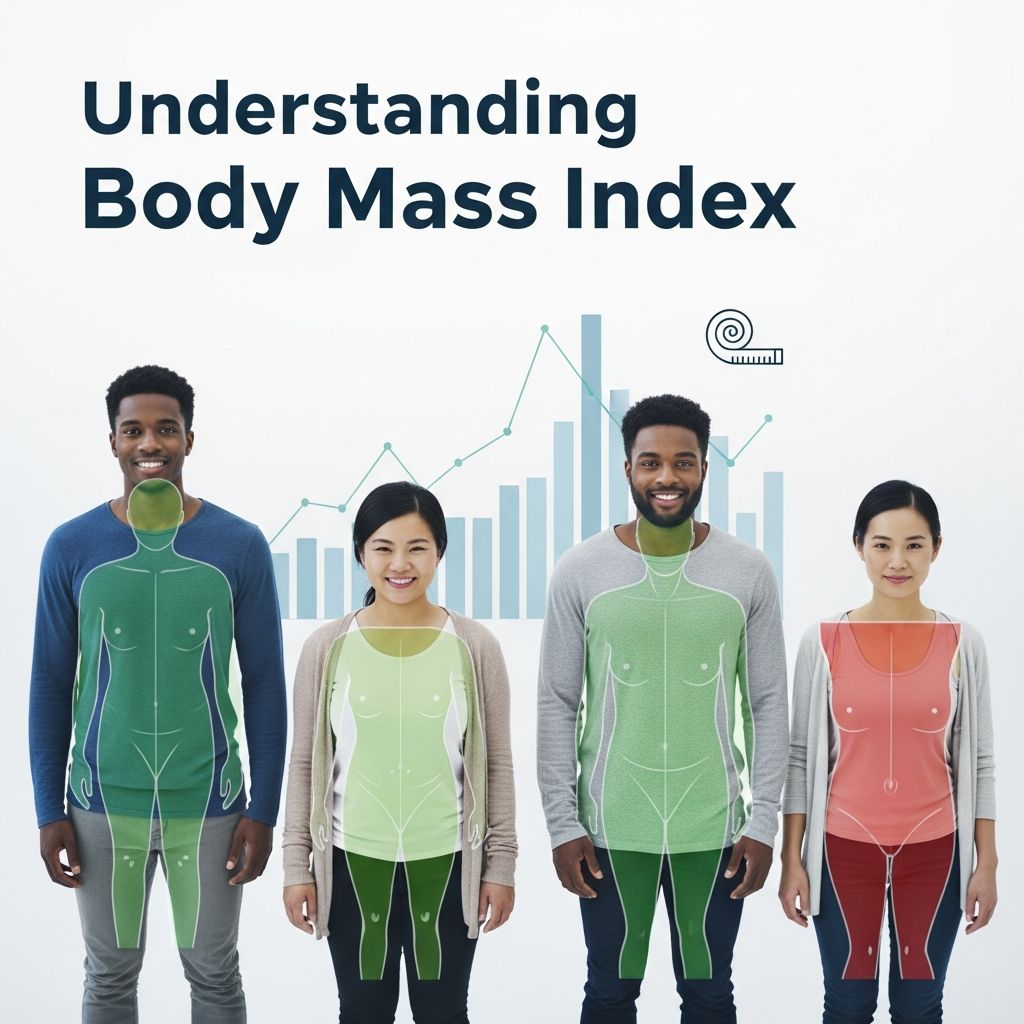
Body Mass Index (BMI) serves as a widely recognized screening tool that estimates body fat based on an individual’s height and weight. Healthcare professionals use it to categorize weight status and identify potential health risks associated with underweight, overweight, or obesity conditions.
The Fundamentals of BMI
BMI quantifies the relationship between body mass and height, providing a standardized numeric value expressed in kilograms per square meter (kg/m²). Developed in the 19th century by Adolphe Quetelet, it has become a cornerstone in public health assessments despite its simplicity.
The core principle relies on the formula where weight in kilograms is divided by the square of height in meters. This approach assumes a linear scaling of body mass with height squared, making it applicable across diverse populations for initial screenings.
Step-by-Step Calculation Guide
Calculating BMI is straightforward and requires only basic measurements. Begin by accurately measuring height and weight using a reliable scale and stadiometer or tape measure.
- Metric System: BMI = weight (kg) / [height (m)]². For instance, a person weighing 70 kg and standing 1.70 m tall computes as follows: 1.70 × 1.70 = 2.89, then 70 ÷ 2.89 ≈ 24.2 kg/m².
- Imperial System: BMI = [weight (lb) × 703] / [height (in)]². Example: 154 lb at 5 ft 6 in (66 in) yields (154 × 703) ÷ (66 × 66) ≈ 24.8 kg/m².
Online calculators from reputable sources like the National Heart, Lung, and Blood Institute (NHLBI) simplify this process, ensuring precision.
BMI Categories and Interpretations
Standard adult BMI classifications, endorsed by organizations such as the World Health Organization and Centers for Disease Control and Prevention, divide results into meaningful ranges.
| BMI Range (kg/m²) | Classification | Health Implications |
|---|---|---|
| < 18.5 | Underweight | Increased risk of malnutrition, osteoporosis, and immune deficiencies. |
| 18.5–24.9 | Normal Weight | Generally lowest risk for weight-related health issues. |
| 25.0–29.9 | Overweight | Elevated risk for hypertension, type 2 diabetes, and cardiovascular disease. |
| 30.0–34.9 | Obesity Class 1 | Moderate risk for chronic conditions like sleep apnea and joint problems. |
| 35.0–39.9 | Obesity Class 2 | High risk for comorbidities including heart disease and certain cancers. |
| ≥ 40.0 | Obesity Class 3 (Severe) | Very high risk for life-threatening conditions; often requires medical intervention. |
These categories apply to adults aged 20 and older, regardless of sex, though separate pediatric charts exist for children.
Health Risks Linked to BMI Extremes
A BMI below 18.5 signals underweight status, potentially leading to weakened bones, fertility issues, and compromised immunity. Conversely, BMI values of 25 or higher correlate with heightened risks for metabolic syndrome, stroke, and various cancers.
Obesity, particularly in Classes 2 and 3, amplifies these dangers. Excess body fat contributes to insulin resistance, inflammation, and endothelial dysfunction, foundational to many non-communicable diseases. The American Cancer Society highlights BMI’s role in cancer risk assessment, noting stronger associations in postmenopausal women.
Limitations and When BMI Falls Short
While valuable, BMI does not differentiate between fat, muscle, bone, or water mass, leading to misclassifications. Athletes with high muscle density may register as overweight or obese despite low body fat percentages.
Elderly individuals or those with sarcopenia (age-related muscle loss) might appear healthier by BMI than they are. Ethnic variations also play a role; some Asian populations face elevated risks at lower BMI thresholds due to higher visceral fat tendencies.
BMI overlooks fat distribution, a critical factor. Central obesity (abdominal fat) poses greater cardiovascular threats than peripheral fat.
Complementary Measures for Better Accuracy
To address BMI’s shortcomings, integrate additional metrics:
- Waist Circumference: Men >40 inches (102 cm) or women >35 inches (88 cm) indicate high risk, especially with BMI 25–34.9.
- Waist-to-Hip Ratio (WHR): Greater than 0.90 for men or 0.85 for women suggests android fat distribution risks.
- Body Fat Percentage: Measured via DEXA scans, bioelectrical impedance, or skinfold calipers for precise fat mass evaluation.
- BMI Prime: Actual BMI divided by 25 (optimal upper limit), yielding a unitless ratio where values >1.0 denote overweight.
Healthcare providers often combine these with blood tests like lipid panels and glucose levels for holistic assessments.
Practical Tools and Resources
Accessible BMI calculators abound from trusted institutions:
- NHS BMI Tool for metric/imperial inputs with instant results.
- Cleveland Clinic’s interactive calculator with health advice.
- Diabetes Canada’s simple formula-based estimator.
Charts and tables facilitate manual checks, plotting weight against height for quick category identification.
Strategies for Managing Your BMI
Achieving or maintaining a healthy BMI involves sustainable lifestyle changes. Focus on balanced nutrition emphasizing whole foods, portion control, and caloric balance. Regular physical activity—150 minutes of moderate aerobic exercise weekly plus strength training—builds muscle and burns fat.
Behavioral strategies include tracking intake via apps, setting realistic goals (1–2 lb/week loss), and seeking professional guidance for personalized plans. For underweight individuals, nutrient-dense foods and medical evaluation for underlying causes are key.
BMI in Special Populations
Pregnancy alters BMI interpretation; pre-pregnancy values guide assessments. Children require age- and sex-specific percentiles, as growth patterns vary.
Athletes and bodybuilders should prioritize body composition analyses. Older adults benefit from sarcopenia screenings alongside BMI to detect frailty risks.
Global Perspectives on BMI
WHO uses BMI for worldwide obesity surveillance, reporting over 1 billion adults obese in 2022. Public health campaigns leverage BMI to combat epidemics, though cultural and genetic factors necessitate localized adjustments.
Frequently Asked Questions (FAQs)
What is a healthy BMI range?
For adults, 18.5–24.9 kg/m² indicates normal weight, balancing minimal health risks.
Does BMI apply to everyone equally?
No, it overestimates fat in muscular individuals and underestimates risks in those with high visceral fat.
How often should I check my BMI?
Annually or with significant weight changes; pair with clinical evaluations.
Can BMI predict disease risk accurately?
It screens effectively but requires context from other metrics for precision.
Is BMI suitable for children?
Use percentile charts based on age and sex, not adult cutoffs.
References
- Body mass index – Wikipedia — Wikipedia contributors. 2024-02-01. https://en.wikipedia.org/wiki/Body_mass_index
- Body Mass Index (BMI) Calculator — American Cancer Society. 2023-11-15. https://www.cancer.org/cancer/risk-prevention/diet-physical-activity/body-weight-and-cancer-risk/body-mass-index-bmi-calculator.html
- BMI (Body Mass Index): What It Is & How To Calculate — Cleveland Clinic. 2024-01-20. https://my.clevelandclinic.org/health/articles/9464-body-mass-index-bmi
- Calculate your body mass index (BMI) for adults — NHS. 2023-09-10. https://www.nhs.uk/health-assessment-tools/calculate-your-body-mass-index/calculate-bmi-for-adults
- Body Mass Index (BMI) Calculator — Diabetes Canada. 2023-05-05. https://www.diabetes.ca/resources/tools-resources/body-mass-index-(bmi)-calculator
- Calculate Your BMI — NHLBI, NIH. 2024-02-04. https://www.nhlbi.nih.gov/calculate-your-bmi
- BMI Calculator — Mayo Clinic. 2023-12-12. https://www.mayoclinic.org/diseases-conditions/obesity/in-depth/bmi-calculator/itt-20084938

Medha Deb is an editor with a master's degree in Applied Linguistics from the University of Hyderabad. She believes that her qualification has helped her develop a deep understanding of language and its application in various contexts. Medha specializes in the areas of beauty, health, sports, and wellness and is committed to ensuring that the content on the website is…