
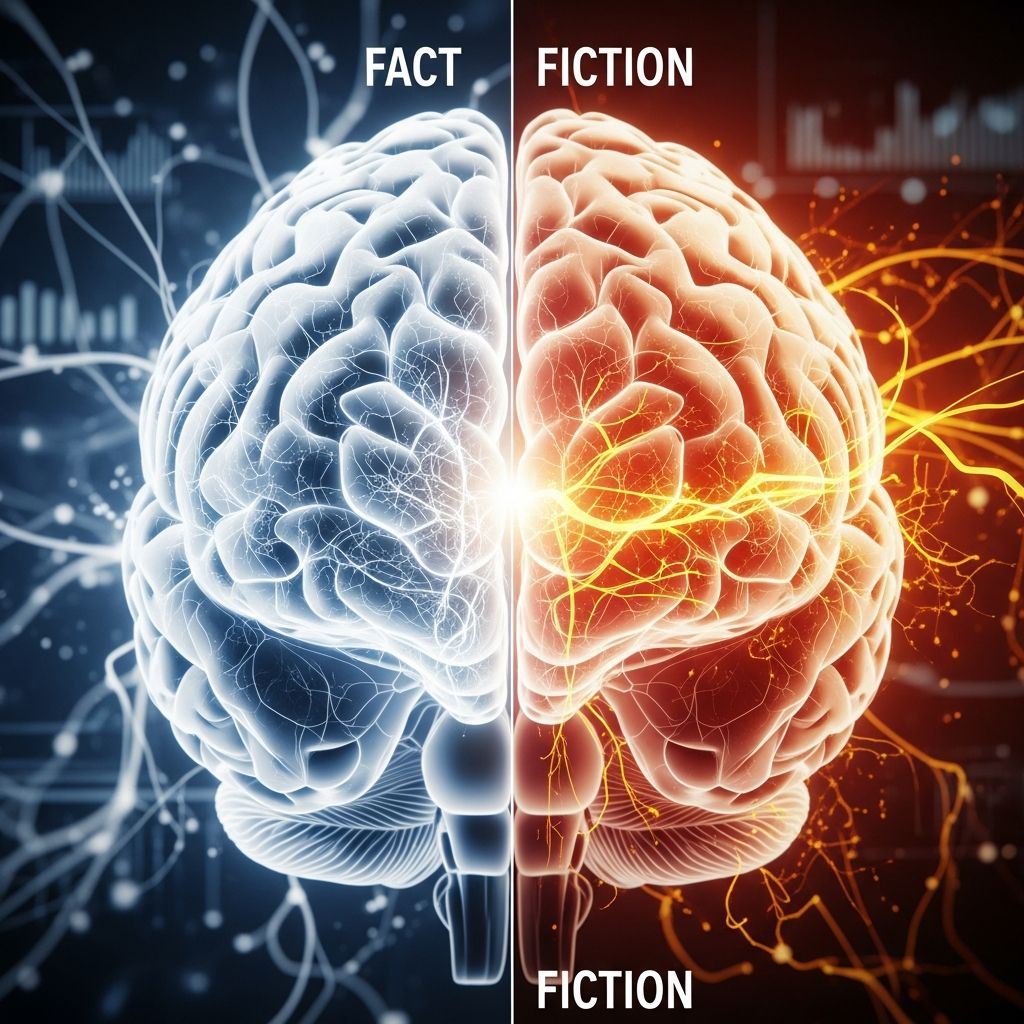
Unlocking the Reality: What Modern Neuroscience Reveals About Brain Function
Popular culture, science fiction films, and well-intentioned self-help literature have shaped our collective understanding of the human brain in ways that often diverge significantly from established neuroscience. Many widely accepted beliefs about cognitive abilities, brain structure, and mental capacity persist despite lacking scientific support. These misconceptions influence how we approach education, aging, learning, and personal development. By examining what neuroscience actually tells us about brain function, we can move beyond folklore and embrace evidence-based perspectives that more accurately reflect the remarkable capabilities of our neural systems.
The Myth of Dormant Brain Capacity
One of the most tenacious beliefs in popular culture is that humans utilize only a fraction of their brain’s potential, leaving vast regions dormant and underutilized. This assertion suggests that hidden reserves of mental power remain locked away, waiting for activation through specialized techniques or supplements. The implication is both tantalizing and troubling: if we could somehow access this untapped capacity, we might unlock extraordinary cognitive abilities.
Neuroscientific evidence thoroughly refutes this notion. Brain imaging studies using functional MRI and PET scans consistently demonstrate that virtually all brain regions show activity, even during sleep or rest. The brain operates as an integrated system where different regions activate depending on current tasks and mental states. What neuroscientists term the “default mode network” actually increases in activity when individuals attempt to minimize external engagement, suggesting that seemingly idle brain states serve important functions. Furthermore, the evolutionary perspective contradicts the dormant capacity hypothesis entirely. If ninety percent of brain tissue served no function, evolution would have eliminated this metabolically expensive tissue through natural selection processes.
Hemispheric Dominance and Personality Traits
The notion that personality and cognitive style are determined by hemispheric dominance has become deeply embedded in popular psychology. According to this framework, left-brain individuals supposedly exhibit analytical, methodical, and logical thinking, while right-brain individuals demonstrate creativity, artistic sensibility, and intuitive reasoning. This dichotomy has influenced educational approaches, career counseling, and personality assessments for decades.
Contemporary neuroscience research employing advanced neuroimaging techniques has dismantled this oversimplification. A comprehensive 2013 analysis utilizing magnetic resonance imaging across 1,011 subjects found no evidence supporting the theory that personality traits align with hemispheric lateralization. While the brain does possess two distinct hemispheres with specialized functions, these structures function as an integrated whole through sophisticated information pathways, particularly the corpus callosum, which facilitates seamless communication between hemispheres. Personality characteristics emerge from the harmonious interaction between both hemispheres working in concert, not from dominance of one side over the other. Contemporary understanding recognizes that even seemingly lateralized functions involve bilateral brain engagement.
The Relationship Between Brain Size and Intellectual Capacity
A widespread assumption suggests that individuals with larger brains possess greater intelligence, leading to conclusions about cognitive capability based on cranial dimensions. This belief has unfortunately been weaponized historically to support racist and sexist pseudoscience, though such applications have been thoroughly discredited by modern genetics and neuroscience.
Actual neuroscientific research reveals a much different picture. Intelligence correlates not with brain size but with the density and organization of synaptic connections—the neural pathways through which neurons communicate. The number of these connections between brain cells, rather than overall brain mass, determines cognitive capability. During approximately week twelve of fetal development, an explosion of synapse formation occurs, creating the foundation for mental capacity. This means that what matters is not the volume of neural tissue but rather how efficiently that tissue is organized and how effectively different regions can communicate. Two individuals with identical brain volumes might demonstrate vastly different intellectual capabilities depending on synaptic organization and network efficiency.
Cognitive Decline and the Aging Brain
Conventional wisdom portrays aging as an inevitable process of mental deterioration, where older adults progressively lose cognitive function across all domains. The adage “you can’t teach an old dog new tricks” encapsulates this pessimistic view of neural aging, suggesting that the brain’s capacity for change and learning diminishes irrevocably with time.
Research in gerontological neuroscience presents a considerably more nuanced and optimistic picture. While certain cognitive functions do decline with age—processing speed and working memory sometimes show age-related reduction—numerous mental abilities actually improve throughout the lifespan. Vocabulary, reading comprehension, conflict resolution skills, and emotional regulation capabilities often reach their peak in older adulthood. These enhancements reflect accumulated experience and refined neural networks developed through decades of learning and social engagement. At the cellular level, recent investigations suggest that cortical neuron numbers remain relatively stable during normal aging, contrary to earlier assumptions about massive neural loss. Cognitive decline in aging may result from changes in specific neuronal populations or alterations in the chemistry and structure of individual neurons rather than wholesale neuron death.
Brain Plasticity Across the Lifespan
For much of the twentieth century, neuroscientists viewed the adult brain as essentially fixed and rigid—a hardwired machine incapable of substantial reorganization. Under this model, damage to specific brain regions resulted in permanent functional loss, with no capacity for recovery or compensation. This deterministic view suggested that critical periods for learning occurred primarily in childhood, after which the brain’s fundamental architecture remained static.
Modern neuroscience has revolutionized our understanding of brain plasticity—the nervous system’s remarkable ability to reorganize and adapt throughout life. Extensive research demonstrates that the brain continuously rewires itself in response to experience, learning, and environmental demands. Individuals who have experienced strokes or other brain injuries often recover function as remaining neural tissue assumes roles previously performed by damaged regions. One striking example involves individuals who have lost limbs; the facial representation in their motor cortex can expand to occupy the deactivated limb area, creating unusual but functional neural reorganization where face stimulation triggers sensations in phantom limbs. This neuroplasticity extends throughout adulthood, enabling learning and adaptation regardless of age.
Neurogenesis in Adult Brain Tissue
The dogma that humans are born with a fixed complement of neurons that only decreases throughout life has guided neuroscience teaching for generations. According to this view, once neurons die or are damaged, the brain cannot replace them, leaving individuals with permanent deficits.
Over recent decades, researchers have accumulated compelling evidence that adult brains generate new neurons through a process called neurogenesis, particularly within the hippocampus—the brain region crucial for memory formation. This discovery fundamentally altered our understanding of neural aging and learning capacity. The ability to generate new neurons in adulthood provides a biological mechanism for continued learning, memory updating, and potential recovery from certain types of brain damage. While neurogenesis in the adult human brain occurs at lower rates than in childhood, its persistence throughout life indicates that the brain maintains generative capacity well into advanced age. This finding has profound implications for understanding learning potential, memory function, and possibilities for neural recovery following injury.
Gender-Based Differences in Brain Organization
Popular literature frequently suggests that male and female brains differ substantially in structure and function, leading to sweeping generalizations about cognitive abilities, emotional processing, and behavioral tendencies based on biological sex. These narratives often reinforce stereotypes about aptitudes in mathematics, spatial reasoning, emotional intelligence, and communication styles.
While neuroscience does identify some structural and functional differences between male and female brains on average, the variation within each sex far exceeds the average difference between sexes. Individual brains demonstrate tremendous diversity regardless of biological sex, making sex-based generalizations about cognitive capability unreliable and scientifically unsound. Research examining cognitive performance across various domains shows substantial overlap between sexes, with individual differences and training effects typically outweighing average sex-based variations. The complexity of gender and brain function resists the binary categorizations popular media often employs.
Memory Consolidation and Information Retention
A common misconception suggests that information stored in memory remains permanently accessible, analogous to computer storage where data persists unchanged indefinitely. This view implies that all learned material continues to exist in the brain, awaiting retrieval through the right mental techniques or memory enhancement methods.
Actual memory function operates quite differently. The brain actively prunes synaptic connections that remain unused, a process sometimes called “neural pruning.” Information that is not regularly accessed, reinforced, or integrated into existing knowledge networks gradually becomes less accessible as the neural pathways supporting that memory weaken. This selective preservation of information reflects an efficient design principle: maintaining neural infrastructure only for information that remains relevant and useful. Consequently, active rehearsal, spaced repetition, and contextual integration prove essential for maintaining memories. This pruning process also explains why studying the night before an exam produces weaker retention than distributed learning spread across weeks or months.
Screen Time and Cognitive Development
Modern anxieties about technology often manifest as concerns that video games, social media, and digital devices fundamentally damage brain development and cognitive function in young people. These worries sometimes resemble earlier moral panics about comic books, television, and radio—technologies that eventually became integrated into society without causing the predicted neurological devastation.
While excessive screen time may displace other beneficial activities and certain digital content raises legitimate concerns, the evidence does not support the claim that screens universally damage developing brains. Like all environmental exposures, the effects depend on content quality, duration, context, and how digital activities interact with other developmental experiences. Some interactive digital media can enhance problem-solving abilities, spatial reasoning, and strategic thinking. The relationship between technology and brain development proves more nuanced than simple narratives of digital harm suggest.
Frequently Asked Questions
Q: Can adults really learn new skills and languages as effectively as children?
A: While children may learn languages with superior accent acquisition and certain memory tasks, adults can achieve high proficiency in new skills through neuroplasticity mechanisms. Adult learning often benefits from established cognitive frameworks and motivation, offsetting differences in learning speed for certain domains.
Q: Do brain training games actually improve general cognitive function?
A: Brain training programs typically improve performance on the specific tasks they train, but transfer of benefits to broader cognitive domains remains limited. Diverse cognitive activities, physical exercise, social engagement, and learning novel skills provide more comprehensive cognitive benefits than specialized training games.
Q: What factors most significantly support healthy brain aging?
A: Physical activity, cognitive stimulation, strong social connections, quality sleep, Mediterranean-style dietary patterns, and stress management emerge consistently as factors supporting cognitive health throughout aging.
Q: How does sleep affect memory and learning?
A: Sleep plays critical roles in memory consolidation, where the brain transfers information from working memory to long-term storage, and in clearing metabolic waste products that accumulate during waking hours. Consistent sleep deprivation impairs both learning capacity and memory retention.
References
- 5 Brain Myths Debunked — Centre for Brain Health. Accessed January 2026. https://www.centreforbrainhealth.ca/news/5-brain-myths-debunked/
- Great myths of the brain: We only use 10 per cent — British Psychological Society. Accessed January 2026. https://www.bps.org.uk/psychologist/great-myths-brain-we-only-use-10-cent
- 10 Surprising Facts About Your Brain — Northwestern Medicine. Accessed January 2026. https://www.nm.org/healthbeat/healthy-tips/ten-surprising-facts-about-your-brain
- Myths and truths about the cellular composition of the human brain — National Center for Biotechnology Information. 2018. https://pmc.ncbi.nlm.nih.gov/articles/PMC5834348/
- Discover 10 surprising myths about the brain with FENS — Federation of European Neuroscience Societies. Accessed January 2026. https://www.fens.org/news-activities/news/discover-myths-about-the-brain
- Do we use only 10 percent of our brain? — MIT McGovern Institute for Brain Research. January 2024. https://mcgovern.mit.edu/2024/01/26/do-we-use-only-10-percent-of-our-brain/
- Myth or fact? Test your knowledge of the brain and learn ways to keep your brain healthy — University of Texas Health Science Center at San Antonio. Accessed January 2026. https://news.uthscsa.edu/myth-or-fact-test-your-knowledge-of-the-brain-and-learn-ways-to-keep-your-brain-healthy/

Medha Deb is an editor with a master's degree in Applied Linguistics from the University of Hyderabad. She believes that her qualification has helped her develop a deep understanding of language and its application in various contexts. Medha specializes in the areas of beauty, health, sports, and wellness and is committed to ensuring that the content on the website is…