
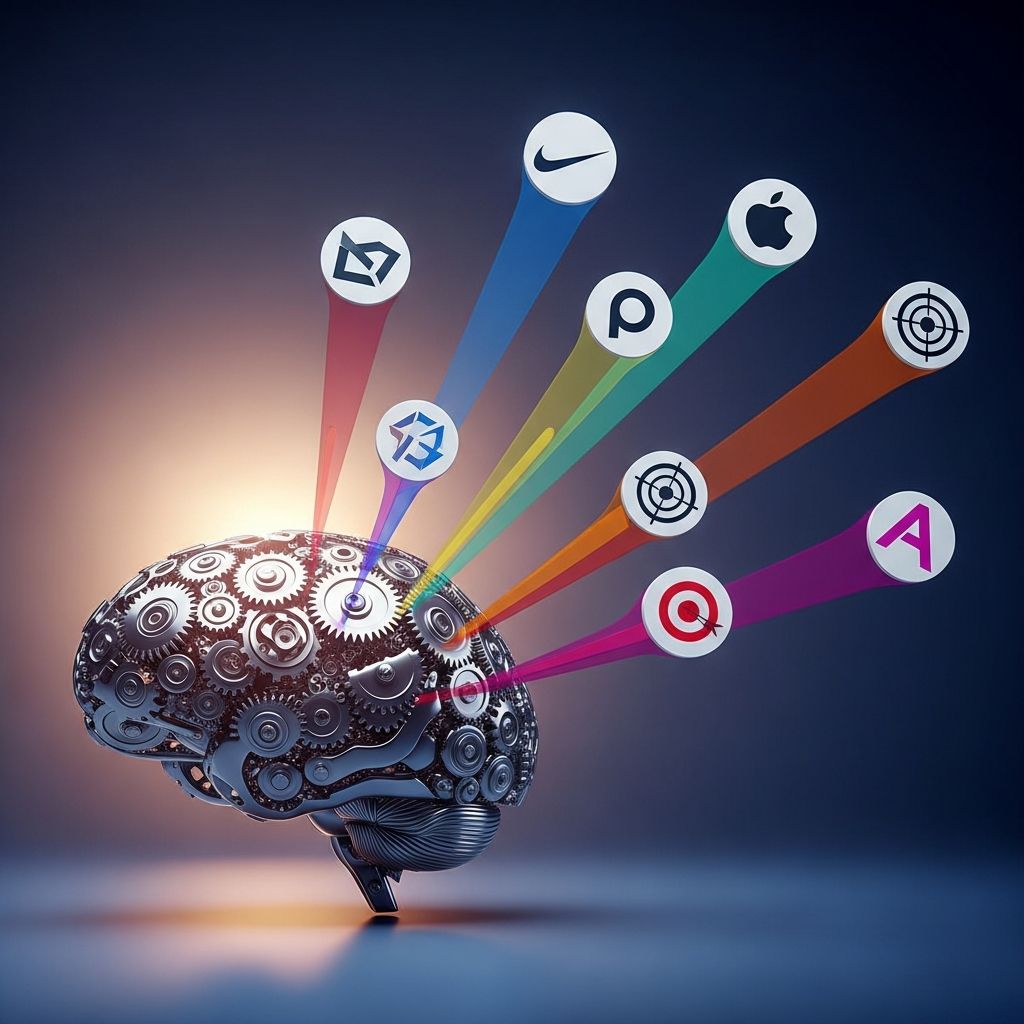
When customers hear your brand name, a cascade of thoughts, images, and feelings instantly comes to mind. Those mental links are called brand associations, and they quietly determine whether people trust you, remember you, and ultimately buy from you.
What Are Brand Associations?
Brand association is the mental connection a person makes between a brand and specific ideas, attributes, emotions, or experiences. When someone thinks of a brand, these associations are the first things that pop into their mind.
These links might include:
- Functional attributes (speed, durability, safety)
- Emotions (comfort, excitement, trust)
- Values (sustainability, innovation, inclusivity)
- People (founders, influencers, typical users)
- Situations (commuting, celebrations, workouts)
Over time, consistent experiences and messages wire these ideas together in memory, so that thinking about the brand automatically triggers them again in the future.
Why Brand Associations Matter for Growth
Brand associations do more than color your reputation; they directly influence choice and loyalty.
- Shape purchase decisions: Positive associations (reliable, easy, premium) increase preference and purchase intent, while negative ones (confusing, cheap, untrustworthy) push people away.
- Differentiate in crowded markets: Unique associations help your brand stand out when products look similar on features or price.
- Build brand equity: The strength, favorability, and uniqueness of associations are core components of overall brand equity and perceived value.
- Reduce marketing costs over time: Strong associations make it easier for new campaigns or product launches to gain traction because people already know what you stand for.
How Brand Associations Form in Customers’ Minds
Brand associations rarely appear overnight. They are built gradually through repeated and coherent signals across many touchpoints.
Key drivers of association formation
- Direct experience: Using the product, talking to sales or support, visiting a store, or navigating your website.
- Marketing communications: Advertising, content marketing, email campaigns, social media, and events.
- Social and cultural context: Reviews, word of mouth, influencer endorsements, press coverage, and cultural conversations about your category.
- Design and sensory cues: Logo, color palette, sound design, packaging, and product aesthetics.
Because these inputs accumulate over time, associations can be managed intentionally—but only with long-term consistency.
Types of Brand Associations to Consider
Not all associations work the same way. Understanding the main types helps you decide which ones to prioritize in your strategy.
| Type of Association | What It Focuses On | Example Concept |
|---|---|---|
| Attribute-based | Features or qualities of the product or service | “Fast”, “secure”, “eco-friendly” |
| Benefit-based | Outcomes customers gain by using the brand | “Saves time”, “reduces stress”, “helps me look professional” |
| Emotional | Feelings triggered when thinking about the brand | “Excitement”, “comfort”, “confidence” |
| Symbolic | Identity and values the brand expresses | “Innovative”, “ethical”, “luxurious” |
| Experiential | Sensory and usage experiences | “Smooth interface”, “great in-store atmosphere” |
Designing a Brand Association Strategy
Effective brands do not leave associations to chance. They define which mental connections they want to own and craft every touchpoint around them.
1. Clarify the associations you want to own
Start by deciding which associations are both desirable and realistic for your brand:
- Customer relevance: Does this association address a real need, pain, or aspiration for your audience?
- Competitive distinctiveness: Can you credibly own this space more strongly than main competitors?
- Strategic fit: Does it align with your business model, capabilities, and long-term positioning?
2. Align your brand positioning
Your brand positioning should anchor the associations you seek to build. Define:
- Target audience and primary use cases
- Core value proposition (what you deliver and why it matters)
- Reason to believe (evidence, proof points, or experiences that support your promise)
These elements guide which associations are emphasized in messaging, design, and product decisions.
3. Translate associations into concrete cues
Customers do not see your strategy document; they experience specific cues. For each desired association, define:
- Verbal cues: Key phrases, tone of voice, taglines, and stories that reflect that association.
- Visual cues: Colors, typography, imagery style, and layout choices that reinforce the intended meaning.
- Behavioral cues: Policies, support standards, response times, and product design decisions that prove the association in practice.
Practical Tactics to Strengthen Brand Associations
Once you know which associations you want to shape, use these tactics to reinforce them consistently.
Consistent brand identity
- Use the same logo, colors, and core design elements across channels to make your brand instantly recognizable.
- Keep tone of voice stable so that emails, blog posts, and ads all “sound” like the same brand.
Storytelling and content
- Share customer stories that dramatize the outcomes you want associated with your brand.
- Publish educational content where your brand appears as a trusted guide, reinforcing competence and reliability.
Social proof and partnerships
- Use reviews, case studies, and testimonials to connect your brand with specific benefits and real-world results.
- Choose partners and influencers whose image supports, rather than clashes with, your intended associations.
Customer experience design
- Audit each step of the journey—from discovery to support—to ensure it supports the same core message.
- Fix friction points quickly; frustrating experiences generate powerful negative associations.
Measuring Brand Associations
To manage associations, you need a way to measure how your brand currently lives in people’s minds. Leading organizations use both qualitative and quantitative tools.
Qualitative methods
- In-depth interviews: Ask open-ended questions like “What comes to mind when you think of this brand?” to uncover spontaneous associations.
- Focus groups: Explore how different customer segments describe the brand and which attributes they emphasize.
- Projective techniques: Ask participants to imagine the brand as a person, place, or object to reveal deeper symbolic meanings.
Quantitative methods
- Brand association surveys: Present lists of attributes and ask respondents to indicate which they strongly link to your brand.
- Implicit association tests: Measure the speed of mental connections to uncover non-conscious associations.
- Tracking studies: Monitor changes over time, especially before and after major campaigns or product launches.
Managing Negative or Unwanted Associations
Even strong brands pick up associations they did not plan for: poor customer service incidents, product issues, controversial partnerships, or broader industry scandals. These can erode trust and damage equity if left unaddressed.
Steps to respond
- Diagnose the source: Understand which events or experiences are driving the negative association.
- Act at the experience level: Fix real problems in product quality, policies, or communications; messaging alone cannot compensate for broken experiences.
- Address the issue transparently: Clear, timely communication can limit long-term damage to trust.
- Rebuild with proof: Over time, demonstrate tangible improvements and highlight them in your storytelling and social proof.
Brand Extensions and the Risk to Associations
When companies launch new products or move into new categories, they rely heavily on existing associations to gain traction quickly. This can create lift—but it also carries risk.
- Positive transfer: Strong associations with quality, innovation, or style can help customers accept new offerings more quickly.
- Confusion or dilution: If a new offering conflicts with core associations (for example, a value brand suddenly launching ultra-luxury products), customers may become confused or skeptical.
- Backfire effects: Poor performance in a new area can feed back into the parent brand and contaminate existing positive associations.
Before launching extensions or partnerships, evaluate whether they reinforce or contradict what your brand stands for.
Checklist: Building Stronger Brand Associations
Use this quick checklist to strengthen how people think about your brand:
- Have you clearly defined 3–5 core associations you want to own?
- Do your positioning and messaging consistently reinforce those ideas?
- Are your visual and verbal identities aligned with those associations?
- Does your customer experience deliver on the promises you make?
- Do you regularly measure associations and track how they change over time?
- Do you have a plan to respond if negative associations emerge?
Frequently Asked Questions About Brand Association
Q: How is brand association different from brand awareness?
Brand awareness is about whether people recognize or recall your brand at all. Brand association goes deeper: it is about what they think and feel when they recognize you— the specific attributes, emotions, and ideas linked to your name.
Q: Can small businesses realistically shape brand associations?
Yes. You may not have a large ad budget, but you can still be very intentional about consistent messaging, great service, and visual identity. For smaller brands, everyday interactions and word of mouth are often the strongest drivers of association.
Q: How long does it take to build strong associations?
Associations form over repeated exposures, so they usually take months or years of consistent behavior and communication to become stable. Short campaigns can create temporary impressions, but durable associations come from long-term alignment between what you say and what you do.
Q: Are emotional associations more powerful than rational ones?
Both matter, but emotional associations often exert stronger influence on preference and loyalty because they tap into how people feel about a brand, not just what they think about its features. The most effective brands combine rational proof (e.g., performance, reliability) with a clear emotional payoff.
Q: What is one simple way to start improving brand associations today?
Start by talking to customers and prospects. Ask them what comes to mind when they think of your brand and what three words they would use to describe it. Compare their answers with the associations you want to own, then update your messaging and experience where there is a gap.
References
- Brand association — alpha.one Neuromarketing & Advertising Glossary. 2023-05-02. https://www.alpha.one/resources/glossary/brand-association
- What is a Brand Association? A deep dive with examples — Brand Marketing Blog. 2022-11-14. https://brandmarketingblog.com/articles/branding-definitions/brand-association/
- Brand Association: Definition, Advantages, and Examples — Acquia. 2023-08-10. https://www.acquia.com/glossary/brand-association
- Brand Association: Meaning, Importance, Types and Barriers — GeeksforGeeks. 2025-07-23. https://www.geeksforgeeks.org/marketing/brand-association-meaning-importance-types-and-barriers/
- What is brand association? — Bynder Glossary. 2024-04-18. https://www.bynder.com/en/glossary/brand-association/
- How brand association shapes consumer behavior — Contentstack. 2023-09-07. https://www.contentstack.com/blog/strategy/how-brand-association-shapes-consumer-behavior
- Branding — American Marketing Association. 2022-03-01. https://www.ama.org/topics/brand-and-branding/

Medha Deb is an editor with a master's degree in Applied Linguistics from the University of Hyderabad. She believes that her qualification has helped her develop a deep understanding of language and its application in various contexts. Medha specializes in the areas of beauty, health, sports, and wellness and is committed to ensuring that the content on the website is…