
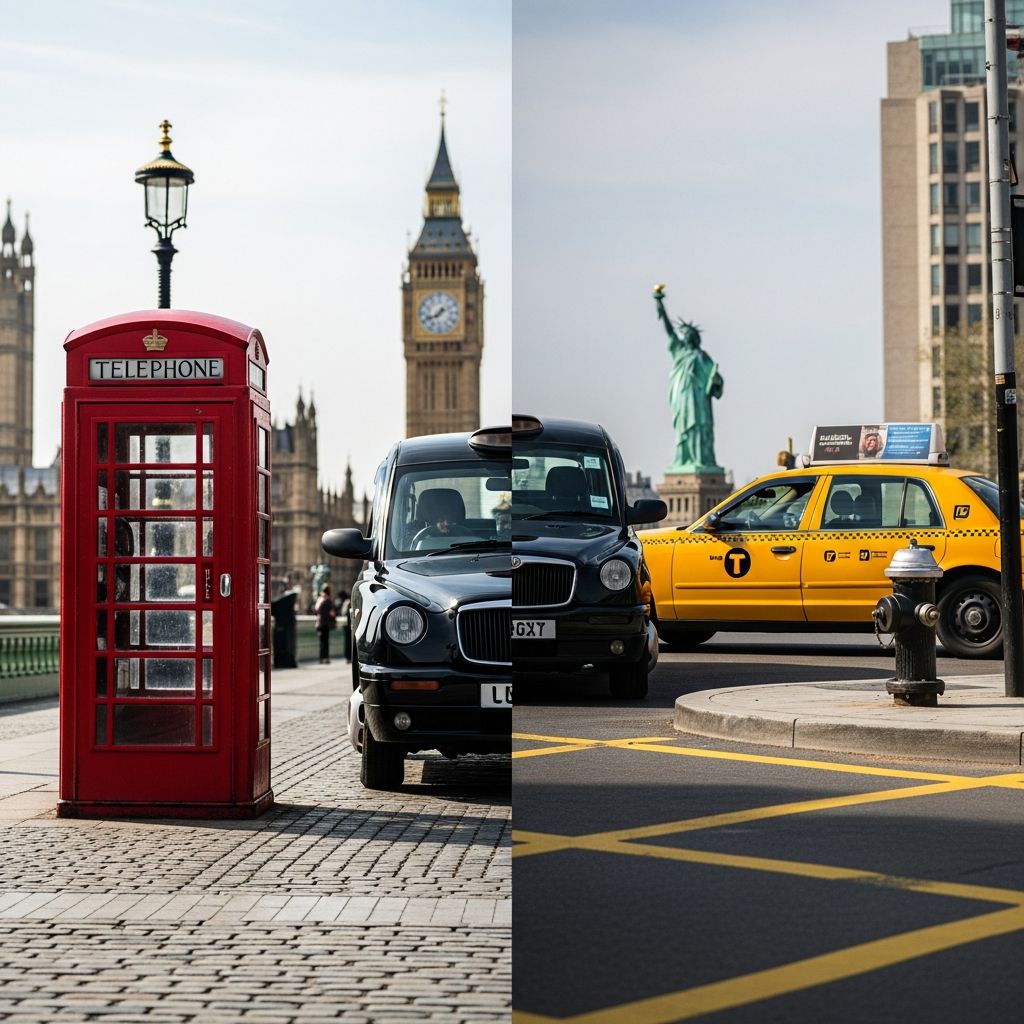
Understanding the nuances between British (UK) and American (US) English is crucial for writers targeting diverse audiences. While both variants share a common foundation, variations in spelling, grammar, punctuation, and word choice can impact clarity and professionalism. This comprehensive guide breaks down these differences, offering practical advice to navigate them effectively.
Historical Roots of Language Divergence
The split between UK and US English traces back to the 18th century. American English evolved under Noah Webster’s influence, who simplified spellings in his 1828 dictionary to promote national identity. British English retained more traditional forms influenced by French and Latin. Today, these variants reflect cultural identities but remain mutually intelligible.
Globalization amplifies the need for awareness. With English as the world’s lingua franca, documents crossing the Atlantic demand consistency. Choosing the right variant depends on your audience: UK for European or Commonwealth readers, US for North American markets.
Spelling Variations: Core Patterns to Memorize
Spelling tops the list of noticeable differences. US English favors streamlined forms, while UK English often includes extra letters for historical accuracy. Key patterns include:
- -our vs -or: UK uses ‘colour’, ‘favour’, ‘honour’; US prefers ‘color’, ‘favor’, ‘honor’.
- -re vs -er: UK ‘centre’, ‘theatre’; US ‘center’, ‘theater’.
- -ise vs -ize: UK ‘organise’, ‘realise’; US ‘organize’, ‘realize’. Note: UK sometimes accepts -ize, but -ise is standard.
- -ogue vs -og: UK ‘catalogue’, ‘dialogue’; US ‘catalog’, ‘dialog’.
- Double consonants: UK ‘travelling’, ‘counselling’; US ‘traveling’, ‘counseling’.
Other single-word shifts: UK ‘tyre’ (wheel), US ‘tire’; UK ‘grey’, US ‘gray’. Tools like spell-checkers in Microsoft Word or Google Docs can switch between variants, but manual verification ensures accuracy.
| UK Spelling | US Spelling | Example Sentence |
|---|---|---|
| colour | color | The colour of the sky is blue. |
| organise | organize | They will organise the event tomorrow. |
| travelling | traveling | She is travelling abroad. |
| centre | center | Meet at the shopping centre. |
Grammar Distinctions: Tense and Verb Usage
Grammar differences are subtler but can alter meaning. UK English leans toward the present perfect tense for recent actions with present relevance, while US favors simple past.
- UK: ‘I have just eaten.’ US: ‘I just ate.’
- UK: ‘Have you finished?’ US: ‘Did you finish?’
Collective nouns differ too. UK treats them as plural: ‘The team are winning.’ US as singular: ‘The team is winning.’
Irregular verbs vary: US ‘gotten’ (past participle of get), absent in UK (‘got’); US ‘dove’ (past of dive), UK ‘dived’. Past participles like ‘dreamt’ (UK preferred) vs ‘dreamed’ (both acceptable).
Punctuation Rules: Quotes and Commas
Punctuation styles diverge notably in quotations. US places commas and periods inside quotes; UK outside unless part of the quote.
- US: He said, “Hello.”
- UK: He said, ‘Hello’.
Quote marks: US double outer (‘” ‘), single inner; UK single outer (‘ ‘), double inner. US embraces the serial (Oxford) comma: ‘red, white, and blue’. UK often omits it: ‘red, white and blue’.
Prepositions and Phrasal Choices
Prepositions cause frequent mix-ups. UK: ‘at the weekend’, ‘in hospital’; US: ‘on the weekend’, ‘in the hospital’.
- UK: ‘at Christmas’; US: ‘on Christmas’.
- UK: ‘different from’; US: ‘different than’.
- Dates: UK ‘Monday week’ (next Monday); US less common.
Fill forms: US ‘fill out’, UK ‘fill in’.
Vocabulary: Words That Travel Differently
Vocabulary gaps confuse most. Everyday items differ:
| Category | UK Term | US Term |
|---|---|---|
| Elevator | Lift | Elevator |
| Apartment | Flat | Apartment |
| Vacation | Holiday | Vacation |
| Cookies | Biscuits | Cookies |
| Truck | Lorry | Truck |
Slang amplifies divides: UK ‘mate’ (friend), US ‘buddy’; UK ‘chuffed’ (pleased), US ‘thrilled’.
Date, Time, and Number Formats
Formats affect clarity. Dates: UK ‘6 February 2026’ (DD/MM/YYYY), US ‘February 6, 2026’ (MM/DD/YYYY).
Time: Both use 12/24-hour, but UK prefers 24-hour officially. Numbers: UK ‘1.234,56’ (thousands dot, decimals comma? Wait, standard UK: 1,234.56 like US, but some EU influence). Ordinals: US ‘July 4th’, UK ‘4th July’.
Pronunciation and Accent Impacts
While writing-focused, accents influence reading. US rhotic (pronounce ‘r’ always), UK non-rhotic in south. Vowels differ: US ‘tomayto’, UK ‘tomahto’. Stress: US first syllable often, UK variable.
Tips for Consistent Writing
To maintain variant consistency:
- Select one dictionary: Oxford (UK), Merriam-Webster (US).
- Use style guides: Chicago Manual (US), Oxford Style (UK).
- Proofread with variant-specific tools.
- For international: Consider neutral ‘International English’ blending both.
In business, specify variant in briefs. Academic papers often follow journal style.
Common Pitfalls and How to Avoid Them
Avoid hybrids like ‘organise’ in US text. Watch homographs: UK ‘bill’ (invoice), US also ‘beak’. Context clarifies most, but consistency prevents errors.
FAQs
Which English variant should I use?
Match your audience: US for American readers, UK for British/Commonwealth.
Are the differences mutually intelligible?
Yes, 99% overlap; issues arise in formal or specialized writing.
Can I mix spellings in one document?
Avoid it; choose one for professionalism.
Does software handle variants automatically?
Most do, but verify settings (e.g., Word’s ‘English (US)’ vs ‘English (UK)’).
Are grammar differences strict rules?
Preferences, not absolutes; flexibility exists, especially in informal contexts.
Adapting for Global Audiences
In a connected world, versatility matters. Learn both via reading (BBC for UK, CNN for US). Practice rewriting sentences. Resources like British Council aid learners.
Ultimately, awareness elevates writing. Mastering UK-US differences ensures precision, avoids misunderstandings, and projects competence.
References
- US vs. UK English Grammar | The Proofreading Pulse — ProofreadingPal. 2023-05-15. https://proofreadingpal.com/proofreading-pulse/writing-guides/us-vs-uk-english-grammar/
- American and British English grammatical differences — Wikipedia. 2025-01-20. https://en.wikipedia.org/wiki/American_and_British_English_grammatical_differences
- 11 Major Differences Between American and British English — American English Institute. 2024-03-10. https://www.american-english-institute.com/11-major-differences-between-american-and-british-english
- Grammatical Differences: American vs. British English — Proofed. 2024-07-22. https://proofed.com/writing-tips/grammatical-differences-american-vs-british-english/
- Differences in American and British English grammar — OneStopEnglish. 2023-11-05. https://www.onestopenglish.com/support-for-teaching-grammar/differences-in-american-and-british-english-grammar-article/152820.article
- British vs. American English — University of Nevada, Reno Writing Center. 2024-09-12. https://www.unr.edu/writing-speaking-center/writing-speaking-resources/british-american-english

Medha Deb is an editor with a master's degree in Applied Linguistics from the University of Hyderabad. She believes that her qualification has helped her develop a deep understanding of language and its application in various contexts. Medha specializes in the areas of beauty, health, sports, and wellness and is committed to ensuring that the content on the website is…