
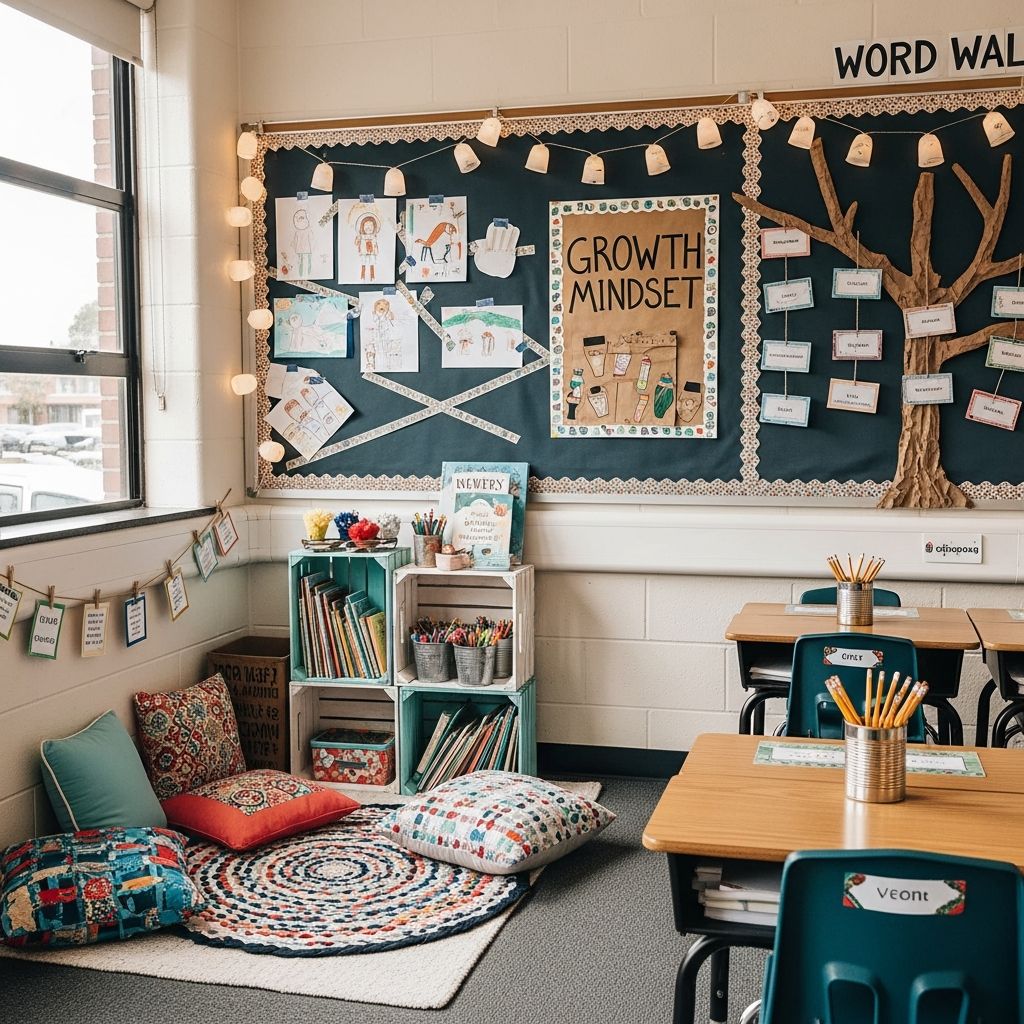
Creating an inviting classroom doesn’t require a large budget or professional designers. Teachers can craft personalized, functional decorations using simple materials, student contributions, and clever repurposing techniques. This approach not only saves money but also fosters a sense of ownership among students, enhancing engagement and pride in their learning space.
Establishing a Cohesive Color Scheme
Start with a unified color palette to tie your classroom together without overwhelming the senses. Select 2-3 main colors that reflect your teaching theme, such as calming blues for a serene atmosphere or vibrant greens for an energetic vibe. Use these shades across walls, furniture, and accents to create harmony.
For instance, paint old stools or storage bins with spray paint in your chosen hues. Dollar store containers in matching tones can organize supplies neatly. This foundation allows flexibility for seasonal changes while maintaining visual consistency.
Showcasing Student Artwork Effectively
One of the most impactful and cost-free decorations is displaying student creations. This practice builds confidence, showcases daily achievements to administrators and peers, and strengthens community bonds. Dedicate wall spaces or bulletin areas for rotating exhibits of drawings, projects, and writings.
- Hang work with colorful clothespins on taut strings for an easy gallery look.
- Create ‘Great Work Grows Here’ zones using faux greenery backdrops to frame pieces dynamically.
- Encourage students to self-select and update their displays, promoting responsibility.
These displays evolve throughout the year, keeping the room fresh and celebrating progress collectively.
Enhancing Ambiance with Smart Lighting
Overhead fluorescent lights often create harsh, uninspiring environments. Swap them for softer alternatives to improve mood and reduce eye strain, especially beneficial for students sensitive to bright glare.
- Introduce affordable table lamps from discount stores, positioning them on shelves or desks.
- Install battery-operated LED strip lights behind shelves or along walls for subtle glows.
- Add string lights or fairy lights (if fire codes permit) for a cozy, magical touch.
These changes instantly warm the space, making it more home-like and conducive to focused learning.
Crafting Vibrant Tissue Paper Accents
Tissue paper offers endless possibilities for bold, inexpensive decor. Its affordability and versatility make it ideal for creating oversized flowers, pom-poms, or garlands that add pops of color without wall damage.
- Layer colored tissue sheets, fan-fold them, and secure with a staple or twist tie in the center.
- Trim edges into petal shapes, then gently pull layers apart to fluff.
- Attach to poster board squares with hot glue, adding command strips for hanging.
Suspend clusters from ceilings or ceilings for dimension, perfect for art rooms or entryways. These lightweight pieces withstand multiple uses and storage.
Personalizing with Handmade Garlands and Letters
Garlands and custom lettering inject personality and whimsy. Fabric scraps, paper, or ribbon form dangling chains that frame whiteboards or windows.
For letters, acquire wooden or cardboard cutouts from craft stores. Apply acrylic paints in multiple coats, seal with mod podge for durability, and embellish with buttons, ribbons, or fabric ties. Hot glue ribbon loops on the back for push-pin hanging, spelling out mottos like ‘Learn & Grow’.
- Mix textures: fabric strips knotted together for rustic appeal.
- Incorporate seasonal motifs, such as leaves for fall or snowflakes for winter.
- Scale to space: larger for high ceilings, smaller for intimate corners.
Creating Sensory Comfort with Scents
A pleasant aroma elevates the room’s appeal, combating odors from daily use. Opt for plug-in diffusers or essential oil units that emit calming mists and shifting lights.
Blend lavender for relaxation or citrus for energy, placing units near vents for even distribution. This subtle addition makes the space feel cared for and inviting, particularly in larger or multi-use rooms.
Wall Transformations Without Permanent Changes
Rental or strict school policies often prohibit painting. Removable solutions like decal murals, brick-pattern wallpaper, or faux boxwood panels provide texture and interest.
| Method | Materials Needed | Cost Estimate | Durability |
|---|---|---|---|
| Faux Boxwood Panels | Panels from retailers, foam tape | Low-Medium | High, reusable |
| Brick Wallpaper | Roll, foam tape/hot glue | Low | Medium, peelable |
| Decal Sticker Murals | Stickers from craft stores | Medium | High, no residue |
Apply to focal walls, such as behind libraries or work display areas, for dramatic effect. These options peel off cleanly, preserving surfaces.
Functional Decor with Magnetic Boards
Turn blank walls into interactive hubs using magnetic paint or pre-made boards. Paint wooden circles, affix number stickers, seal, and glue magnets for customizable labels.
Divide boards with colored tape for categories like ‘To Do’ and ‘Done’. This setup organizes schedules, announcements, and achievements while serving as decor.
Seasonal and Themed Refreshers
Keep energy high by rotating elements quarterly. Dollar store garlands, student-made wreaths, or printable posters align with holidays or units.
- Fall: Leaf strands and pumpkin accents.
- Winter: Garland lights and snow motifs.
- Spring: Floral bursts and pastel tones.
Involve students in crafting to deepen investment. Small changes prevent staleness and signal new learning phases.
Budget Sourcing and Repurposing Tips
Maximize savings by shopping craft store sales, dollar sections, and thrift finds. Repurpose shower curtains as backdrops, spray-paint furniture, and utilize school die-cut machines for letters.
Build inventory gradually: start with free student work, add lighting, then accents. Track expenses to stay under $100 initially.
Frequently Asked Questions
What are the cheapest ways to decorate a classroom?
Display student work for free impact, add lamps or LED strips under $20, and craft tissue paper items with supplies costing pennies.
Can I decorate rented or temporary classrooms?
Yes, prioritize removable items like command strip hangings, peelable wallpapers, and freestanding decor to avoid damage.
How do I involve students in decorating?
Have them contribute artwork, vote on colors, craft garlands, or maintain displays to build ownership and excitement.
Are string lights safe in schools?
Check local fire codes; opt for battery-operated versions if plugs pose risks.
How often should I change decorations?
Rotate seasonally or per unit to maintain freshness, involving minor updates monthly for sustained engagement.
References
- National Center for Education Statistics Classroom Environment Guidelines — U.S. Department of Education. 2023-09-15. https://nces.ed.gov/pubs2024/2024001.pdf
- Impact of Classroom Design on Student Performance — American Educational Research Association. 2022-05-20. https://www.aera.net/Publications/Journals/AERJ
- School Facility Management Guidelines — Council of Educational Facility Planners International. 2024-01-10. https://www.cefp.org/resources
- Lighting and Learning: Effects on Achievement — Illuminating Engineering Society. 2021-11-05. https://www.ies.org/standards
- Educational Spaces: Design for Well-Being — World Health Organization. 2023-03-12. https://www.who.int/publications/i/item/9789240072360

- Integrated M.A. in Applied Linguistics, University of Hyderabad
- 5+ years in editorial, instructional, SEO, and research-based writing
Sneha is a relationships and lifestyle writer with a strong foundation in applied linguistics and certified training in relationship coaching. She brings over five years of writing experience to theskillvault, crafting thoughtful, research-driven content that empowers readers to build healthier relationships, boost emotional well-being, and embrace holistic living. Her writing and insights reflect the belief that beauty, happiness, and wellness…