
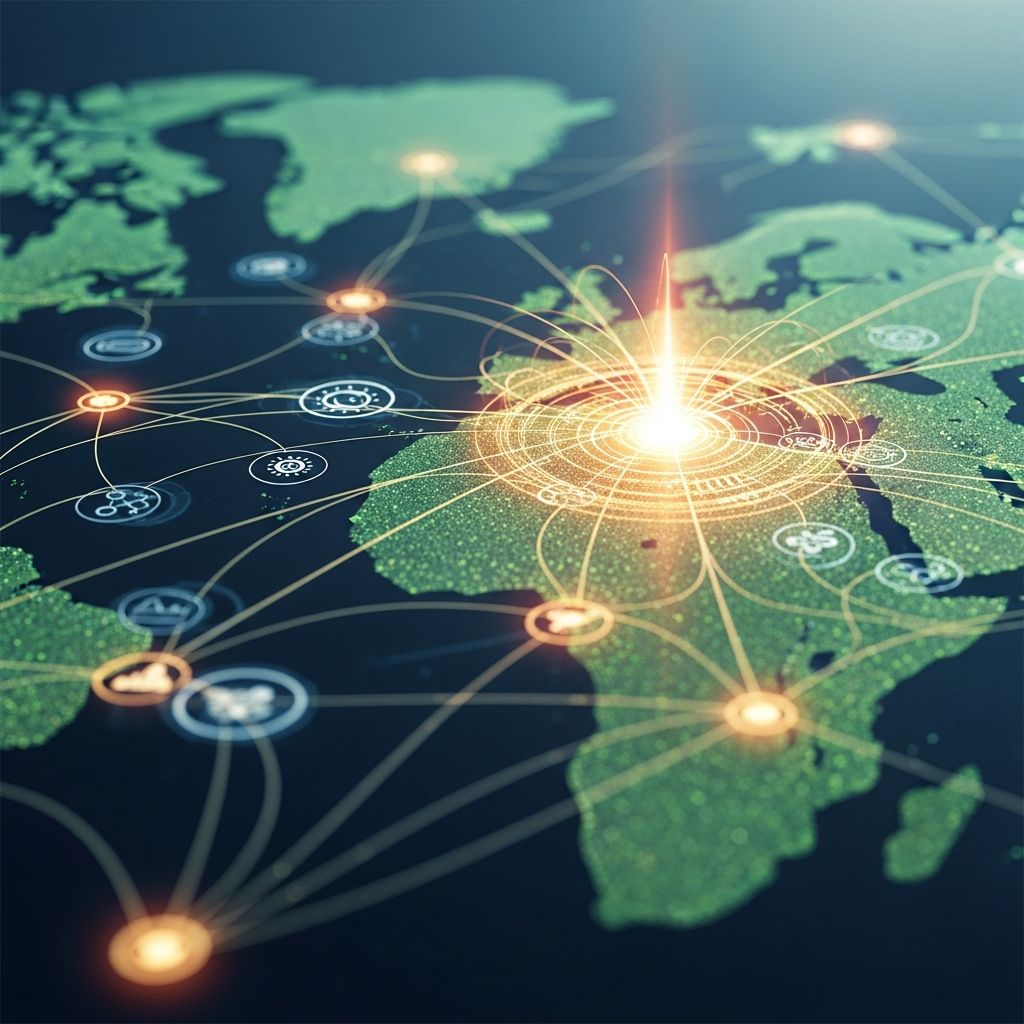
Pandemics are not rare accidents; they are recurring features of life on a densely connected planet. Yet our ability to detect new pathogens early and contain them quickly still lags far behind what modern science and technology make possible. The idea behind a global Sentinel system is simple but ambitious: place powerful diagnostics and genomic tools as close as possible to where people first get sick, and use that information in real time to guide rapid, local responses.
This article explores what such a Sentinel system might look like in practice, drawing on lessons from genomics, outbreak response, and capacity-building efforts in regions that repeatedly face deadly infectious diseases.
Why Early Detection Matters More Than Almost Anything Else
Outbreaks follow a familiar pattern: a pathogen jumps into humans, spreads locally, then radiates outward through travel and trade. The earlier a new threat is recognized, the cheaper and easier it is to stop.
- Low case numbers: In the first days and weeks, total infections are still relatively small, making contact tracing and isolation feasible.
- Limited geographic spread: Travel restrictions and targeted interventions can still slow or stop cross-border transmission.
- More options: Health authorities can experiment with different containment strategies before systems are overwhelmed.
By contrast, delayed detection means hospitals fill up, supply chains strain, and political leaders are forced into blunt, expensive measures such as nationwide lockdowns. A functioning Sentinel network aims to move as much action as possible into that early window.
From Reactive to Proactive: What Is a Sentinel System?
A Sentinel system is a distributed network of people, tools, and institutions designed to detect, analyze, and respond to infectious threats before they explode into full-scale crises. Unlike traditional surveillance that may rely on sparse reporting and slow laboratory confirmation, Sentinel-style systems use modern genomics, data science, and local capacity to create a richer, faster picture of what is circulating in communities.
| Conventional Surveillance | Sentinel Approach |
|---|---|
| Centralized labs far from patients | Decentralized labs near clinics and hospitals |
| Reporting often delayed by weeks | Near real-time sequencing and data sharing |
| Focus on a few known pathogens | Broad detection of known and novel microbes |
| Limited feedback to local health workers | Actionable information returned quickly to the front line |
The Role of Genomics in Outbreak Detection
Modern sequencing technologies allow scientists to read the genetic code of viruses, bacteria, and parasites directly from patient samples. This genetic information can reveal:
- What pathogen is present: Genomic signatures distinguish one virus or bacterium from another, even when symptoms look similar.
- How it is spreading: Comparing sequences across patients shows transmission chains, revealing clusters, superspreading events, and hidden routes of spread.
- How it is evolving: Genomes change as pathogens adapt to hosts, treatments, or vaccines. Genomic surveillance can track these changes in real time.
During recent outbreaks, genomic data have been crucial for recognizing new variants, estimating how quickly a pathogen spreads, and understanding whether existing vaccines or diagnostics might fail.
Case Studies: What Recent Epidemics Have Taught Us
Several major epidemics over the last two decades have highlighted both the power of genomic tools and the dangers of weak surveillance.
Ebola and the Importance of Local Sequencing
The 2014–2016 West African Ebola epidemic revealed enormous gaps in preparedness. At the same time, it demonstrated how rapid viral sequencing can clarify transmission patterns and guide control measures. Scientists working closely with local health authorities generated large genomic datasets, showed that the outbreak was driven by sustained human-to-human transmission, and shared data publicly to support a coordinated response.
Crucially, work in West Africa also supported the establishment of regional genome centers and training programs, enabling local teams to diagnose Ebola in countries such as Sierra Leone and Nigeria and to respond to later outbreaks more quickly.
SARS-CoV-2 and the Era of Global Viral Sequencing
COVID-19 took genomic surveillance into the mainstream. Networks of labs worldwide generated millions of virus genomes, allowing scientists to track variants like Alpha, Delta, and Omicron, estimate their transmissibility, and inform vaccine updates. This enormous global effort illustrated what is possible when sequencing becomes routine, but it also highlighted inequities: many low- and middle-income countries had limited capacity to generate or analyze data.
Key Building Blocks of a Sentinel Network
To move from isolated success stories to a stable, global safety net, several elements must come together.
1. Frontline Diagnostic Capacity
At the most basic level, Sentinel networks require that people who get sick can be tested rapidly and accurately. This means:
- Accessible clinics and hospitals equipped with reliable tests for common diseases.
- Referral pathways for unusual or severe cases to higher-level labs.
- Integration of new point-of-need diagnostic technologies, including rapid molecular assays or CRISPR-based tests, where appropriate.
Making diagnostics affordable and available in rural as well as urban settings is essential, particularly in regions where many emerging pathogens originate.
2. Regional Genome Centers
Next, the system needs laboratories capable of sequencing and interpreting pathogen genomes. Some key features of effective regional centers include:
- High-throughput sequencing platforms suitable for processing large numbers of samples during surges.
- Bioinformatics expertise to analyze genomic data, identify variants, and infer transmission patterns.
- Strong ties to public health agencies so that genomic findings translate rapidly into action.
Experience in West Africa and elsewhere shows that building these centers around local scientists creates more resilient systems than relying solely on external partners.
3. Skilled Local Scientists and Public Health Workers
Equipment alone cannot catch outbreaks. A Sentinel system depends on trained people who can run assays, interpret results, troubleshoot problems, and coordinate responses.
- Training programs in genomics, epidemiology, and data science for scientists and technicians.
- Continuous professional development to keep staff current as methods and tools evolve.
- Support for leadership roles for local experts in national and regional health decision-making.
Large capacity-building efforts over the past decade have shown that when local teams are empowered, they can diagnose emerging diseases, run complex sequencing workflows, and train others across an entire continent.
4. Data Sharing and Open Science
Sentinel systems work best when genomic and epidemiological data move quickly and responsibly between institutions and across borders. Open, timely data sharing can:
- Help identify new variants or pathogens faster.
- Enable neighboring countries to prepare for incoming threats.
- Accelerate research on diagnostics, vaccines, and treatments.
At the same time, data governance must respect privacy, national laws, and the contributions of local scientists. Fair recognition and equitable collaboration are essential to sustaining trust.
Design Principles for a Fair and Effective Sentinel System
Beyond technical components, the values that guide a Sentinel system will shape whether it truly improves global health security.
- Equity: Regions historically hit hardest by outbreaks should not be last in line for tools, funding, or vaccines. Building surveillance where risk is highest protects everyone.
- Partnership: Effective collaboration recognizes local leadership, shares credit, and distributes decision-making power, rather than imposing outside agendas.
- Transparency: Clear communication about risks, uncertainties, and trade-offs helps maintain public trust during fast-moving crises.
- Flexibility: Systems must adapt as pathogens, technologies, and social contexts change.
Challenges and Trade-Offs
Even with clear benefits, building Sentinel networks at scale is not straightforward.
Financing and Long-Term Sustainability
Outbreak-related funding often comes in waves: large injections during a crisis followed by sharp declines once the immediate threat fades. A robust Sentinel architecture requires more stable, long-term investment models that support:
- Ongoing staff salaries and training.
- Regular maintenance and upgrading of equipment.
- Routine surveillance, not just emergency response.
Balancing Speed and Quality
Rapid sequencing and data release are valuable during emergencies, but they can create pressure to act on incomplete or noisy information. Sentinel teams must navigate trade-offs between:
- Getting information out quickly enough to inform responses.
- Ensuring analyses meet minimum quality standards.
- Avoiding over-interpretation of early signals that might later change.
Ethical and Political Complexities
Infectious disease data can have political and economic consequences, affecting travel, trade, and public perception. Countries may worry about being stigmatized or facing restrictions if they share data transparently. Building Sentinel networks therefore involves diplomacy, trust-building, and international agreements that reward rather than punish openness.
Education, Simulation, and Public Engagement
Preparedness is not only a technical matter; it is also cultural. Societies that understand how outbreaks spread are better equipped to support sensible interventions and distinguish evidence-based measures from misinformation.
- Outbreak simulations: Interactive tools and role-playing exercises can help students and communities experience how pathogens spread and how different behaviors affect outcomes.
- Accessible teaching materials: Courses on statistics, genomics, and outbreak science can demystify the tools used in pandemic response and inspire future public health leaders.
- Storytelling: Sharing narratives from frontline scientists, clinicians, and community organizers helps connect abstract systems like Sentinel to real human experiences.
How Individuals and Institutions Can Support Sentinel Efforts
Creating a safer world is a collective task. Diverse actors can contribute in complementary ways.
For Policymakers
- Invest consistently in national public health institutes and laboratory networks.
- Support regional genome centers and cross-border surveillance initiatives.
- Establish clear legal frameworks for data sharing and emergency response.
For Scientists and Technologists
- Develop tools that are robust, affordable, and usable in low-resource settings.
- Collaborate with local partners from the outset when designing projects.
- Publish methods and datasets in ways that enable others to build on them.
For Funders and Philanthropists
- Prioritize long-term capacity over short-term visibility.
- Support training programs, fellowships, and institutional strengthening.
- Encourage open science practices while respecting local priorities.
Frequently Asked Questions (FAQs)
Q: How is a Sentinel system different from current global health surveillance?
A Sentinel system emphasizes decentralized capacity, widespread genomic sequencing, and rapid, bidirectional data flows between local clinics and regional or global analysis hubs. Traditional surveillance often relies on a smaller number of central laboratories, slower reporting, and narrower testing focused on a few well-known pathogens.
Q: Why focus so much on genomics for outbreak detection?
Genomic sequencing reveals what pathogen is present, how it is spreading, and how it is changing over time. This information helps distinguish between different diseases with similar symptoms, uncover hidden transmission chains, and detect new variants that might evade vaccines or diagnostics.
Q: Is Sentinel surveillance only relevant for viral diseases?
No. While viruses like Ebola, influenza, and SARS-CoV-2 receive much attention, genomic and diagnostic tools can also track bacteria, parasites, and other microbes. Many of the same laboratory and data systems can serve multiple pathogens, improving efficiency and preparedness across a wide range of health threats.
Q: How do Sentinel systems protect the rights and interests of local communities?
Ethical Sentinel designs emphasize local leadership, fair recognition for scientists who generate data, and transparent communication with communities about why data are collected and how they will be used. Strong governance and accountability mechanisms are essential to ensuring that surveillance serves public health rather than narrow political or commercial interests.
Q: What is the biggest bottleneck to building a global Sentinel network today?
Many technical tools already exist, but scaling them requires sustained investment in people, institutions, and cross-border cooperation. Long-term funding for local labs, training, and public health infrastructure is often the limiting factor, alongside political will to prioritize preparedness even when no crisis dominates the headlines.
References
- Pardis Sabeti – Broad Institute — Broad Institute of MIT and Harvard. 2024-05-01. https://www.broadinstitute.org/bios/pardis-sabeti
- Pardis Christine Sabeti — Harvard T.H. Chan School of Public Health. 2023-11-10. https://hsph.harvard.edu/profile/pardis-christine-sabeti/
- Genomic sequencing of pathogens for outbreak response: A practical guide — World Health Organization. 2022-04-05. https://www.who.int/publications/i/item/9789240044883
- A coordinated global effort to enable genomic surveillance of SARS-CoV-2 — The Lancet Microbe. 2021-08-01. https://doi.org/10.1016/S2666-5247(21)00163-3
- Sequence-based identification of Ebola virus transmission during the 2014–2015 outbreak — New England Journal of Medicine. 2014-09-25. https://doi.org/10.1056/NEJMoa1405225

- Integrated M.A. in Applied Linguistics, University of Hyderabad
- 5+ years in editorial, instructional, SEO, and research-based writing
Sneha is a relationships and lifestyle writer with a strong foundation in applied linguistics and certified training in relationship coaching. She brings over five years of writing experience to theskillvault, crafting thoughtful, research-driven content that empowers readers to build healthier relationships, boost emotional well-being, and embrace holistic living. Her writing and insights reflect the belief that beauty, happiness, and wellness…