
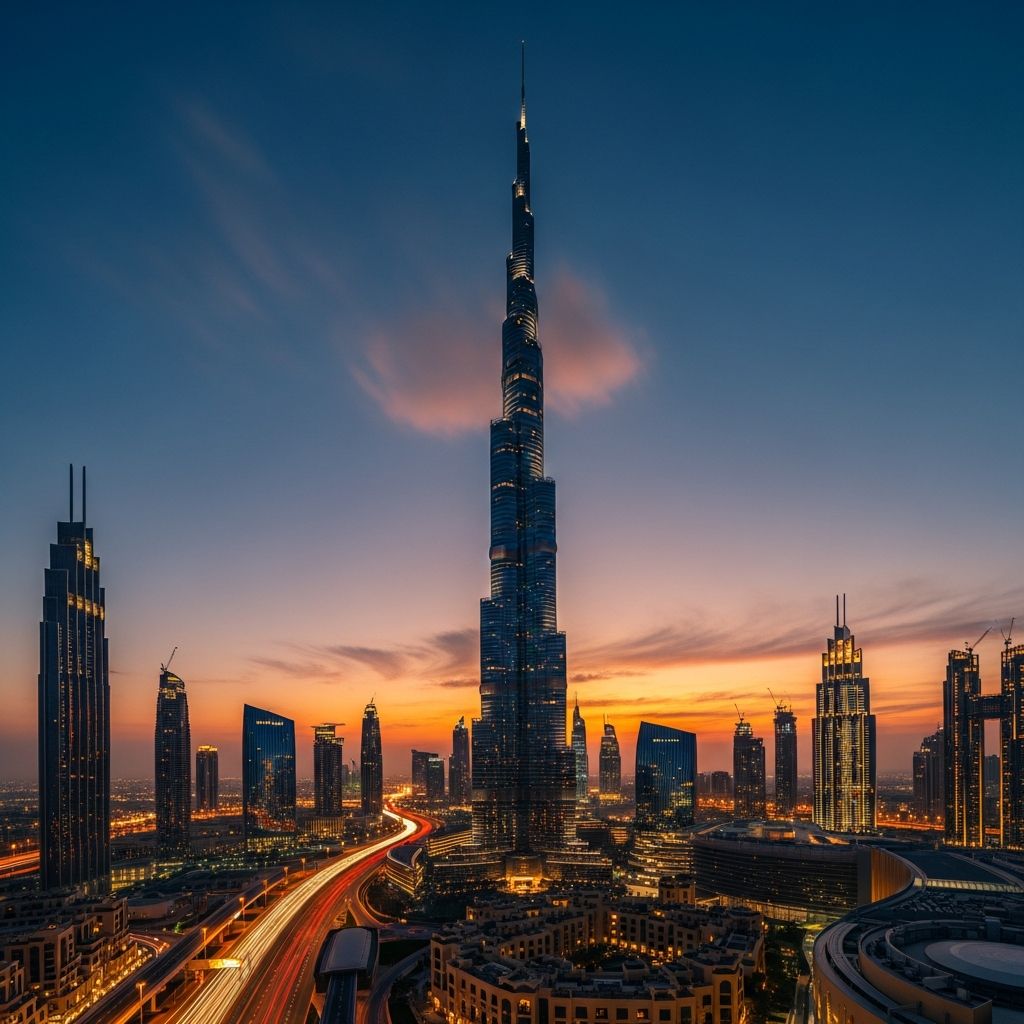
Understanding the World’s Greatest Vertical Achievement
The architectural landscape of the modern world has been fundamentally transformed by the construction of extraordinary vertical structures. Among these impressive feats of engineering and design, one building stands prominently above all others—both literally and figuratively. Located in the heart of Dubai, United Arab Emirates, the Burj Khalifa represents a pinnacle of human achievement in construction and urban development. This magnificent structure has redefined what is possible in architectural design and continues to capture the imagination of people worldwide.
The Burj Khalifa holds the distinguished title of being the world’s tallest building, a recognition that comes with numerous associated records and achievements. Its existence serves as a testament to human ambition, technological innovation, and the pursuit of excellence in architectural design. Understanding this remarkable structure requires examining its dimensions, construction methodology, historical significance, and the various records it maintains.
Dimensional Specifications and Scale
The physical dimensions of the Burj Khalifa are truly staggering and contribute significantly to its status as an architectural marvel. The structure reaches a total height of 829.8 meters, which translates to approximately 2,722 feet or just over half a mile into the sky. This measurement includes the building’s distinctive spire, which extends 242.6 meters above the roof level. The roof height alone, excluding the antenna but including the spire, measures 828 meters or 2,717 feet.
To comprehend the magnitude of this achievement, contextual comparisons prove invaluable. The Burj Khalifa surpasses the iconic Empire State Building by more than double, standing at 1,250 feet. Even when accounting for the Empire State Building’s antenna, which extends its total height to 1,454 feet, the Burj Khalifa still towers significantly higher. When compared to the Eiffel Tower, another architectural icon, the Burj Khalifa approaches nearly three times the height of this famous Parisian structure. Such comparisons underscore the unprecedented scale of this Dubai-based edifice.
Construction Timeline and Development Process
The journey of bringing the Burj Khalifa from concept to reality spans several years and represents countless hours of labor, planning, and coordination. Construction commenced on September 21, 2004, marking the beginning of an ambitious undertaking that would reshape Dubai’s skyline. The completion of the exterior structure occurred on October 1, 2009, representing approximately five years of intensive construction activities. During this period, the project required a remarkable 22 million man-hours of work, demonstrating the enormous scale of human effort involved.
Following the completion of the exterior, the project proceeded toward its final phases of finishing and preparation for opening. The official inauguration of the completed Burj Khalifa took place on January 4, 2010, marking a momentous occasion in architectural history. On this date, the building was officially recognized as the tallest building in the world, surpassing the previous record holder and establishing a new benchmark for vertical construction achievement.
Architectural Design and Conceptual Innovation
The visual and structural design of the Burj Khalifa reflects sophisticated architectural thinking and innovative engineering approaches. The building was designed by the prestigious architectural firm Skidmore, Owings & Merrill, known for their expertise in creating landmark structures worldwide. The overall aesthetic of the building draws inspiration from the Hymenocallis, a regional desert flower found in the Arabian region, creating a design that connects the structure to its local environment while maintaining contemporary appeal.
The architectural form of the Burj Khalifa demonstrates the principle of setback design, where the building tapers as it rises toward the sky. This design approach serves multiple purposes: it enhances visual appeal, distributes structural loads more efficiently, and creates varied interior spaces. The integration of these design elements resulted in a structure that functions both as a practical mixed-use building and as a visually striking architectural statement that defines Dubai’s modern skyline.
Functional Composition and Building Specifications
The Burj Khalifa functions as a mixed-use development, incorporating diverse purposes within its vertical expanse. The building contains 163 floors, making it the tallest building in the world by the measure of floor count as well. These floors are distributed among residential apartments, corporate office spaces, and hospitality facilities including luxury hotel accommodations. This diversified functional composition ensures that the building serves multiple segments of Dubai’s economic and residential landscape.
The residential component of the Burj Khalifa includes premium apartments distributed across numerous floors, providing some of the world’s most elevated living spaces. The commercial office spaces cater to international corporations and businesses seeking prestigious locations within Dubai’s business district. The hotel component provides luxury hospitality services, allowing guests to experience accommodations at extraordinary heights. This multifaceted approach to building design maximizes the utility and economic viability of the structure.
Revolutionary Records and Technical Achievements
The Burj Khalifa’s claim to prominence extends far beyond simply being the world’s tallest building. The structure holds multiple world records across various categories of measurement and achievement, establishing it as a record-breaker in numerous dimensions.
- Tallest Existing Structure: The Burj Khalifa holds the record for the tallest structure currently standing anywhere on Earth, maintaining this distinction since its completion.
- Tallest Structure Ever Constructed: This record acknowledges that no structure in human history has ever reached the height achieved by the Burj Khalifa.
- Tallest Freestanding Structure: The building stands independently without the support of cables or external bracing systems, making it the tallest unsupported vertical structure.
- Tallest Skyscraper: Among buildings designed and constructed for human occupation and use, none surpasses the Burj Khalifa in height.
- Building with Greatest Floor Count: With 163 floors, the Burj Khalifa surpasses all other buildings in the number of distinct floor levels.
- Highest Occupied Floor: The uppermost residential and occupied floors reach an elevation of 1,918 feet or 584.5 meters above ground level.
- Tallest Elevator in a Building: The elevator systems within the Burj Khalifa span 504 meters, making them the tallest elevator shafts in any building worldwide.
- Highest Outdoor Observation Deck: The Burj Khalifa features an observation deck at 555.7 meters above ground level, providing visitors with views from an unparalleled height. Although China’s Shanghai Tower has since constructed a higher observation deck at 561.3 meters, the Burj Khalifa maintained this record for several years following its opening.
- Highest Restaurant from Ground Level: Dining facilities within the Burj Khalifa reach an elevation of 441.3 meters, establishing the record for the highest restaurant location in any building.
Comparison with Previous Record Holders
The journey toward the Burj Khalifa’s achievement involved a succession of buildings that held the world record across different eras. Prior to the Burj Khalifa’s completion, the Taipei 101 in Taiwan held the distinction of being the world’s tallest building. This structure measured 508 meters or 1,666 feet in total height. Before Taipei 101, the Petronas Towers in Kuala Lumpur, Malaysia, held the record. The twin towers of the Petronas complex reached 451.9 meters, with their height achieved partially through 73.5-meter stainless steel pinnacles placed atop the 88-story structures.
The transition from one record holder to the next reflects the increasing ambition and capability of architects and engineers to push the boundaries of vertical construction. Each new record-holding building typically surpasses its predecessor by a substantial margin, representing significant advances in construction technology and engineering methodology. The Burj Khalifa, with its substantial height advantage over previous record holders, exemplifies this trajectory of continuous advancement in architectural achievement.
Engineering and Elevator Systems
The operational systems within the Burj Khalifa represent marvels of engineering in their own right. The elevator systems are particularly noteworthy, as they must efficiently transport occupants across an unprecedented vertical distance. These elevator units operate at speeds of approximately 10 meters per second, making them among the fastest elevator systems in the world. The combination of height and speed creates a transportation challenge that required innovative solutions in elevator technology and safety systems.
Beyond elevators, the Burj Khalifa’s mechanical systems address challenges inherent to extreme heights. Climate control, water distribution, structural support against wind forces, and emergency systems all required engineering solutions specifically adapted to the building’s unique characteristics. The structural design incorporates a central core that provides stability against wind forces and distributes loads throughout the building’s height, ensuring both functionality and safety for all occupants.
Vanity Height and Practical Occupancy
An important consideration in evaluating the Burj Khalifa’s record involves understanding the distinction between total height and practical occupiable height. Approximately 29 percent of the Burj Khalifa’s total height consists of what is termed “vanity height”—the uppermost portion of the structure that contributes to overall height but contains limited functional space. The highest occupiable floor reaches 585 meters above ground level, which represents the practical maximum height of the building when considering actual usable space.
This distinction remains relevant when comparing the Burj Khalifa to other supertall buildings. While the Burj Khalifa maintains its record as the world’s tallest building when measuring total architectural height, the practical occupancy advantage over other buildings becomes more modest. For instance, when considering only occupiable space, the Shanghai Tower in China approaches the Burj Khalifa’s achievement with a margin of only approximately 2 meters. This nuance illustrates that architectural records can be measured through different methodological approaches, each providing different perspectives on building achievement.
Cultural and Economic Significance
Beyond its physical and technical achievements, the Burj Khalifa carries substantial cultural and economic significance for Dubai and the broader international community. The structure has become synonymous with Dubai’s rapid modernization and emergence as a global center for commerce, luxury, and innovation. The building’s presence on the skyline serves as a symbol of ambition, progress, and the possibilities of contemporary architecture.
Economically, the Burj Khalifa generates substantial value through residential sales, commercial leasing, tourism revenue from observation deck visitors, and hospitality services. The building has become a major tourist attraction, drawing hundreds of thousands of visitors annually who seek to experience its heights and observe the surrounding landscape from its observation decks. This tourism component contributes significantly to Dubai’s economy and enhances the emirate’s status as a global destination.
Observation Decks and Visitor Experience
The Burj Khalifa’s observation decks represent a primary draw for tourists and provide visitors with unparalleled views of Dubai and the surrounding region. The observation facilities are positioned at extraordinary heights, offering perspectives that few humans experience in their lifetimes. The viewing areas feature floor-to-ceiling windows and outdoor platforms that allow visitors to observe the landscape in all directions. On clear days, visibility extends across Dubai’s coastline and into the surrounding desert landscape.
The observation deck experience incorporates various amenities and services designed to enhance visitor enjoyment and comfort. Photography opportunities abound, as visitors attempt to capture images of themselves and the surrounding vista from an elevation that provides unique perspectives. The experience serves both as a leisure activity for tourists and as an engineering demonstration of human achievement in vertical construction.
Frequently Asked Questions About the Burj Khalifa
Q: How long did it take to construct the Burj Khalifa?
A: The construction of the Burj Khalifa took approximately six years, beginning on September 21, 2004, and concluding with the official opening on January 4, 2010. The exterior was completed in approximately five years on October 1, 2009.
Q: What is the total cost of the Burj Khalifa?
A: While specific cost details vary in different sources, the Burj Khalifa represents one of the most expensive construction projects ever undertaken, with estimates suggesting costs in the billions of dollars range for the complete development.
Q: How many people work in the Burj Khalifa?
A: The number of people working in the Burj Khalifa varies depending on occupancy rates of office spaces and the number of hotel staff employed. Thousands of workers are employed daily across the building’s various commercial, residential, and hospitality functions.
Q: Can visitors access the observation deck?
A: Yes, the Burj Khalifa is open to public visitors who can purchase tickets to access the observation decks. This represents a significant source of tourism revenue for the building and provides the public with the opportunity to experience the extraordinary heights of this architectural marvel.
Q: What architectural firm designed the Burj Khalifa?
A: The Burj Khalifa was designed by Skidmore, Owings & Merrill (SOM), a renowned international architectural firm known for designing numerous landmark structures worldwide.
Q: Will any building ever surpass the Burj Khalifa in height?
A: While several buildings have been proposed or are under construction that may eventually exceed the Burj Khalifa’s height, as of now, no completed building surpasses it. The Burj Khalifa will likely eventually be surpassed as architectural ambitions and technologies continue to evolve.
References
- Burj Khalifa — Guinness World Records. Accessed April 2026. https://www.guinnessworldrecords.com/records/hall-of-fame/burj-khalifa-tallest-building-in-the-world
- Burj Khalifa — Wikipedia — Wikimedia Foundation. https://en.wikipedia.org/wiki/Burj_Khalifa
- History of the world’s tallest buildings — Wikipedia. Wikimedia Foundation. https://en.wikipedia.org/wiki/History_of_the_world%27s_tallest_buildings
- 9 Amazing Facts About The Burj Khalifa — SkySaver Rescue. https://skysaver.com/blog/9-amazing-facts-burj-khalifa-skysaver-rescue/
- Burj Khalifa | Height, Architect, Top Floor, & Facts — Britannica. Accessed April 2026. https://www.britannica.com/topic/Burj-Khalifa

Medha Deb is an editor with a master's degree in Applied Linguistics from the University of Hyderabad. She believes that her qualification has helped her develop a deep understanding of language and its application in various contexts. Medha specializes in the areas of beauty, health, sports, and wellness and is committed to ensuring that the content on the website is…