
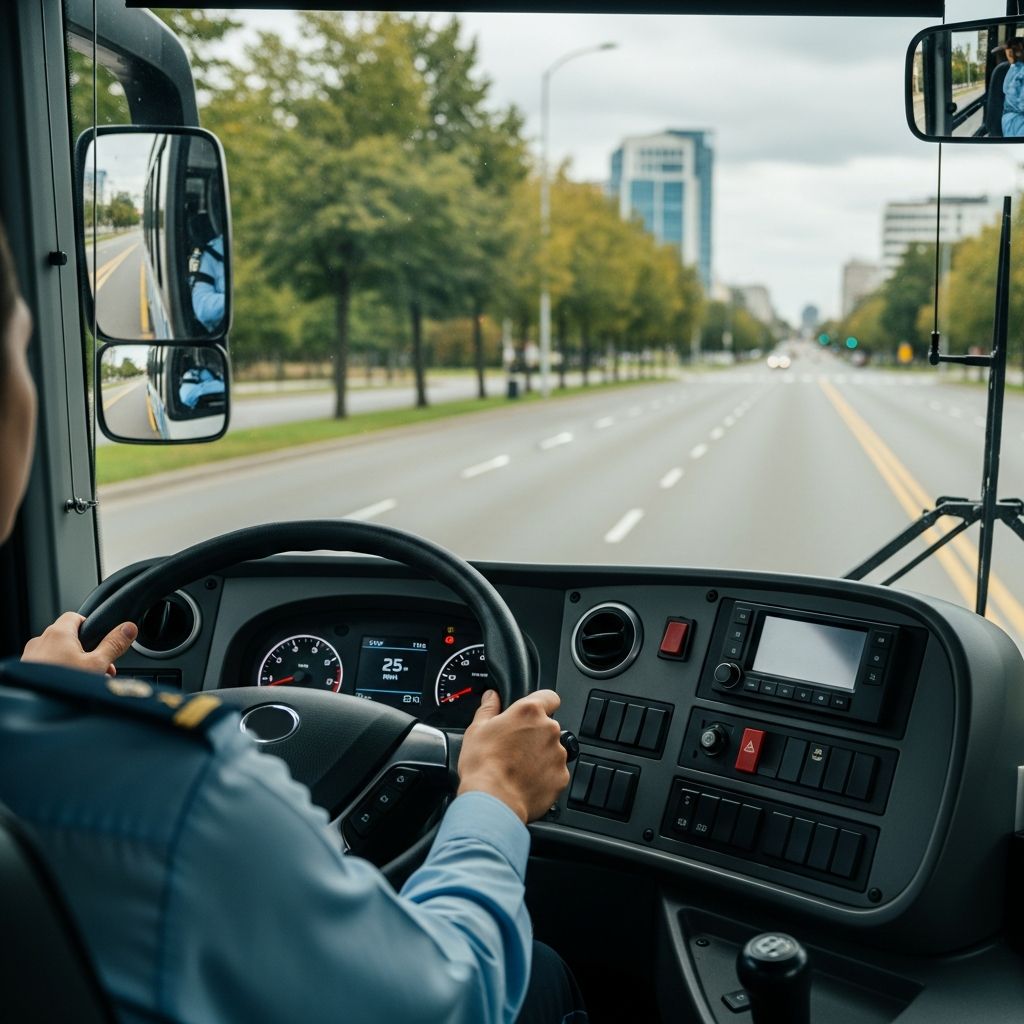
Bus drivers play a critical role in public transportation, ensuring safe and efficient movement of passengers across urban routes, school systems, and long-distance services. Success in this profession demands a blend of technical expertise, interpersonal abilities, and unwavering commitment to safety. This article delves into the foundational skills, licensing requirements, daily responsibilities, and strategies for professional advancement, drawing from established standards in the field.
Core Licensing and Qualification Requirements
To operate a bus professionally, individuals must meet stringent licensing criteria set by state and federal regulations. A Commercial Driver’s License (CDL) with appropriate endorsements forms the cornerstone of these qualifications.
- Class A or B CDL: Required for buses accommodating 16 or more passengers, including the driver. Class B suits most urban and school buses, while Class A covers larger articulated vehicles.
- Passenger (P) Endorsement: Certifies competency in handling passenger loads, including emergency evacuations and securement of mobility devices.
- School Bus (S) Endorsement: Mandatory for school routes, emphasizing child safety protocols, loading/unloading zones, and interaction with minors.
- Medical Certification: Drivers must pass a Department of Transportation physical exam, verifying vision (at least 20/40), hearing (whisper test from 5 feet), and overall health to withstand long hours.
Additional prerequisites include a high school diploma or GED, a clean driving record free of chargeable accidents for at least three years, and often a minimum age of 21 for interstate operations. Background checks, drug/alcohol testing, and first aid/CPR certification are standard, particularly for school and transit roles.
Mastering Vehicle Operation and Safety Protocols
Proficient vehicle handling distinguishes exceptional bus drivers. This involves pre-trip inspections, defensive driving techniques, and adherence to traffic laws.
| Inspection Component | Key Checks | Purpose |
|---|---|---|
| Exterior Walkaround | Tires, lights, mirrors, brakes | Prevent mechanical failures |
| Brake System Test | Governor test, parking brake | Ensure stopping capability |
| Interior Scan | Seats, emergency exits, gauges | Passenger and driver safety |
| Engine Compartment | Fluids, belts, hoses | Avoid breakdowns en route |
Defensive driving emphasizes anticipation of hazards, maintaining safe following distances, and proper use of mirrors to monitor blind spots and the “danger zone” around the bus. Techniques like forward roll prevention during loading and precise backing maneuvers are vital, especially in congested areas. Federal and state codes, such as California’s Vehicle Code Section 22112, govern passenger loading/unloading to minimize risks.
Effective Passenger Management Techniques
Beyond driving, bus drivers serve as frontline ambassadors for their employer. Managing diverse passenger groups requires patience, clear communication, and conflict resolution.
- Route Communication: Announce stops clearly, provide updates on delays, and assist with accessibility needs like wheelchair ramps.
- Behavioral Oversight: Enforce rules on eating, loud noise, or harassment calmly but firmly, prioritizing de-escalation.
- Special Populations: For school buses, monitor student conduct, conduct headcounts, and coordinate with teachers on disciplinary issues.
- Courteous Interactions: Greet passengers warmly, offer seating priority to elderly or disabled individuals, and handle complaints professionally.
Strong decision-making under pressure—such as navigating traffic jams or medical emergencies—ensures smooth operations and builds public trust.
Personal Qualities That Define Top Performers
Technical skills alone do not suffice; personal attributes amplify effectiveness. Employers seek candidates with situational awareness, hand-eye coordination, and emotional resilience.
- Calm Demeanor: Remains composed amid aggressive drivers, crying children, or mechanical glitches.
- Physical Stamina: Capable of prolonged sitting, frequent stops, and manual tasks like fueling or cleaning.
- Communication Prowess: Articulates instructions verbally and nonverbally, essential for multilingual routes.
- Ethical Integrity: Upholds confidentiality, avoids distractions like phones, and reports incidents accurately.
Continuous learning, such as refresher courses on regulations or advanced defensive driving, keeps skills sharp.
Navigating Career Pathways and Advancement
Entry-level bus driving offers stable employment with benefits like health insurance and pensions. Median pay hovers around competitive wages, with transit drivers earning more due to union protections.
Advancement opportunities include supervisor roles, dispatcher positions, or instructor certification. Becoming a state-certified trainer requires 5 years of experience (or equivalents), no-fault record, and demonstrated teaching ability. Instructors verify competencies in inspections, maneuvers, and legal knowledge, contributing to safer fleets.
Daily Routines and Best Practices
A typical shift begins with a thorough pre-trip inspection, followed by passenger pickup along fixed routes. Midday might involve layovers for maintenance checks, culminating in end-of-shift reports on mileage, incidents, and fuel.
Best practices include:
- Scanning mirrors every 5-8 seconds.
- Maintaining 10-12 second following distances.
- Practicing fuel-efficient acceleration and braking.
- Documenting all interactions for liability protection.
Challenges and Solutions in Bus Driving
Common hurdles include traffic congestion, adverse weather, and passenger disputes. Solutions involve route planning apps, winter tire mandates, and de-escalation training. Burnout from irregular hours can be mitigated through wellness programs and peer support networks.
FAQs
What is the minimum age to become a bus driver?
Most states require drivers to be at least 18 for intrastate routes and 21 for interstate travel.
Do bus drivers need prior experience?
Many employers provide on-the-job CDL training, but 1-3 years of safe driving history strengthens applications.
How often must bus drivers renew their CDL?
Typically every 4-8 years, with annual medical recertification.
Are background checks required?
Yes, especially for school buses, including criminal, driving, and sex offender registry reviews.
What training do school bus drivers undergo?
Specialized programs cover child safety, evacuation drills, and state-specific protocols.
References
- Bus Driver Instructor Selection Guidelines — California Department of Education. Accessed 2026. https://www.cde.ca.gov/ls/tn/im/instrguidelines.asp
- Bus Operator Qualifications — Santa Barbara Metropolitan Transit District. Accessed 2026. https://sbmtd.gov/busoperator/
- Bus Drivers: Occupational Outlook Handbook — U.S. Bureau of Labor Statistics. 2023-11-28. https://www.bls.gov/ooh/transportation-and-material-moving/bus-drivers.htm
- School Bus Driver: What Is It? and How to Become One? — ZipRecruiter. Accessed 2026. https://www.ziprecruiter.com/career/School-Bus-Driver/What-Is-How-to-Become
- What Does a School Bus Driver Do? (Duties and Requirements) — Indeed Career Advice. Accessed 2026. https://www.indeed.com/career-advice/careers/what-does-a-school-bus-driver-do
- Steps to Become a Licensed Coach Bus Driver — CoachWest. Accessed 2026. https://coachwest.com/become-licensed-coach-bus-driver/
- School Bus Program — California Highway Patrol. Accessed 2026. https://www.chp.ca.gov/programs-services/programs/school-bus-program/

Medha Deb is an editor with a master's degree in Applied Linguistics from the University of Hyderabad. She believes that her qualification has helped her develop a deep understanding of language and its application in various contexts. Medha specializes in the areas of beauty, health, sports, and wellness and is committed to ensuring that the content on the website is…