
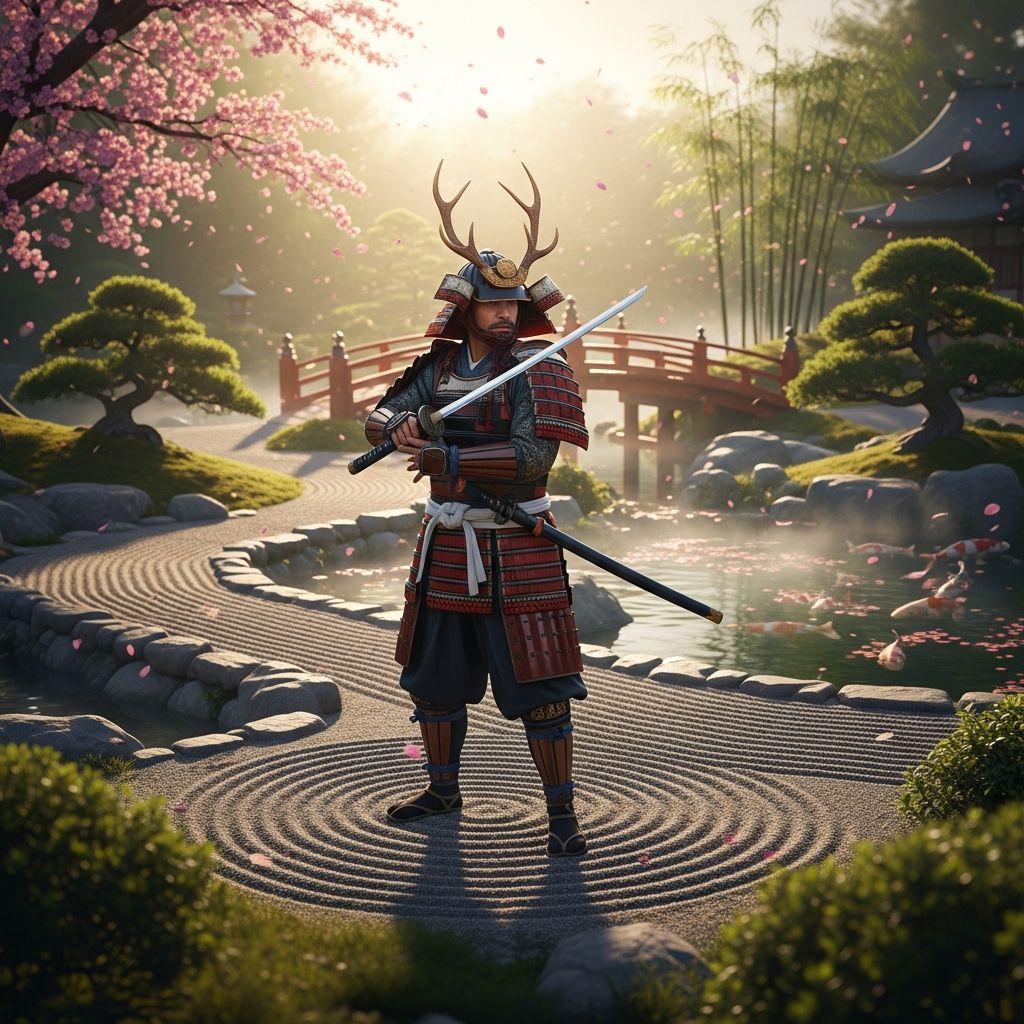
The concept of **Bushido**, often translated as the “Way of the Warrior,” represents a profound ethical framework that guided Japan’s samurai class through centuries of feudal strife and peace. Emerging from a blend of philosophical traditions, it encapsulated ideals of moral integrity, martial prowess, and unwavering loyalty, profoundly shaping not just warriors but Japanese society at large.
Historical Foundations of the Warrior Ethos
Bushido’s roots trace back to the Kamakura period (1185–1333), when the samurai class rose to prominence amid constant warfare. During this era, warriors serving feudal lords developed informal codes to regulate behavior on and off the battlefield. These early principles were influenced by Shinto beliefs in ancestral spirits, Confucian emphasis on hierarchy and duty, and Zen Buddhism’s focus on meditation and detachment from worldly fears.
By the Muromachi period (1336–1573), these ideas evolved further as samurai engaged in prolonged civil conflicts. Texts began to formalize warrior conduct, stressing self-mastery and readiness for death. The Edo period (1603–1868), under the Tokugawa shogunate, marked the code’s maturation into a structured doctrine amid relative peace. Samurai, now more administrators than fighters, internalized Bushido through rigorous training and philosophical study.
The term “Bushido” itself gained currency in the 16th century, but its essence predates this nomenclature. It was not a single written law but a living tradition, adapted across regions and lords, drawing from works like the Hagakure and Miyamoto Musashi’s Book of Five Rings, which advocated strategic mindset and spiritual discipline.
Core Virtues Defining the Samurai Spirit
At its heart, Bushido revolved around a set of virtues that formed the samurai’s moral compass. While lists vary slightly across sources, a common framework includes seven or eight key principles, each fostering a balanced life of action and reflection.
- Rectitude (Gi): The commitment to justice and moral righteousness. Samurai were expected to discern right from wrong and act decisively, even at personal cost.
- Courage (Yu): Fearless action in the face of danger, tempered by wisdom rather than recklessness. True bravery involved confronting death without hesitation.
- Benevolence (Jin): Compassion and mercy toward the weak, balancing martial ferocity with humane kindness.
- Respect (Rei): Politeness and reverence for others, regardless of status, rooted in humility and empathy.
- Honesty (Makoto): Sincere truthfulness in word and deed, rejecting deceit as a betrayal of one’s soul.
- Honor (Meiyo): Personal reputation as sacred, maintained through consistent virtuous living.
- Loyalty (Chū): Absolute devotion to one’s lord, family, and emperor, often superseding personal desires.
- Self-Control (Jisei): Mastery over emotions and impulses, achieved through Zen practices.
These virtues were interdependent; for instance, courage without rectitude could devolve into brutality, while benevolence unchecked by loyalty might undermine duty.
Rituals and Practices Embodying Bushido
Bushido manifested in daily rituals and extreme acts. Samurai trained relentlessly in martial arts like kenjutsu (swordsmanship) and kyujutsu (archery), viewing the body as a weapon honed for service.
Seppuku, ritual suicide by disembowelment, epitomized ultimate honor. Performed to atone for failure or protest injustice, it demonstrated control over life and death, freeing the spirit from shame. Hagakure, a 18th-century text, urged constant meditation on death: “The way of the samurai is found in death,” promoting a liberated mindset.
Tea ceremonies and calligraphy cultivated refinement, reminding warriors that elegance complemented strength. Frugality and filial piety rounded out the ethos, ensuring holistic character development.
Bushido’s Transformation During the Meiji Era
The Meiji Restoration (1868) dismantled the samurai class, abolishing their privileges as Japan modernized. Yet Bushido adapted, shifting loyalty from daimyo to the emperor. State education incorporated its precepts, fueling nationalism during conflicts like the Sino-Japanese War (1894–1895) and World War II.
Military academies taught Bushido-inspired discipline, contributing to imperial expansion. Post-1945 defeat, official propagation ceased, but echoes persisted in corporate loyalty and endurance sports.
| Period | Bushido Focus | Societal Role |
|---|---|---|
| Kamakura (1185–1333) | Battlefield valor | Warrior emergence |
| Edo (1603–1868) | Self-discipline, loyalty | Administrative class |
| Meiji (1868–1945) | National patriotism | Militaristic ideology |
| Post-WWII | Personal ethics | Cultural heritage |
Modern Echoes and Global Influence
Today, Bushido inspires beyond Japan. Martial arts like judo, kendo, and aikido embed its principles, teaching discipline and respect worldwide. Business leaders draw on loyalty and perseverance for team dynamics, while self-help advocates its virtues for personal growth.
In popular culture, films like Seven Samurai and games romanticize the code, though often simplifying its nuances. Critically, its militaristic perversion during wartime highlights the danger of absolutism without context.
Scholars debate Bushido’s authenticity, noting much was retroactively constructed in the 19th century. Nonetheless, its philosophical depth endures, offering timeless lessons in ethical living.
Intensive Samurai Training Regimens
Samurai upbringing began young. Boys entered page service around age 7, learning horsemanship, archery, and etiquette. Adolescents mastered multiple weapons, enduring grueling drills to build resilience.
Zen meditation fostered mental fortitude, enabling clarity amid chaos. Physical conditioning included swimming in armor and rock-climbing, preparing for any terrain.
Women and Bushido: The Onna-Bushido
While male-centric, samurai women followed Onna-Bushido, emphasizing chastity, obedience, and defensive skills like naginata wielding. They managed households and defended homes, embodying stoic strength.
Frequently Asked Questions (FAQs)
What is the literal meaning of Bushido?
Bushido combines “bushi” (warrior) and “do” (way), signifying the path or moral way of the warrior.
Did all samurai strictly follow Bushido?
No, adherence varied; it was an ideal, not universal practice, with regional and personal differences.
Is Bushido still relevant today?
Yes, its virtues influence modern Japanese culture, martial arts, and global personal development philosophies.
How did Confucianism shape Bushido?
It instilled hierarchy, loyalty to superiors, and self-cultivation, blending with indigenous warrior traditions.
What role did seppuku play in Bushido?
It was the ultimate expression of honor, restoring dignity through voluntary death after disgrace.
Applying Bushido Virtues in Contemporary Life
Rectitude guides ethical decisions in business; courage aids risk-taking in careers; benevolence fosters empathy in relationships. Loyalty builds strong networks, while self-control combats modern distractions like social media.
Communities worldwide host Bushido workshops, adapting it for leadership training. Athletes channel its discipline for peak performance, proving its universality.
In summary, Bushido transcends its historical origins, offering a blueprint for principled living amid 21st-century challenges. Its emphasis on balance—strength with compassion, action with reflection—remains profoundly relevant.
References
- Bushido – Wikipedia — Wikipedia contributors. 2023-10-15. https://en.wikipedia.org/wiki/Bushido
- Bushido | Virtues, Significance, History, & Facts — Encyclopædia Britannica. 2024-01-22. https://www.britannica.com/topic/Bushido
- Samurai Warriors Of Japan: Their Bushido Code And History — YouTube (Documentary). 2022-05-10. https://www.youtube.com/watch?v=bCplFboM2RQ
- The Code of Bushido: The Way of the Warrior — Samurai Market. 2023-08-05. https://samuraimarket.net/blogs/news/the-code-of-bushido-the-way-of-the-warrior
- Living Life By A Code: Exploring Bushido, the Eight Samurai Virtues — Depth Not Width. 2023-11-12. https://www.depthnotwidth.com/living-life-by-a-code-exploring-bushido-the-eight-samurai-virtues/
- The Bushido Code: The Eight Virtues of the Samurai — Art of Manliness. 2024-02-28. https://www.artofmanliness.com/character/knowledge-of-men/the-bushido-code-the-eight-virtues-of-the-samurai/

Medha Deb is an editor with a master's degree in Applied Linguistics from the University of Hyderabad. She believes that her qualification has helped her develop a deep understanding of language and its application in various contexts. Medha specializes in the areas of beauty, health, sports, and wellness and is committed to ensuring that the content on the website is…