
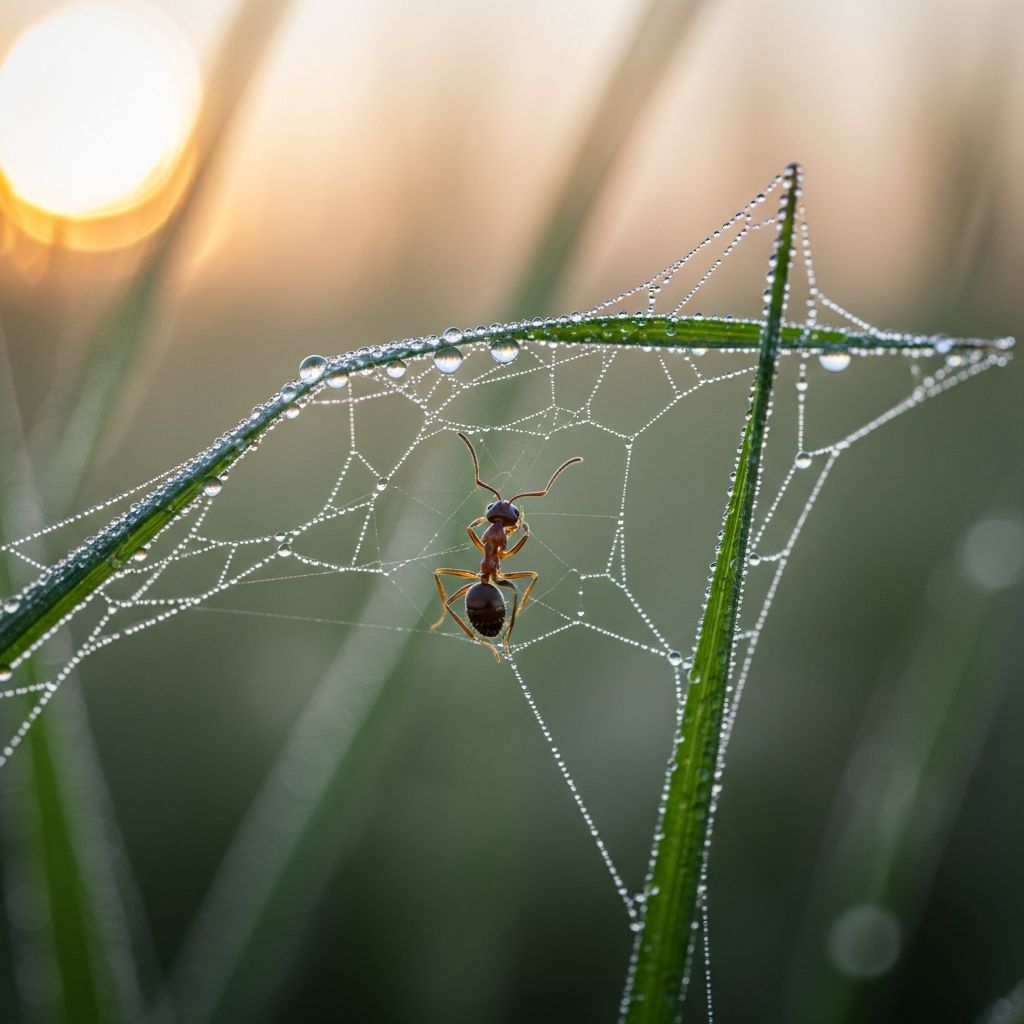
For much of scientific history, insects were treated as tiny machines — simple creatures that reflexively responded to the world but did not truly feel anything. In the last few decades, that picture has shifted dramatically. New research in neurobiology, behavior, and animal ethics has led many scientists to reconsider a once-dismissed question: could insects experience pain and perhaps other conscious states?
This question is not only scientifically fascinating. It has enormous moral stakes. Humans kill or manage trillions of insects each year in agriculture, research, and emerging insect-farming industries. If even a fraction of those insects are capable of suffering, our ethical calculus may need to change.
Why Insect Pain Matters More Than It Sounds
Thinking seriously about insect pain is not a quirky niche. It has at least three large-scale implications:
- A massive numbers problem: Insects outnumber humans by an estimated 200 million to 1 on Earth, and we increasingly farm insects by the billions for food and animal feed.
- Legal and policy gaps: Most animal welfare laws still exclude insects, based on older assumptions that they cannot feel pain.
- Scientific responsibility: Insects are heavily used in research as model organisms, often with little or no welfare consideration.
If there is even a non-trivial chance that some insect species feel pain, a precautionary approach suggests we should pay attention to their treatment, just as policy-makers have begun to do for other invertebrates like octopuses and crustaceans.
Pain, Nociception, and Conscious Experience
Before asking whether insects feel pain, we need to distinguish key concepts used in both human and animal research.
What is pain in a scientific sense?
Modern definitions draw on human and veterinary medicine: pain is an unpleasant subjective experience associated with actual or potential tissue damage. It has two main aspects:
- Sensory: what part of the body is affected, how intense the damage is.
- Affective: the aversive, emotional quality — the “this is bad, I want it to stop” feeling.
This is different from mere detection of harm.
Nociception vs. pain
Nociception is the process by which specialized cells detect harmful or potentially harmful stimuli and send signals to the nervous system. It can exist without conscious experience. For example:
- Spinal reflexes in humans can cause a rapid withdrawal from a hot stove before the conscious feeling of pain fully forms.
- Simple animals with very small nervous systems can show withdrawal responses with no clear evidence of rich mental states.
Insects clearly have nociceptors and show rapid protective responses. The open question is whether those signals contribute to a centralized, integrated state that feels like anything from the insect’s point of view.
A Framework for Assessing Insect Sentience
Because animals cannot verbally report their experiences, researchers rely on converging lines of evidence. A prominent approach, developed by philosopher Jonathan Birch and colleagues and adopted by the UK government, uses eight criteria to assess evidence for pain in invertebrates.
The table below summarizes these criteria in simplified form.
| Criterion | What it Indicates |
|---|---|
| Nociceptors and neural pathways | Ability to detect harmful stimuli and transmit signals centrally. |
| Sensory integration | Combining information from different senses in a flexible way. |
| Centralized processing of noxious input | Signals converge in brain-like structures, not just local reflexes. |
| Analgesia or modulation | Systems that turn down responses to damage under some conditions. |
| Motivational trade-offs | Balancing pain avoidance with competing goals like feeding or mating. |
| Flexible self-protection | Targeted protection of injured sites, not mere hard-wired reflexes. |
| Associative learning | Learning to avoid specific cues that predict harm. |
| Preference for relief | Seeking out treatments that reduce discomfort. |
The more of these criteria a species meets, and the stronger the evidence, the more plausible it is that pain is present.
What Recent Research Suggests About Insect Pain
Historically, the dominant view was that insects fail key tests for pain. A widely cited 1984 paper by Eisemann and colleagues argued that insects do not feel pain, influencing textbooks and policy for decades. Recent work has revisited those arguments in light of hundreds of newer studies.
Reassessing the old consensus
- Barrett and Fischer reviewed how insect pain research has changed since the 1980s and concluded that many earlier arguments against insect pain are now undermined by newer evidence.
- They highlight that the absence of vertebrate-style opioid systems in insects, once taken as evidence against pain, is better understood as a sign of evolutionary divergence rather than definitive proof of non-sentience.
- They also point out that older claims about insects behaving “normally” after injury relied on anecdote rather than quantitative data.
The upshot is not that insect pain is proven, but that the earlier confident denial is no longer justified.
Large-scale reviews of neural and behavioral evidence
A recent comprehensive review by Gibbons, Crump, Barrett, Birch, Chittka and colleagues evaluated over 300–350 studies across multiple insect orders using the Birch criteria framework.
Key findings include:
- Strong evidence for pain-like states in adult flies and mosquitoes (Diptera) and in cockroaches and termites (Blattodea), with these groups meeting six of eight criteria at high confidence.
- Substantial evidence for several additional orders, with no robust evidence that any studied insect group completely fails a criterion; instead, there are large evidence gaps, especially for juveniles.
- Complex behavior after injury, such as altered feeding, grooming injured sites, and changes in mating effort, which look more like flexible motivational trade-offs than simple reflexes.
These findings have been influential enough to shape ongoing debates about whether insect welfare should be reflected in law and research policy, similar to the way evidence about crustacean sentience contributed to the UK’s Animal Welfare (Sentience) Act covering decapod crustaceans and cephalopods.
How Insect Nervous Systems Support Pain-Like Processing
Insects obviously do not have mammalian brains. But their nervous systems show several features that look relevant to pain processing.
Nociceptive systems and brain-like centers
- Insects possess nociceptors — specialized cells and ion channels that respond to high temperature, mechanical damage, or harmful chemicals — with some homology to mammalian nociceptive channels.
- Their signals travel into a centralized nervous system including structures like the ventral nerve cord and a brain with specialized regions for processing sensory input.
- Evidence of integrated nociception suggests that nociceptive signals are not always handled by purely local circuits; they can be modulated by brain activity depending on context.
Modulation and “analgesia” without opioids
One earlier argument held that because insects lack opioid receptors, they cannot experience pain in a vertebrate-like way. New work urges caution with that reasoning:
- Opioid systems likely evolved later in vertebrates; their absence in insects shows divergence, not necessarily absence of pain.
- Other neuromodulators, such as GABAergic neurons, appear to adjust responses to chronically harmful stimulation, suggesting alternative analgesia-like systems.
- Some pharmacological studies show that exogenous drugs can alter insects’ responses to noxious stimuli, supporting the idea that their nervous systems can adjust sensitivity in context-dependent ways.
Behavioral Clues: More Than Simple Reflexes?
Behavior is a crucial window into animal minds. For insects, several patterns look more consistent with pain-like experience than with unstructured reflexes.
Flexible self-protection and grooming
Studies summarized in recent reviews report behaviors such as:
- Selective grooming of injured body parts, sometimes at the expense of feeding or mating opportunities.
- Changes in posture or limb use that reduce contact with painful areas.
- Long-lasting protective responses that persist beyond the immediate stimulus.
These patterns suggest some centralized representation of the injury and a persistent motivational state, rather than a one-off reflex.
Motivational trade-offs and learning
Evidence across several insect orders indicates:
- Injured insects may still choose to endure a noxious stimulus if the alternative is starvation, implying a balancing of competing goals.
- Many species learn to avoid cues associated with harmful events, demonstrating associative learning that incorporates noxious input.
- Some insects appear to change long-term behavior after repeated harmful experiences, which is harder to explain via rigid programming alone.
Such trade-offs and long-term adjustments are often taken as markers of more complex affective processing in other animals.
Ethical Implications: Research, Farming, and Wild Management
Even if we remain uncertain about insect pain, the scale of human impact and the strengthening evidence argue for rethinking our responsibilities.
Insects in research
Insects like fruit flies are central to genetics, neurobiology, and behavior experiments. Yet most countries’ laboratory welfare standards do not apply to insects.
Recent scholars in insect welfare argue that researchers should:
- Recognize that some insect species might plausibly feel pain and apply basic refinement principles (reducing harmful procedures when possible).
- Collect more systematic data on how experimental techniques affect insect behavior and physiology, rather than assuming minimal welfare impact.
- Discuss insect welfare explicitly in grant proposals and ethics reviews when large numbers of insects are used.
Industrial insect farming
Growing interest in insects as a sustainable protein source has led to rapidly expanding farms for species such as black soldier flies and mealworms. Reviews note that this sector is both highly scalable and currently lightly regulated for welfare.
From an ethical standpoint, this raises questions:
- How should we design housing, density, and slaughter methods if there is a significant chance these animals feel pain?
- Do we need species-specific welfare guidelines, as has been developed for vertebrate farm animals?
- Should public funding and industry standards require welfare research alongside efficiency research?
Insects in the wild and pest control
Human activity already affects wild insects through habitat loss, pesticides, and climate change. Thinking about pain and sentience adds extra complexity:
- Pest control strategies may differ in how quickly and intensely they cause harm; some might be preferable on welfare grounds.
- Conservation and welfare can sometimes conflict, for example when protecting crops or native ecosystems involves killing large numbers of insects.
- Ethicists increasingly explore how to balance ecosystem goals with minimizing unnecessary suffering in wild populations.
How Confident Should We Be Right Now?
Current expert consensus does not claim that all insects definitely feel pain. Instead, leading reviews summarize the state of evidence as follows:
- Plausible pain-like states in at least some adult insects, especially flies, mosquitoes, cockroaches, and termites.
- Substantial uncertainty for many other species and for juvenile stages due to limited data.
- Weak evidence against insect pain once earlier arguments are re-evaluated with updated methods and knowledge.
This has led several scholars to advocate a precautionary approach: behave as if some insects might be sentient, prioritizing welfare improvements that are low-cost and high-impact, while continuing to study the question rigorously.
Practical Steps: What Can Change Today?
Individuals, institutions, and policymakers can all respond to this emerging evidence in concrete ways.
For researchers
- Include brief welfare considerations in experimental design, especially for procedures involving injury, high temperatures, or toxins.
- Pilot alternative methods that reduce harm without compromising data quality.
- Report details of housing, handling, and endpoints to enable future welfare-focused meta-analyses.
For policymakers and funders
- Track developments in insect sentience research and be prepared to update welfare legislation if evidence continues to accumulate.
- Fund targeted studies on understudied insect orders and life stages, as existing evidence is heavily biased toward a few model species.
- Encourage the insect-farming industry to adopt voluntary welfare standards that can later inform formal regulation.
For consumers and citizens
- Stay informed about how insect-based foods and feeds are produced.
- Support companies and policies that take a precautionary stance on invertebrate welfare.
- Recognize that our moral circle may need to expand beyond familiar mammals and birds as science progresses.
Frequently Asked Questions (FAQs)
Q1: Is there proof that insects feel pain, like there is for humans?
There is no direct proof comparable to human self-reports, but multiple lines of neural and behavioral evidence make pain-like states plausible in some insect species. Reviews of hundreds of studies show strong evidence for pain in certain adult flies, mosquitoes, cockroaches, and termites under widely used scientific criteria.
Q2: If insects lack opioid receptors, doesn’t that mean they can’t feel pain?
Not necessarily. Opioid systems seem to be a vertebrate innovation. Insects may rely on different neuromodulators (such as GABAergic systems) to regulate responses to harm. Researchers now view the absence of opioids as evidence of divergent evolution, not a decisive argument against insect pain.
Q3: Are all insects equally likely to be sentient?
Probably not. Current evidence is strongest for a few well-studied groups like Diptera (flies) and Blattodea (cockroaches and termites). Many other orders, especially beetles and juvenile stages, remain understudied, so our uncertainty is high rather than confidently negative.
Q4: Why should we care when insects are so small?
Moral importance does not depend only on individual size. Because humans affect vast numbers of insects, even a small chance that each insect can suffer could add up to very large amounts of potential suffering overall. This is why many ethicists argue for a precautionary approach.
Q5: What is the most important research still missing?
Key gaps include systematic studies of juvenile insects, more species beyond the usual laboratory models, and experiments specifically designed to test criteria like preference for pain relief and long-term motivational changes after injury.
References
- How insect pain research has evolved – The Era Beyond Eisemann — Rethink Priorities / Barrett M, Fischer B. 2021-10-18. https://rethinkpriorities.org/research-area/era-beyond-eisemann/
- Short Research Summary: Can insects feel pain? A review of the neural and behavioural evidence — Gibbons M et al., Effective Altruism Forum summary of Advances in Insect Physiology paper. 2022-11-10. https://forum.effectivealtruism.org/posts/yPDXXxdeK9cgCfLwj/short-research-summary-can-insects-feel-pain-a-review-of-the
- Is it time for insect researchers to consider their subjects’ welfare? — Gibbons M, Crump A, Barrett M, Birch J, Chittka L. PLOS Biology. 2023-05-18. https://doi.org/10.1371/journal.pbio.3002155
- Can insects feel pain? A review of the neural and behavioural evidence — Gibbons M, Crump A, Barrett M, Sarlak S, Birch J, Chittka L. London School of Economics working paper / Advances in Insect Physiology chapter. 2022-10-01. https://eprints.lse.ac.uk/117533/
- Meghan Barrett – Faculty profile — IU Indianapolis School of Science. 2023-09-01. https://science.indianapolis.iu.edu/people-directory/people/barrett-meghan.html

- Integrated M.A. in Applied Linguistics, University of Hyderabad
- 5+ years in editorial, instructional, SEO, and research-based writing
Sneha is a relationships and lifestyle writer with a strong foundation in applied linguistics and certified training in relationship coaching. She brings over five years of writing experience to theskillvault, crafting thoughtful, research-driven content that empowers readers to build healthier relationships, boost emotional well-being, and embrace holistic living. Her writing and insights reflect the belief that beauty, happiness, and wellness…