
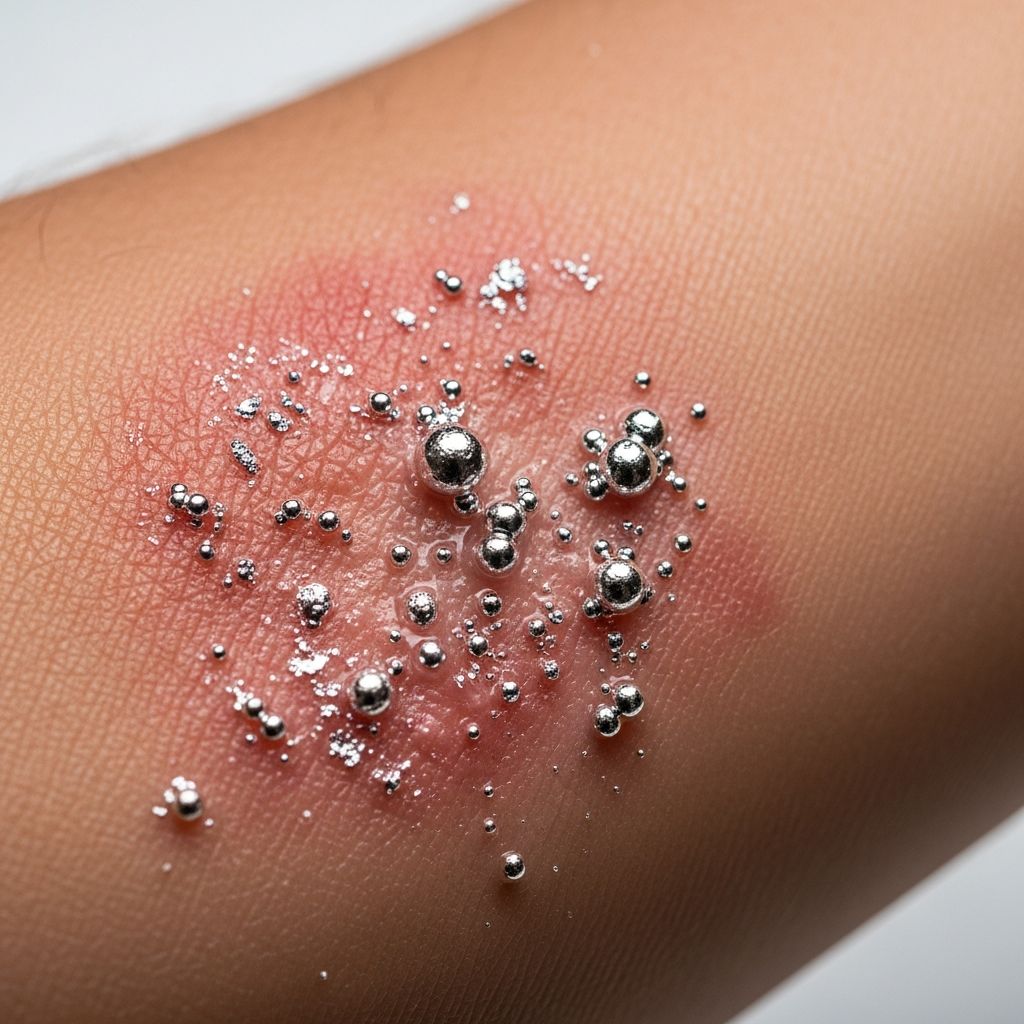
Liquid mercury, also known as elemental mercury, appears as a shiny, silver-white substance that can seem harmless at first glance. However, direct skin contact poses significant health risks due to its toxicity, potential for absorption, and ability to release harmful vapors.
The Nature of Elemental Mercury and Initial Contact
Elemental mercury is a dense liquid metal at room temperature, often found in old thermometers, barometers, and certain electrical switches. When touched, it does not immediately burn or corrode the skin like some acids. Instead, it spreads easily, coating surfaces and penetrating clothing or porous materials. While the skin’s barrier limits direct absorption, mercury’s low but notable dermal uptake—combined with its evaporation into toxic vapors—creates prolonged exposure risks.
Upon contact, individuals might notice a cool, metallic sensation without instant pain. This false sense of safety leads many to mishandle spills, exacerbating dangers. In warm environments, evaporation accelerates, releasing vapors that are readily inhaled, far more hazardous than the liquid itself.
- Key properties: High density (sinks in water), low viscosity (flows easily), and significant vapor pressure even at room temperature.
- Contact behavior: Does not wet skin readily but adheres to surfaces, making cleanup challenging.
- Evaporation rate: Faster in heat, producing colorless, odorless vapors that accumulate indoors.
Skin Absorption and Short-Term Effects
Dermal exposure to elemental mercury results in minimal immediate absorption through intact skin, estimated at less than 0.02 mg/cm² per hour under normal conditions. However, prolonged contact or broken skin increases uptake, potentially leading to localized irritation or systemic effects over time.
Short-term skin contact rarely causes severe burns but can provoke mild rashes, dermatitis, or allergic reactions in sensitive individuals. More critically, any spilled mercury on skin prompts vapor release near the face during handling attempts, heightening inhalation risks.
| Exposure Duration | Skin Effects | Associated Risks |
|---|---|---|
| Minutes | Mild coolness, no pain | Vapor inhalation begins |
| Hours | Possible rash or irritation | Increased vapor exposure, mouth/lung lining damage |
| Days | Dermatitis, potential granulomas if injected | Systemic toxicity buildup |
Health authorities emphasize that even brief contact warrants immediate washing with soap and water, followed by professional cleanup to mitigate vapors.
Vapor Hazards: The Invisible Threat from Liquid Mercury
The primary danger of touching liquid mercury stems from its vaporization. Elemental mercury evaporates slowly, but in confined spaces, concentrations can reach toxic levels quickly. Inhaled vapors pass directly into the bloodstream via the lungs, bypassing skin barriers.
Acute high-level vapor exposure irritates the respiratory tract, causing chest tightness, coughing, burning lungs, nausea, and elevated heart rate. Short-term effects mirror flu-like symptoms but can escalate to pneumonia or hypoxia in severe cases.
- Coughing and shortness of breath from lung lining damage.
- Gastrointestinal upset: nausea, vomiting, diarrhea.
- Cardiovascular: Increased blood pressure, tachycardia.
- Skin and eyes: Rashes, irritation from secondary contact.
Chronic low-level vapor inhalation, common in improper spill cleanups, targets the kidneys and central nervous system, leading to proteinuria and neurological symptoms.
Health Impacts Across Mercury Forms
Elemental Mercury Specifics
Unlike salts or organics, elemental mercury’s toxicity amplifies via inhalation. Long-term exposure causes erethism—characterized by irritability, shyness, insomnia, and tremors—alongside gingivitis and kidney damage.
Inorganic Mercury Compounds
Inorganic forms, like mercuric chloride, are corrosive if ingested or absorbed dermally. Acute exposure yields severe abdominal pain, bloody stools, and renal failure from tubular necrosis. Chronic effects include acrodynia (pink disease): pink palms/soles, rash, hair loss, irritability.
Dermal long-term contact leads to kidney accumulation, proteinuria, and potential nephrotic syndrome.
Organic Mercury Variants
Methylmercury and ethylmercury, highly lipid-soluble, cross the blood-brain barrier, causing neurological devastation: ataxia, vision loss, paresthesias, hearing impairment, and tremors. Teratogenic risks affect fetuses via placental transfer.
Symptoms delay due to enzyme depletion, progressing to paralysis or death in extremes.
Symptoms of Mercury Poisoning by Exposure Route
| Route | Acute Symptoms | Chronic Symptoms |
|---|---|---|
| Inhalation (Vapor) | Cough, chest pain, nausea, hypertension | Tremors, mood changes, proteinuria, gingivitis |
| Skin/Dermal | Rash, irritation | Kidney damage, dermatitis |
| Ingestion (Inorganic) | Vomiting, abdominal pain, shock | Renal failure, acrodynia |
| Ingestion (Organic) | Neurological onset delayed | Ataxia, vision/hearing loss, paralysis |
Early signs like metallic taste or mouth irritation signal intervention needs.
Safe Handling and Spill Response Protocols
Never touch liquid mercury with bare hands. Use personal protective equipment (PPE) like nitrile gloves, and work in well-ventilated areas. For spills:
- Evacuate and ventilate the area.
- Avoid vacuuming or brooming—use specialized mercury sponges or sulfur powder to bind droplets.
- Collect in sealed containers for hazardous waste disposal.
- Wash exposed skin thoroughly; seek medical evaluation.
Household items like duct tape aid small spills, but professionals handle larger ones to prevent vapor spread.
Prevention Strategies in Homes and Workplaces
Phase out mercury-containing devices: switch to digital thermometers, fluorescent bulb alternatives. Educate on risks, especially for children and pregnant individuals vulnerable to neurotoxins.
- Store legacy items sealed.
- Monitor indoor air if spills suspected.
- Follow EPA guidelines for waste.
Occupational settings require monitoring, PPE, and engineering controls.
Medical Diagnosis, Treatment, and Prognosis
Diagnosis involves blood/urine/hair analysis for mercury levels. Chelation therapy with DMSA or DMPS removes systemic burdens, most effective early.
Prognosis varies: mild exposures resolve with removal; severe cases risk permanent lung, kidney, or brain damage. Elemental inhalation may cause irreversible pulmonary fibrosis; organic forms yield lasting neuro deficits.
Frequently Asked Questions (FAQs)
What should I do if I touch liquid mercury?
Remove jewelry/clothing, wash skin with soap and water for 15 minutes, ventilate area, and contact poison control or a doctor immediately.
Is liquid mercury safe to touch briefly?
No—even brief contact risks vapor inhalation during handling, leading to respiratory and systemic effects.
Can mercury be absorbed through intact skin?
Limited absorption occurs, but vapors from evaporation pose greater threat; prolonged contact increases risks.
How do I clean a small mercury spill at home?
Use gloves, tape, or sulfur; never sweep. Dispose as hazardous waste and air out the space.
Are there long-term effects from one-time exposure?
Typically minimal if cleaned properly, but high vapor doses can cause lasting damage; monitor symptoms.
Regulatory Standards and Global Concerns
Agencies like EPA set exposure limits: 0.2 µg/m³ for chronic air vapor. Fish consumption advisories target methylmercury.
Global efforts reduce emissions from coal and artisanal mining to curb environmental spread.
References
- Mercury Poisoning — Iowa Department of Health and Human Services. 2023. https://hhs.iowa.gov/health-prevention/providers-professionals/center-acute-disease-epidemiology/epi-manual/environmental-disease/mercury-poisoning
- Human Exposure and Health Effects of Inorganic and Elemental Mercury — PMC (PubMed Central). 2012-10-23. https://pmc.ncbi.nlm.nih.gov/articles/PMC3514464/
- Health Effects of Exposures to Mercury — US EPA. 2024. https://www.epa.gov/mercury/health-effects-exposures-mercury
- Mercury Poisoning — UF Health. 2023. https://ufhealth.org/conditions-and-treatments/mercury-poisoning
- Mercury — MN Dept. of Health. 2024. https://www.health.state.mn.us/communities/environment/hazardous/topics/mercury.html
- Mercury Poisoning: Symptoms, Causes & Treatment — Cleveland Clinic. 2023-09-26. https://my.clevelandclinic.org/health/diseases/23420-mercury-poisoning

- Integrated M.A. in Applied Linguistics, University of Hyderabad
- 5+ years in editorial, instructional, SEO, and research-based writing
Sneha is a relationships and lifestyle writer with a strong foundation in applied linguistics and certified training in relationship coaching. She brings over five years of writing experience to theskillvault, crafting thoughtful, research-driven content that empowers readers to build healthier relationships, boost emotional well-being, and embrace holistic living. Her writing and insights reflect the belief that beauty, happiness, and wellness…