
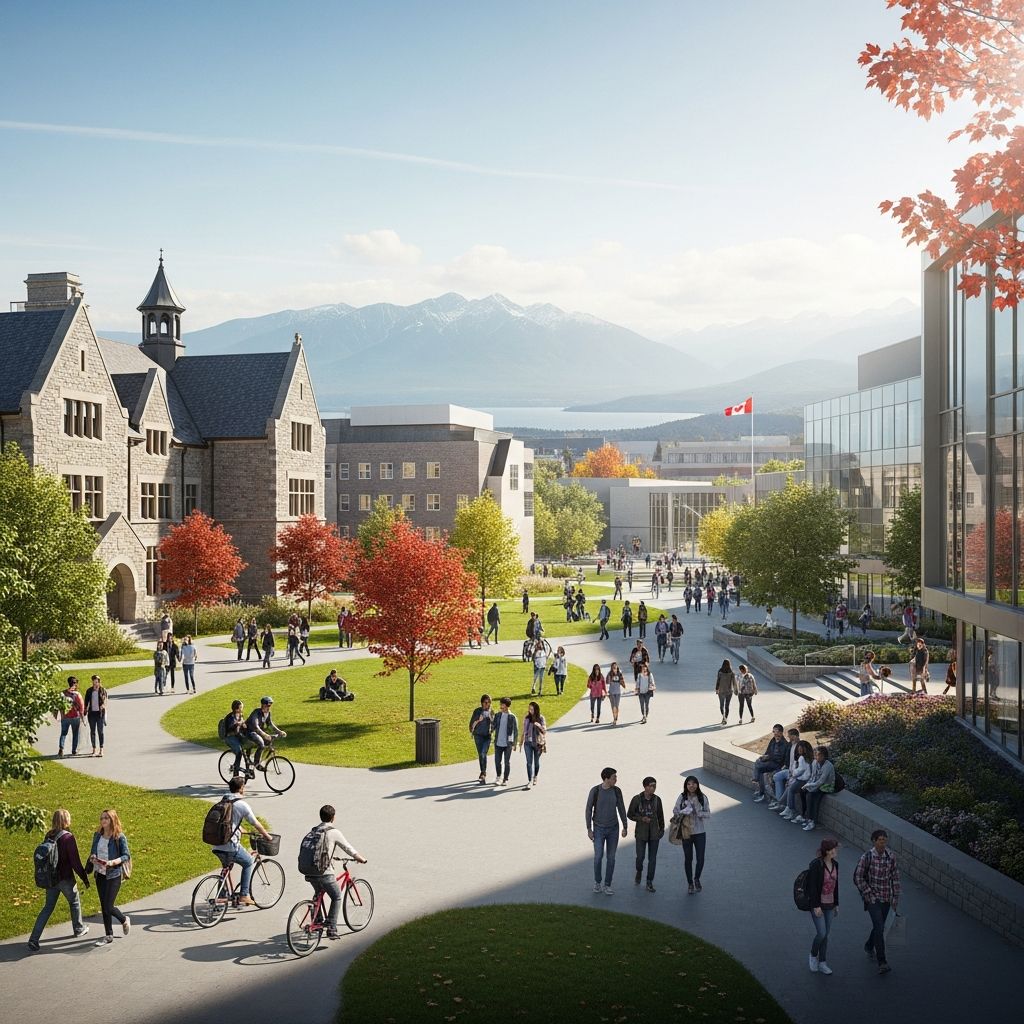
Understanding Canada’s Diverse Educational Landscape
Canada offers a comprehensive and flexible post-secondary education system designed to accommodate students with varying interests, learning styles, and career aspirations. Unlike more rigid educational structures, the Canadian system provides multiple entry and exit points, allowing individuals to pursue their goals through different institutional types and credential levels. Whether you envision yourself in a research-focused university setting, a hands-on technical training environment, or a specialized professional program, Canada’s post-secondary institutions provide pathways tailored to your unique circumstances.
The foundation of this educational flexibility rests on the recognition that not all students follow identical trajectories. Some may require academic preparation before entering a main program, while others are ready to dive directly into specialized training. This inclusive approach means high school graduates can explore various options without feeling locked into a single path, and those seeking career transitions can access retraining opportunities at any life stage.
The Institutional Framework: Where Learning Happens
Canada’s post-secondary education is delivered through three primary institutional types, each serving distinct educational and training needs. Understanding the characteristics of each helps students make informed decisions aligned with their aspirations.
Universities serve as comprehensive academic institutions emphasizing research, theoretical knowledge, and advanced scholarship. These organizations typically house multiple faculties and departments spanning humanities, sciences, business, engineering, medicine, law, and countless other disciplines. Universities excel at preparing students for careers requiring specialized academic credentials and those considering further graduate studies. The university environment typically features larger class sizes in introductory courses, substantial independent study requirements, and extensive library and research resources.
Colleges and institutes focus on practical, applied learning combined with theoretical knowledge. These institutions prioritize hands-on training, workplace connections, and skill development directly relevant to specific industries. Smaller class sizes, collaborative learning environments, and direct access to instructors characterize the college experience. Many colleges maintain strong relationships with local employers, facilitating internships, cooperative education placements, and job placement support.
Specialized training institutions concentrate on particular fields such as trades, hospitality, healthcare, or technology. These organizations deliver focused, intensive programs designed for rapid entry into specific occupations. They often feature compressed timelines, cohort-based learning, and industry-standard equipment and facilities.
Credential Types: Building Your Educational Portfolio
Canada’s post-secondary system offers multiple credential types, each serving different purposes and timeframes. Selecting the appropriate credential depends on your career objectives, learning preferences, and life circumstances.
| Credential Type | Duration | Focus Area | Primary Benefit |
|---|---|---|---|
| Academic Upgrading/Preparation | One semester to multiple years | Foundation skills in English, mathematics, sciences | Meets admission requirements for main programs |
| Certificate Programs | Less than one year to one year full-time | Specialized professional skills | Quick entry into employment |
| Diploma Programs | Two to three years full-time | Applied knowledge and workplace skills | Career-ready qualification with depth |
| Bachelor’s Degree | Three to four years full-time | Comprehensive academic and professional knowledge | Enhanced career opportunities and earning potential |
| Postgraduate Certificate/Diploma | One year full-time | Specialized skills following bachelor’s degree | Advanced expertise in specific field |
| Master’s Degree | One to two years full-time | Advanced specialization and research | Leadership and specialized expertise |
| Doctoral Degree | Four to five years full-time | Original research and advanced scholarship | Highest academic qualification and research credentials |
Academic Pathways: Starting Points and Progression Routes
Not every student enters post-secondary education at the same starting point. Canada’s system accommodates various entry levels and progression routes, recognizing that individuals have different preparation levels and needs.
Academic upgrading and preparation programs serve students who need to strengthen foundational skills before beginning their main program of study. These programs address gaps in English language proficiency, mathematics competency, or general academic preparation. Some students complete upgrading through single courses, while others pursue comprehensive programs leading to high school equivalency credentials. These preparatory offerings operate on both full-time and part-time schedules, accommodating working students and those with family responsibilities.
Language training programs support both newcomers to Canada requiring English or French language development and international students needing academic English proficiency. These courses range from general second-language instruction to specialized industry-specific communication programs. Language training is available at varying intensity levels and schedule options.
Apprenticeship training combines structured workplace experience with classroom instruction, particularly benefiting students pursuing skilled trades. Apprenticeships typically span four years, with students alternating between on-the-job training with employers and in-class instruction at colleges or institutes. This earn-while-you-learn model appeals to individuals preferring practical, hands-on learning environments.
Once students complete initial credentials, the system facilitates lateral and vertical progression. A graduate with a two-year diploma can pursue a three-year advanced diploma or enter a bachelor’s degree program, often with advanced standing recognizing completed work. Similarly, students completing a certificate can progress to diploma-level study. This flexibility eliminates the notion of educational dead-ends; instead, each credential represents a stepping stone toward higher qualifications.
Specialized Collaborative Pathways and Combined Credentials
Canadian post-secondary institutions have created innovative partnership models allowing students to access credentials from multiple institutions simultaneously or in sequence.
Joint programs represent partnerships between colleges and universities where students complete study partly or entirely at a college campus while earning a university-awarded credential. These arrangements bring university-level programming to college environments, often featuring smaller class sizes and more hands-on instruction than traditional university settings.
Dual credential programs enable students to earn two qualifications concurrently—typically a university degree and a college diploma or certificate. These programs compress the timeline for obtaining multiple credentials while ensuring both qualifications remain relevant to students’ career objectives. A student might simultaneously earn a bachelor’s degree in business and a diploma in hotel management, for example.
Articulation agreements between institutions facilitate seamless credential transfer. These formal arrangements recognize completed coursework and prior learning, allowing students to progress without repeating material or losing credits. The existence of thousands of such agreements across Canada’s post-secondary sector demonstrates the system’s commitment to student mobility and flexible pathways.
Employment Outcomes: The Financial Case for Post-Secondary Education
Beyond personal fulfillment and knowledge acquisition, post-secondary education dramatically impacts employment prospects and earning potential. Canadian data consistently demonstrates substantial advantages for individuals holding post-secondary qualifications.
Employment rates for adults aged 25 to 64 reveal significant disparities based on educational attainment. Those with post-secondary credentials experience employment rates between 85 and 89 percent, compared to approximately 72 percent for individuals holding only high school diplomas. This substantial gap reflects both broader job availability for credential holders and the enhanced competitiveness these qualifications provide in the labor market.
Beyond employment rates, post-secondary education influences the quality and nature of available positions. Graduates gain access to occupations requiring specialized knowledge and skills—professions in healthcare, technology, engineering, business, education, and countless other fields. The credential acts as a minimum threshold for entry into many desirable careers, while the knowledge and skills acquired during studies enable meaningful contribution and advancement within those fields.
Earning potential also correlates strongly with educational attainment. While individual outcomes vary based on field of study, geographic location, and economic conditions, post-secondary graduates typically command significantly higher salaries throughout their careers compared to high school graduates.
Selecting Your Educational Institution: Key Considerations
With diverse options available, thoughtful decision-making becomes essential. Several factors merit consideration when evaluating post-secondary institutions and programs.
Program relevance and career alignment: Assess whether specific programs align with your career aspirations and interests. Research labor market demand for graduates in your field, employer hiring patterns, and long-term career trajectory possibilities. Some programs lead directly to specific professions, while others provide broader foundational knowledge applicable across multiple careers.
Learning environment preferences: Consider whether you thrive in large lecture halls with substantial independent study or prefer smaller, interactive class environments. Reflect on your learning style—do you learn best through theoretical instruction, hands-on application, or a blend of both? Your institutional choice should complement your optimal learning conditions.
Geographic and accessibility factors: Consider location, transportation requirements, and available student support services. Some institutions offer on-campus residences, childcare facilities, accessibility services for students with disabilities, and other support systems affecting your ability to succeed. These practical considerations significantly influence your post-secondary experience.
Financial considerations: Evaluate tuition costs, available financial aid, and scholarship opportunities. While costs vary substantially across programs and institutions, financial investment represents a significant decision requiring careful planning.
Institutional recognition and accreditation: Ensure institutions hold proper government recognition and accreditation. In Canada, provincial and territorial governments oversee post-secondary institution recognition, ensuring programs meet specific standards and that credentials possess legitimate value in the employment market.
Support Services and Student Resources
Most post-secondary institutions provide comprehensive support services extending beyond classroom instruction. These services significantly contribute to student success and include academic support, career counseling, mental health resources, tutoring, writing centers, and peer mentoring programs. Career-focused colleges particularly emphasize job placement services, providing resume development assistance, interview coaching, and direct employer connections.
Prospective students should investigate available support services when evaluating institutions, as these resources often determine the difference between struggling and thriving in post-secondary studies.
Indigenous Learners and Specialized Programming
Canada recognizes the importance of culturally relevant and accessible post-secondary education for Indigenous learners. Numerous Indigenous-led post-secondary institutions and Indigenous-led faculties within mainstream institutions offer specialized programming reflecting Indigenous knowledge, values, and educational approaches. These institutions play crucial roles in providing access to learners who might otherwise face barriers to post-secondary participation. Indigenous students accessing post-secondary education may qualify for targeted financial support through institutional funding and provincial/territorial strategies designed specifically for Indigenous learners.
Frequently Asked Questions
Q: What qualifications do I need to enter post-secondary education in Canada?
A: You typically need a high school diploma or equivalent. If you lack a diploma, you can obtain equivalency through the Canadian Adult Education Credential (CAEC) test, and many institutions offer upgrading programs to prepare you for further study.
Q: Can I transfer between colleges and universities in Canada?
A: Yes, the Canadian system facilitates transfers through articulation agreements and credit recognition. A student completing a diploma at a college can often enter a bachelor’s degree program with advanced standing, receiving credit for completed coursework.
Q: How long does a typical certificate program take?
A: Certificate programs generally take less than one year to one year of full-time study, making them attractive for individuals seeking rapid entry into employment or career change.
Q: Are part-time study options available?
A: Yes, most post-secondary institutions offer part-time options for certificates, diplomas, bachelor’s degrees, and graduate programs, accommodating working students and those with family responsibilities.
Q: What is the difference between a college diploma and a university degree?
A: College diplomas typically emphasize applied skills and workplace preparation, often completed in two to three years with smaller classes and hands-on learning. University degrees provide comprehensive academic knowledge, usually requiring three to four years, with larger class sizes and greater emphasis on independent study and research.
Q: Do I need to decide my career immediately before starting post-secondary education?
A: While it helps to have direction, Canada’s flexible system allows exploration. Many institutions offer general education components allowing you to explore interests before specializing, and the system facilitates program and institution changes if your goals evolve.
Q: What financial support is available for post-secondary students?
A: Support includes government student loans, grants, scholarships, and bursaries offered through federal and provincial governments, institutions, and private organizations. Research opportunities specific to your program and circumstances.
References
- Post-Secondary Pathways in Canada — Colleges and Institutes Canada. 2025. https://www.collegesinstitutes.ca/colleges-and-institutes-in-your-community/benefit-college-institute-credential/post-secondary-pathways-in-canada/
- Common Pathways to College and University in Canada — EduCanada. 2025. https://www.educanada.ca/programs-programmes/pathways-voies.aspx?lang=eng
- Levels of Post-Secondary Study in Canada — CanadaVisa.com. 2025. https://www.canadavisa.com/levels-of-post-secondary-study-in-canada.html
- Education in Canada: An Overview — Council of Ministers of Education, Canada. 2025. https://www.cmec.ca/299/education-in-canada-an-overview/index.html
- Different Levels of Post-Secondary Education in Canada — BorderPass. 2025. https://www.borderpass.ai/borderpass-101/post-secondary-education
- Post-Secondary Education in Canada: Career Path Options — Sundance College. 2025. https://sundancecollege.com/blog/post-secondary-education-canada/

Medha Deb is an editor with a master's degree in Applied Linguistics from the University of Hyderabad. She believes that her qualification has helped her develop a deep understanding of language and its application in various contexts. Medha specializes in the areas of beauty, health, sports, and wellness and is committed to ensuring that the content on the website is…