
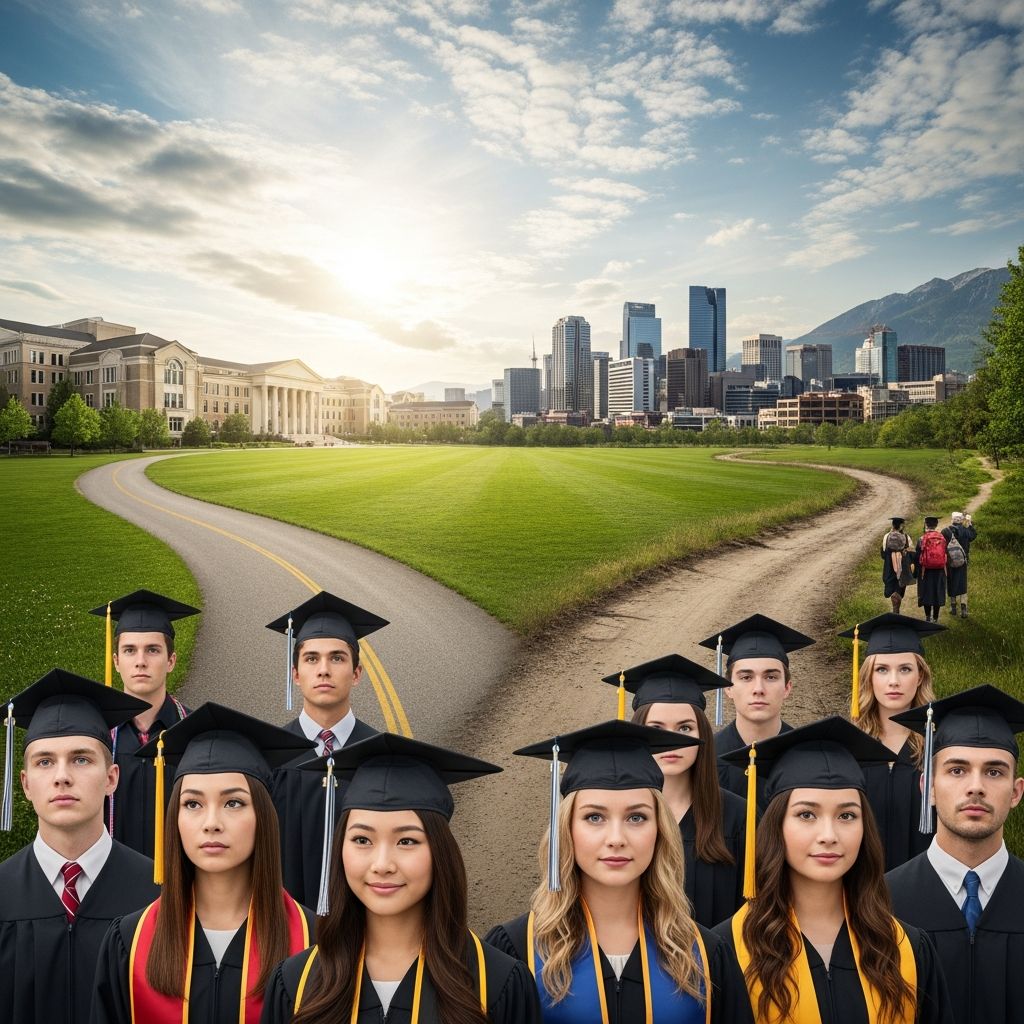
Completing high school opens doors to higher education, careers, and personal growth. In Canada, graduation pathways vary by province, offering **standard diplomas**, certificates, and flexible options for diverse needs. This guide outlines key routes, requirements, and strategies to select the right one.
Understanding Standard Diploma Requirements Across Provinces
Most provinces require a set number of **credits** in core subjects like English, math, science, and social studies, plus electives. Ontario mandates **30 credits** (18 compulsory, 12 optional for those starting Grade 9 before 2024), **40 community involvement hours**, a **literacy test (OSSLT)**, and **2 online credits**. British Columbia requires **80 credits**, including 52 mandatory ones, plus numeracy and literacy assessments.
Prince Edward Island needs at least **20 credits**, with specifics like three English credits (one at Grade 12 level) and two each in math and science. These structures ensure foundational skills while allowing personalization.
| Province | Total Credits | Key Compulsory Areas | Additional Requirements |
|---|---|---|---|
| Ontario | 30 | English (4), Math (3), Science (2) | Literacy test, 40 volunteer hours, 2 online |
| BC | 80 | 52 required, incl. Career Education (8) | Grade 10/12 literacy & numeracy assessments |
| PEI | 20 | English (3), Math (2), Science (2) | 5 Grade 12-level credits |
| NWT | Var. (e.g., 24+) | Math (10), Science (10) | Northern Studies (5) |
This table highlights variations; always check provincial guidelines for your start year, as updates like Ontario’s 2024 shift to 17 compulsory credits apply.
Core Subjects and Credit Breakdown
**Compulsory credits** build essential knowledge. In Ontario, expect 4 English, 3 math (one Grade 11/12), 2 science, 1 Canadian history, 1 geography, 0.5 civics, 1 arts, 1 health/PE, and 1 French. Electives from groups like humanities, sciences, or tech fill the rest, fostering interests in business or arts.
- English/Language Arts: Critical for communication; often 3-4 credits, including Grade 12 level.
- Math: 2-3 credits, with advanced options for post-secondary prep.
- Sciences/Social Studies: Develop analytical skills; mandatory across provinces.
- Electives: 12-28 credits for personalization, e.g., tech ed or career courses.
Students typically earn 7-8 credits yearly, but flexible pacing suits online or part-time learners.
Alternative Graduation Options for Unique Situations
Not every student fits the full diploma path. **Certificates of Accomplishment** in PEI offer 20 credits for those exiting early, focusing on basics without full diploma demands. Ontario provides similar for partial completion.
**Adult learners** or mature students access **Prior Learning Assessment and Recognition (PLAR)**, crediting life/work experience toward the 30-credit diploma, potentially reducing courses needed. This suits returnees balancing jobs or family.
**French immersion** or Indigenous programs have tailored credits, like PEI’s 25-credit French path with five French language credits. Special needs students may pursue modified diplomas with adjusted requirements.
Flexible Learning Formats to Reach Graduation
**Online learning** is mandatory in Ontario (2 credits post-2020), enabling self-paced study via platforms like OES High School. BC integrates career-life connections in electives.
**Night school, summer courses**, or **co-op programs** accelerate progress. Community involvement (e.g., Ontario’s 40 hours) builds resumes while fulfilling requirements.
- Pros of online/flexible: Custom schedules, credit recovery.
- Cons: Requires discipline; exemptions for hardships available.
Overcoming Challenges on Your Graduation Journey
Failed courses? Use **credit recovery** or retakes. OSSLT failure? Opt for OSSLC course. Track progress with guidance counselors; apps/tools monitor credits.
International students or transfers equate prior learning via PLAR. Aim beyond minimums for competitive post-secondary apps—e.g., extra math/science.
Planning for Post-Graduation Success
Graduation is a milestone, not endpoint. Diplomas like OSSD are recognized globally. Align electives with goals: university (advanced math/English), trades (tech ed), or apprenticeships (co-op).
Complete more than minimums; post-secondary often demands specific Grade 12 courses. Volunteer hours enhance applications.
Frequently Asked Questions (FAQs)
What is the minimum credits for an Ontario high school diploma?
**30 credits**, plus literacy, 40 volunteer hours, and 2 online courses.
How do requirements differ by Canadian province?
Ontario: 30 credits; BC: 80; PEI: 20—always verify locally.
Can adults earn a high school diploma?
Yes, via PLAR for prior learning, night school, or online—flexible for working adults.
What if I fail the literacy test?
Take OSSLC course or alternatives; contact your principal.
Are online credits required everywhere?
Mandatory in Ontario post-2020; optional elsewhere but recommended.
References
- How Many Credits to Graduate High School in Ontario? — OES High School. 2024. https://oeshighschool.com/how-many-credits-to-graduate-high-school/
- Requirements for High School Graduation — Government of Prince Edward Island. 2023-10-01. https://www.princeedwardisland.ca/en/information/education-and-early-years/requirements-for-high-school-graduation
- Graduation Requirements — Government of Northwest Territories. 2024. https://www.ece.gov.nt.ca/en/services/jk-12-school-curriculum/graduation-requirements
- Graduation Requirements | Ontario Education System — OASI. 2023. https://www.oasdi.ca/k-12-education-in-ontario/graduation-requirements/
- Earning your high school diploma — Government of Ontario. 2025-01-01. http://www.ontario.ca/page/earning-your-high-school-diploma
- Graduation Requirements — Government of British Columbia. 2024-09-01. https://www2.gov.bc.ca/gov/content/education-training/k-12/administration/legislation-policy/public-schools/graduation-requirements

- Integrated M.A. in Applied Linguistics, University of Hyderabad
- 5+ years in editorial, instructional, SEO, and research-based writing
Sneha is a relationships and lifestyle writer with a strong foundation in applied linguistics and certified training in relationship coaching. She brings over five years of writing experience to theskillvault, crafting thoughtful, research-driven content that empowers readers to build healthier relationships, boost emotional well-being, and embrace holistic living. Her writing and insights reflect the belief that beauty, happiness, and wellness…