
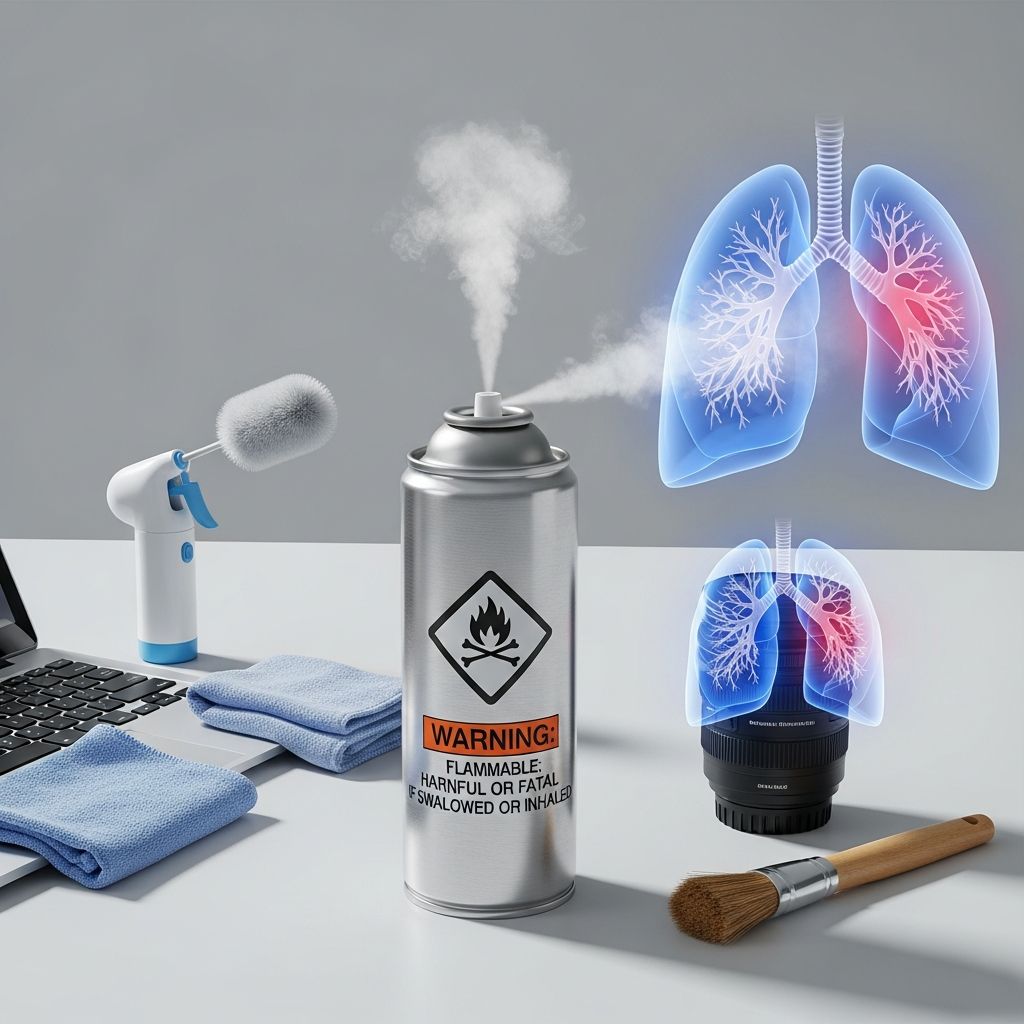
Canned air, commonly used for dusting electronics, contains compressed liquefied gases rather than regular atmosphere, posing significant health, safety, and environmental risks if mishandled. Understanding its true makeup and hazards empowers users to adopt safer practices and alternatives.
Understanding the True Makeup of Canned Air Products
Despite the name, canned air does not hold ordinary breathable air. Manufacturers compress gases into liquid form inside pressurized cans to create powerful blasts for removing dust from keyboards, circuits, and delicate equipment. The primary components are hydrofluorocarbons (HFCs) such as difluoroethane (HFC-152a), tetrafluoroethane (HFC-134a), and trifluoroethane. These propellants liquify under pressure and rapidly expand into gas upon release, delivering the forceful spray needed for cleaning.
Product labels or Material Safety Data Sheets (MSDS) provide exact formulations, which vary by brand. For instance, difluoroethane is highly prevalent due to its efficiency and low cost. Unlike compressed air systems, these cans require no external power, making them portable but introducing unique volatility. The liquid-to-gas transition generates extreme cold, contributing to many hazards.
- HFC-152a (Difluoroethane): Common for its strong propulsion and flammability.
- HFC-134a (Tetrafluoroethane): Less flammable but potent greenhouse gas.
- Trifluoroethane: Used in blends for balanced performance.
This composition enables short bursts of cleaning power but demands careful handling to avoid dangers.
Immediate Physical Injuries from Improper Use
The rapid expansion of propellant causes severe cooling, often below freezing temperatures. Spraying liquid propellant directly on skin leads to frostbite, with burns manifesting as blisters or tissue damage. Holding the can upside down expels liquid instead of gas, intensifying this risk. Extended use chills the can itself, risking cold burns to hands.
High-velocity blasts can embed particles into skin or eyes, while misuse near the face might rupture eardrums or force air into body orifices. In workplaces, tilting cans during cleaning has caused documented injuries, such as facial burns from flash fires when liquid propellant ignited.
| Hazard | Cause | Prevention |
|---|---|---|
| Frostbite | Liquid expulsion on skin | Keep upright; avoid direct contact |
| Cold Burns | Chilled can exterior | Use gloves; limit duration |
| Particle Embedding | High-pressure jet | Wear eye/skin protection |
These injuries underscore the need for protective gear and strict adherence to upright positioning.
Fire and Explosion Threats in Everyday Settings
Many canned air products contain flammable gases like difluoroethane, which concentrate in enclosed spaces. Tilting releases liquid that vaporizes into a flammable cloud, igniting from sparks, switches, or static. A bowling alley incident involved an employee suffering facial burns when sprayed liquid on a shredder created an ignitable zone.
Cans can explode if heated above 120°F (49°C), common in hot vehicles or near heat sources. Poor ventilation exacerbates risks, as gases displace oxygen and form explosive mixtures. Switching to non-flammable formulations or electric alternatives mitigates these dangers.
Health Effects from Inhalation and Exposure
Inhaling propellants, often abused for psychoactive highs, causes light-headedness, heart palpitations, intoxication, and oxygen displacement leading to asphyxiation. Chronic or high-dose exposure risks brain damage, cardiac arrest, or death. In confined areas, gases reduce oxygen levels, causing toxicity varying by propellant type.
Sustained huffing produces a brief euphoria but triggers severe side effects like nervous system disruption. Workplace misuse amplifies risks, with symptoms from accidental spills mimicking intentional abuse. Ventilation and training prevent most incidents.
- Short-term: Dizziness, euphoria, irregular heartbeat
- Long-term: Organ damage, addiction potential
- Severe: Asphyxiation, sudden death
Environmental Consequences of Routine Disposal
HFCs are greenhouse gases with global warming potentials thousands of times greater than CO2. HFC-134a, for example, has a potency over 1,400 times that of CO2 per unit, per IPCC assessments. Releasing propellants contributes to climate change, while single-use cans generate waste.
Unlike reusable compressed air systems, canned products burden landfills. Transitioning to electric dusters eliminates emissions and waste, offering sustainability. Regulatory phases-outs of high-GWP HFCs push industry toward greener propellants, but consumer habits lag.
Workplace Protocols for Safe Deployment
Employers must train staff on labels, upright use, and ventilation. Prohibit use near ignition sources and mandate PPE. Hazard alerts from agencies emphasize reading MSDS and avoiding enclosed spaces. Regular audits ensure compliance, reducing incidents.
For cleaning, opt for well-ventilated areas, short bursts, and distance from skin. Post-use, store cans away from heat. These steps align with occupational safety standards.
Promising Alternatives to Traditional Canned Air
Electric compressed air systems, or “canless air,” use batteries or cords to generate gusts without chemicals. Reusable and gas-free, they avoid flammability, frostbite, and pollution. Initial cost yields long-term savings and safety.
Other options include soft brushes, microfiber cloths, and vacuum attachments for electronics. Compressed air hoses from workshops provide power without cans, though they require infrastructure. These methods prioritize safety and eco-friendliness.
| Method | Pros | Cons |
|---|---|---|
| Electric Dusters | No gases, reusable, powerful | Upfront cost, charging |
| Brushes/Cloths | Cheap, no risks | Less effective for crevices |
| Workshop Compressors | Unlimited supply | Not portable |
Frequently Asked Questions (FAQs)
What gases are typically in canned air?
Canned air primarily uses HFCs like difluoroethane and tetrafluoroethane, compressed as liquids for propulsion.
Can canned air cause frostbite?
Yes, expelling liquid propellant rapidly cools skin, leading to frostbite; always hold upright.
Is canned air flammable?
Many formulations are, creating fire risks in poor ventilation; check labels for specifics.
How does canned air harm the environment?
HFCs are potent greenhouse gases, and cans add waste; opt for reusables.
Is inhaling canned air safe for a quick high?
No, it risks asphyxiation, heart issues, and death; it’s extremely dangerous.
Best Practices Summary for Risk Reduction
To harness canned air safely, prioritize ventilation, upright positioning, PPE, and minimal use. Educate on MSDS, avoid heat exposure, and explore alternatives. These habits prevent tragedies while maintaining clean equipment.
References
- The Little-Known Truth about Canned Air — Canless Air System. Accessed 2026. https://canlessair.com/the-little-known-truth-about-canned-air/
- Improper Use of Canned-air Products Can Cause Flash Fires and Injury — Washington State Department of Labor & Industries. Accessed 2026. https://lni.wa.gov/safety-health/preventing-injuries-illnesses/hazardalerts/CannedAir.pdf
- Take Extra Care When Using Canned Air — ESD 112. Accessed 2026. https://www.esd112.org/news/take-extra-care-when-using-canned-air/
- Cleaning with Compressed Air — Canadian Centre for Occupational Health and Safety (CCOHS). Accessed 2026. https://www.ccohs.ca/oshanswers/safety_haz/compressed_air.html
- Dangers of Compressed Air — Dynamic Engineering Australia. Accessed 2026. https://www.dynamiceng.com.au/blog/post/6950/dangers-of-compressed-air/

- Integrated M.A. in Applied Linguistics, University of Hyderabad
- 5+ years in editorial, instructional, SEO, and research-based writing
Sneha is a relationships and lifestyle writer with a strong foundation in applied linguistics and certified training in relationship coaching. She brings over five years of writing experience to theskillvault, crafting thoughtful, research-driven content that empowers readers to build healthier relationships, boost emotional well-being, and embrace holistic living. Her writing and insights reflect the belief that beauty, happiness, and wellness…