
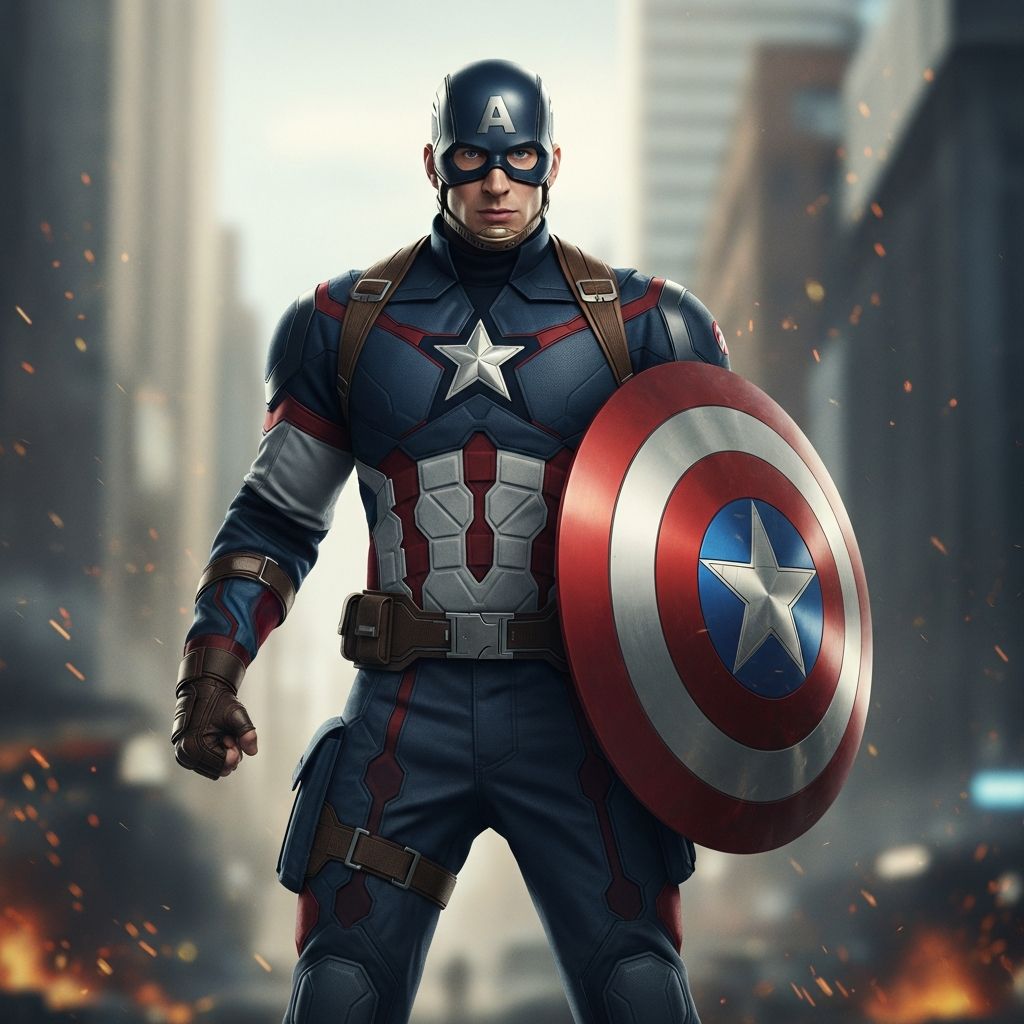
Captain America, also known as Steve Rogers, is often seen as the moral anchor of the Avengers: steady, principled, and unwaveringly loyal. Many of his trademark qualities align with what personality theory would call a classic Defender-style character: practical, responsible, protective, and deeply guided by a personal code of right and wrong.
This article explores how Captain America reflects a Defender personality pattern, why that matters for the Avengers as a team, and what we can learn from his strengths and blind spots in everyday life.
The Heart of a Defender: Core Traits Behind the Shield
Before looking at specific moments in his story, it helps to understand the central qualities that define a Defender-like personality as seen through Steve Rogers.
- Strong sense of duty: He believes power exists to protect, not to dominate, and treats his role as a moral obligation rather than a path to fame.
- Loyalty to people and principles: Steve is fiercely devoted both to individuals (like Bucky) and to ideals such as justice, fairness, and human dignity.
- Protective instinct: His iconic shield is more a tool of defense than aggression, symbolizing his urge to stand between danger and the vulnerable.
- Grounded, down-to-earth attitude: Despite his status, he behaves like an ordinary person with extraordinary responsibilities, not a celebrity or demigod.
- Consistency of character: His personality remains stable across decades and crises—honest, principled, and relatively even-tempered.
These qualities line up with a value-driven, steady personality style that prefers clear roles, real-world action, and loyalty over novelty or self-promotion.
From Underdog to Icon: Why His Origins Matter
Steve Rogers begins not as a natural warrior but as a frail young man who refuses to look away from injustice.
- He repeatedly tries to enlist despite physical limitations, motivated not by glory but by a desire to confront bullies on a larger scale.
- His selection for the Super Soldier program is based on character—compassion, courage, and humility—rather than preexisting strength.
Psychologically, this origin story reinforces a key Defender theme: character first, power second. Official analyses of his role in the Marvel saga describe him as defined by loyalty, honesty, integrity, and grit, rather than intellect or flair.
Because he knows what it is to be powerless, Steve treats his enhanced abilities as a trust to be honored, not exploited.
Values in Action: Moral Compass and Everyday Choices
Captain America’s personality is best understood through the moral choices he makes, often at great personal cost.
Non-negotiable principles
Steve’s internal code centers on a few recurring ideas:
- Opposition to bullies: From back-alley brawls to intergalactic threats, he consistently moves toward the abused and away from those who misuse power.
- Honesty and integrity: He strives to be straightforward, and is widely regarded by allies as one of the most trustworthy heroes.
- Responsibility for others: When he can intervene, he believes he must; standing by feels morally wrong to him.
These are not abstract ideals to Steve—they are daily operating rules. As several character studies note, his moral clarity makes him a recognizable symbol of a “strong moral compass” in modern popular culture.
When duty clashes with authority
Defender-style personalities often respect rules and institutions, but Steve draws a line when systems betray the people they exist to protect.
- He supports structure as long as it aligns with his core ethics.
- He is willing to disobey orders, defy organizations, or even become an outlaw if following the rules would mean abandoning people in need.
This tension—loyalty to ideals over institutions—explains many of his conflicts with more pragmatic or politically flexible teammates. His moral lens is clear and relatively uncompromising, which can be both a source of inspiration and friction.
Leadership by Example: How a Defender Leads a Team of Titans
Among the Avengers, Captain America is rarely the flashiest member, but again and again he ends up at the center when decisions must be made.
Why others follow him
- Reliability: Teammates can predict what he will do because his values rarely shift with circumstances.
- Calm under pressure: Analyses of his on-screen behavior emphasize his stable, even demeanor, even in catastrophic scenarios.
- Self-sacrifice: He consistently chooses the dangerous role for himself, which earns respect and trust over time.
- Focus on protection: His strategic instincts emphasize minimizing harm to civilians and teammates, not just defeating an enemy.
Leadership style comparison
| Leader | Primary Focus | Leadership Style | Key Strength | Potential Weakness |
|---|---|---|---|---|
| Captain America | Ethics and protection | Example-driven, value-centric | Moral clarity and trustworthiness | Can seem rigid or idealistic |
| Iron Man | Innovation and problem-solving | Visionary, improvisational | Creativity and adaptability | Impulsiveness, ego conflicts |
| Thor | Honor and legacy | Charismatic, symbolic | Inspirational presence | Inconsistent maturity |
This contrast highlights how Steve’s Defender-like approach fills a specific niche: he does not always see the most creative solution, but he is the one others look to when they need a clear ethical direction.
Strengths of the Defender Hero
Personality-wise, Steve Rogers brings several standout strengths that would be valuable far beyond a superhero universe.
- Courage grounded in conviction: He enters danger not for thrill but because he has decided that protecting others is worth the risk.
- Humility: Even as a legendary figure, he rarely boasts about his achievements and relates to ordinary people with ease.
- Consistency over time: Long-term character studies point out that, across multiple films, he grows in experience but remains recognizably the same man in terms of his core values.
- Empathy for the vulnerable: His early life as an underdog seems to deepen his sensitivity to unfairness and exploitation.
- Perseverance: He persists through physical, emotional, and social obstacles without surrendering his guiding principles.
These qualities collectively make him what some psychologists might call a “moral exemplar”—a figure whose behavior provides a concrete image of abstract ethical ideals.
Blind Spots and Costs: When Defender Traits Go Too Far
No personality pattern is purely positive. The same qualities that make Captain America admirable can create problems for him and those around him.
- Stubbornness: His firm convictions sometimes become inflexibility, making compromise difficult.
- Outdated mental models: Coming from an earlier era, he occasionally struggles to adjust to changing norms, technology, and geopolitics.
- Limited focus on the big picture: Analyses of his character note that he can become so absorbed in immediate protection and moral clarity that he underestimates long-term strategic or political consequences.
- Emotional cost of loyalty: His enduring attachment to figures from his past, especially Bucky, exposes him to personal pain and conflict with teammates who prioritize broader security.
These blind spots reflect typical Defender challenges: difficulty letting go, resistance to morally gray compromises, and tension between personal bonds and collective strategy.
What Captain America Reveals About Defender Personalities
While Steve Rogers is an exaggerated, fictional example, his story illustrates patterns commonly discussed in personality psychology and character education.
Everyday parallels
In non-superhero settings, Defender-like individuals may show up as:
- Reliable coworkers who quietly ensure tasks are done well and on time.
- Family members who prioritize security, tradition, and caretaking roles.
- Community volunteers drawn to practical service rather than public recognition.
- Leaders who emphasize fairness, stability, and protection of vulnerable groups over rapid change.
Lessons we can apply
From Captain America’s portrayal, several practical insights emerge:
- Anchor decisions in core values: Knowing what you stand for simplifies choices under pressure.
- Use strength to protect, not dominate: Whether your power is physical, social, or professional, treat it as a responsibility.
- Balance loyalty with perspective: Care deeply about people, but stay open to how broader systems and long-term consequences affect them.
- Update principles without abandoning them: Like Steve confronting new eras, we can retain core ethics while revising assumptions about how to live them out.
FAQ: Captain America and Personality Types
Q: Why is Captain America often linked with a Defender-style personality?
Analysts associate him with a Defender-like profile because he is practical, loyal, protective, and deeply rooted in a personal moral code, focusing more on duty and relationships than on novelty or self-expression.
Q: Is Captain America more logical or emotional in his decision-making?
He integrates both, but his choices strongly reflect emotional commitments—to people, fairness, and responsibility—rather than detached calculation, even when that puts him at odds with more strategic teammates.
Q: How does his personality affect his leadership of the Avengers?
His consistency, courage, and trustworthiness make him a natural rallying point; others follow him not because he is the most powerful, but because they know where he stands and believe he will protect them.
Q: What are the main downsides of his Defender-like traits?
His rigidity, difficulty compromising, and tendency to focus on immediate moral clarity over complex long-term strategy sometimes create conflict and can prevent him from seeing alternative solutions.
Q: Can people with similar personalities relate to Captain America in everyday life?
Yes. Many people who value duty, loyalty, and protection—even in roles like teaching, nursing, local leadership, or community work—may recognize aspects of themselves in Steve’s drive to stand up for others and do the right thing quietly and consistently.
References
- The Endgame of Captain America—A Marvel Character Study — Love Thy Nerd. 2019-05-01. https://lovethynerd.com/the-endgame-of-captain-america-a-marvel-character-study/
- Lessons in Leadership from Captain America: Character Comes First — OneLife Leaders. 2020-07-06. https://onelifeleaders.com/blog/lessons-in-leadership-from-captain-america-character-comes-first
- 10 Unmistakable Captain America Traits In The MCU Films — Screen Rant. 2020-03-31. https://screenrant.com/captain-america-mcu-character-traits/
- Captain America’s 5 Best Personality Traits (& 5 Worst) — Comic Book Resources (CBR). 2020-08-02. https://www.cbr.com/captain-americas-best-worst-traits/
- Captain America / Steve Rogers from Marvel Cinematic Universe — CharacTour. 2018-01-01. https://www.charactour.com/hub/characters/view/Captain-America.Captain-America-the-First-Avenger
- Captain America: The Delicate Masculinity of an American Icon — University of Nebraska at Omaha Honors Program. 2016-05-01. https://digitalcommons.unomaha.edu/university_honors_program/279/

Medha Deb is an editor with a master's degree in Applied Linguistics from the University of Hyderabad. She believes that her qualification has helped her develop a deep understanding of language and its application in various contexts. Medha specializes in the areas of beauty, health, sports, and wellness and is committed to ensuring that the content on the website is…