
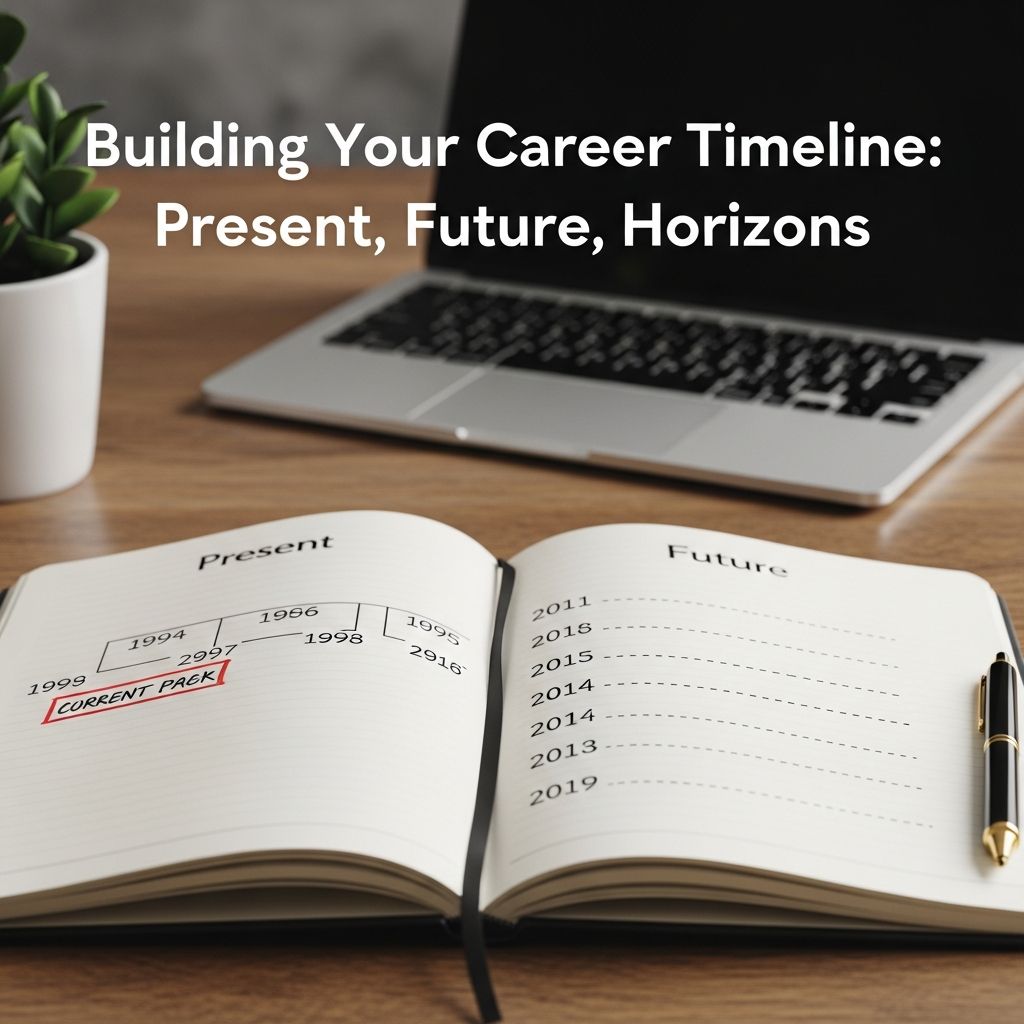
Understanding Career Development Across Multiple Time Horizons
Career advancement is not a single event but rather a continuous journey that unfolds across different timeframes. Many professionals struggle with career planning because they focus exclusively on immediate opportunities or distant dreams without connecting the two. A more effective approach involves examining your career through three distinct lenses: your current reality, your near-term objectives, and your long-term aspirations. This three-horizon framework provides clarity about where you stand today, where you want to be within the next few years, and the ultimate destination you envision for your professional life.
Understanding this framework helps you make intentional decisions rather than reactive ones. Instead of accepting the first opportunity that comes your way, you can evaluate whether it aligns with your broader career trajectory. This strategic mindset transforms career development from something that happens to you into something you actively shape and control.
Assessing Your Current Professional Position
Before planning any career movement, you must honestly evaluate where you are today. This assessment goes beyond your job title and includes your skills, experience level, workplace environment, and overall job satisfaction. Taking time for this self-reflection prevents you from pursuing paths that don’t leverage your strengths or address your actual needs.
Your current position includes several important dimensions:
- Skills and competencies: What abilities have you developed throughout your career? Which skills do you use regularly, and which have become underutilized? Understanding your existing skill set prevents you from pursuing roles that require capabilities you already possess or eliminating options where you’re more qualified than you realize.
- Work environment and culture fit: Consider whether your current workplace aligns with your values and preferences. Do you thrive in collaborative team settings or prefer independent work? Are you energized by fast-paced environments or do you prefer stability and predictability? These preferences should inform your future career choices.
- Satisfaction and engagement levels: Evaluate what aspects of your current role energize you and which drain you. This distinction is crucial because it reveals what you should seek more of and what you should avoid in future positions.
- Financial and personal circumstances: Your current responsibilities, financial obligations, and personal commitments affect what career moves are realistic. These practical considerations deserve honest acknowledgment in your planning process.
- Professional relationships and reputation: Consider the networks you’ve built and the reputation you’ve established. These assets will support your career transitions and should factor into your decisions about future moves.
This comprehensive assessment creates your baseline. It answers the fundamental question: “Where am I really starting from?” Without this honest evaluation, your career plan risks being built on incomplete or inaccurate information.
Defining Your Near-Term Professional Objectives
The intermediate horizon typically spans the next 12 to 24 months and represents the actionable phase of your career planning. During this period, you should identify specific, achievable goals that build skills, expand your experience, or position you for future opportunities. These objectives serve as stepping stones between your current reality and your long-term vision.
Effective near-term goals share several characteristics. They should be specific enough to guide your actions but flexible enough to accommodate changing circumstances. Rather than vague aspirations like “advance in my career,” near-term objectives might include “complete a professional certification in project management,” “lead a cross-functional initiative,” or “develop expertise in emerging industry technologies.” These concrete objectives give you clear targets to work toward.
Your intermediate goals should also align with two things: your long-term aspirations and your current circumstances. A goal that moves you toward your ultimate vision but isn’t feasible given your present situation won’t serve you well. Conversely, pursuing goals solely because they’re available without considering your broader trajectory wastes valuable time and energy.
Consider breaking larger ambitions into smaller milestones. If your long-term goal involves transitioning to leadership, your near-term objectives might include seeking mentorship from experienced leaders, taking on project management responsibilities within your current role, and completing leadership development training. These incremental steps build capability while allowing you to test whether leadership is truly your desired path.
Creating an Action Plan for Skill Development
Identifying what you want to achieve is essential, but converting goals into reality requires concrete action steps. An effective action plan specifies what you’ll do, when you’ll do it, what resources you’ll need, and how you’ll measure progress. This level of detail transforms abstract goals into manageable tasks.
Your action plan should address four key dimensions:
- Specific actions: What concrete steps will you take? If your goal involves learning new software, your action might be “complete an online certification course in the software platform.” If your goal involves expanding your network, actions might include “attend three industry conferences this year” or “join the professional association in my field.”
- Timeline and sequencing: When will each action occur? Some steps must happen before others, while some can happen simultaneously. Mapping out the timeline prevents you from feeling overwhelmed and ensures logical progression.
- Resources and support: What do you need to succeed? This might include financial resources for training, time for learning, mentorship from more experienced professionals, or organizational support like tuition reimbursement or flexible scheduling.
- Progress indicators: How will you know you’re making progress? Rather than waiting until you’ve achieved the entire goal to assess whether you’re on track, identify checkpoints along the way. These interim indicators help you course-correct if needed.
A useful approach involves SMART goal framework—ensuring your objectives are Specific, Measurable, Achievable, Relevant, and Time-bound. Instead of saying “improve my communication skills,” a SMART goal would be “complete a presentation skills course by the end of the second quarter and deliver three presentations to senior leadership by year-end.” This specificity makes it much easier to take consistent action.
Envisioning Your Long-Term Career Direction
While the near-term horizon focuses on achievable actions, the long-term perspective allows for broader visioning. Your long-term career aspirations might span five to ten years or even represent an ultimate career destination you hope to reach eventually. This extended timeframe permits more ambitious goals and allows you to consider significant transitions or major shifts in direction.
Effective long-term vision goes beyond job titles and includes the impact you want to have, the environment where you want to work, and the lifestyle you want to support. Consider questions like: What problems do you want to solve? What populations do you want to serve? What kind of work culture brings out your best? What level of responsibility appeals to you? What’s your relationship with authority and independence?
Long-term vision also accounts for how your career might evolve as your personal circumstances change. Someone early in their career might envision rapid advancement and significant relocation, while the same person with family responsibilities might later prioritize stability and location flexibility. Your long-term vision should be grounded enough to feel real but flexible enough to adapt as you learn more about yourself and changing opportunities.
Connecting the Three Horizons into a Coherent Strategy
The power of the three-horizon approach lies not in viewing each horizon separately but in understanding how they connect. Your current reality provides the starting point. Your near-term objectives build the bridge from present to future. Your long-term vision provides direction and purpose.
Effective career planning involves regular alignment checks. Every few months, ask yourself: “Are my current actions genuinely moving me toward my desired future?” If not, you can adjust your near-term goals or investigate whether your long-term vision still resonates. This ongoing reflection prevents you from pursuing a path out of momentum rather than intention.
Sometimes you’ll discover that your long-term vision needs refinement as you gain experience. Perhaps a role you aspired to looks different from the inside than you expected. Or maybe you discover new capabilities or interests you hadn’t previously considered. Rather than viewing this as failure, recognize that learning about yourself is itself valuable progress. Career planning is iterative, not fixed.
Leveraging Resources and Support Systems
Developing your career across multiple time horizons often requires external support. Mentors can provide perspective based on their own experience and help you navigate decisions. Professional development resources—whether formal training, online courses, or conferences—build the skills you need. Managers who support your growth can create opportunities within your current organization that advance your goals.
Many organizations now recognize that supporting employee career development benefits both the individual and the organization. Internal career pathways help employees understand possible trajectories. Learning platforms provide accessible skill-building opportunities. Succession planning discussions clarify future possibilities. If your organization offers these resources, taking advantage of them accelerates your progress.
Your professional network also constitutes a valuable resource. Colleagues, former supervisors, industry contacts, and professional association members can provide information about opportunities, introduce you to key people, offer advice on skill development, and support you through transitions.
Evaluating and Adapting Your Career Plan
Career plans require periodic review and adjustment. External factors like industry changes, economic conditions, or organizational restructuring might create new opportunities or eliminate others. Personal circumstances change too—family responsibilities, health considerations, or shifting values might make previously appropriate goals less relevant.
Regular evaluation doesn’t mean your plan failed if adjustments become necessary. Rather, it means you’re responding intelligently to new information and changing circumstances. The discipline of having a plan is valuable precisely because it gives you a reference point against which to measure change. You can more consciously decide to alter your path rather than simply drifting.
Consider scheduling quarterly or semi-annual career planning check-ins with yourself. Review what you’ve accomplished in your near-term goals. Assess whether your long-term vision still feels authentic. Update your action plan based on what you’ve learned about yourself and your options. These structured reflections prevent career planning from becoming an exercise you complete once and then ignore.
The Role of Intentionality in Career Success
Perhaps the most important value of understanding your career across three time horizons is that it cultivates intentionality. Rather than career advancement happening to you through chance encounters or external pressure, you become the architect of your professional journey. You make deliberate choices about how to spend your limited time and energy. You pursue development in areas that matter to you.
This intentional approach reduces career anxiety because you have a framework for evaluating opportunities. When a new role is offered, you can assess whether it supports your goals. When you face a decision point, you can reference your vision. This doesn’t mean you rigidly follow your plan regardless of circumstances, but rather that you make changes from a position of clear understanding rather than confusion.
Frequently Asked Questions
Q: How often should I revisit my career plan?
A: Review your plan at least twice yearly, or whenever significant changes occur in your work, industry, or personal circumstances. However, your long-term vision might remain stable while near-term objectives shift more frequently based on new opportunities or learning.
Q: What if my long-term vision seems unrealistic given my starting point?
A: Ambitious goals are motivating, but they should still feel achievable through sustained effort. If your vision feels impossibly distant, identify smaller intermediate milestones that make progress feel tangible. Alternatively, break your ultimate vision into alternative pathways—multiple routes might lead toward similar outcomes.
Q: How do I balance pursuing my career plan with taking advantage of unexpected opportunities?
A: Your plan should guide but not constrain. Evaluate unexpected opportunities against your goals and vision. If an opportunity genuinely advances your development even if it wasn’t specifically planned, it’s worth considering. However, pursuing every opportunity that appears prevents you from achieving your intentional goals.
Q: What if I realize my current role doesn’t support my career goals?
A: This is valuable information. You might pursue a different role within your organization, seek opportunities externally, or investigate whether your goals can be pursued through side projects or professional development outside your current job. Recognizing misalignment early allows you to make proactive decisions.
Q: How do I keep my career plan from becoming overwhelming?
A: Focus your near-term planning on two or three priority goals rather than trying to pursue everything simultaneously. Remember that career development is a marathon, not a sprint. Sustainable progress over time accomplishes more than ambitious but short-lived efforts.
References
- The 2026 Guide to Career Pathing Implementation & Steps — TalentGuard. 2026. https://www.talentguard.com/blog/four-steps-to-successfully-implement-career-pathing-infographic
- Easy-to-follow career development plan for 2026 — Global Health Education. 2026. https://globalhealtheducation.com/au/resources/career-development-plan
- Key Steps for Career Planning and Development 2026 — Nexford Education. 2026. https://www.nexford.edu/insights/key-steps-for-career-planning-and-development
- Transform Your Career in 2026 with These 8 Simple Goals — StudyNext. 2026. https://studynext.com/au/resources/career-development-goals
- 10 Trends in Career Advising and Development for 2026 — ICAD Learn. 2026. https://www.icadlearn.com/post/10-trends-in-career-advising-and-development-for-2026

Medha Deb is an editor with a master's degree in Applied Linguistics from the University of Hyderabad. She believes that her qualification has helped her develop a deep understanding of language and its application in various contexts. Medha specializes in the areas of beauty, health, sports, and wellness and is committed to ensuring that the content on the website is…